


Light-controlled-one-shot-timer
#light-controlled
#one-shot timer
#voltage comparator
#CA3290
#BiMOS
#light diode
#timer circuit
#sensor
#delay
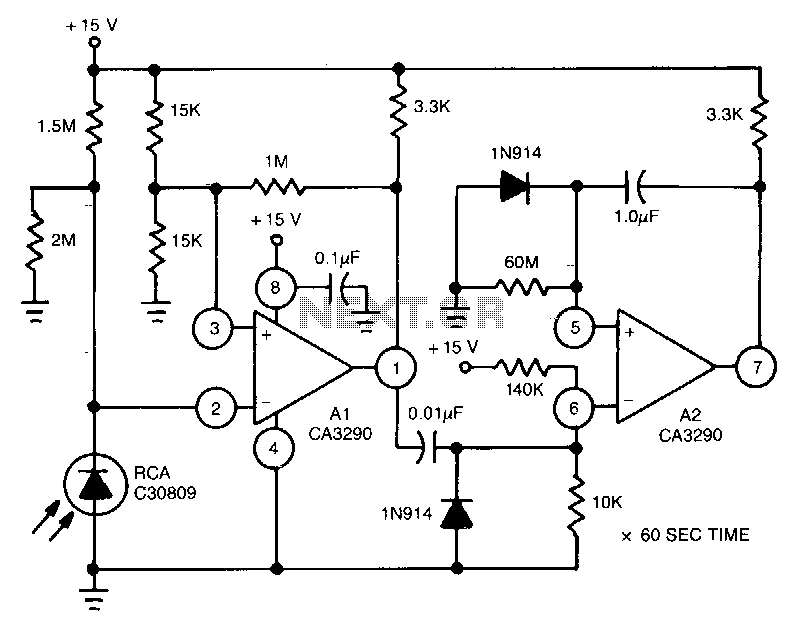
Description: This circuit utilizes the CA3290 BiMOS dual voltage comparator to detect variations in the current of a light-emitting diode (LED). The output from the comparator triggers A2, a one-shot timer. If the light source to the photodiode is disrupted, the circuit output transitions to a low state for approximately 60 seconds.
The circuit's primary function is to monitor the current flowing through the photodiode, which is sensitive to changes in light levels. The CA3290, known for its low power consumption and high-speed operation, serves as the core component for voltage comparison. When the light intensity falls below a predetermined threshold, the comparator's output changes state, signaling that the light source has been interrupted.
Upon the comparator's output indicating a low state, the one-shot timer (A2) is activated. This timer is designed to produce a single output pulse of a specified duration—in this case, approximately 60 seconds. The timing is typically set using an external resistor-capacitor (RC) network connected to the timer. This pulse duration can be critical in applications where a delay is required before taking further action, such as activating an alarm or switching on a backup light source.
The circuit's output can be connected to various downstream components, such as microcontrollers or relay drivers, depending on the intended application. The use of a BiMOS comparator allows for the integration of both analog and digital signals, enhancing the circuit's versatility in a range of electronic systems. Overall, this design is effective for applications where light monitoring and response are essential, such as in security systems or automated lighting controls.This circuit uses Al of the CA3290 BiMOS dual voltage comparator to sense a change in light diode current. A2, a one-shot timer, is triggered by the Al output. If the light source to the photodiode is interrupted, the circuit output switches to a low state for approximately 60 s.
The circuit's primary function is to monitor the current flowing through the photodiode, which is sensitive to changes in light levels. The CA3290, known for its low power consumption and high-speed operation, serves as the core component for voltage comparison. When the light intensity falls below a predetermined threshold, the comparator's output changes state, signaling that the light source has been interrupted.
Upon the comparator's output indicating a low state, the one-shot timer (A2) is activated. This timer is designed to produce a single output pulse of a specified duration—in this case, approximately 60 seconds. The timing is typically set using an external resistor-capacitor (RC) network connected to the timer. This pulse duration can be critical in applications where a delay is required before taking further action, such as activating an alarm or switching on a backup light source.
The circuit's output can be connected to various downstream components, such as microcontrollers or relay drivers, depending on the intended application. The use of a BiMOS comparator allows for the integration of both analog and digital signals, enhancing the circuit's versatility in a range of electronic systems. Overall, this design is effective for applications where light monitoring and response are essential, such as in security systems or automated lighting controls.This circuit uses Al of the CA3290 BiMOS dual voltage comparator to sense a change in light diode current. A2, a one-shot timer, is triggered by the Al output. If the light source to the photodiode is interrupted, the circuit output switches to a low state for approximately 60 s.

Sensor-Activated Relay Pulser Circuit
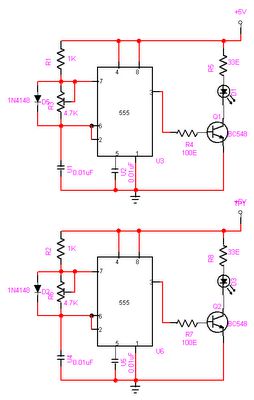
A sensor activates transistor Q1 to turn on the low-frequency 555 oscillator, which generates pulses to control LAMP II. The sensor may respond to variations in light or temperature. Either resistor RA or RB can function as the sensor, depending...
Automatic Room light Control With Bi Directional Visitor Counter
The objective of this project is to create a controller-based model that counts the number of individuals entering a specific room and activates the lighting accordingly. This is achieved through the use of sensors that detect the current number of...
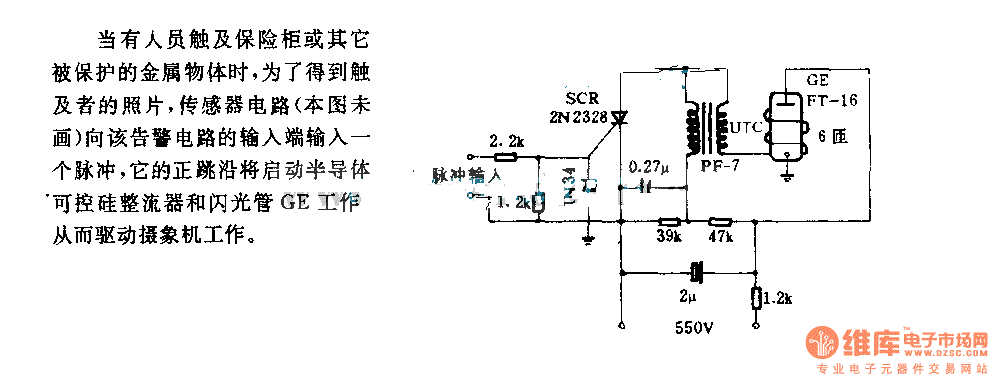
The alarm circuit diagram for safety box and other metal objects
When an individual touches the safety box or other protected metal objects, the sensor circuit generates a pulse to the alarm circuit. The positive edge of this pulse activates the semiconductor and thyristor flash GE, subsequently triggering the camera to...
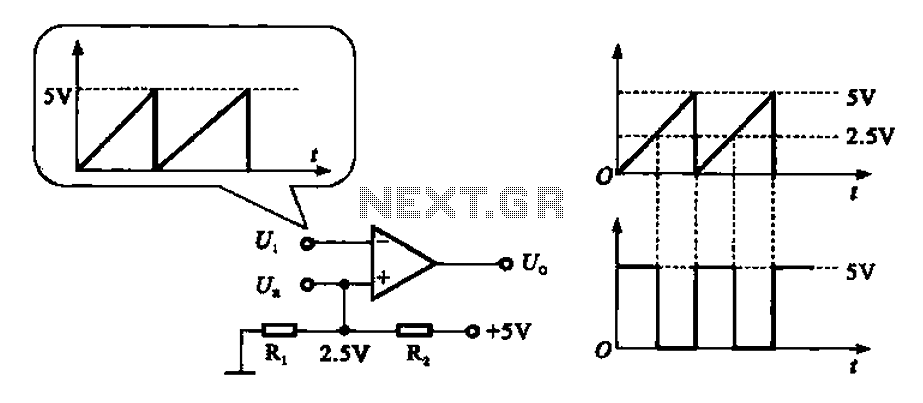
Voltage comparator amplifier circuit
The addition and subtraction functions of an operational amplifier are facilitated through an external feedback network, which places the integrated operational amplifier in a deep state of negative feedback. In this linear region, the relationship between input and output is...
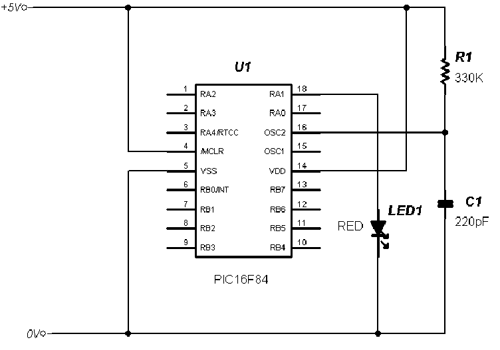
Delay Loops
There is one slight drawback to our flashing LED program. Each instruction takes one clock cycle to complete. If we are using a 4MHz crystal, then each instruction will take 1/4MHz, or 1µs to complete. As we are using only...
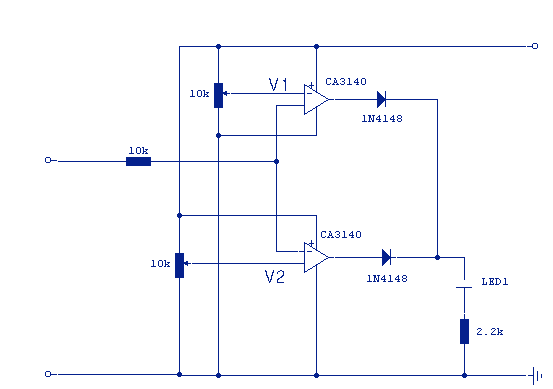
Voltage Comparator Switch
This circuit will provide an indication whenever the input voltage differs from two defined limits, V1 and V2. The supply voltage, Vcc must be higher than the highest input voltage by at least 2 volts. One application here is to...
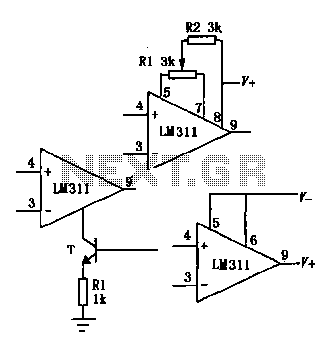
LM111 / 211/311 single voltage comparator circuit diagram
The LM111/211/311 power supply operates within a voltage range of 5V to 15V. It features bias current, offset current, and a differential input voltage range of 30V. The output is compatible with TTL, DTL, and MOS circuits, allowing it to...
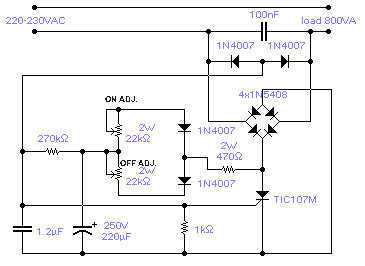
Mains variable Delay circuit
The circuit shown will switch on and off a resistive or inductive load up to 800VA with the possibility to adjust both the on and off period. Switching takes place during the zero crossing of the sine wave. The switch...
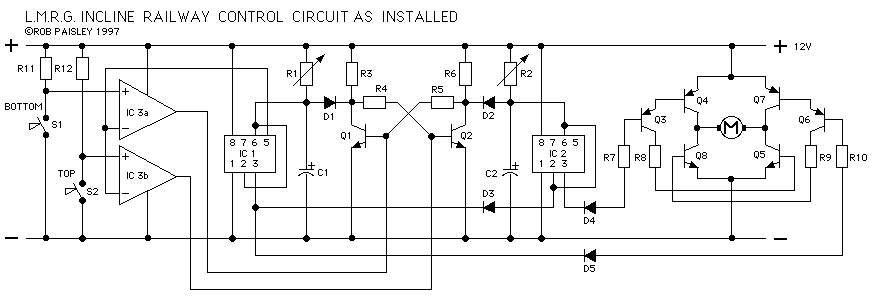
Incline Railway Project
The drawings and photos below are for an operating incline railway that was built by the London Model Railroad Group for its O scale model railway club located at London, Ontario, Canada. This is a single car model loosely based...