


Long-Line Ir Drop-Voltage Recovery
#voltage recovery
#IR drop
#power distribution
#voltage regulation
#system-level
#electronics
#circuit design
#power management
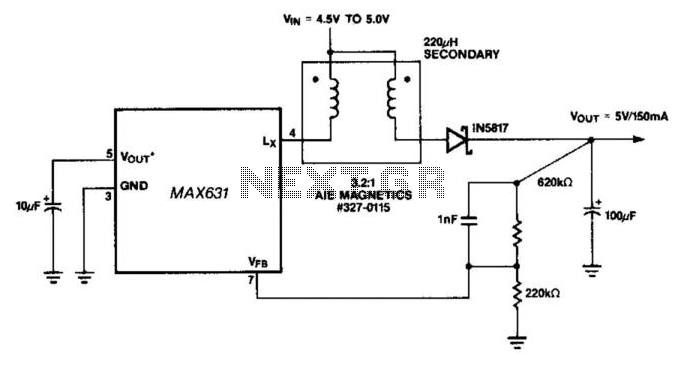
Description: This circuit offers a distinctive solution to a prevalent power distribution issue at the system level. When the supply voltage to a remote board must travel through a lengthy cable, the voltage at the termination point may decrease to unacceptable levels. This +5-V/+5-V converter resolves this issue by taking the diminished voltage at the end of the supply line and amplifying it back to +5 V. This functionality is particularly beneficial in remote display devices, such as certain point-of-sale (POS) terminals, where several meters of cable might separate the terminal from the display.
The described circuit operates as a voltage booster, specifically designed to counteract voltage drop due to resistive losses in long cable runs. By employing a step-up (boost) converter topology, the circuit can efficiently increase the voltage from a lower level back to the desired +5 V output.
Key components of the circuit typically include an inductor, a switch (often a MOSFET), a diode, and a capacitor. The inductor stores energy when the switch is closed, and when the switch opens, the energy is released to the output through the diode, charging the output capacitor. This process is controlled by a feedback mechanism that monitors the output voltage and adjusts the duty cycle of the switch to maintain a stable +5 V output, even when the input voltage varies.
The circuit's design should consider the maximum current requirements of the load, ensuring that the components are rated appropriately to handle the expected power levels. Additionally, attention must be given to the efficiency of the converter, as losses can occur in the switching elements and in the inductor, which may lead to heat generation and reduced performance.
For applications in POS terminals or other remote display devices, it is crucial to ensure that the circuit can operate over the entire range of input voltage levels that may be encountered, especially under load conditions. Proper layout and grounding techniques should also be employed to minimize noise and ensure reliable operation, especially given the potential for electromagnetic interference in environments where POS systems are commonly used.
In summary, this +5-V/+5-V converter circuit is a vital tool for maintaining proper voltage levels in remote applications, enhancing the reliability and performance of electronic systems that rely on long cable runs for power distribution. This circuit provides a unique solution to a common system-level power distribution problem: When the su pply voltage to a remote board must traverse a long cable, the voltage at the end of the line sometimes drops to unacceptable levels. This + 5-V/ + 5-V converter addresses this by taking the reduced voltage at the end of the supply line and boosting it back to + 5 V.
This can be especially useful in remote display devices, such as some point-of-sale (POS) terminals, where several meters of cable could separate the terminal from the readout.
The described circuit operates as a voltage booster, specifically designed to counteract voltage drop due to resistive losses in long cable runs. By employing a step-up (boost) converter topology, the circuit can efficiently increase the voltage from a lower level back to the desired +5 V output.
Key components of the circuit typically include an inductor, a switch (often a MOSFET), a diode, and a capacitor. The inductor stores energy when the switch is closed, and when the switch opens, the energy is released to the output through the diode, charging the output capacitor. This process is controlled by a feedback mechanism that monitors the output voltage and adjusts the duty cycle of the switch to maintain a stable +5 V output, even when the input voltage varies.
The circuit's design should consider the maximum current requirements of the load, ensuring that the components are rated appropriately to handle the expected power levels. Additionally, attention must be given to the efficiency of the converter, as losses can occur in the switching elements and in the inductor, which may lead to heat generation and reduced performance.
For applications in POS terminals or other remote display devices, it is crucial to ensure that the circuit can operate over the entire range of input voltage levels that may be encountered, especially under load conditions. Proper layout and grounding techniques should also be employed to minimize noise and ensure reliable operation, especially given the potential for electromagnetic interference in environments where POS systems are commonly used.
In summary, this +5-V/+5-V converter circuit is a vital tool for maintaining proper voltage levels in remote applications, enhancing the reliability and performance of electronic systems that rely on long cable runs for power distribution. This circuit provides a unique solution to a common system-level power distribution problem: When the su pply voltage to a remote board must traverse a long cable, the voltage at the end of the line sometimes drops to unacceptable levels. This + 5-V/ + 5-V converter addresses this by taking the reduced voltage at the end of the supply line and boosting it back to + 5 V.
This can be especially useful in remote display devices, such as some point-of-sale (POS) terminals, where several meters of cable could separate the terminal from the readout.
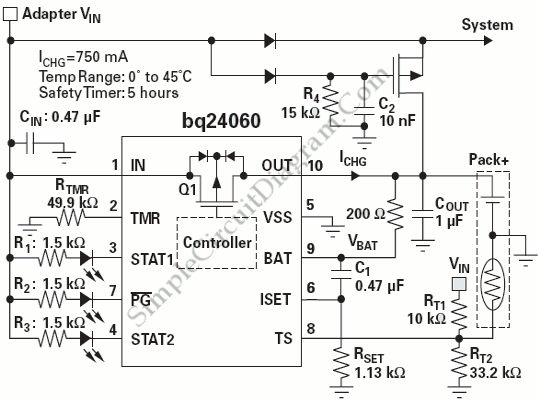
Power Path Management Battery Charger
Powering the system is required by many applications while charging the battery simultaneously. Interaction between the system and charger may result in a...
Power management in electronic systems is critical, particularly in applications that necessitate simultaneous operation and battery charging. This...
Electronic Projects
This program includes circuit design CAD, simulation, and auto-routing PC layout. PSPICE is also utilized at Unisys, which offers more capabilities but costs six times as much and requires annual renewal. With these requirements and others in mind, a variation...
Electronics Projects Circuits
Over 1400 top electronics projects and electronic circuits with photos, datasheets, and easy-to-read schematics, along with explanations of how they work and how to build them.
The collection comprises a vast array of electronics projects suitable for enthusiasts and professionals alike....
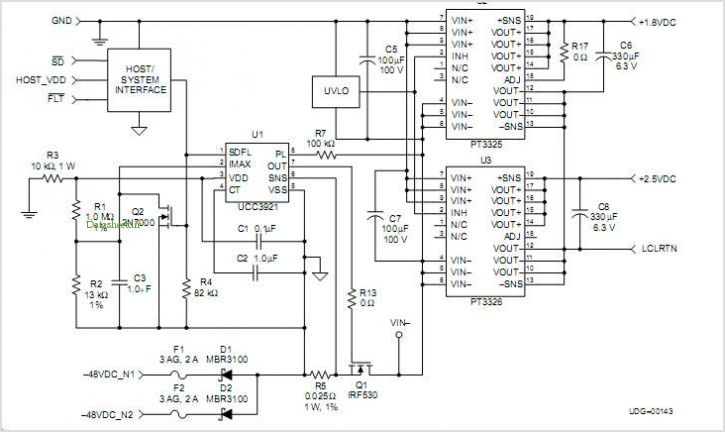
A Power Management Interface Circuit For Telecom Hot Swap With Local Dc/dc Conve
New cellular phones have incorporated high-resolution cameras that require bright illumination of the surrounding area to achieve high-quality pictures. Traditional xenon-filled photo flashes cannot be used due to the limited space available in cellular phone cameras. Instead, design engineers utilize...
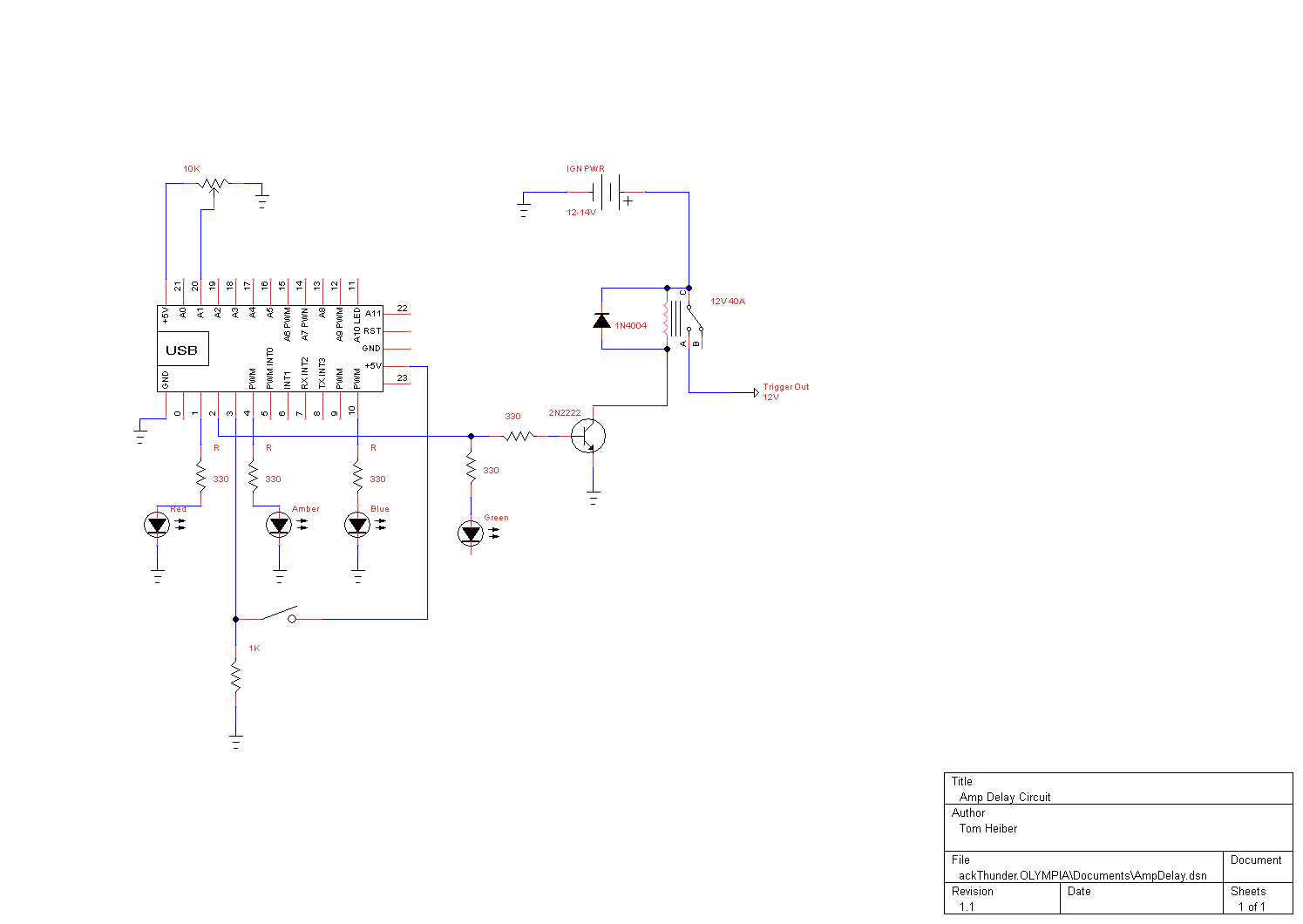
smart amp delay
This system is designed as a Windows service that detects various power events, including Suspend, Hibernate, Reboot, and Shutdown. It can send appropriate responses to a control circuit, specifically a Heartbeat or Kill signal. The trigger mechanism is also regulated...
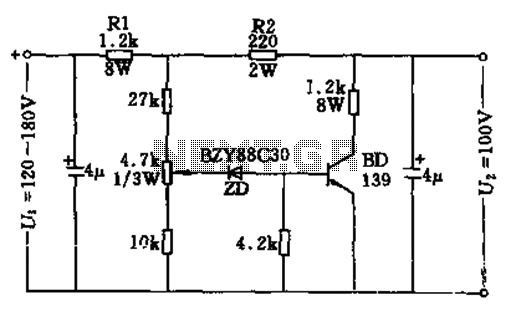
100v / 10ma regulator circuit
The circuit features no-load and short circuit protection mechanisms. To accommodate short circuit conditions, it is necessary to increase resistors R1 and R2 to allow for power dissipation; for example, R1 can be set to 1.2kΩ with a power rating...
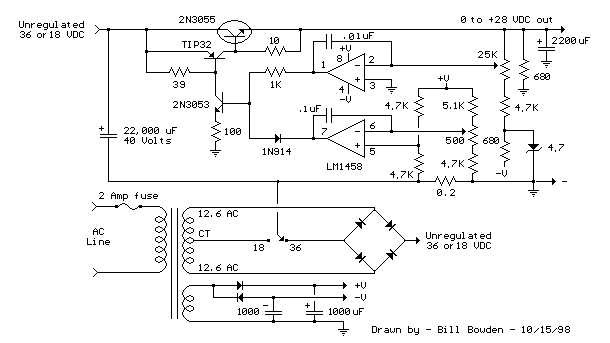
Current and Variable Voltage Power Supply
Another adjustment of application operational amplifiers to adapt a power supply is apparent below. The power supply requires an additional adjustment to supply the op-amps with a bipolar voltage (+/- 8 volts), and the negative voltage is also used to...
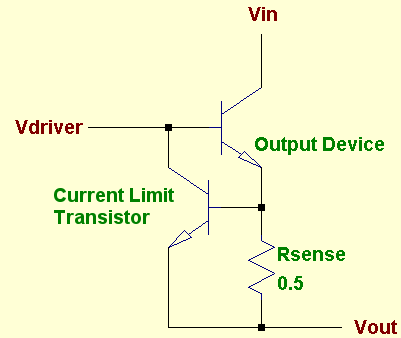
protected
A voltage regulator is designed to provide a fixed voltage to any load. This inherently means it must supply the necessary current through that load to satisfy Ohm's Law, I = V/R. As the resistance (R) approaches zero, such as...
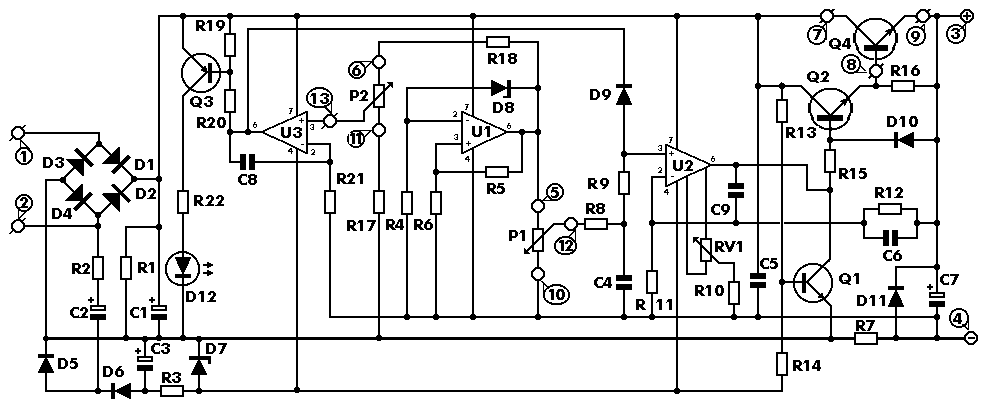
0-30 VDC Stabilized Power Supply with Current Control 0.002-3 A
The circuit begins with a step-down mains transformer featuring a secondary winding rated at 24 V/3 A, which connects across the input points at pins 1 and 2. The quality of the output supply is directly related to the transformer's...