


Bluetooth Digital Setting Circles
#bluetooth
#digital setting circles
#serial communication
#astronomy
#RS232
#microcontroller
#wireless
#adaptation
#power efficiency
#DIY
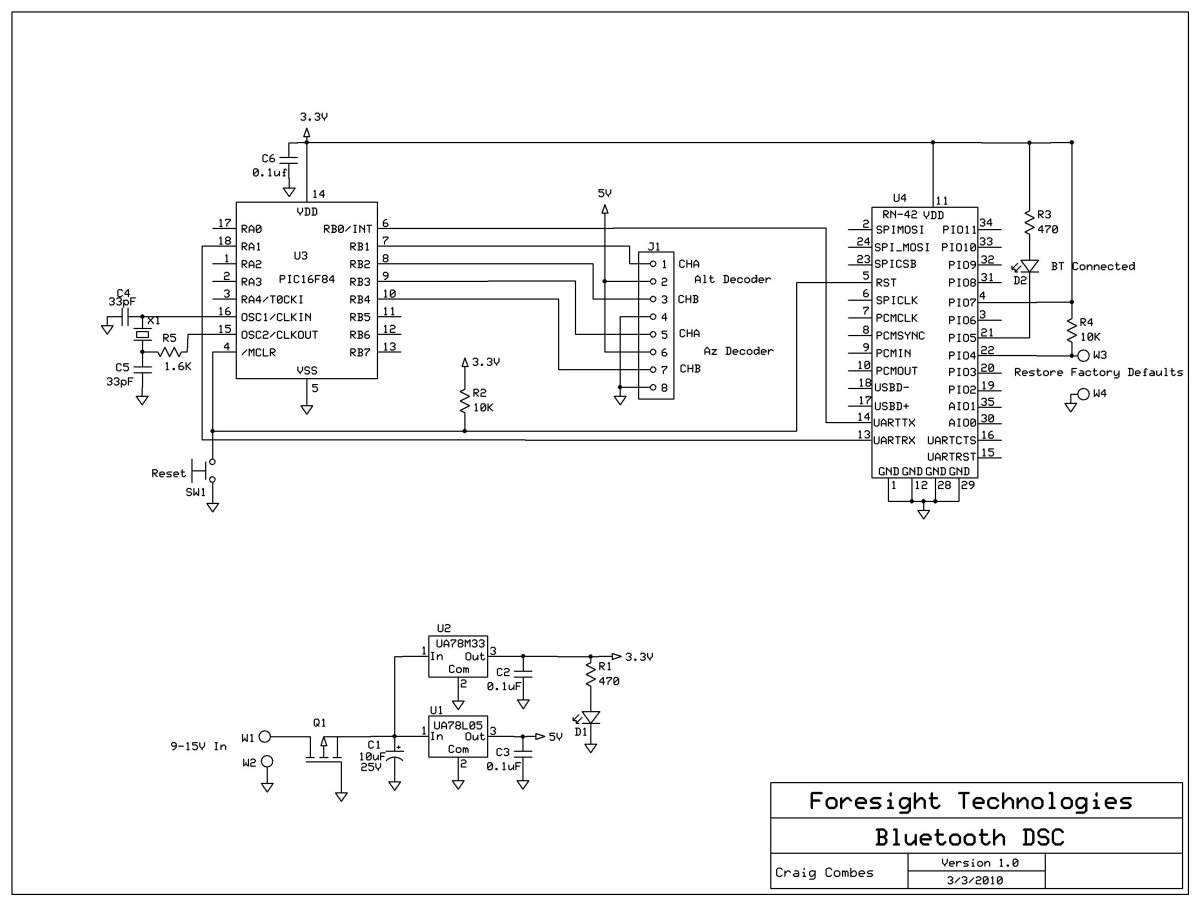
Description: This variation of the Digital Setting Circles project was developed by Craig Combes, who shared his insights for others to replicate his version. Many users utilize Dave's serial DSC board along with a serial to Bluetooth adapter, which can be costly, bulky, and power-intensive. Consequently, the design was adapted to bypass the RS232 circuit and connect directly to Bluetooth. During this adaptation, the PIC was changed to a more affordable and updated chip, the 16F628A, for which Dave already had code. Minor modifications were made to the code to remove some pull-up resistors. The new design incorporates a 5-volt regulator to ensure proper functionality of the encoders and a 3.3-volt regulator to power the Bluetooth module. A MOSFET was implemented for polarity protection to lessen the input voltage requirement. Additionally, the oscillator module was substituted with a crystal to decrease costs and power consumption. The Bluetooth module used is a surface mount device, and the custom boards have 11 solder pads for this component. Most other components, excluding the PIC, are also surface mount, with a manageable number of pins per component for soldering. The Bluetooth module is the RN-42 from Roving Networks, which consumes 30mA during transmission, 3mA while sniffing, and 26µA in sleep mode. It is configured to communicate at a baud rate of 9600. The power-on indicator LED is labeled D1, while SW1 serves as the reset button for both the RN-42 and the PIC. The status indicator light for the RN-42 is denoted as D2, which blinks until a connection is established, after which it remains illuminated. Boards for this circuit have been produced and will eventually be available through FAR Circuits, similar to Dave's original board. Suggestions for enhancing the design or board are welcomed.
The Digital Setting Circles project, as modified by Craig Combes, represents an efficient approach to integrating Bluetooth technology into a compact electronic design. The choice of the PIC16F628A microcontroller is significant as it balances cost and performance, making it suitable for hobbyist and educational applications. The elimination of the RS232 interface streamlines the design, reducing both physical size and complexity, which is advantageous for users seeking a more straightforward setup.
The incorporation of dual voltage regulators ensures that the different components operate within their specified voltage ranges. The 5-volt regulator is essential for the encoders, which are typically sensitive to voltage fluctuations, while the 3.3-volt regulator is critical for the Bluetooth module, which is optimized for low power consumption. The use of a MOSFET for polarity protection is a prudent design choice, safeguarding the circuit against potential damage from reverse polarity connections.
The transition from an oscillator module to a crystal not only minimizes costs but also enhances the stability and reliability of the timing signals within the circuit. This change is particularly beneficial in communication applications where timing precision is crucial for maintaining data integrity.
The RN-42 Bluetooth module is noteworthy for its low power consumption, making it an excellent choice for battery-operated devices. Its operational modes allow for flexibility in power management, which is essential for extending the lifespan of portable applications. The configuration at 9600 baud is standard for many serial communications, ensuring compatibility with a wide range of devices and software.
The design's user-friendly features, such as the power-on indicator LED and the reset button, enhance the overall functionality, making it easier for users to monitor the system's status and reset it as needed. The blinking status indicator provides immediate feedback on the connection state, which is a crucial aspect for troubleshooting and user experience.
Overall, the modifications made to the Digital Setting Circles project not only improve its cost-effectiveness but also its usability, making it an attractive option for enthusiasts looking to integrate Bluetooth capabilities into their astronomical setups. The openness to suggestions for further improvements indicates a commitment to continuous enhancement and user engagement in the development process.This variation on my Digital Setting Circles project was created by Craig Combes. He provided the following content so others could recreate his version. Thanks, Craig! Many people use Dave`s serial DSC board with a serial to Bluetooth adapter and that can get quite pricey, large and power hungry. So I adapted Dave`s design to skip the RS232 circu it and go straight to Bluetooth. In the process, I decided to change the PIC to a less expensive, and more recent chip: the 16F628A, which Dave had code for already. I made some minor tweaks to the code to eliminate some pull up resistors. The new design uses a 5 volt regulator (to make sure the encoders are happy) and a 3. 3 volt regulator to supply everything else (the Bluetooth module needs 3. 3v). I used a MOSFET for polarity protection to reduce the input voltage requirement. I also replaced the oscillator module with a crystal to reduce cost and power consumption. The Bluetooth module is a surface mount device and the boards I created have 11 pads to solder for this device.
Most of the other components (not the PIC) are surface mount also, but there aren`t many of them and their are only a few pins maximum per component to solder, so it`s not difficult. The Bluetooth module is the RN-42 from Roving Networks, which only uses 30ma when transmitting, 3ma when sniffing and 26ua when sleeping.
I have it configured to communicate at 9600 baud. For more info on the RN-42, you can go here: D1 is the power on indicator LED. SW1 is the reset button for the RN-42 and the PIC. D2 is the status indicator light for the RN-42. D2 blinks until connected, then it stays on. I do have boards made for this circuit and I will eventually make them available through FAR Circuits, like Dave`s original board. I am open to suggestions for improving the design/board. Just send me a note here.
The Digital Setting Circles project, as modified by Craig Combes, represents an efficient approach to integrating Bluetooth technology into a compact electronic design. The choice of the PIC16F628A microcontroller is significant as it balances cost and performance, making it suitable for hobbyist and educational applications. The elimination of the RS232 interface streamlines the design, reducing both physical size and complexity, which is advantageous for users seeking a more straightforward setup.
The incorporation of dual voltage regulators ensures that the different components operate within their specified voltage ranges. The 5-volt regulator is essential for the encoders, which are typically sensitive to voltage fluctuations, while the 3.3-volt regulator is critical for the Bluetooth module, which is optimized for low power consumption. The use of a MOSFET for polarity protection is a prudent design choice, safeguarding the circuit against potential damage from reverse polarity connections.
The transition from an oscillator module to a crystal not only minimizes costs but also enhances the stability and reliability of the timing signals within the circuit. This change is particularly beneficial in communication applications where timing precision is crucial for maintaining data integrity.
The RN-42 Bluetooth module is noteworthy for its low power consumption, making it an excellent choice for battery-operated devices. Its operational modes allow for flexibility in power management, which is essential for extending the lifespan of portable applications. The configuration at 9600 baud is standard for many serial communications, ensuring compatibility with a wide range of devices and software.
The design's user-friendly features, such as the power-on indicator LED and the reset button, enhance the overall functionality, making it easier for users to monitor the system's status and reset it as needed. The blinking status indicator provides immediate feedback on the connection state, which is a crucial aspect for troubleshooting and user experience.
Overall, the modifications made to the Digital Setting Circles project not only improve its cost-effectiveness but also its usability, making it an attractive option for enthusiasts looking to integrate Bluetooth capabilities into their astronomical setups. The openness to suggestions for further improvements indicates a commitment to continuous enhancement and user engagement in the development process.This variation on my Digital Setting Circles project was created by Craig Combes. He provided the following content so others could recreate his version. Thanks, Craig! Many people use Dave`s serial DSC board with a serial to Bluetooth adapter and that can get quite pricey, large and power hungry. So I adapted Dave`s design to skip the RS232 circu it and go straight to Bluetooth. In the process, I decided to change the PIC to a less expensive, and more recent chip: the 16F628A, which Dave had code for already. I made some minor tweaks to the code to eliminate some pull up resistors. The new design uses a 5 volt regulator (to make sure the encoders are happy) and a 3. 3 volt regulator to supply everything else (the Bluetooth module needs 3. 3v). I used a MOSFET for polarity protection to reduce the input voltage requirement. I also replaced the oscillator module with a crystal to reduce cost and power consumption. The Bluetooth module is a surface mount device and the boards I created have 11 pads to solder for this device.
Most of the other components (not the PIC) are surface mount also, but there aren`t many of them and their are only a few pins maximum per component to solder, so it`s not difficult. The Bluetooth module is the RN-42 from Roving Networks, which only uses 30ma when transmitting, 3ma when sniffing and 26ua when sleeping.
I have it configured to communicate at 9600 baud. For more info on the RN-42, you can go here: D1 is the power on indicator LED. SW1 is the reset button for the RN-42 and the PIC. D2 is the status indicator light for the RN-42. D2 blinks until connected, then it stays on. I do have boards made for this circuit and I will eventually make them available through FAR Circuits, like Dave`s original board. I am open to suggestions for improving the design/board. Just send me a note here.
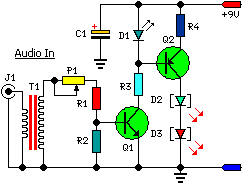
A Low Power Wireless Audio Power Amplifier circuit
This low-cost project enables audio reproduction from a television without disturbing others. It eliminates the need for wired connections between the TV and loudspeakers. Instead, it utilizes invisible infrared light to transmit audio signals from the TV to the loudspeakers....
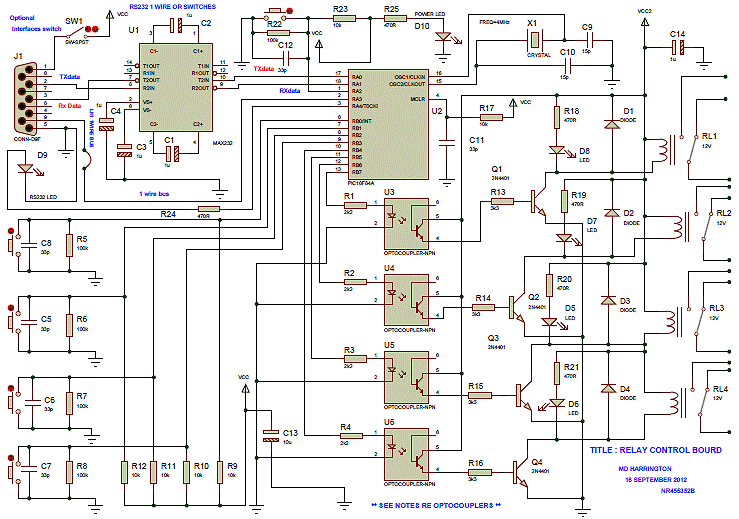
Rs 232 Relay Control Board
This device can be interfaced with various adapters, including a keypad adapter (optional), an RF receiver (optional), or via the internet (optional). It can also be adapted to operate with other external attachments.
The device features multiple interfacing options, enhancing its...
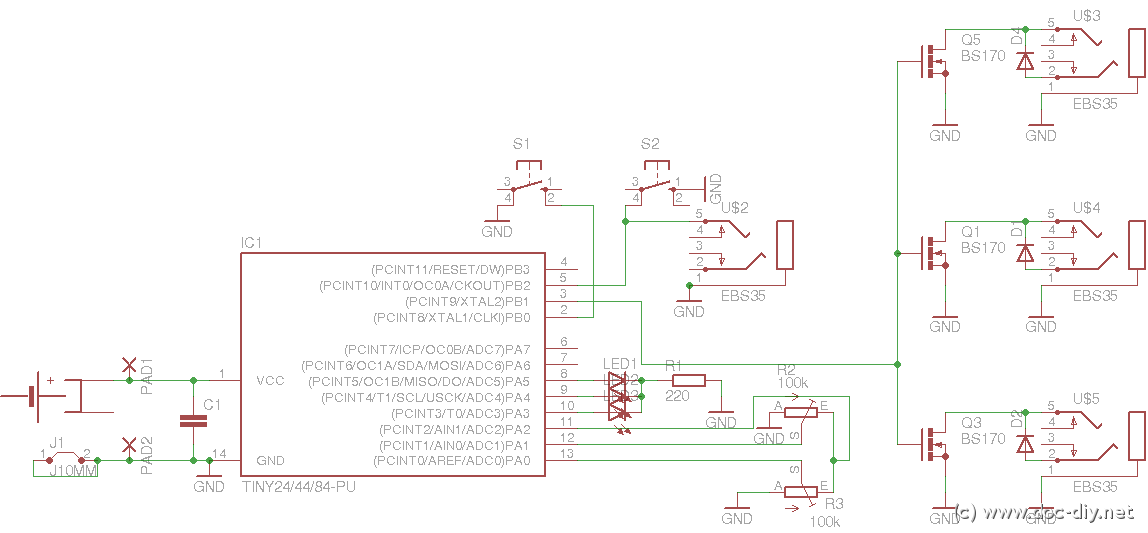
delay
This article outlines the construction of a simple microcontroller-based delay circuit designed for photographic applications, such as drop or high-speed photography. It is capable of controlling the trigger lag for cameras and flash units, generating periodic trigger pulses, or managing...
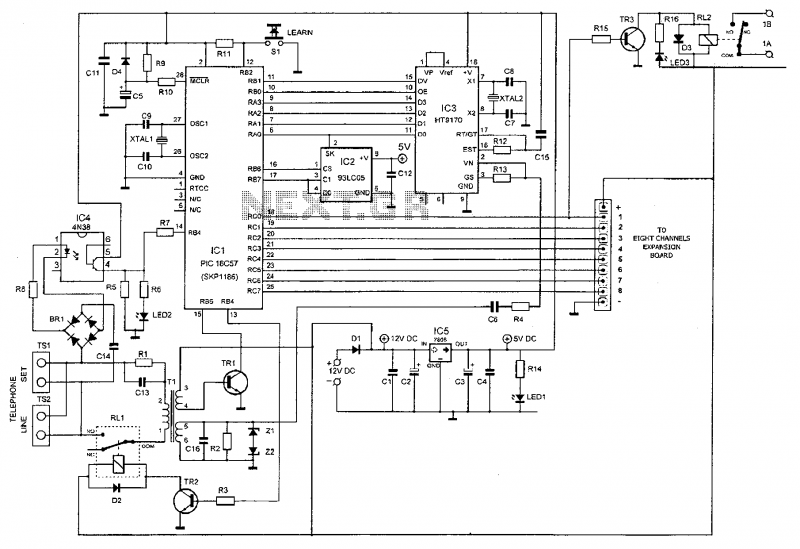
Microcontroller Based Telephone Remote Control Circuit
This device enables remote control of various appliances (up to eight with suitable add-on expansion boards) such as lights, water heaters, air conditioning, plant watering systems, alarms, etc., via a relay. It allows users to perform actions such as watering...

Metal detector circuit
The project demonstration has been successfully completed, with the only remaining task being the final project report due on June 15, which will be integrated with a conference paper. This update marks the last entry in the electronic notebook, although...
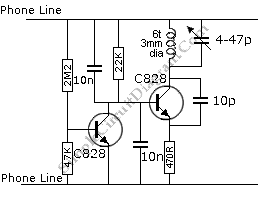
Wireless Telephone Line Spy
This is a phone bug circuit. This wireless telephone line spy circuit can be used to transmit the phone conversation to a nearby FM radio. This circuit must be...
The phone bug circuit is designed to intercept and transmit audio signals...
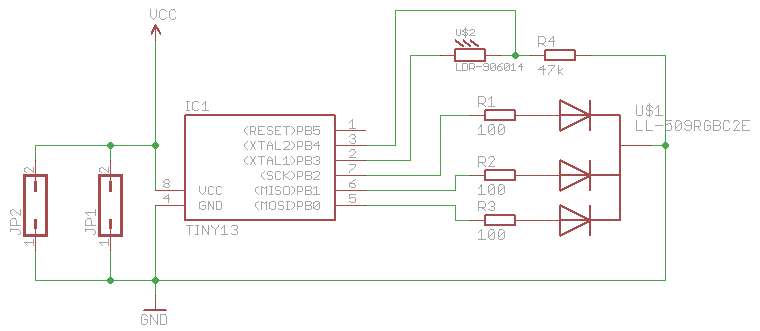
synchronizing fireflies ng
This is a remake of the fireflies project that was created a year ago. The concept revolves around the emergence of patterns, particularly the synchronization of hundreds or thousands of fireflies. Initially, they flash randomly, but over time, influenced by...
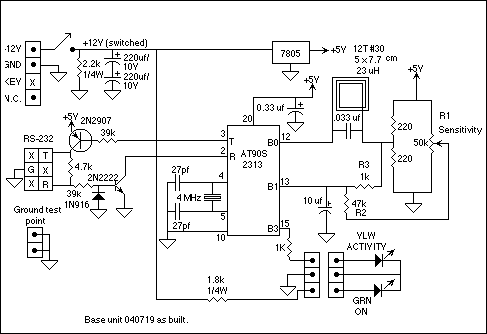
Wireless Coupler Terminal Interface
The purpose of the terminal interface is to allow my computer to communicate with Minimum Mass Wireless Coupler equipped devices using a terminal emulator program. Consequently, the Base Unit is basically an RS-232 interface and Minimum Mass Wireless Coupler. The...
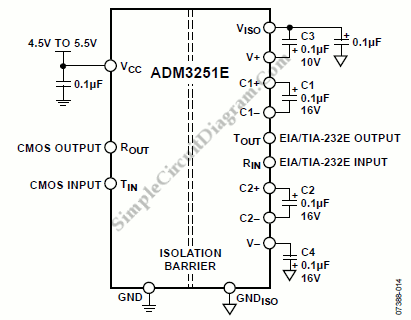
2.5KV Isolated RS232-TTL/CMOS Converter/Driver/Receiver
The ADM3251E is a transceiver that features high-speed operation, 2.5 kV full isolation, and a single channel for RS-232/V.28 communication. This device operates from a single 5 V power supply.
The ADM3251E transceiver is designed for robust communication in environments where...