


HC-11 Evaluation Board
#HC-11
#Interactive C
#S19 downloader
#Buffalo monitor
#microcontroller
#programming
#bootrap mode
#pcode
#Mobile Robots
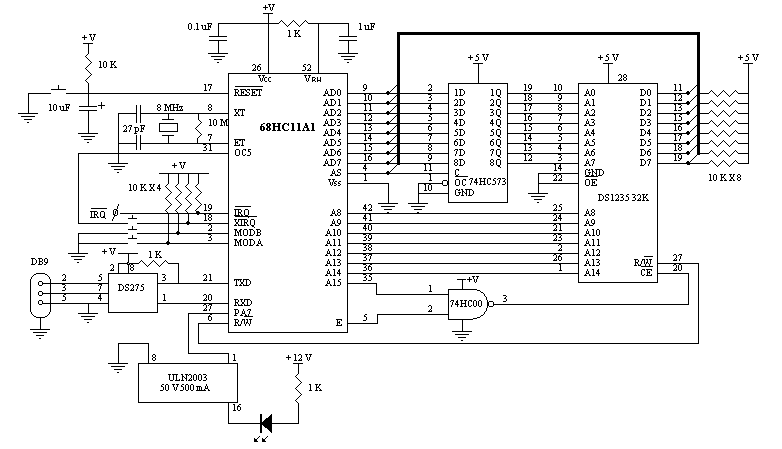
Description: After reading the Mobile Robots Book, written by Joseph L. Jones and Anita M. Flynn, and get the Interactive-C file from ftp://cher.media.mit.edu, I found a very nice S19 downloader written by Randy Sargent. I started to download the pcode to my HC-11 board, and run Interactive C. No problem with my board, it works very nice. Then I got the idea for the Buffalo monitor, to use Randy's Downloader writes the S19 file of the Buffalo with special boothrap mode.
The HC-11 microcontroller is a versatile platform widely utilized in educational and prototyping environments. The S19 downloader mentioned is a utility that facilitates the transfer of compiled code in S-record format to the HC-11. The S-record format is a standard for representing binary information in ASCII text format, which is particularly useful for programming microcontrollers.
In the context of the Buffalo monitor, a bootloader is implemented to enable the downloading and execution of code directly onto the HC-11. The Buffalo monitor operates in a special mode, referred to as "boothrap mode," which likely allows for a streamlined process of writing S19 files to the microcontroller’s memory. This mode may involve specific configurations of the HC-11's memory map to ensure that the S19 files are correctly interpreted and executed.
The interaction between the S19 downloader and the Buffalo monitor requires careful attention to the memory layout of the HC-11. The S19 downloader must be able to correctly identify the starting address for the program to be loaded, as well as manage any necessary offsets or padding. The bootloader's role is crucial, as it initializes the microcontroller and prepares it to receive the incoming data stream from the downloader.
For implementation, the circuit schematic would typically include the HC-11 microcontroller connected to a serial interface for communication with a host computer running the Interactive C environment. Additional components may include pull-up resistors on the communication lines, capacitors for power supply stability, and possibly an LED indicator to signal the status of the download process.
The design of this system emphasizes the importance of robust communication protocols, proper power management, and the ability to handle errors during the downloading process. The integration of the S19 downloader with the Buffalo monitor enhances the functionality of the HC-11, allowing for more flexible programming and debugging options in robotic applications.After reading the Mobile Robots Book, written by Joseph L. Jones and Anita M. Flynn, and get the Interactive-C file from ftp://cher.media.mit.edu, I found a very nice S19 downloader written by Randy Sargent. I started to download the pcode to my HC-11 board, and run Interactive C. No problem with my board, it works very nice. Then I got the idea for the Buffalo monitor, to use Randy`s Downloader writes the S19 file of the Buffalo with special boothrap mode.
The HC-11 microcontroller is a versatile platform widely utilized in educational and prototyping environments. The S19 downloader mentioned is a utility that facilitates the transfer of compiled code in S-record format to the HC-11. The S-record format is a standard for representing binary information in ASCII text format, which is particularly useful for programming microcontrollers.
In the context of the Buffalo monitor, a bootloader is implemented to enable the downloading and execution of code directly onto the HC-11. The Buffalo monitor operates in a special mode, referred to as "boothrap mode," which likely allows for a streamlined process of writing S19 files to the microcontroller’s memory. This mode may involve specific configurations of the HC-11's memory map to ensure that the S19 files are correctly interpreted and executed.
The interaction between the S19 downloader and the Buffalo monitor requires careful attention to the memory layout of the HC-11. The S19 downloader must be able to correctly identify the starting address for the program to be loaded, as well as manage any necessary offsets or padding. The bootloader's role is crucial, as it initializes the microcontroller and prepares it to receive the incoming data stream from the downloader.
For implementation, the circuit schematic would typically include the HC-11 microcontroller connected to a serial interface for communication with a host computer running the Interactive C environment. Additional components may include pull-up resistors on the communication lines, capacitors for power supply stability, and possibly an LED indicator to signal the status of the download process.
The design of this system emphasizes the importance of robust communication protocols, proper power management, and the ability to handle errors during the downloading process. The integration of the S19 downloader with the Buffalo monitor enhances the functionality of the HC-11, allowing for more flexible programming and debugging options in robotic applications.After reading the Mobile Robots Book, written by Joseph L. Jones and Anita M. Flynn, and get the Interactive-C file from ftp://cher.media.mit.edu, I found a very nice S19 downloader written by Randy Sargent. I started to download the pcode to my HC-11 board, and run Interactive C. No problem with my board, it works very nice. Then I got the idea for the Buffalo monitor, to use Randy`s Downloader writes the S19 file of the Buffalo with special boothrap mode.
Interfacing seven segment to microcontroller
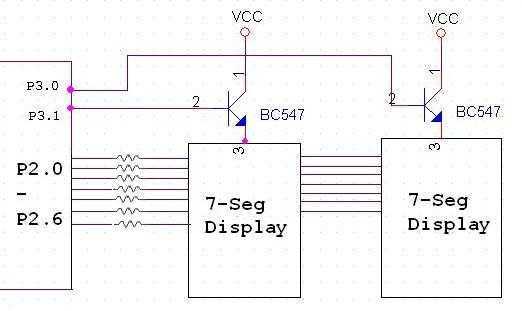
The Tutorial shows how to interface 7-segment display to a microcontroller. Also explains how do display more than one 7-segment on same data lines using scanning method. 7 Seg displays are are basically 7 LED's. It will be much easier...
Crazy Looper Schematic
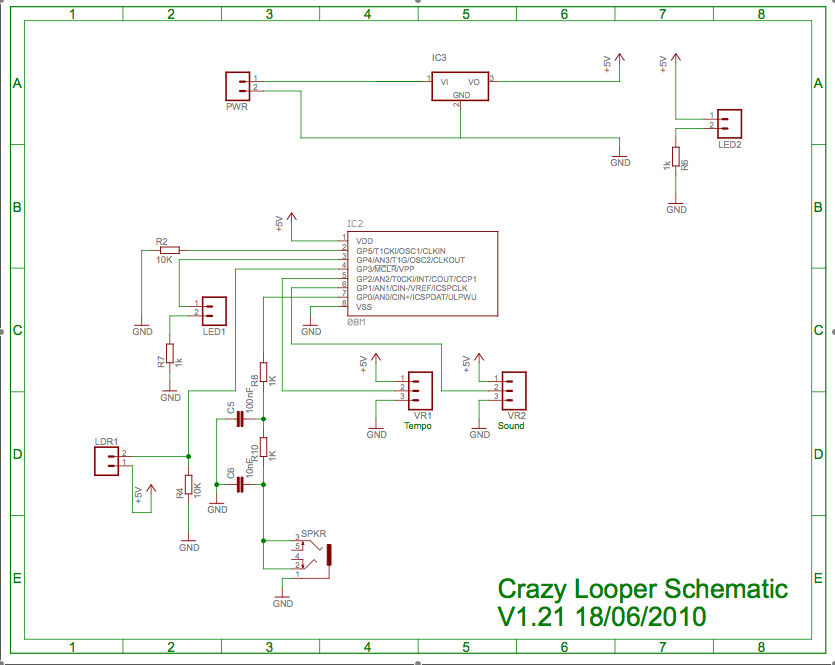
Two schematics are provided, one depicting the circuit without a programming port and the other including a programming port.
The first schematic represents a basic electronic circuit configuration that operates independently of a programming interface. This design may be suitable for...
µP-Controlled Oscillator Delivers Rock-Bottom Distortion
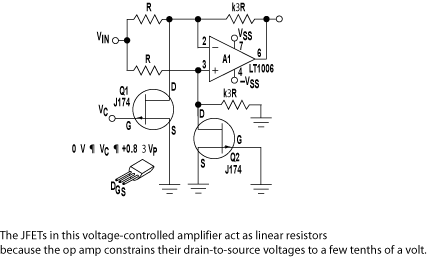
Function generators are essential in the design, testing, and operation of encoders, modulators, demodulators, and measurement instruments. This document presents an economical method to construct a bus-controlled sinewave oscillator that exhibits exceptionally low distortion. The circuit produces a sinusoidal output...
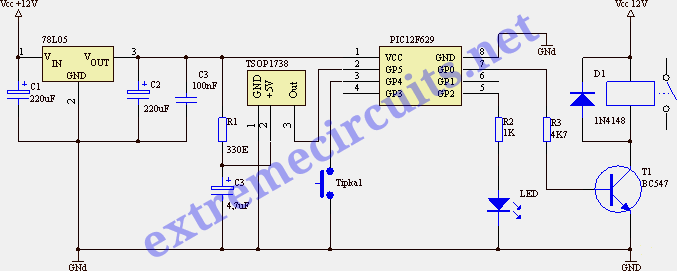
IR On/Off Switch Using Microcontroller
Turning electrical devices ON or OFF using a remote control is a well-established concept, with numerous devices available that perform this function effectively. To create such a device, it is necessary to construct a receiver and a transmitter, as well...
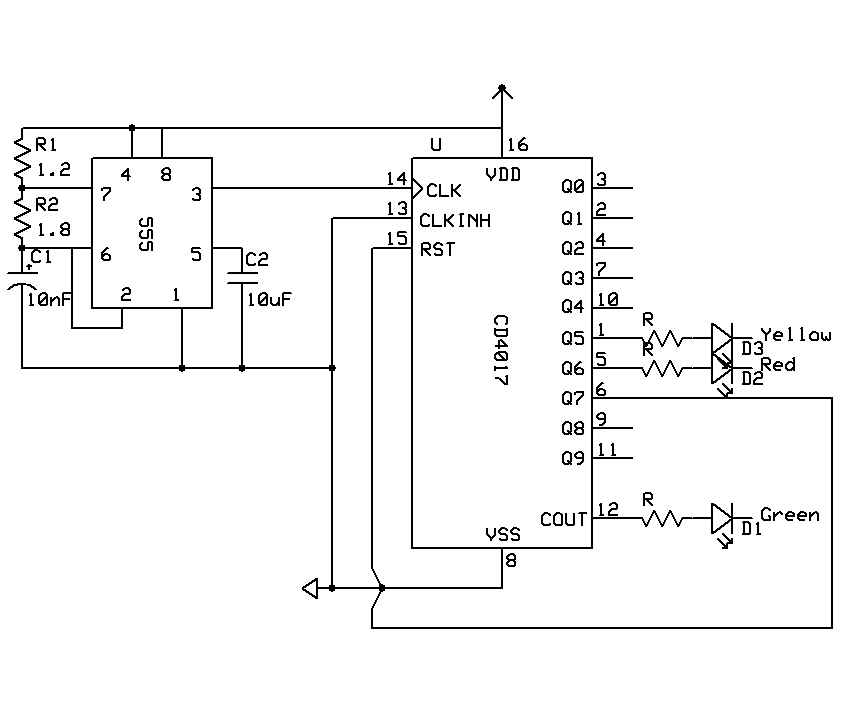
Training Boxing timer schematic
A timer is being developed for circuit training or boxing training. The timer does not require any external input, except for a reset function. The project can be simplified using a microcontroller, such as the PIC12F635, which is cost-effective at...
Password(code) Based Digital Locking System Using Microcontroller 89C52/89S52
Upon entering the password, the application, in this case "LED," will illuminate. In this digital locking system project, the interfacing of a keypad and a 16x2 LCD with a microcontroller will be explored, along with the accompanying code. This project...

Microcontroller and Motor Driver Circuit Board
Efforts were made to minimize the number of wire jumpers on this board, but space constraints arose due to the integration of the microcontroller and motor driver on a single board. The design would have been cleaner without the inclusion...
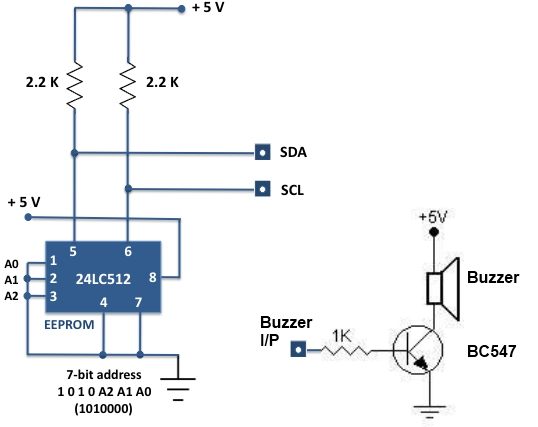
Experimental I/O board for microcontrollers
For beginners experiencing similar challenges, a general-purpose I/O board is recommended to minimize prototyping time and maximize space on the breadboard for projects. The construction of this board is straightforward. Basic I/O devices can be soldered onto a general-purpose perforated...
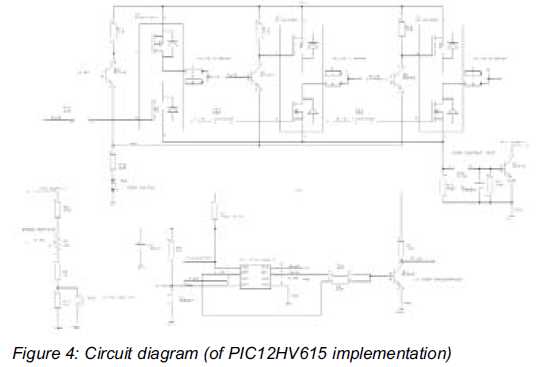
Low Resource Microcontroller 3 Phase BLDC Motor Speed Controller
This article discusses a minimal resource microcontroller implementation for a three-phase Brushless DC (BLDC) motor, focusing on a closed-loop speed motor controller application based on a Microchip PIC12 device. It demonstrates how minimization techniques can reduce the number of I/O...