


rfm12b wireless
#RFM12B
#wireless communication
#ISM band
#433MHz
#868MHz
#915MHz
#Xbee comparison
#software configurable
#RF modules
#Stuart Poulton
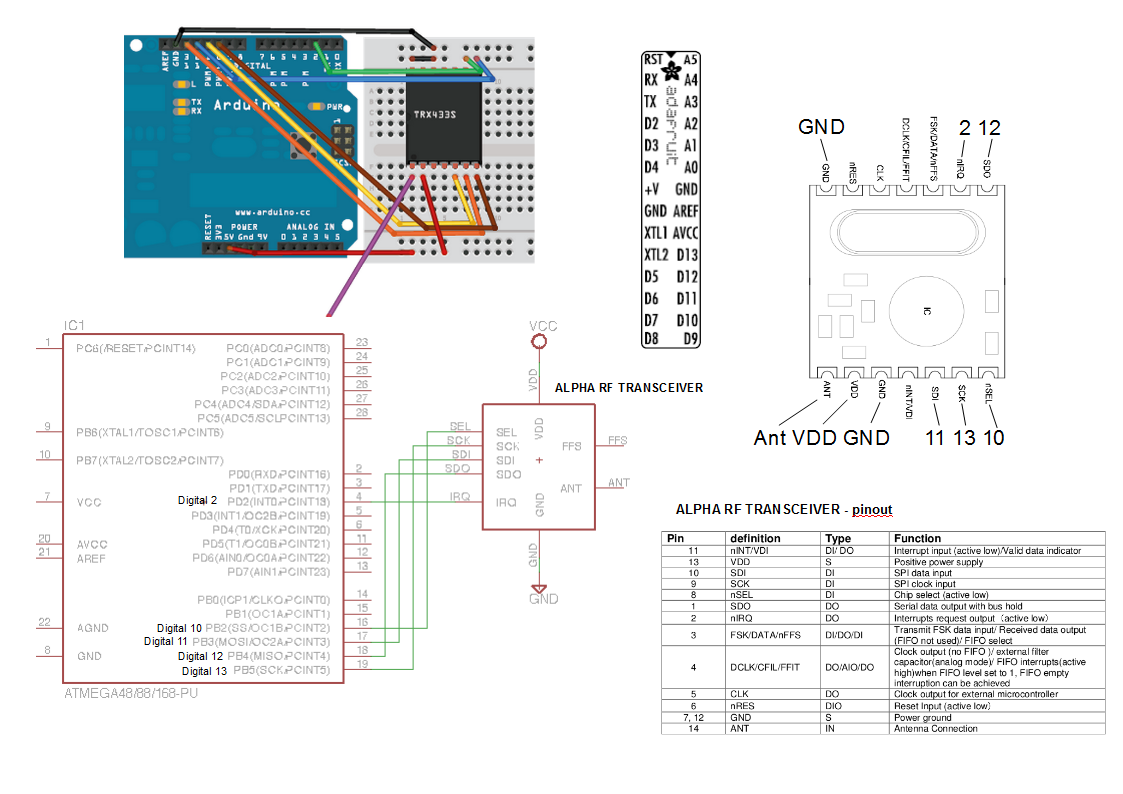
Description: To understand how the RFM12B wireless module compares to other similar wireless options such as Xbee and XRF, refer to the comprehensive comparison overview by Stuart Poulton. The RFM12B operates on three different ISM band frequencies: 433 MHz (worldwide), 868 MHz (Europe), and 915 MHz (USA and Australia only). It is important to note that the frequency of a module is configured in software, and for optimal performance, it should correspond to the intended hardware frequency of the module.
The RFM12B is a low-power, low-cost wireless transceiver designed primarily for short-range communication in various applications, including remote sensing and automation. It operates using the ISM bands, which are unlicensed frequency bands suitable for industrial, scientific, and medical devices.
The module's versatility in supporting multiple frequencies allows it to be adapted for different regional regulations and applications. For instance, the 433 MHz frequency is widely used globally, making it suitable for applications that require international compatibility. The 868 MHz frequency is specifically tailored for European use, while the 915 MHz frequency is designated for the USA and Australia, ensuring compliance with local regulations.
The RFM12B's frequency configuration is managed through software, which allows users to easily switch between the supported frequencies based on their specific needs. This feature is particularly advantageous for developers who may need to deploy their devices in different regions or require specific frequency settings for optimal communication performance.
In terms of performance, the RFM12B can achieve a communication range of up to several hundred meters, depending on environmental factors, antenna design, and power settings. It supports various modulation schemes and data rates, enabling it to transmit data efficiently while maintaining low power consumption. This makes the RFM12B suitable for battery-operated devices, where energy efficiency is critical.
When comparing the RFM12B to other wireless options like Xbee and XRF, it is essential to consider factors such as range, power consumption, ease of use, and cost. While Xbee modules are known for their robust mesh networking capabilities, they may come at a higher price point. In contrast, the RFM12B provides a cost-effective solution for developers looking for a simple and effective wireless communication method without the added complexity of mesh networking.
Overall, the RFM12B presents a compelling option for wireless communication in various applications, particularly where low cost and low power consumption are prioritized. Its flexibility in frequency selection, combined with its ease of integration into existing systems, makes it a valuable component in the design of modern wireless devices.To see how RFM12B wireless compares to other similar wireless options (e. g Xbee, XRF etc. ) check out this well compiled comparison overview byStuart Poulton:. 3 different ISM band frequencies: 433MHz (worldwide), 868MHz (Europe), 915MHz (USA & Australia only). Note: frequency of a module is set in software, for best performance the frequency se t should match the intended hardware frequency of the module.
The RFM12B is a low-power, low-cost wireless transceiver designed primarily for short-range communication in various applications, including remote sensing and automation. It operates using the ISM bands, which are unlicensed frequency bands suitable for industrial, scientific, and medical devices.
The module's versatility in supporting multiple frequencies allows it to be adapted for different regional regulations and applications. For instance, the 433 MHz frequency is widely used globally, making it suitable for applications that require international compatibility. The 868 MHz frequency is specifically tailored for European use, while the 915 MHz frequency is designated for the USA and Australia, ensuring compliance with local regulations.
The RFM12B's frequency configuration is managed through software, which allows users to easily switch between the supported frequencies based on their specific needs. This feature is particularly advantageous for developers who may need to deploy their devices in different regions or require specific frequency settings for optimal communication performance.
In terms of performance, the RFM12B can achieve a communication range of up to several hundred meters, depending on environmental factors, antenna design, and power settings. It supports various modulation schemes and data rates, enabling it to transmit data efficiently while maintaining low power consumption. This makes the RFM12B suitable for battery-operated devices, where energy efficiency is critical.
When comparing the RFM12B to other wireless options like Xbee and XRF, it is essential to consider factors such as range, power consumption, ease of use, and cost. While Xbee modules are known for their robust mesh networking capabilities, they may come at a higher price point. In contrast, the RFM12B provides a cost-effective solution for developers looking for a simple and effective wireless communication method without the added complexity of mesh networking.
Overall, the RFM12B presents a compelling option for wireless communication in various applications, particularly where low cost and low power consumption are prioritized. Its flexibility in frequency selection, combined with its ease of integration into existing systems, makes it a valuable component in the design of modern wireless devices.To see how RFM12B wireless compares to other similar wireless options (e. g Xbee, XRF etc. ) check out this well compiled comparison overview byStuart Poulton:. 3 different ISM band frequencies: 433MHz (worldwide), 868MHz (Europe), 915MHz (USA & Australia only). Note: frequency of a module is set in software, for best performance the frequency se t should match the intended hardware frequency of the module.
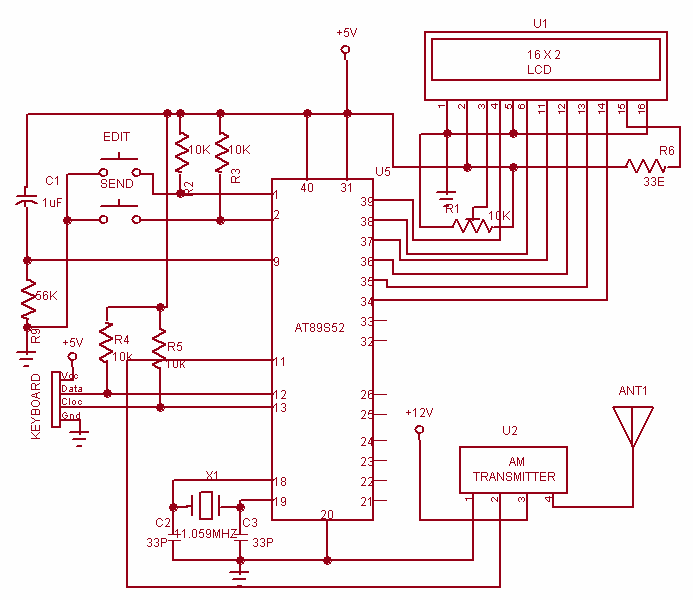
Wireless Data Communication system
This project is used to communicate or transmit a text message from one place to another place through wireless. The text message is encrypted by using the Microcontroller and the encrypted message was transmitted through wireless. At the receiver end...
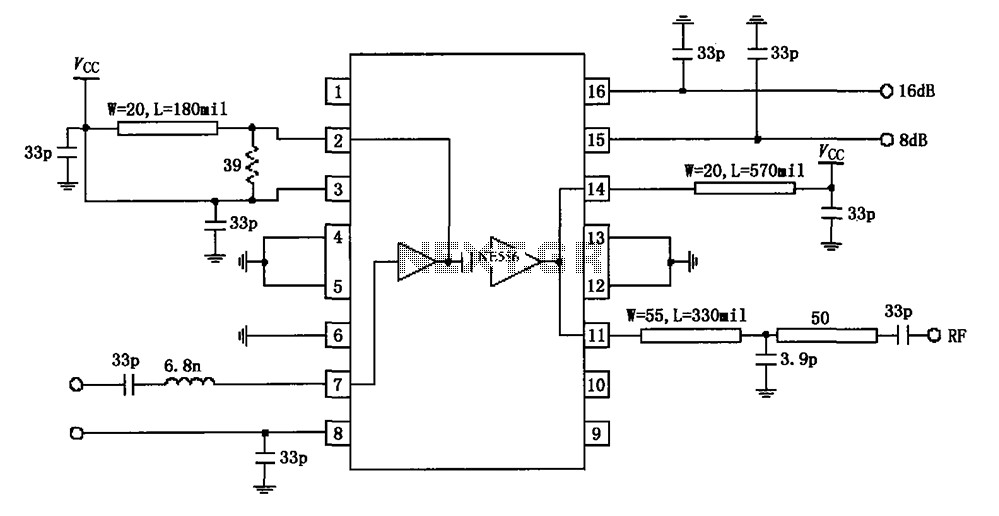
915MHz Power Amplifier RF2155 circuit diagram
The circuit diagram illustrates the application of a 915MHz RF2155 power amplifier. The radio frequency (RF) signal enters through pin 7, where it is processed by a preamplifier. The output from the preamplifier is further amplified by the power amplifier,...
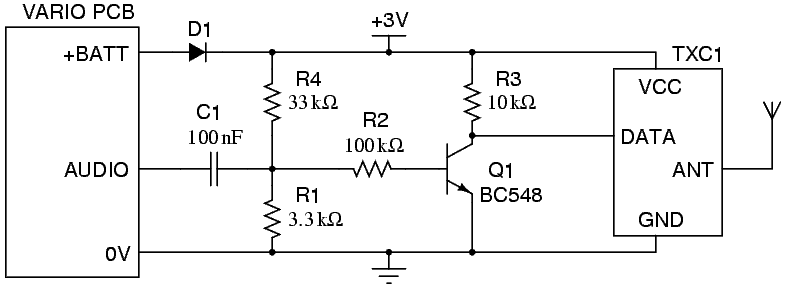
Wireless Piezo Beeper
The design utilizes a pair of 433MHz wireless modules that can be purchased pre-assembled, containing all necessary radio frequency components. These modules are integrated into two circuits: one for transmitting audio from the vario and another for receiving and reproducing...
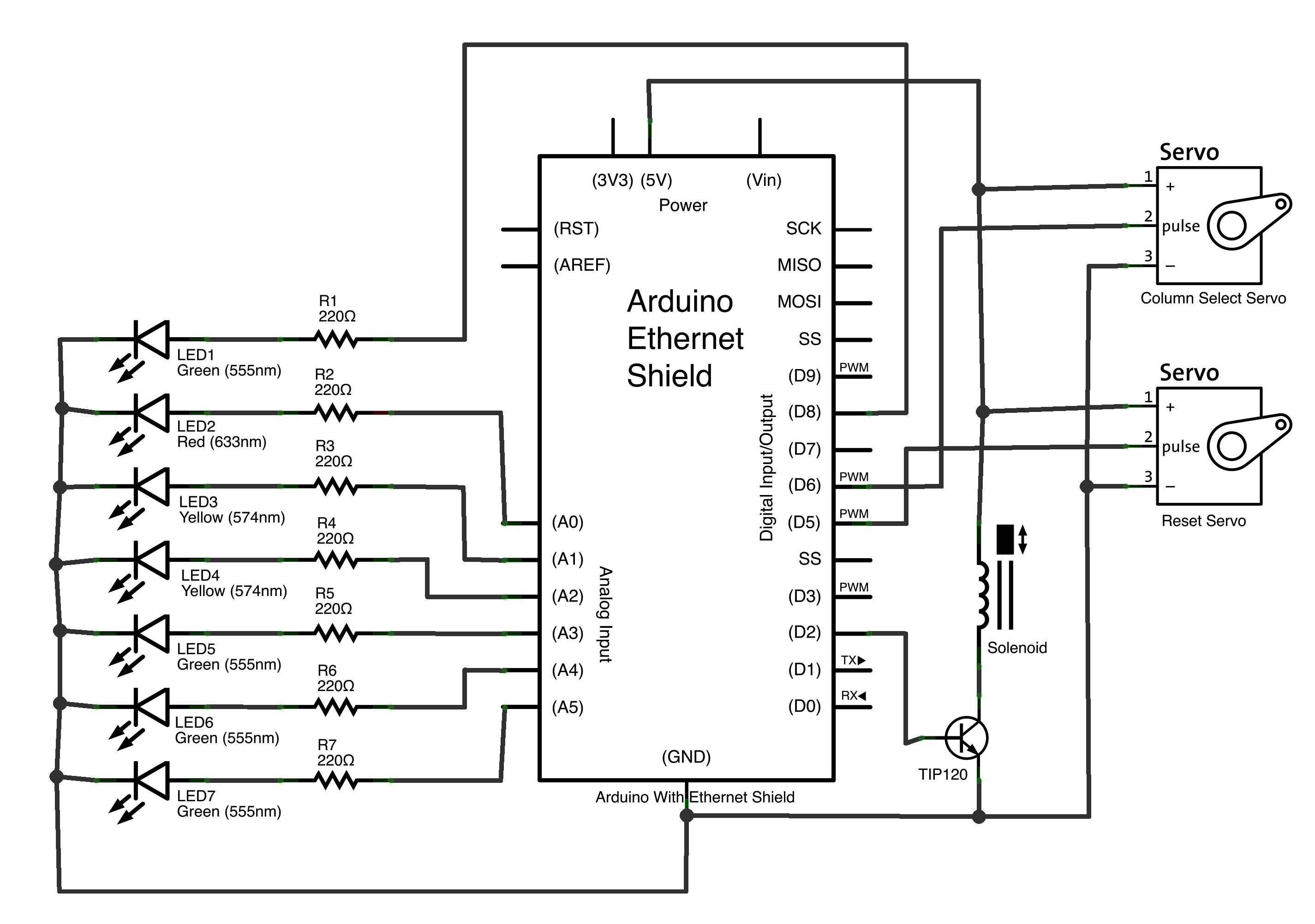
connect 4000
The objective of this project was to investigate the wireless linkage of objects, locations, and individuals. Initial discussions revolved around the intended use of the project—whether for private or public purposes—and the number of participants involved. Considerations included the choice...
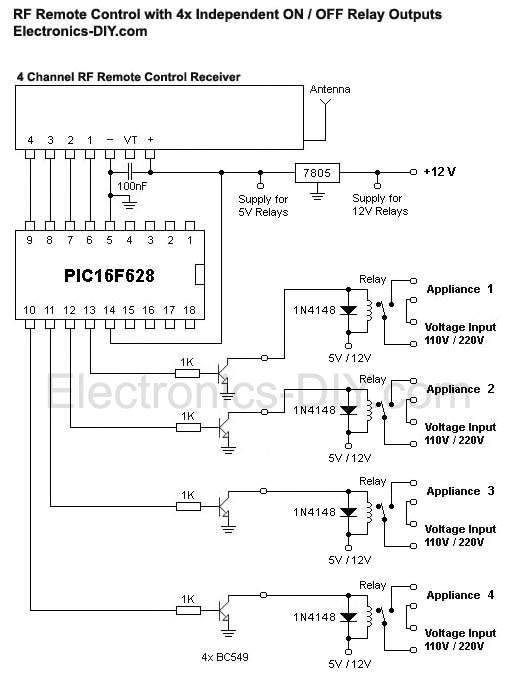
4 Channel 433MHz Wireless RF Remote Control Kit 200m
4 Channel 433MHz Wireless RF Remote Control Kit with a range of 200 meters. This RF remote control offers an extended range of up to 200 meters (650 feet) and is versatile for controlling various devices.
The 4 Channel 433MHz Wireless...
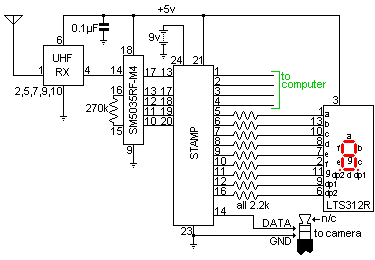
Construction of the Mk1 Receiver
The remote control receiver is a custom design based on a pre-built 433MHz UHF radio receiver, a decoder chip and a BASIC Stamp. The Stamp is expensive, but easy to work with. The receiver requires 8.5mA, plus 1.5mA for each...
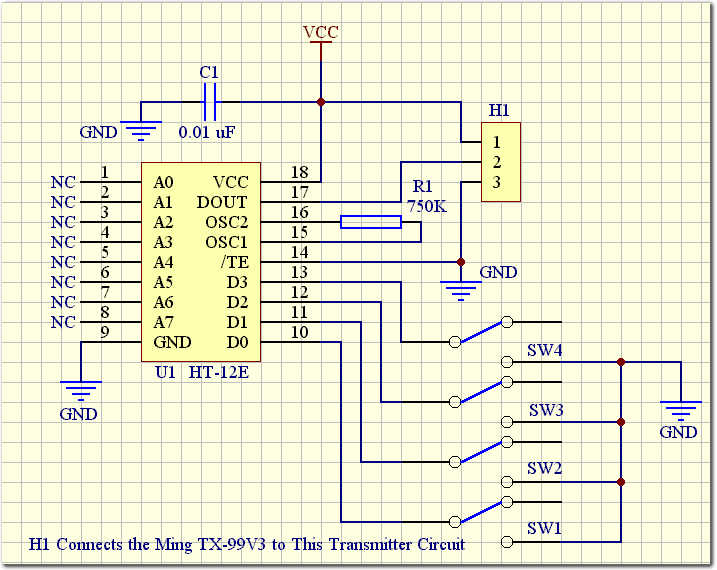
using RF modules with HT12e/d
The address bits in the encoder are unconnected, while they are grounded in the decoder. It is advisable to connect them to ground in the encoder as well. Additionally, when the keys in the transmission circuit are open, the input...
Wireless Communication Hobby Projects
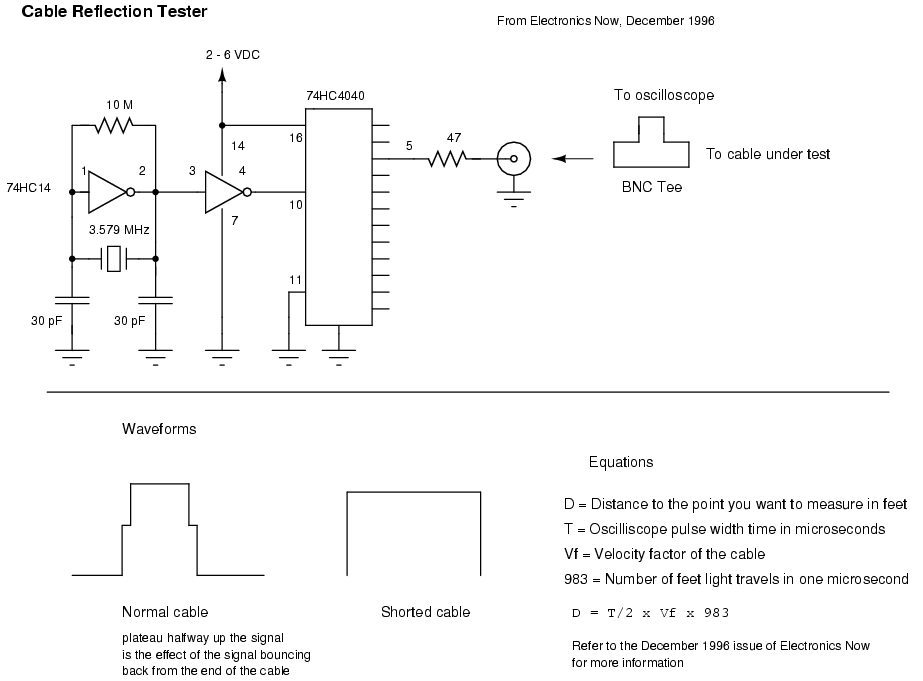
Another method of testing the received signal strength on a Symphony-based wireless network is with a homebrew signal meter. The National LMX2240 Intermediate Frequency Receiver has a pin called "RSSI Out." RSSI stands for Relative Signal Strength Indicator and provides...
Wireless Interface RF Modules Circuit
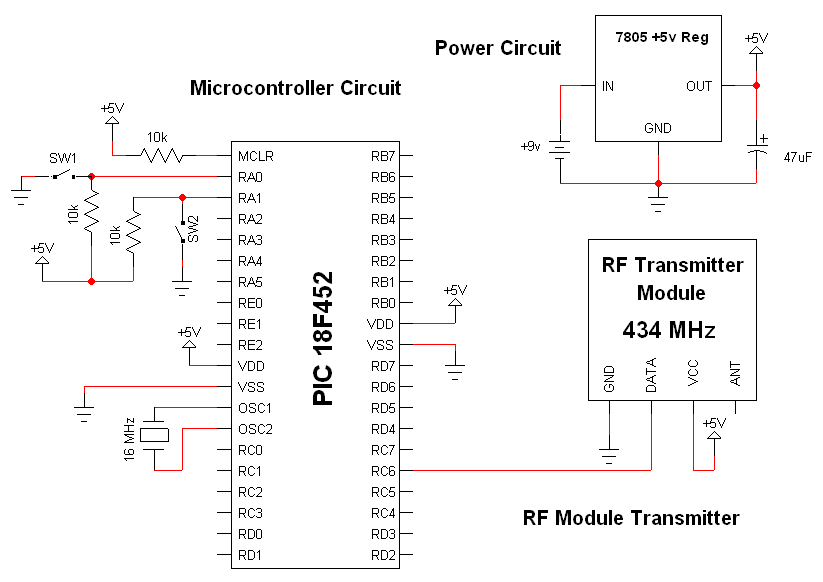
The RF modules utilized in this schematic are straightforward, requiring only a few additional pins for power, ground, and data connections. The primary components featured in this schematic include the RF transmitter module, the RF receiver module, and the microcontrollers...