


command line interface
#mbed
#PS/2 Keyboard
#LCD
#command line
#pin allocation
#interface configuration
#input device
#output device
#reprogrammable
#embedded systems

Description: This setup enables the allocation of pins on an mbed for a specified interface without the need to recompile the code. It utilizes a PS/2 keyboard as an input device and an LCD as an output device. The system can accept commands and interpret them based on predefined rules to assign or reassign different pins for various interfaces.
The described setup consists of an mbed microcontroller, a PS/2 keyboard, and an LCD display, forming a flexible interface management system. The mbed microcontroller serves as the central processing unit, executing the commands received from the keyboard and managing the output to the LCD.
The PS/2 keyboard is connected to the mbed via a specific set of pins configured to handle serial communication. The keyboard sends keystrokes as encoded signals, which the mbed interprets using a dedicated library that handles the PS/2 protocol. This allows users to input commands that dictate how the mbed should allocate its pins.
The LCD, which is typically interfaced using either a parallel or serial communication method, displays feedback and status messages to the user. This visual output is crucial for user interaction, providing real-time information about the current pin assignments and any changes made through keyboard commands.
The core functionality of the system revolves around a command parser that interprets user inputs according to a predefined set of rules. These rules dictate how commands are structured and how they correspond to specific actions, such as assigning a pin to a particular function or reassigning it. The flexibility of this setup allows users to dynamically change the configuration of the mbed without the cumbersome process of recompiling and uploading new code, significantly enhancing development efficiency.
To implement this system, the mbed's GPIO (General Purpose Input/Output) pins are initially configured to a default state. As commands are issued through the PS/2 keyboard, the command parser updates the pin configurations in real-time, ensuring that the mbed's functionalities can be adapted to various applications, from simple input/output tasks to more complex interfacing with sensors and actuators.
Overall, this setup exemplifies an efficient and user-friendly approach to managing microcontroller pin assignments, suitable for rapid prototyping and development in embedded systems.This setup allows you to allocate the pins of an mbed for a specified interface without having to recompile the code. It uses a PS/2 Keyboard as an input device and an LCD as an output device. It can take commands and interpret them according to predefined rules in order to assign/reassign different pins for different interfaces.
The described setup consists of an mbed microcontroller, a PS/2 keyboard, and an LCD display, forming a flexible interface management system. The mbed microcontroller serves as the central processing unit, executing the commands received from the keyboard and managing the output to the LCD.
The PS/2 keyboard is connected to the mbed via a specific set of pins configured to handle serial communication. The keyboard sends keystrokes as encoded signals, which the mbed interprets using a dedicated library that handles the PS/2 protocol. This allows users to input commands that dictate how the mbed should allocate its pins.
The LCD, which is typically interfaced using either a parallel or serial communication method, displays feedback and status messages to the user. This visual output is crucial for user interaction, providing real-time information about the current pin assignments and any changes made through keyboard commands.
The core functionality of the system revolves around a command parser that interprets user inputs according to a predefined set of rules. These rules dictate how commands are structured and how they correspond to specific actions, such as assigning a pin to a particular function or reassigning it. The flexibility of this setup allows users to dynamically change the configuration of the mbed without the cumbersome process of recompiling and uploading new code, significantly enhancing development efficiency.
To implement this system, the mbed's GPIO (General Purpose Input/Output) pins are initially configured to a default state. As commands are issued through the PS/2 keyboard, the command parser updates the pin configurations in real-time, ensuring that the mbed's functionalities can be adapted to various applications, from simple input/output tasks to more complex interfacing with sensors and actuators.
Overall, this setup exemplifies an efficient and user-friendly approach to managing microcontroller pin assignments, suitable for rapid prototyping and development in embedded systems.This setup allows you to allocate the pins of an mbed for a specified interface without having to recompile the code. It uses a PS/2 Keyboard as an input device and an LCD as an output device. It can take commands and interpret them according to predefined rules in order to assign/reassign different pins for different interfaces.
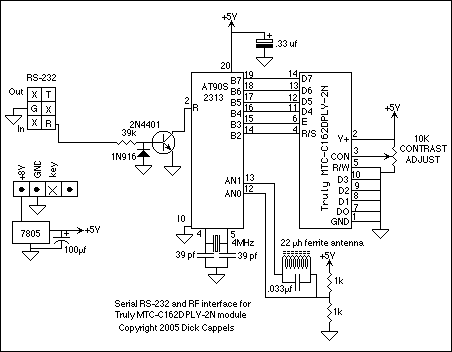
Wireless LCD Display (AT90S2313)
Its an adaptation of the 2X 16 LCD project, by adding a ferrite loop antenna, two resistors, and a capacitor. Here the display shows the output of the 10 bit scanning voltmeter with Minimum Mass Wireless Coupler. Both the ferrite...
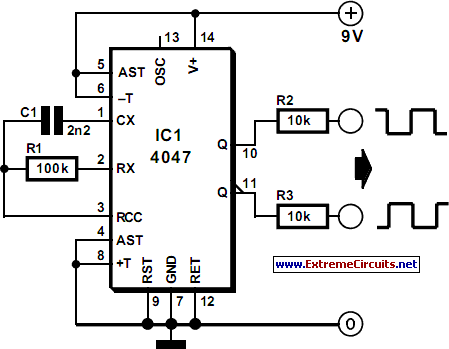
Liquid-Crystal Display (LCD) Tester
Liquid-crystal displays (LCDs) are available in various sizes and configurations, including their pinouts. Many of these displays require the manufacturer's documentation for proper usage, which is often difficult to locate when needed. Consequently, a small tester designed to identify the...
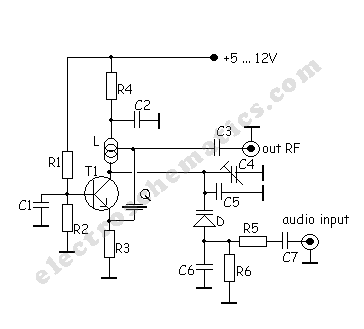
LCD Liquid Crystal Display
An LCD essentially comprises two glass plates with a layer of liquid crystal material sandwiched between them. The LCD utilizes an electrically controlled light-polarizing liquid.
The liquid crystal display (LCD) operates based on the manipulation of light through liquid crystals, which...
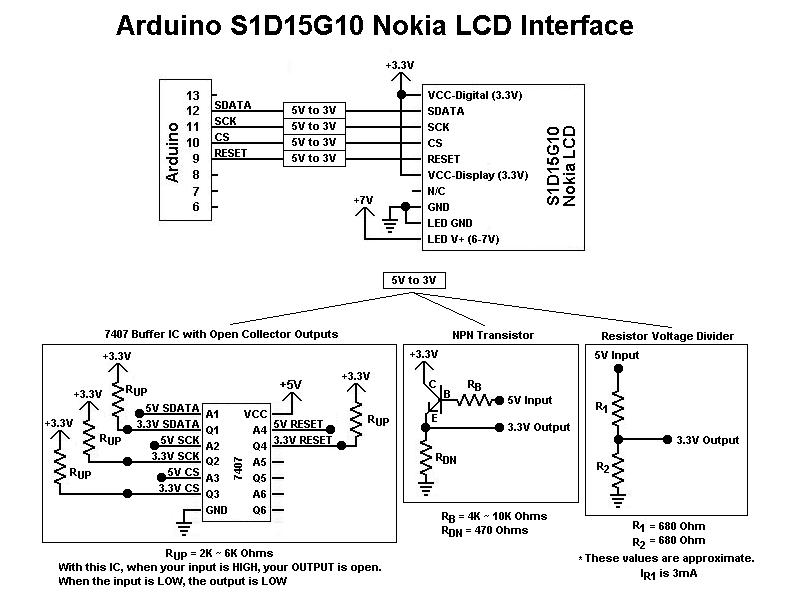
S1D15G10 Nokia LCD
This is the first color graphic LCD display encountered. Initial assumptions were made regarding the connections, specifically that the Chip Select (CS) and RESET pins could be tied high for simplicity, based on previous experience with TTL logic. However, this...
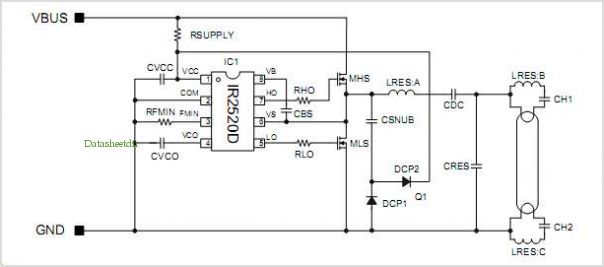
Filaments Detection Circuit
LCD modules have become a popular means of displaying system messages and status in embedded applications. This application note demonstrates how to interface an SST FlashFlex microcontroller to a typical character LCD module. The SST FlashFlex is an industry-standard, 8051-compatible...
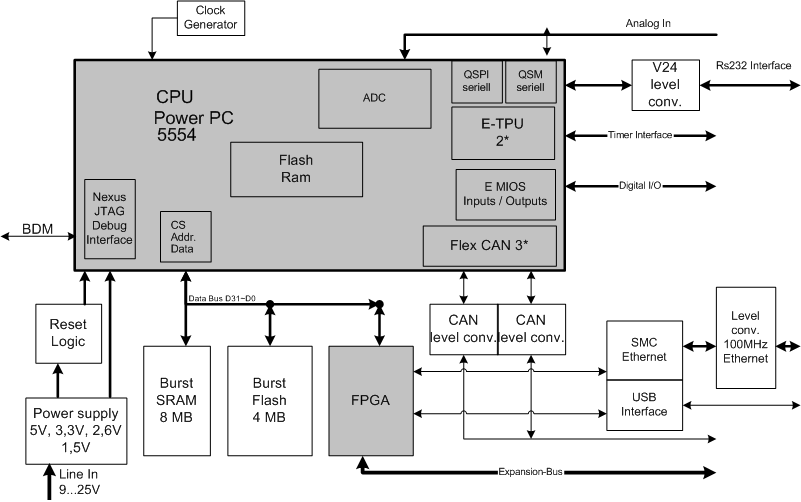
Electronics Engineering Herald - online magazine of electronics -home
Embedded systems serve as the core of most electronics-based systems, enabling data access, processing, storage, and control. While some simple electronic circuits can be designed without a microprocessor or microcontroller, this approach is often economically impractical, except for basic passive...
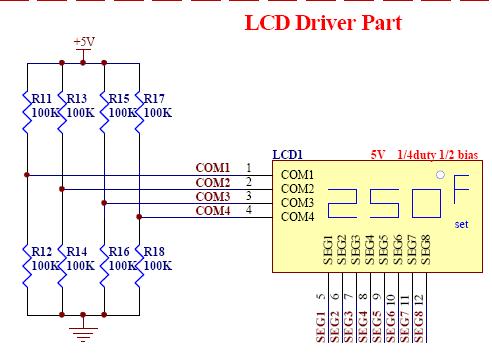
direct driving LCD
The LCD in question has more pins than the microcontroller. It was not possible to expand the image for a better view. Unless there is a strong preference for using this display, it is recommended to obtain a Hitachi-compliant alphanumeric...
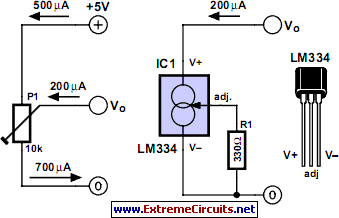
Contrast Control for LCDs
The adjustment control for the contrast of an LC-Display typically utilizes a 10-kilohm potentiometer. This arrangement functions adequately, provided that the power supply voltage remains constant. However, in situations where the power supply is variable, such as with a battery,...
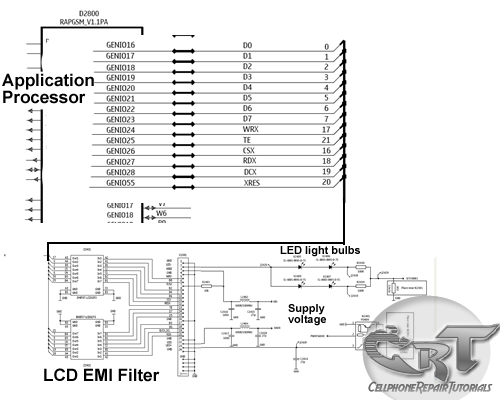
how lcd display interface circuit works 20
An LCD (liquid crystal display) is an electronically modulated optical device composed of multiple pixels filled with liquid crystals, arranged in front of a light source (backlight) or reflector to generate images in either color or monochrome. The block diagram...