


A passive light emitting diode output level indication circuit
#LED
#passive circuit
#level indication
#visual feedback
#output monitoring
#indicator
#light emitting diode
#signal level
#display
#voltage indicator
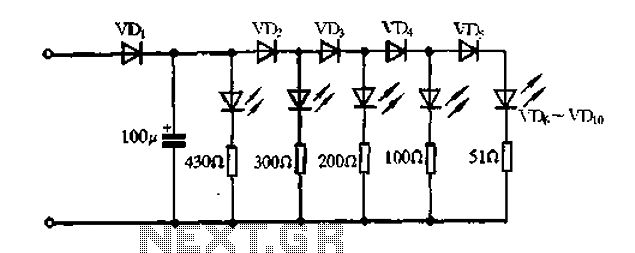
Description: A passive light-emitting diode output level indication circuit.
This circuit utilizes a light-emitting diode (LED) to provide a visual indication of the output level from a given source. The design is characterized by its passive nature, meaning it does not require an active power source to operate the LED. Instead, the circuit relies on the voltage generated by the output signal to illuminate the LED.
The core components of this circuit include the LED, a current-limiting resistor, and the output source. When the output voltage exceeds a certain threshold, it forward-biases the LED, allowing current to flow through it. The current-limiting resistor is essential to prevent excessive current from damaging the LED, ensuring that it operates within its specified parameters.
In practical applications, this circuit can be implemented in various devices to provide a simple and effective visual representation of output levels, such as in audio equipment to indicate signal presence or in power supply circuits to show operational status. The passive nature of this circuit makes it suitable for low-power applications where minimal power consumption is desired.
To enhance the functionality of the circuit, additional components such as diodes or transistors may be incorporated to improve response times or to create multi-level indication systems, where different LED colors or multiple LEDs indicate varying levels of output. Overall, this passive LED output level indication circuit serves as an efficient solution for visual feedback in electronic systems.A passive light emitting diode output level indication circuit
This circuit utilizes a light-emitting diode (LED) to provide a visual indication of the output level from a given source. The design is characterized by its passive nature, meaning it does not require an active power source to operate the LED. Instead, the circuit relies on the voltage generated by the output signal to illuminate the LED.
The core components of this circuit include the LED, a current-limiting resistor, and the output source. When the output voltage exceeds a certain threshold, it forward-biases the LED, allowing current to flow through it. The current-limiting resistor is essential to prevent excessive current from damaging the LED, ensuring that it operates within its specified parameters.
In practical applications, this circuit can be implemented in various devices to provide a simple and effective visual representation of output levels, such as in audio equipment to indicate signal presence or in power supply circuits to show operational status. The passive nature of this circuit makes it suitable for low-power applications where minimal power consumption is desired.
To enhance the functionality of the circuit, additional components such as diodes or transistors may be incorporated to improve response times or to create multi-level indication systems, where different LED colors or multiple LEDs indicate varying levels of output. Overall, this passive LED output level indication circuit serves as an efficient solution for visual feedback in electronic systems.A passive light emitting diode output level indication circuit
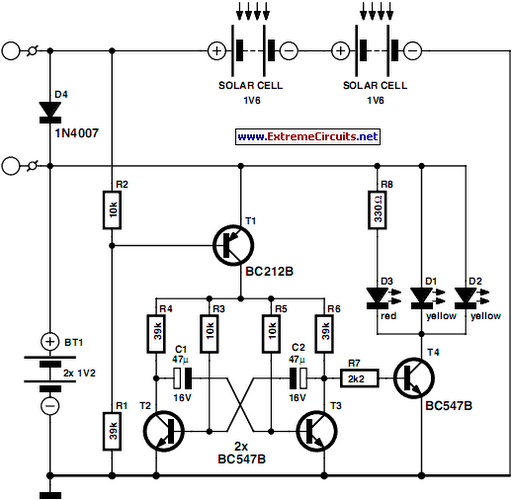
High-intensity LED Warning Flasher
This circuit is designed as a warning flasher to alert road users to dangerous situations in low-light conditions. It can also function as a bicycle light, adhering to traffic regulations. White LEDs are recommended for use as a front bicycle...
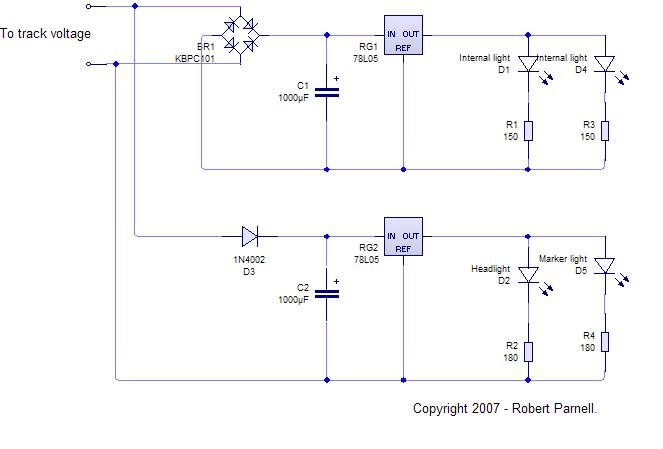
LEDs and resistors circuit
An LED, or Light Emitting Diode, is a semiconductor device that allows current to flow in one direction while blocking it in the opposite direction. This characteristic makes LEDs polarized components, having a positive side known as the anode and...
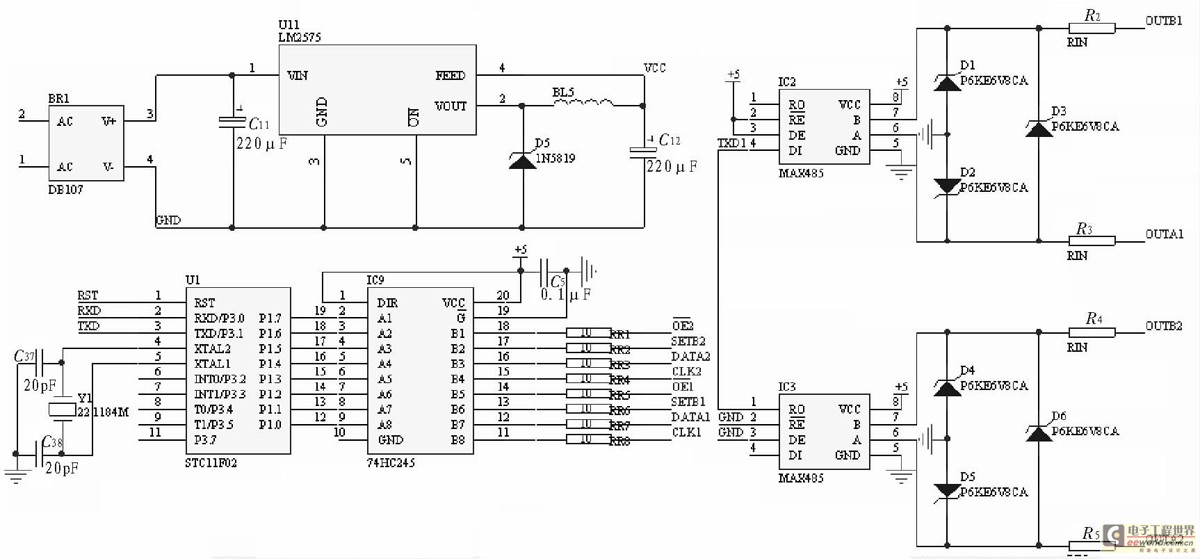
LED outline display control unit cipher scheme on the basis of the one-chip computer
The LED guard-rail tube, also known as the decorative tube, is an advanced LED illumination product designed for decorative purposes. It utilizes red, green, and blue LEDs as light sources, employing microelectronics and digital technology to create color chasing effects,...

LED Volt Meter
This circuit is a simple LED voltmeter designed to monitor the charge level of lead-acid or tubular batteries. The terminal voltage of the battery is displayed through four LED indicators. The nominal terminal voltage for a fully charged lead-acid battery...
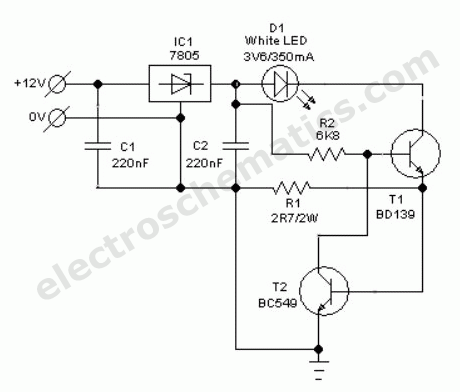
Automobile White LED Light
Without a dedicated buck converter or white LED driver IC, it is possible to safely drive multiple standard high-efficiency white LED modules using available battery power.
To design a circuit capable of driving high-efficiency white LED modules without a dedicated buck...
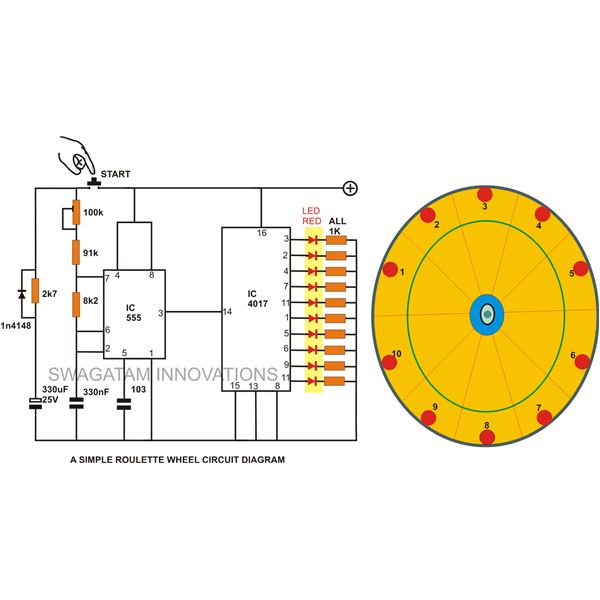
10 led simple roulette wheel circuit
A simple circuit for a 10 LED roulette wheel is presented. Pressing the button initiates the LEDs in a rotational sequence that starts at full speed and gradually decelerates until it halts at a randomly selected LED. The randomness of...
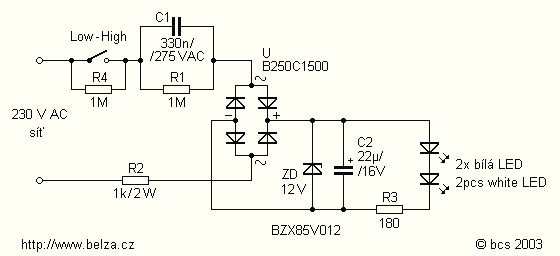
220 V LED Night light
This is a capacitor power supply. This is a very small current of energy-effective because it has very little loss, much smaller than the miniature transformer. Capacitor impedance is inversely proportional to frequency. This is a great disadvantage when the...
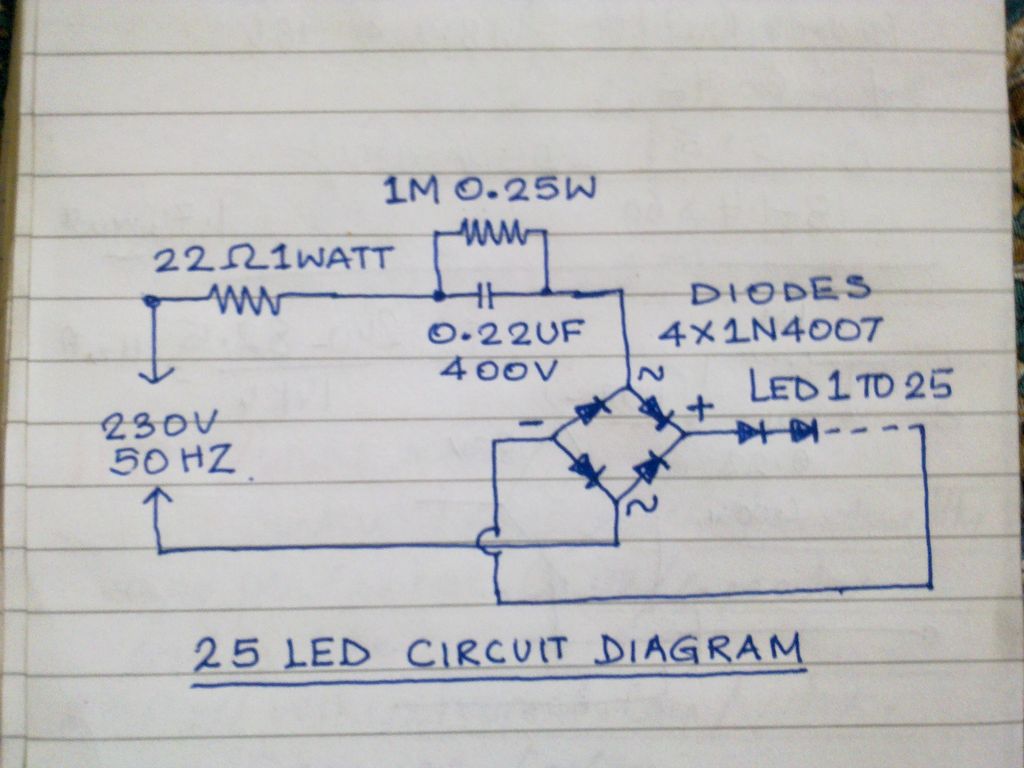
Mains operated led Lamp
This circuit operates 25 LEDs powered by a mains supply of 230V. A fluorescent lamp adapter was acquired from a scrap dealer for ease of disassembly.
The circuit consists of a series of 25 light-emitting diodes (LEDs) arranged to operate from...
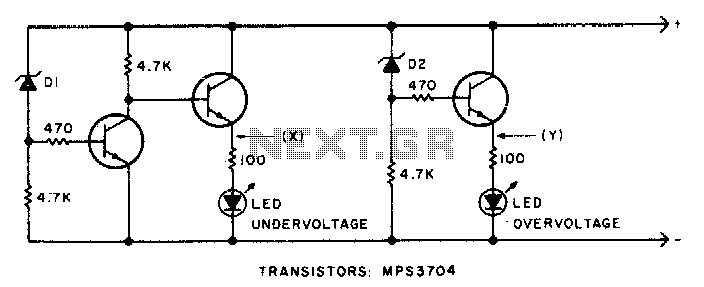
Undervoltage-overvoltage indicator
This circuit will activate the LED when the monitored voltage drops below the values determined by the Zener diodes D1 and D2.
The circuit utilizes Zener diodes to establish reference voltage levels, which are critical for monitoring voltage thresholds. The Zener...