


Ten-band-octave-equalizer
#equalizer
#active filters
#LM3481C
#audio processing
#graphic equalizer
#band filters
#audio signal
#frequency response
#sound adjustment
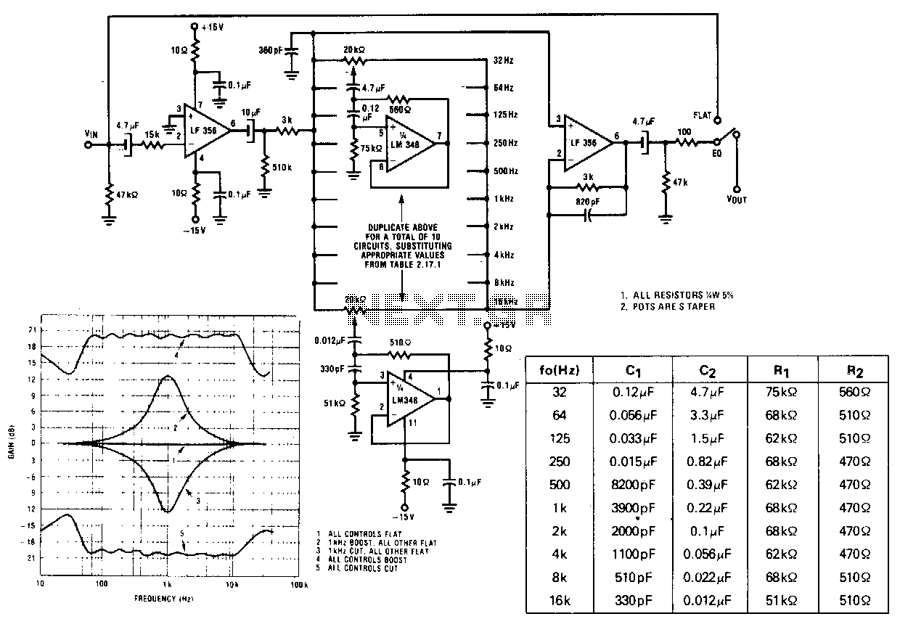
Description: A series of active RF filters using the National LM3481C comprises a ten-band graphic equalizer. C1, C2, R1, and R2 should be at least 10% with 5% preferred tolerances.
The circuit design features a ten-band graphic equalizer that utilizes a series of active radio frequency (RF) filters. The National LM3481C operational amplifier serves as the core component in this configuration, providing the necessary amplification and filtering capabilities. Each band of the equalizer is designed to target specific frequency ranges, allowing for precise control over the audio signal's tonal balance.
In this schematic, capacitors C1 and C2, along with resistors R1 and R2, play critical roles in defining the filter characteristics. The values of these components are selected to ensure that the frequency response of each band meets the desired specifications. The recommendation for component tolerances suggests that a tolerance of at least 10% is acceptable, with a preference for 5% tolerances to achieve greater accuracy in the frequency response.
The active filters are configured in a way that each band can be adjusted independently, enabling users to enhance or attenuate specific frequencies according to their preferences. This flexibility is particularly beneficial in audio applications, where different environments and listening preferences may necessitate varying equalization settings.
Overall, the design of this ten-band graphic equalizer using the LM3481C showcases the integration of active components to achieve high-performance audio processing, while the careful selection of passive components ensures optimal functionality and reliability.A series of active rffilters using National LM3481C comprises a ten-band graphic equalizer. Cl, C2, Rl, and R2 should be at least lO% with 5% preferred tolerances.
The circuit design features a ten-band graphic equalizer that utilizes a series of active radio frequency (RF) filters. The National LM3481C operational amplifier serves as the core component in this configuration, providing the necessary amplification and filtering capabilities. Each band of the equalizer is designed to target specific frequency ranges, allowing for precise control over the audio signal's tonal balance.
In this schematic, capacitors C1 and C2, along with resistors R1 and R2, play critical roles in defining the filter characteristics. The values of these components are selected to ensure that the frequency response of each band meets the desired specifications. The recommendation for component tolerances suggests that a tolerance of at least 10% is acceptable, with a preference for 5% tolerances to achieve greater accuracy in the frequency response.
The active filters are configured in a way that each band can be adjusted independently, enabling users to enhance or attenuate specific frequencies according to their preferences. This flexibility is particularly beneficial in audio applications, where different environments and listening preferences may necessitate varying equalization settings.
Overall, the design of this ten-band graphic equalizer using the LM3481C showcases the integration of active components to achieve high-performance audio processing, while the careful selection of passive components ensures optimal functionality and reliability.A series of active rffilters using National LM3481C comprises a ten-band graphic equalizer. Cl, C2, Rl, and R2 should be at least lO% with 5% preferred tolerances.
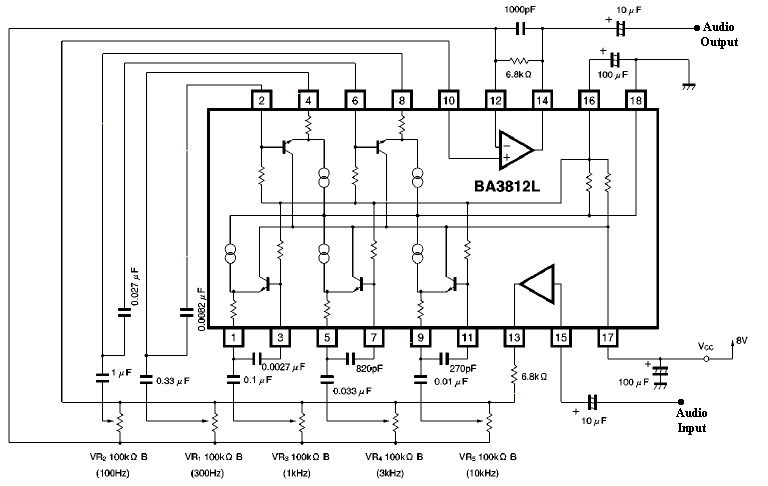
5 band graphic equalizer using a single IC/chip
A five-band graphic equalizer utilizing a single integrated circuit (IC). The BA3812L is a five-point graphic equalizer that incorporates all necessary functions within its design.
The BA3812L is an integrated circuit specifically designed for audio applications, particularly for graphic equalization in...
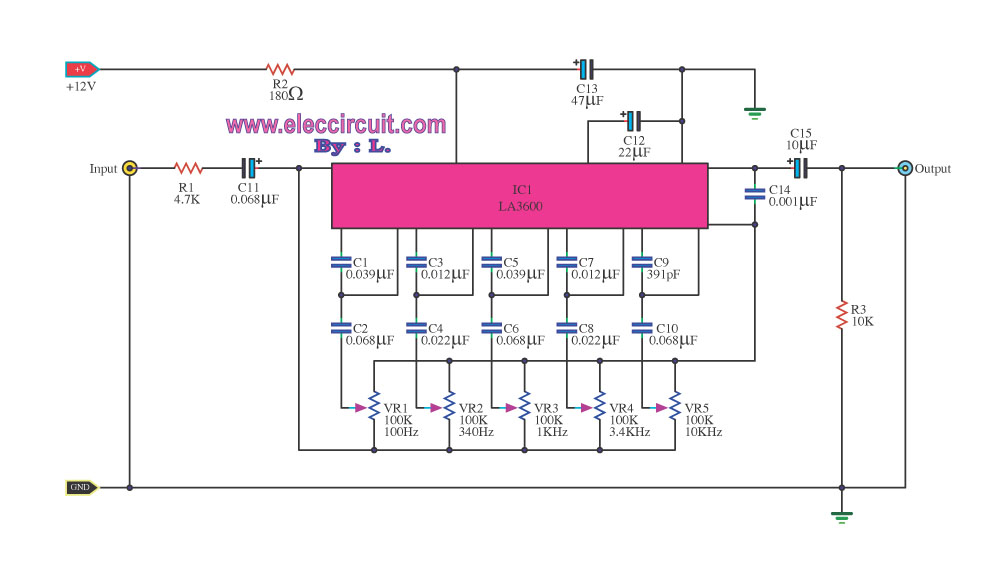
5 Channels Graphic Equalizer by LA3600
This circuit is a 5-channel, 2-octave graphic equalizer that is easy to construct. It utilizes the LA3600 integrated circuit, which simplifies the design process. This equalizer is suitable for those interested in music sound enhancement.
The 5-channel, 2-octave graphic equalizer circuit...
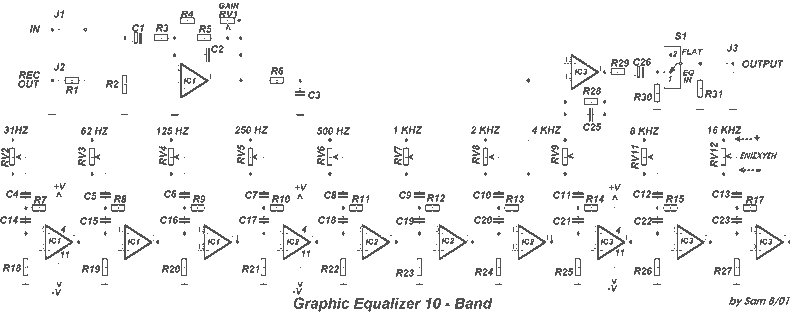
10 Band Graphic Equalizer
The provided description pertains to a graphic equalizer, a device used for selectively attenuating or boosting specific frequency bands in an acoustic spectrum. This function allows for the adaptation of musical reproduction to the acoustics of a particular space. However,...
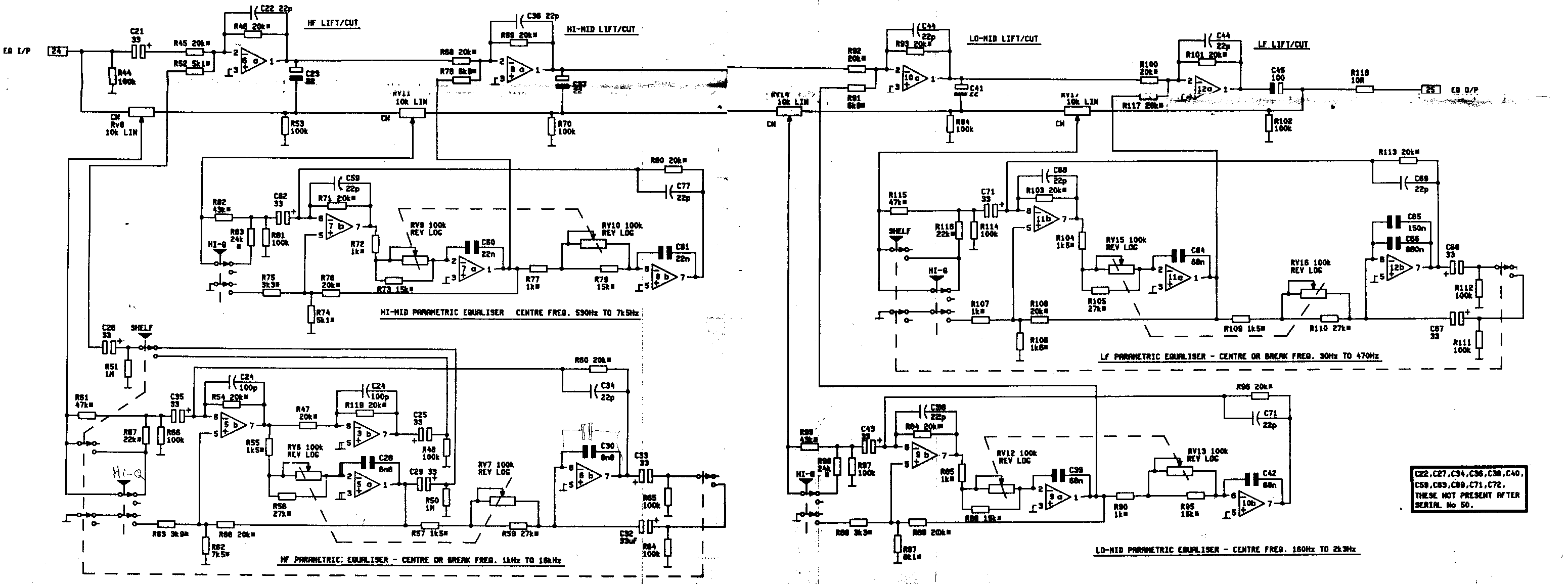
Gyraf Audio EQ
This page contains information about constructing a personal version of the Calrec PQ1549 Equalizer, originally found in the Calrec "Polar" desk. This equalizer is highly regarded among standard IC-based types, prompting the creation of this project to allow more individuals...
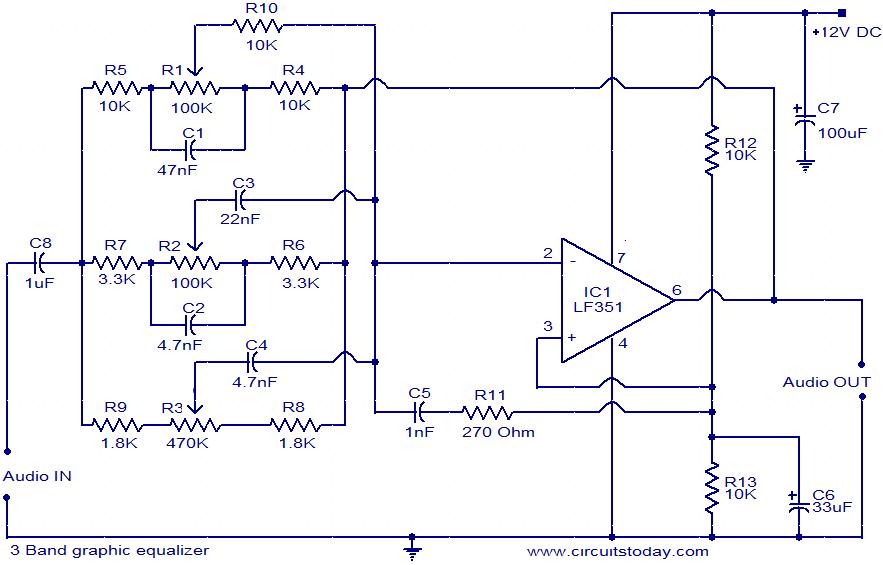
3 Band graphic equalizer circuit
This document presents the circuit diagram of a simple three-band graphic equalizer that utilizes a single integrated circuit (IC) and a few additional components. The IC employed in this design is the LF351, which is a wide bandwidth single JFET...
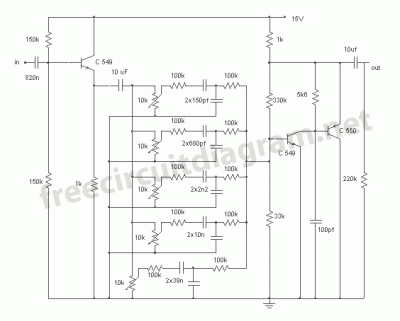
Simple 5 Band Equalizer Circuit
This circuit is a five-channel equalizer designed for a single line channel. The working principle of this series involves a series of frequency filters with a center frequency of 10 Hz.
The five-channel equalizer circuit is structured to manipulate audio signals...
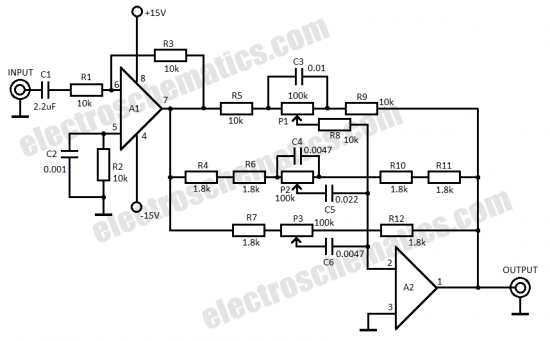
3 band equalizer circuit
This three-band equalizer circuit functions as an active filter network for bass, mid, and high audio frequencies. It is built around the LM833 operational amplifier from National Semiconductors. The output of this three-way graphic equalizer is configured to be DC...
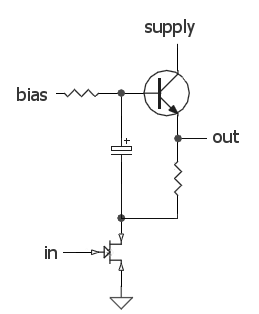
DC biasing audio signal
The audio source will be a line-level audio signal ranging from -2V to +2V AC, which will be passed through a 220µF coupling capacitor followed by a two-pole low-pass filter (RC). The signal will be processed by an Analog-to-Digital Converter...
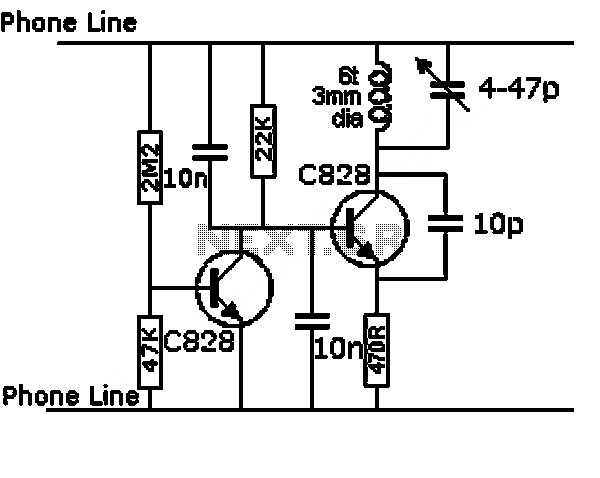
3 band equalizer circuit
This circuit is designed for tone control utilizing a three-band equalizer. It is based on the LF351 single-chip operational amplifiers. The circuit features three adjustable ranges: bass, mid, and treble controls. The equalizer allows for approximately +/-20 dB of boost...