


Horsepower Monitor
#torque measurement
#RS-232 interface
#RF data link
#vehicle data recording
#horsepower calculation
#sensor unit
#receiver unit
#433 Mhz
#drive shaft
#battery powered
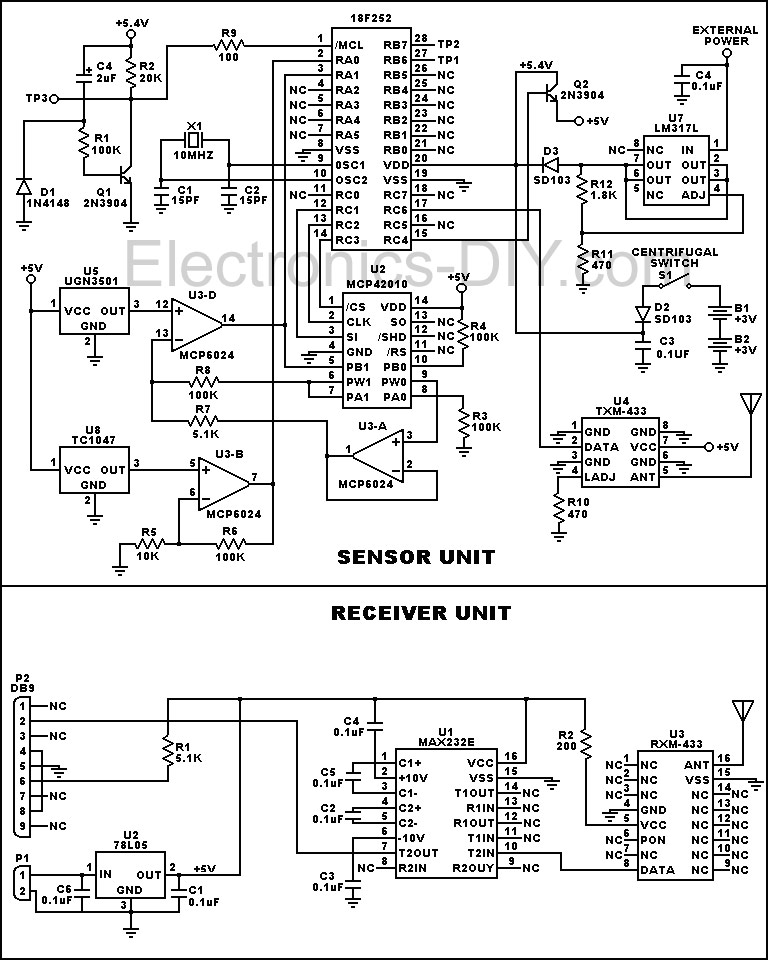
Description: This device is designed to measure the torque in an automobile drive shaft and provide output to a vehicle data recording system or a portable computer via an RS-232 interface. The received data can then be combined with RPM measurements from the data recording system to calculate horsepower. It consists of the sensor unit, which attaches to the driveshaft, and the receiver unit, which provides the serial output signal. The sensor unit is battery-powered and communicates with the receiver via a 433 MHz RF data link. The receiver unit is powered by the vehicle's electrical system. Circuit operation is shown in the diagram.
This torque measurement device operates by utilizing a sensor unit that is securely mounted to the automobile's drive shaft. The sensor detects the torque applied to the drive shaft during vehicle operation. The data collected by the sensor is transmitted wirelessly to a receiver unit using a 433 MHz RF data link, ensuring reliable communication over the required distance.
The sensor unit is equipped with a battery to allow for standalone operation, enhancing its flexibility and ease of installation. This battery-powered design also minimizes the need for complex wiring, reducing installation time and potential points of failure. The sensor processes the torque data and sends it as a digital signal to the receiver unit.
The receiver unit is designed to interface with a vehicle's data recording system or a portable computer through an RS-232 serial connection. This allows for seamless integration with existing automotive diagnostic tools or data logging software. Once the torque data is received, it can be combined with RPM measurements to compute the horsepower output of the vehicle, providing valuable insights into engine performance and efficiency.
The circuit diagram illustrating the operation of this device includes essential components such as the torque sensor, RF transmitter, receiver, and the RS-232 interface. Each component is carefully selected to ensure accurate data transmission and minimal latency, which is crucial for real-time performance monitoring. The overall system design emphasizes reliability, ease of use, and compatibility with a wide range of automotive applications.This device is designed to measure the torque in an automobile drive shaft and provide an output to a vehicle data recording system or a portable computer via an RS-232 interface. The received data can then be combined with RPM measurements from the data recording system to calculate horsepower.
It consists of the sensor unit, (Figure 1), which attaches to the driveshaft, and the receiver unit, , which provides the serial output signal. The sensor unit is battery powered and communicates with the receiver via a 433 Mhz RF data link.The receiver unit is powered by the vehicle electrical system.
Circuit operation is shown in the diagram
This torque measurement device operates by utilizing a sensor unit that is securely mounted to the automobile's drive shaft. The sensor detects the torque applied to the drive shaft during vehicle operation. The data collected by the sensor is transmitted wirelessly to a receiver unit using a 433 MHz RF data link, ensuring reliable communication over the required distance.
The sensor unit is equipped with a battery to allow for standalone operation, enhancing its flexibility and ease of installation. This battery-powered design also minimizes the need for complex wiring, reducing installation time and potential points of failure. The sensor processes the torque data and sends it as a digital signal to the receiver unit.
The receiver unit is designed to interface with a vehicle's data recording system or a portable computer through an RS-232 serial connection. This allows for seamless integration with existing automotive diagnostic tools or data logging software. Once the torque data is received, it can be combined with RPM measurements to compute the horsepower output of the vehicle, providing valuable insights into engine performance and efficiency.
The circuit diagram illustrating the operation of this device includes essential components such as the torque sensor, RF transmitter, receiver, and the RS-232 interface. Each component is carefully selected to ensure accurate data transmission and minimal latency, which is crucial for real-time performance monitoring. The overall system design emphasizes reliability, ease of use, and compatibility with a wide range of automotive applications.This device is designed to measure the torque in an automobile drive shaft and provide an output to a vehicle data recording system or a portable computer via an RS-232 interface. The received data can then be combined with RPM measurements from the data recording system to calculate horsepower.
It consists of the sensor unit, (Figure 1), which attaches to the driveshaft, and the receiver unit, , which provides the serial output signal. The sensor unit is battery powered and communicates with the receiver via a 433 Mhz RF data link.The receiver unit is powered by the vehicle electrical system.
Circuit operation is shown in the diagram
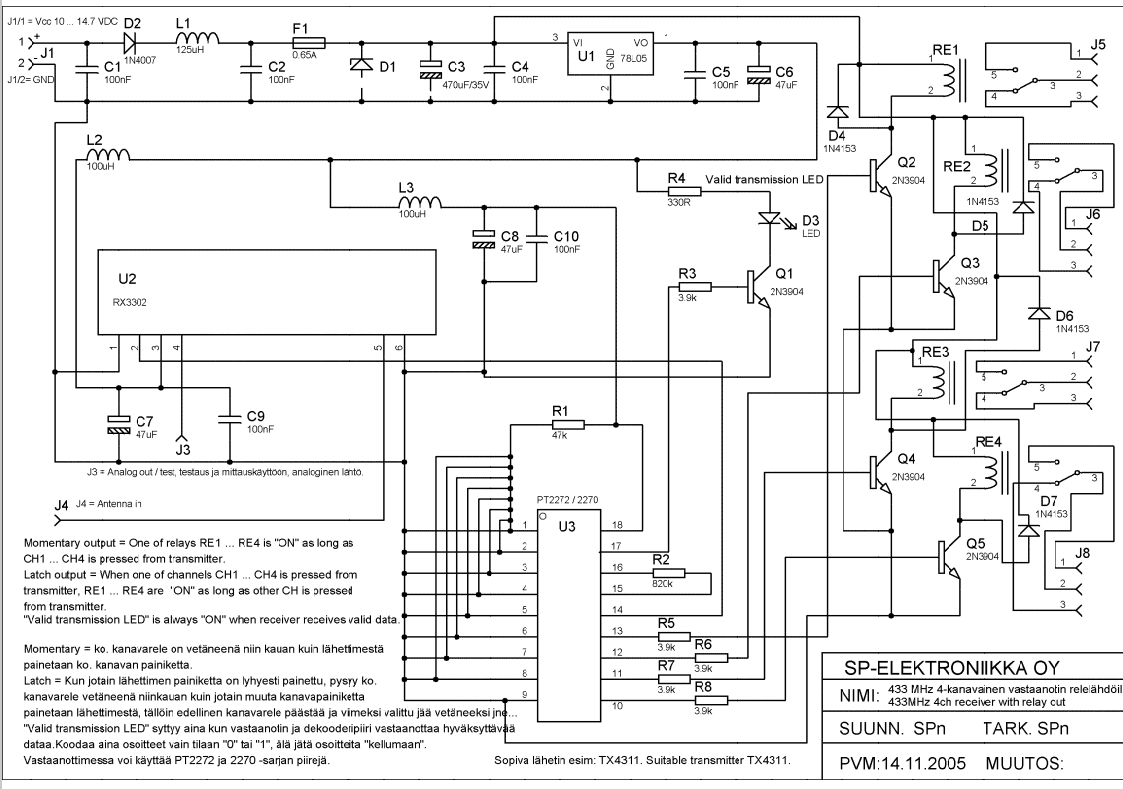
433 MHz 4-ch receiver with relay output transmitter
Momentary output: One of the relays RE1...RE4 is ON as long as CH1---CH4 is pressed from transmitter. Latch output: when one of channels CH1...CH4 is pressed from transmitter RE1...RE4 are ON as long as other CH is pressed from transmitter....
You Have Mail!
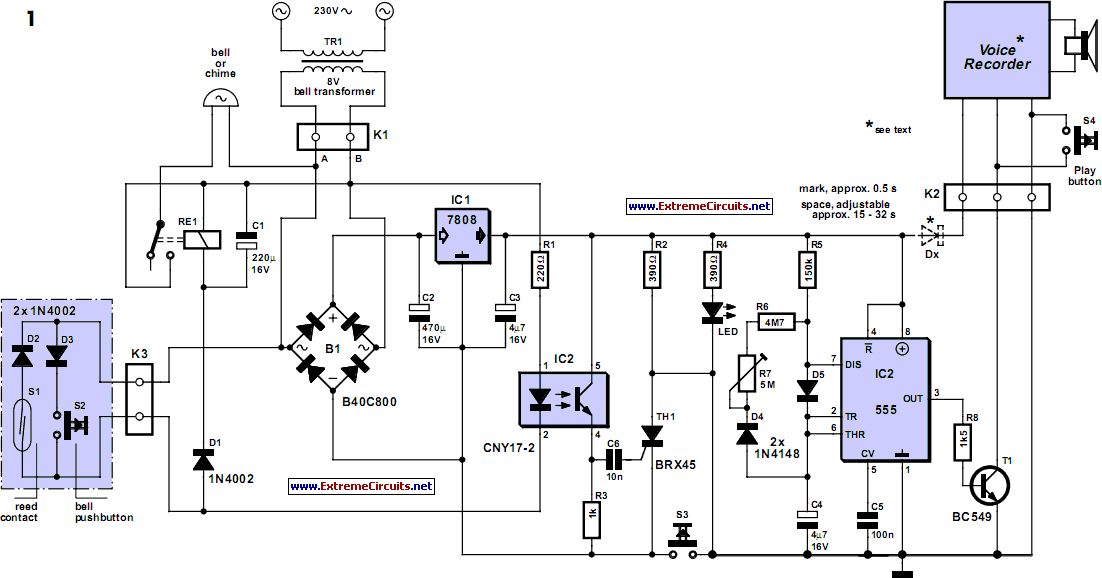
If the letterbox is located at a distance from the house, a monitoring device can be beneficial to indicate the arrival of new mail. This device may feature a visible flag similar to those used in the US, or it...

Battery Powered Soldering Iron PCB
Traditional soldering irons utilize mains AC supply for heating, which can be inconvenient in the absence of such a power source. This document describes a simple and cost-effective inverter circuit designed for use with standard soldering irons (25W, 30W, 35W)....
433 MHz UHF lost model radio beacon
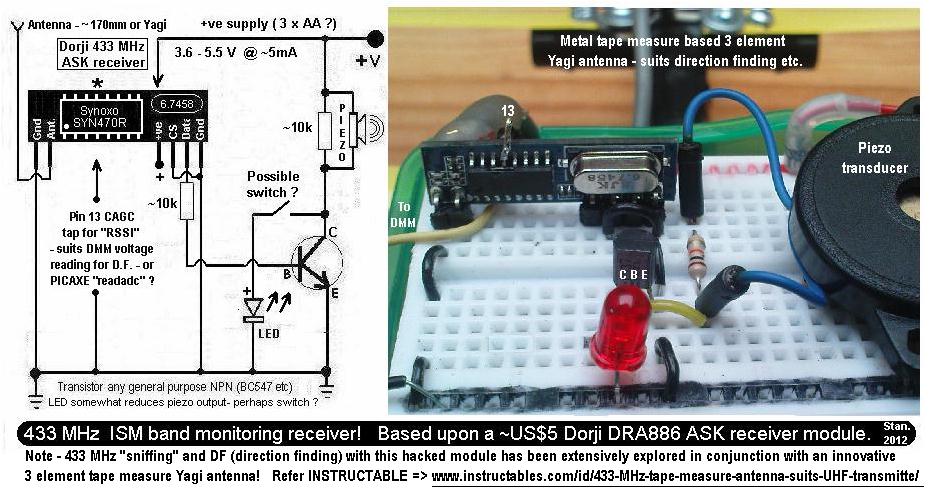
This is a simple 433.92 MHz short-range radio beacon that can be useful for locating downed R/C planes, lost balloons, model rockets, or possibly hidden items.
The 433.92 MHz short-range radio beacon circuit is designed to transmit a signal over short...
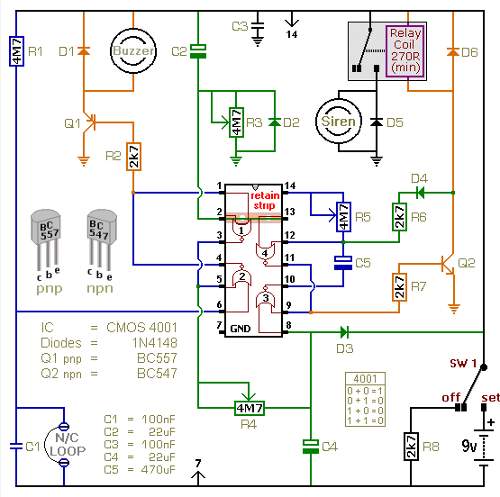
Battery Powered Burglar Alarm Sensor Circuit
The following circuit illustrates a battery-powered burglar alarm sensor circuit. Features include foil tape and passive infrared sensors (PIRs), as well as magnetic reed contacts.
This battery-powered burglar alarm sensor circuit is designed to provide an effective security solution for residential...

Electronic Cricket Match Game
This electronic cricket is a gift for children. This simple battery-powered circuit can be utilized to play cricket matches with friends. Each LED in the circuit...
This electronic cricket circuit is designed as an engaging and interactive toy for children, promoting...
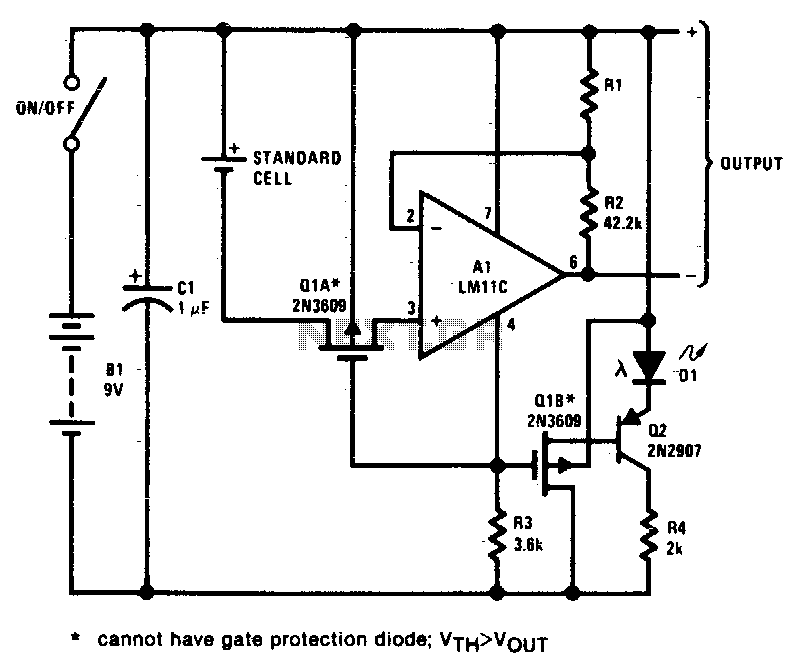
Battery powered buffer amplifier
This circuit exhibits negligible loading and disconnects the cell in response to low supply voltage or an overload on the output. Additionally, the indicator diode turns off when the disconnect circuitry is activated.
The circuit design incorporates a voltage monitoring mechanism...