


It ZD1 type forklift battery control circuit
#forklift
#battery control
#motor control
#pump motor
#driving motor
#contact closure
#cam controller
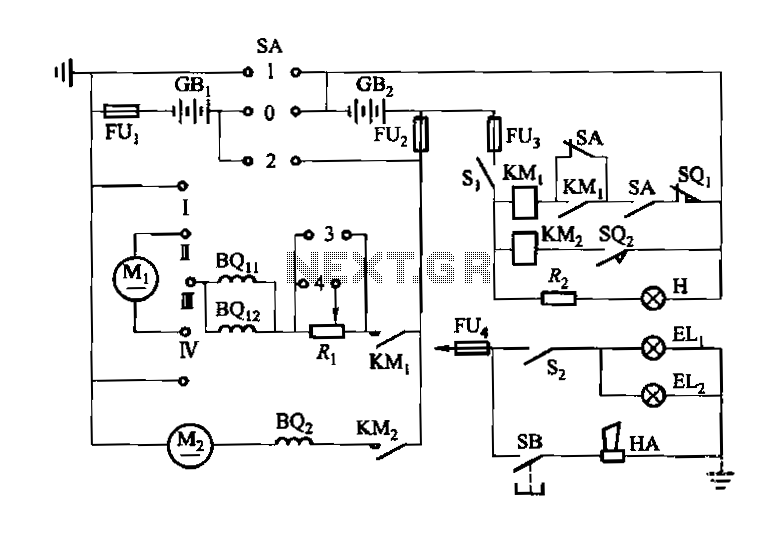
Description: Denote cam controller SA 1 contact closure case. M1 is 1.35 kW driving motor, M2 is a 4 kW pump motor.
The circuit involves a cam controller designated as SA 1, which is responsible for managing the operation of two motors: M1, a driving motor rated at 1.35 kW, and M2, a pump motor rated at 4 kW. The contact closure case indicates that the controller utilizes a mechanical switch or relay system to initiate or terminate the operation of these motors based on the position of the cam.
The cam controller operates by detecting the position of the cam mechanism, which is typically linked to the operational cycle of the machinery. When the cam reaches a certain position, it causes the contact closure to occur, sending a signal to activate M1 or M2. The driving motor (M1) is primarily responsible for powering the mechanical components of the system, while the pump motor (M2) facilitates fluid movement, essential for the overall operation.
The control circuit may include additional components such as fuses for overload protection, contactors for motor control, and potentially a feedback loop to monitor the performance of the motors. The design must ensure that the current ratings and voltage levels are suitable for the motors in use, and that the contact closure mechanism is reliable to prevent unintended motor activation.
In summary, the schematic for this circuit will consist of the cam controller, relay contacts for M1 and M2, protection devices, and the necessary wiring to connect the motors to the power supply. Proper grounding and safety measures should also be incorporated to ensure safe operation within the designated parameters.Denote cam controller SA 1 contact closure case. M1 is 1. 35kW driving motor, Mz to 4kW pump motor.
The circuit involves a cam controller designated as SA 1, which is responsible for managing the operation of two motors: M1, a driving motor rated at 1.35 kW, and M2, a pump motor rated at 4 kW. The contact closure case indicates that the controller utilizes a mechanical switch or relay system to initiate or terminate the operation of these motors based on the position of the cam.
The cam controller operates by detecting the position of the cam mechanism, which is typically linked to the operational cycle of the machinery. When the cam reaches a certain position, it causes the contact closure to occur, sending a signal to activate M1 or M2. The driving motor (M1) is primarily responsible for powering the mechanical components of the system, while the pump motor (M2) facilitates fluid movement, essential for the overall operation.
The control circuit may include additional components such as fuses for overload protection, contactors for motor control, and potentially a feedback loop to monitor the performance of the motors. The design must ensure that the current ratings and voltage levels are suitable for the motors in use, and that the contact closure mechanism is reliable to prevent unintended motor activation.
In summary, the schematic for this circuit will consist of the cam controller, relay contacts for M1 and M2, protection devices, and the necessary wiring to connect the motors to the power supply. Proper grounding and safety measures should also be incorporated to ensure safe operation within the designated parameters.Denote cam controller SA 1 contact closure case. M1 is 1. 35kW driving motor, Mz to 4kW pump motor.
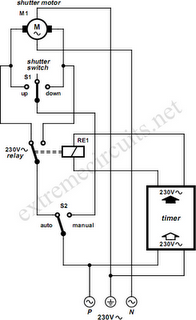
To Automate Rolling Shutter Motor
To automate the opening and closing of a rolling shutter using a time-controlled switch, additional wiring will be necessary.
To implement an automated system for a rolling shutter, a time-controlled switch can be utilized to manage the operation of the shutter....
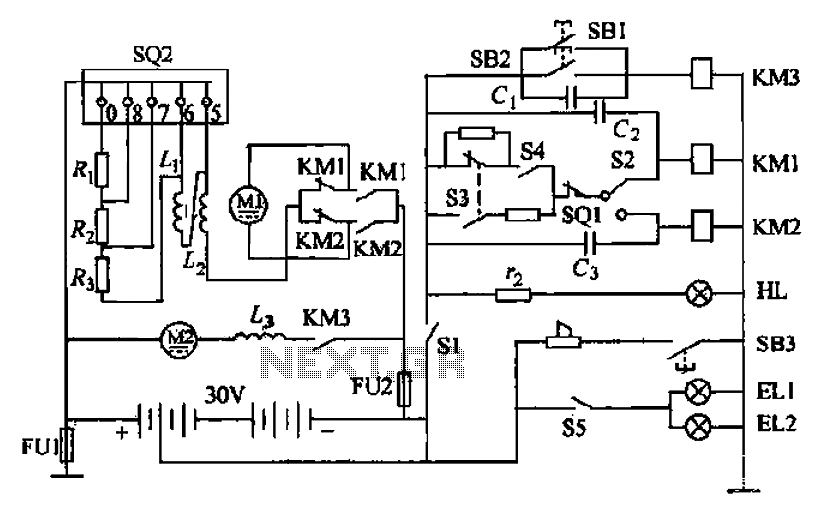
Forklift battery circuit
Battery forklifts are commonly used as stacking and handling tools in railway stations, docks, and warehouses. The battery shape and electrical control circuitry are depicted in the schematic. The system consists of batteries connected in series to form a 30V...
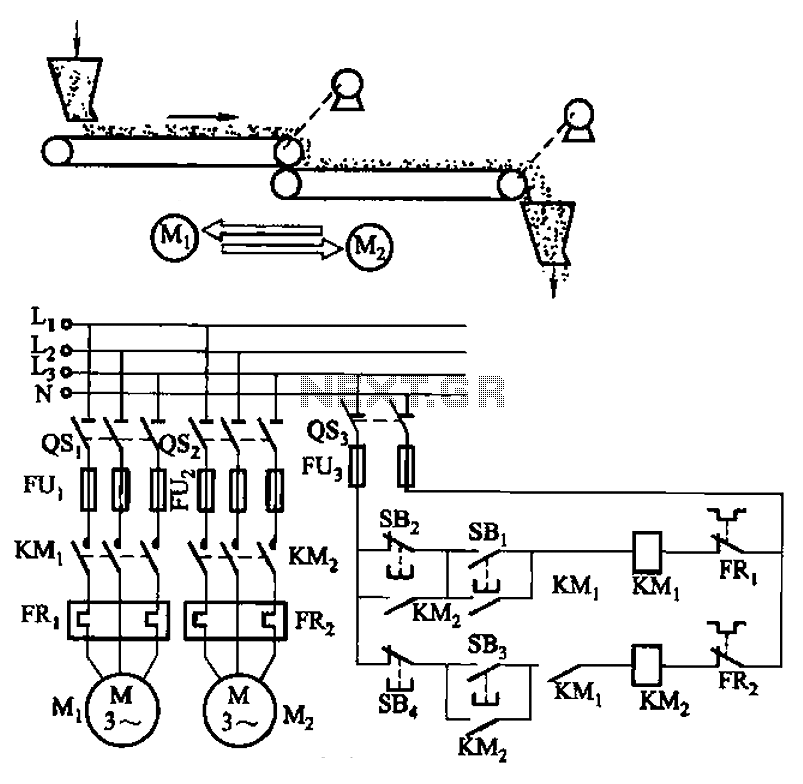
Belt conveyor interlock motor operation sequence control circuit
The circuit depicted in Figure 3-86 utilizes a line utilization time relay to control two motors, starting one before the other after an initial stall. The time relay KTi can be adjusted to modify the starting interval of the two...
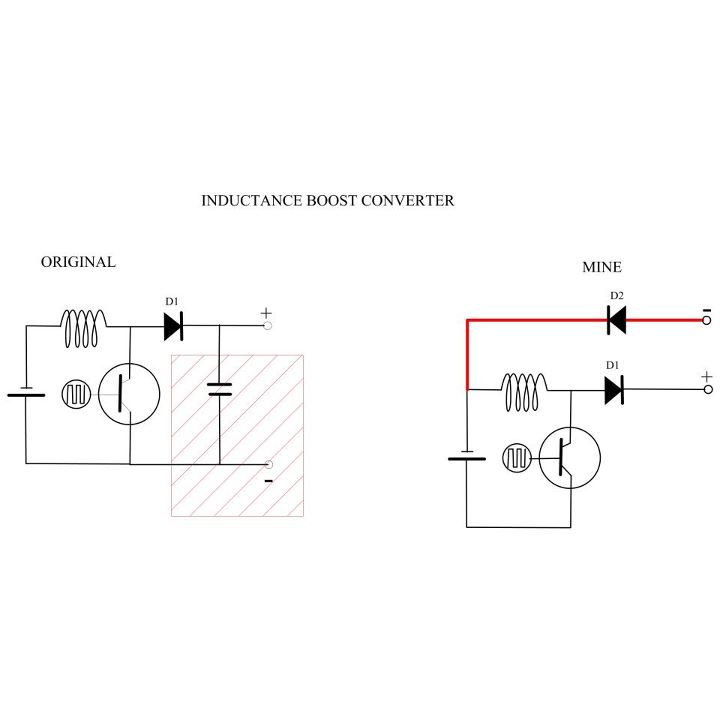
My Motors got me to Tap into Radiant Energy
A new user is seeking to share information about their experiences on this platform.
The user expresses a desire to communicate and engage with the community regarding their experiences. This indicates an interest in exchanging knowledge and possibly seeking assistance or...
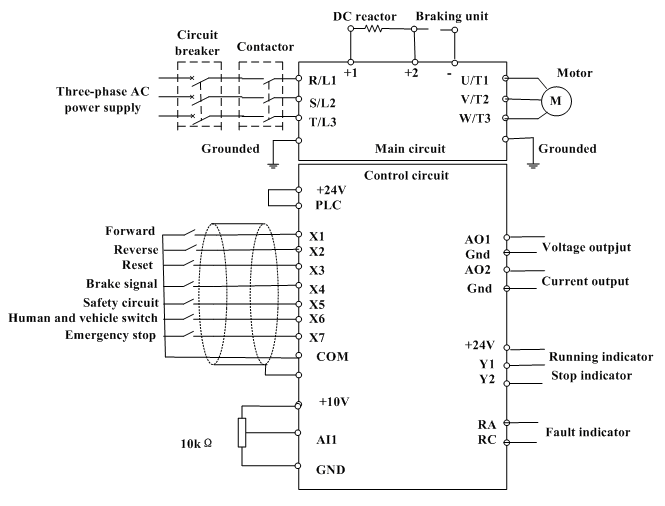
motor control inverter (AC drive) in mine industry
Motor control, energy efficiency of inverter (AC drive) selection, and parameters setting guidance in the mining industry: vector control, open loop or closed loop control, with energy braking unit or energy feedback unit.
In the context of motor control for the...
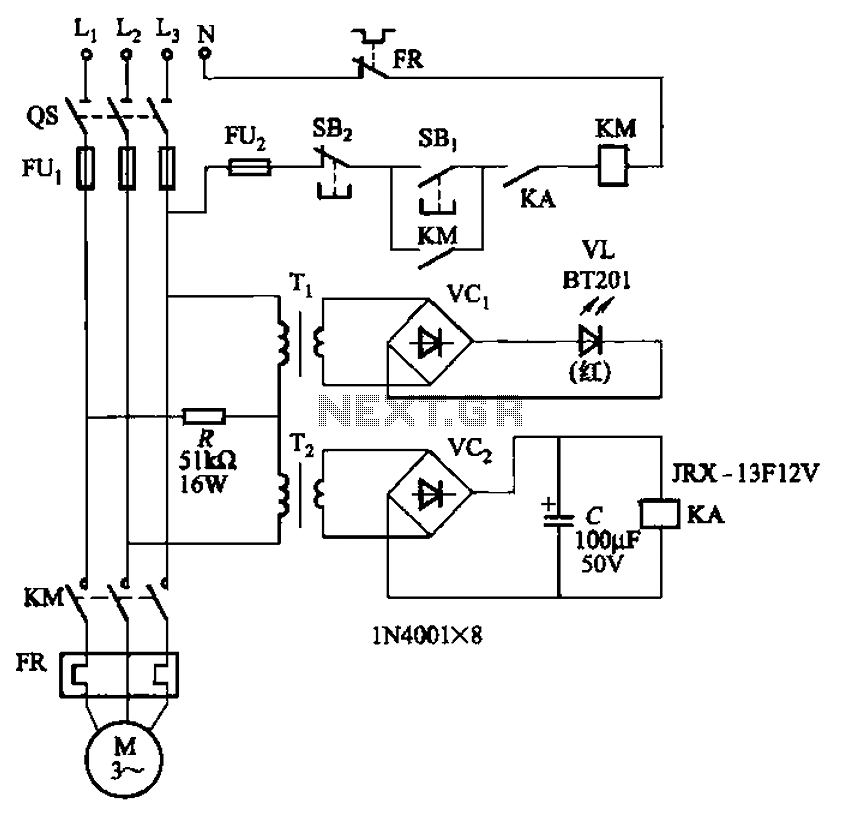
Allowing only one-way operation of the motor-controlled circuit 2
The circuit depicted in Figure 3-92 employs a dual-phase sequence protection relay for sensing. When the power supply exhibits a positive phase sequence (U, V, W), the relay KA is activated. If the power supply maintains the correct phase sequence,...
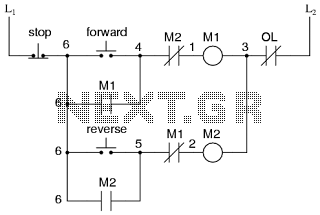
Motor control circuit for forward and reverse phase induction
This is the power diagram for motor forward and reverse operation. To change the motor direction, one polarity must be altered, for example, changing R to S. For detailed information, please refer to the following.
The described power diagram illustrates a...
Motorized Video Camera Mount
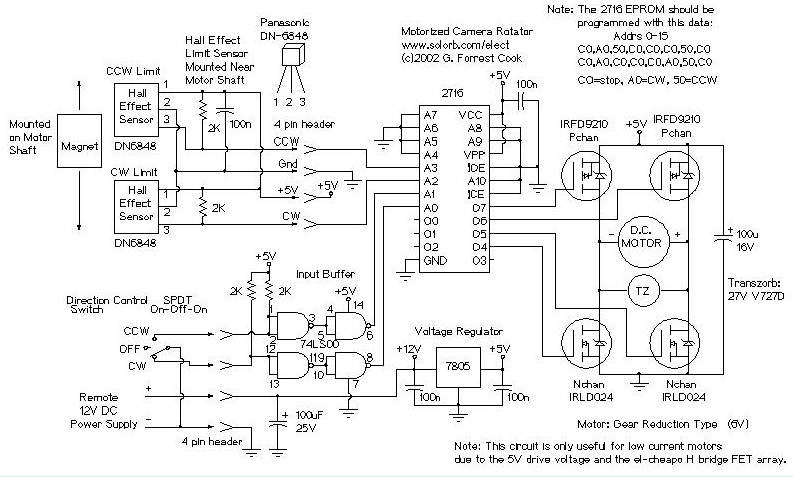
The camera rotator circuit utilizes a 2716 EPROM to store a logic value table that governs the motor driver (H-bridge) circuit. The schematic illustrates the EPROM data. By employing the EPROM, a significant number of discrete gates are eliminated. The...
2Y-Y-2 - connection four-speed motor switch control circuit
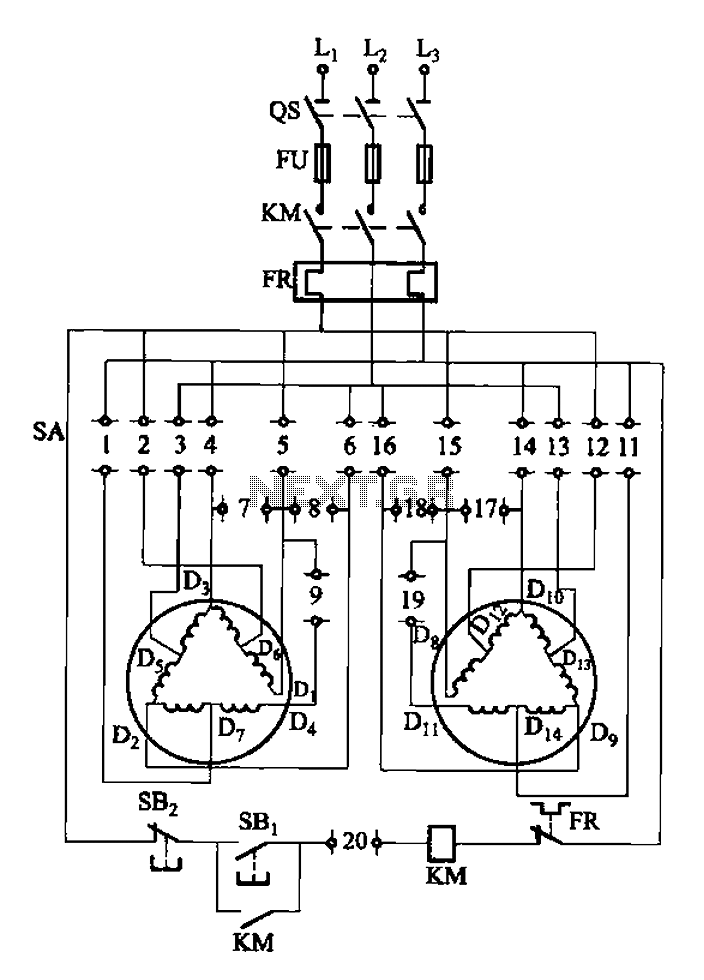
The 3-119 circuit shown in the figure combines switch SA to realize the stator windings, specifically the 2, Y, and 2Y connections, which correspond to the motor speed n1.
The 3-119 circuit is designed to facilitate the control of motor speed...