


make 6v 4ah automatic battery charger
#LM317T
#lead acid battery
#automatic charging
#6V battery
#solar garden light
#voltage regulator
#energy efficient
#simple circuit
#low component count
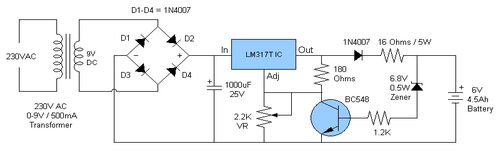
Description: The battery charger circuit is designed to charge 6V 4.5 AH lead-acid batteries. The schematic is straightforward and utilizes only a few components. The IC LM317T serves as the core component of the circuit. It features an automatic charging mechanism, which ceases charging once the battery reaches full capacity. Such circuits are particularly beneficial for applications like solar garden lights and can also be employed in other devices, such as emergency LED lamps. A transformer rated at 230V AC to 9V / 500mA is recommended for use in this circuit.
The battery charger circuit utilizing the LM317T integrated circuit is an efficient and reliable solution for charging 6V lead-acid batteries with a capacity of 4.5 AH. The LM317T is a versatile voltage regulator that can be configured to provide a constant output voltage, making it ideal for battery charging applications. The circuit typically includes a few essential components: the LM317T, resistors for setting the output voltage, a diode for reverse polarity protection, and a capacitor for stability.
The operation of the circuit begins when the transformer converts the 230V AC mains voltage to a lower AC voltage of 9V. This AC voltage is then rectified by a bridge rectifier, which converts it to DC voltage suitable for charging the battery. The output from the rectifier is smoothed using a capacitor to reduce voltage ripple, ensuring a steady charging current.
The LM317T regulates the output voltage to the desired level for charging the lead-acid battery. It is essential to set the output voltage correctly to avoid overcharging, which can damage the battery. The automatic cutoff feature is achieved through a feedback mechanism that monitors the battery voltage. Once the battery reaches its full charge, the LM317T reduces the output current to prevent overcharging, thus extending the battery's lifespan.
In addition to solar garden lights, this battery charger circuit can be adapted for various applications, including emergency LED lamps and other low-power devices that require reliable charging of lead-acid batteries. The simplicity of the design and the availability of the components make it an attractive choice for hobbyists and professionals alike. Proper heat sinking for the LM317T and ensuring adequate ventilation in the circuit design are recommended to prevent overheating during operation.The battery charger circuit which is able to charge 6V 4. 5 AH lead acid batteries. The schematic is very simple and using only few components. IC LM317T is the heart of the circuit. The circuit is automatic so when the battery will become full charge it will stop charging. These type of circuits are very useful for solar garden light and can also be used in other circuits like emergency led lamp etc. Use transformer 230 AC to 9V / 500mA.
The battery charger circuit utilizing the LM317T integrated circuit is an efficient and reliable solution for charging 6V lead-acid batteries with a capacity of 4.5 AH. The LM317T is a versatile voltage regulator that can be configured to provide a constant output voltage, making it ideal for battery charging applications. The circuit typically includes a few essential components: the LM317T, resistors for setting the output voltage, a diode for reverse polarity protection, and a capacitor for stability.
The operation of the circuit begins when the transformer converts the 230V AC mains voltage to a lower AC voltage of 9V. This AC voltage is then rectified by a bridge rectifier, which converts it to DC voltage suitable for charging the battery. The output from the rectifier is smoothed using a capacitor to reduce voltage ripple, ensuring a steady charging current.
The LM317T regulates the output voltage to the desired level for charging the lead-acid battery. It is essential to set the output voltage correctly to avoid overcharging, which can damage the battery. The automatic cutoff feature is achieved through a feedback mechanism that monitors the battery voltage. Once the battery reaches its full charge, the LM317T reduces the output current to prevent overcharging, thus extending the battery's lifespan.
In addition to solar garden lights, this battery charger circuit can be adapted for various applications, including emergency LED lamps and other low-power devices that require reliable charging of lead-acid batteries. The simplicity of the design and the availability of the components make it an attractive choice for hobbyists and professionals alike. Proper heat sinking for the LM317T and ensuring adequate ventilation in the circuit design are recommended to prevent overheating during operation.The battery charger circuit which is able to charge 6V 4. 5 AH lead acid batteries. The schematic is very simple and using only few components. IC LM317T is the heart of the circuit. The circuit is automatic so when the battery will become full charge it will stop charging. These type of circuits are very useful for solar garden light and can also be used in other circuits like emergency led lamp etc. Use transformer 230 AC to 9V / 500mA.
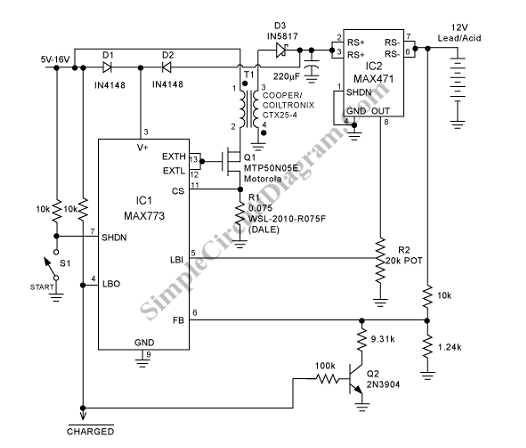
Lead Acid Battery Charger Circuit
To charge lead-acid batteries, a circuit can be utilized that consists of a current-limited power supply and a flyback converter topology.
The described circuit for charging lead-acid batteries employs a current-limited power supply in conjunction with a flyback converter configuration....
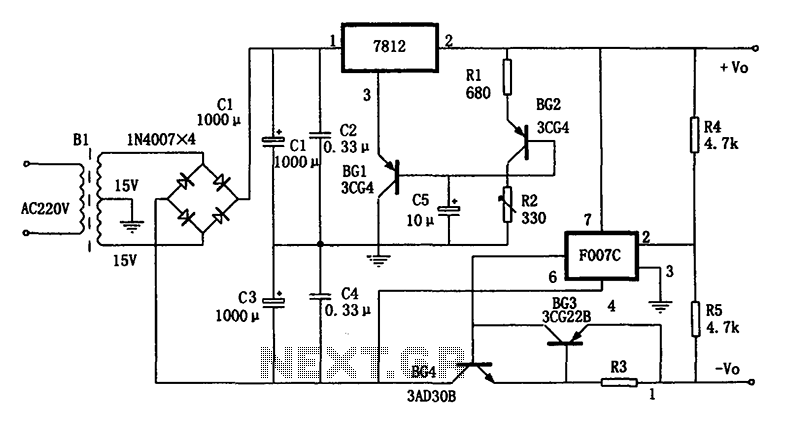
Temperature compensation of the symmetrical power supply 7812 F007C
The circuit is a temperature-compensated power supply that generates a negative voltage to track positive voltage changes in a symmetrical voltage integrated power supply. It features a three-terminal regulator connected with two identical transistors, leveraging the temperature characteristics of the...
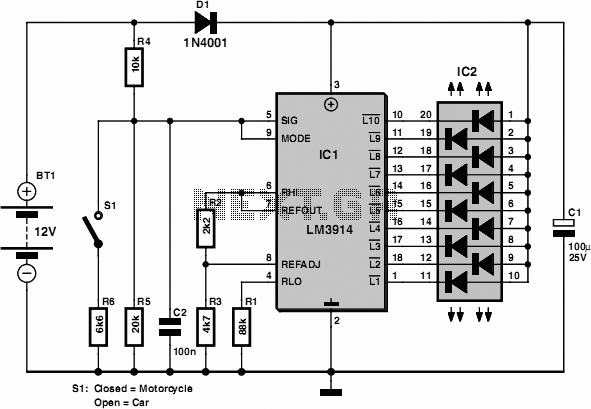
Car and Motorcycle Battery Tester
Car and Motorcycle Battery Tester Circuit. Going camping today often requires bringing various electronic devices for daily activities or entertainment. Typically, a charged lead-acid battery and a power source are essential.
The Car and Motorcycle Battery Tester Circuit is designed to...
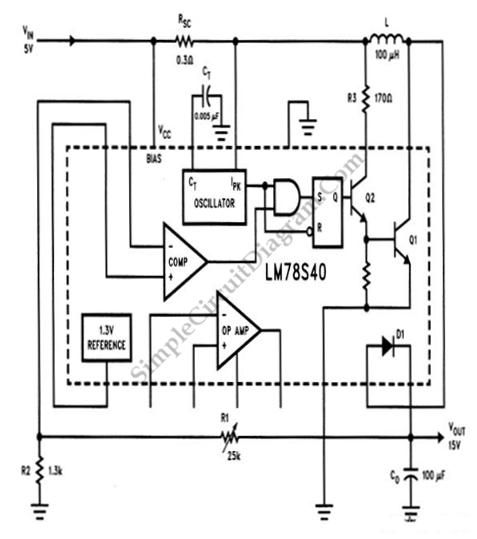
LM78S40 5V to 15V Step-up Voltage Regulator
A step-up conversion can be achieved without utilizing a transformer. This circuit is capable of converting a 5V DC source into 15V. It is important to note that there is no power gain.
The described circuit employs a DC-DC boost converter...
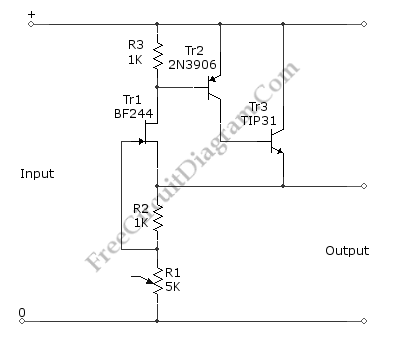
5V FET Voltage Regulator
This voltage regulator circuit provides a stable 5V output from unregulated inputs that are greater than 5V. The output voltage stability is satisfactory, with minimal variations.
The voltage regulator circuit utilizes a linear voltage regulator, such as the LM7805, which is...
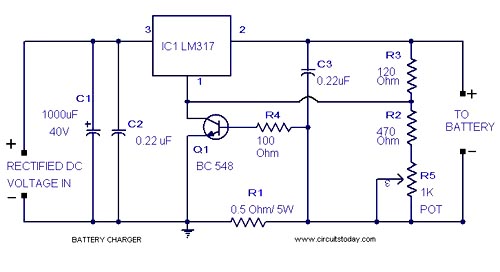
Lead Acid Battery Charger Circuit
A simple lead-acid battery charger circuit with a diagram and schematic using the IC LM317, which provides the correct battery charging voltage. This lead-acid battery charger should be supplied with an input of 18 volts to the IC.
The lead-acid battery...
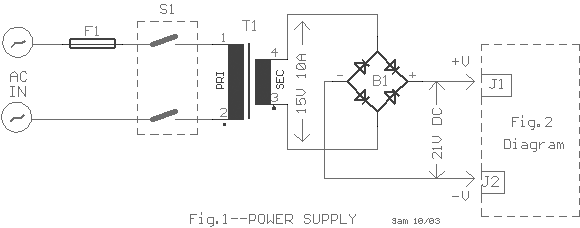
car battery 6v or 12v charger
This circuit can automatically and efficiently charge 6V and 12V batteries. A key factor in the successful operation of the circuit is the use of a high-quality transformer [T1] that has excellent insulation and resistance to short circuits.
The circuit functions...
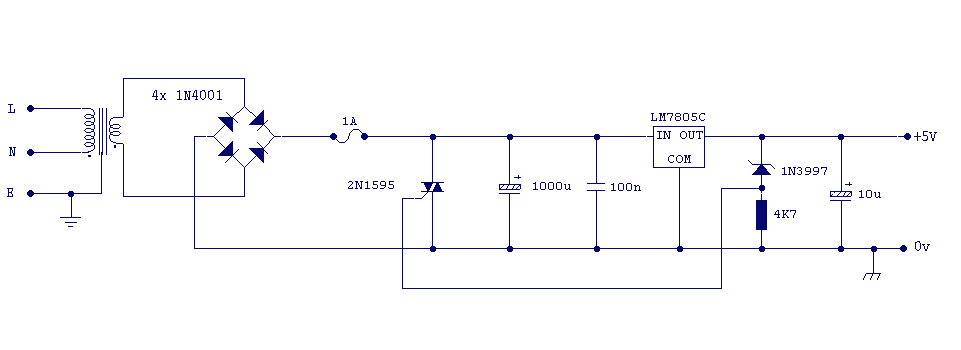
Logic PSU with Overvoltage Protection
The 5 volt regulated power supply for TTL and 74LS series integrated circuits has to be very precise and tolerant of voltage transients. These ICs are easily damaged by short voltage spikes. A fuse will blow when its current rating...
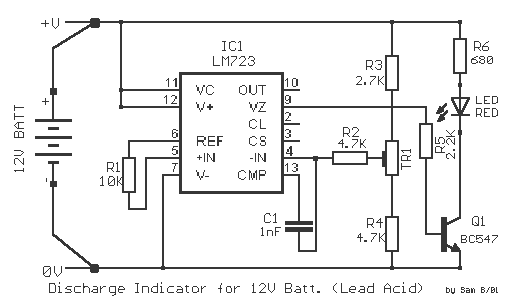
Lead Acid Battery Discharge protector
In perfect discharge the batteries of lead acid, exists the fear they are destroyed. This circuit makes the work, this detection of discharge, protecting the batteries from destruction. At the discharge the polar voltage of batteries 12V of Lead acid,...