


Simple Li-Ion Battery Charger
#li-ion
#LP2951
#charging current
#single-cell
#overnight charger
#100mA
#battery capacity
#low current
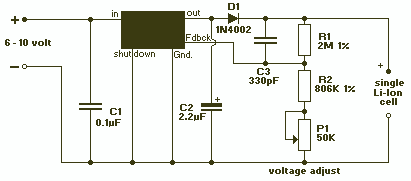
Description: Charging current is about 100+mA, which is the internally-limited maximum current of the LP2951. For those wondering, this is compatible with just about any single-cell li-ion battery since li-ion can generally accept a charging current of up to about 1c (i.e. charging current in mA equivalent to their capacity in mAh, so a 1100mAh li-ion cell can be charged at up to 1100mA and so on). A lower charging current just brings about a correspondingly longer charge time. 100mA is quite low, low enough that the circuit can be used for an overnight charger for many typical single-cell li-ion batteries. The LP2951 regulator is manufactured by National Semiconductors. The choice of values is from an application note "Battery Charging", written by Chester Simpson. The resistors are deliberately kept at large orders of magnitude (tens/hundred Kohm and Mohm range) to keep the off-state current as low as possible, at about 2µA. Resistor tolerances should be kept at 1% for output voltage accuracy. The 50k pot allows for an output voltage range between 4.08V to 4.26V - thus allowing calibration as well as a choice between a charging voltage of 4.1V or 4.2V depending on the cell to be charged. The capacitors are for stability, especially C2 which prevents the output from ringing/oscillating. Diode D1 can be any diode from the 1N00x series, whichever is conveniently available. It functions as a blocking diode, to prevent a back flow of current from the battery into the LP2951 when the input voltage is disconnected.
The circuit described is a battery charging circuit utilizing the LP2951 voltage regulator, which is designed to safely charge single-cell lithium-ion batteries. The charging current is limited to approximately 100 mA, making it suitable for overnight charging applications. This current is within the acceptable range for lithium-ion batteries, which can typically handle charging currents up to 1C of their rated capacity.
The LP2951 is a low-dropout linear voltage regulator, allowing for efficient operation even when the input voltage is close to the output voltage. The circuit configuration includes a potentiometer (50kΩ) that provides an adjustable output voltage, allowing for fine-tuning between 4.08V and 4.26V. This adjustability is critical for accommodating different battery chemistries and capacities, ensuring optimal charging voltages for various lithium-ion cells.
Resistor values are chosen from the tens to hundreds of kilo-ohm range to minimize quiescent current, which is maintained at approximately 2 µA. This low off-state current is essential for battery-powered applications where energy conservation is a priority. The resistors should have a tolerance of 1% to maintain accuracy in the output voltage, ensuring reliable battery charging.
Capacitors are included in the design for stability, particularly capacitor C2, which is crucial in preventing oscillations in the output voltage. This is important for maintaining a steady charge to the battery and avoiding potential damage due to voltage spikes.
The inclusion of a diode (D1) from the 1N00x series serves as a blocking diode, preventing reverse current flow from the battery back into the LP2951 when the input voltage is disconnected. This feature protects the regulator and ensures safe operation of the circuit.
Overall, this circuit effectively balances performance and safety, making it a practical choice for charging single-cell lithium-ion batteries in various applications.Charging current is about 100+mA, which is the internally-limited maximum current of the LP2951. For those wondering, this is compatible with just about any single-cell li-ion battery since li-ion can generally accept a charging current of up to about 1c (i.e. charging current in mA equivalent to their capacity in mAh, so a 1100mAh li-ion cell can be charged at up to 1100mA and so on).
A lower charging current just brings about a correspondingly longer charge time. IMHO 100mA is quite low, low enough that the circuit can be used for an overnight charger for many typical single-cell li-ion batteries. The LP2951 regulator is manufactured by National Semiconductors. The choice of values is from an application note "Battery Charging", written by Chester Simpson. The resistors are deliberately kept at large orders of magnitude (tens/hundred Kohm and Mohm range) to keep the off-state current as low as possible, at about 2?A. Resistor tolerances should be kept at 1% for output voltage accuracy. The 50k pot allows for an output voltage range between 4.08V to 4.26V - thus allowing calibration as well as a choice between a charging voltage of 4.1V or 4.2V depending on the cell to be charged.
The capacitors are for stability, especially C2 which prevents the output from ringing/oscillating. Diode D1 can be any diode from the 1N00x series, whichever is conveniently available. It functions as a blocking diode, to prevent a back flow of current from the battery into the LP2951 when the input voltage is disconnected.
The circuit described is a battery charging circuit utilizing the LP2951 voltage regulator, which is designed to safely charge single-cell lithium-ion batteries. The charging current is limited to approximately 100 mA, making it suitable for overnight charging applications. This current is within the acceptable range for lithium-ion batteries, which can typically handle charging currents up to 1C of their rated capacity.
The LP2951 is a low-dropout linear voltage regulator, allowing for efficient operation even when the input voltage is close to the output voltage. The circuit configuration includes a potentiometer (50kΩ) that provides an adjustable output voltage, allowing for fine-tuning between 4.08V and 4.26V. This adjustability is critical for accommodating different battery chemistries and capacities, ensuring optimal charging voltages for various lithium-ion cells.
Resistor values are chosen from the tens to hundreds of kilo-ohm range to minimize quiescent current, which is maintained at approximately 2 µA. This low off-state current is essential for battery-powered applications where energy conservation is a priority. The resistors should have a tolerance of 1% to maintain accuracy in the output voltage, ensuring reliable battery charging.
Capacitors are included in the design for stability, particularly capacitor C2, which is crucial in preventing oscillations in the output voltage. This is important for maintaining a steady charge to the battery and avoiding potential damage due to voltage spikes.
The inclusion of a diode (D1) from the 1N00x series serves as a blocking diode, preventing reverse current flow from the battery back into the LP2951 when the input voltage is disconnected. This feature protects the regulator and ensures safe operation of the circuit.
Overall, this circuit effectively balances performance and safety, making it a practical choice for charging single-cell lithium-ion batteries in various applications.Charging current is about 100+mA, which is the internally-limited maximum current of the LP2951. For those wondering, this is compatible with just about any single-cell li-ion battery since li-ion can generally accept a charging current of up to about 1c (i.e. charging current in mA equivalent to their capacity in mAh, so a 1100mAh li-ion cell can be charged at up to 1100mA and so on).
A lower charging current just brings about a correspondingly longer charge time. IMHO 100mA is quite low, low enough that the circuit can be used for an overnight charger for many typical single-cell li-ion batteries. The LP2951 regulator is manufactured by National Semiconductors. The choice of values is from an application note "Battery Charging", written by Chester Simpson. The resistors are deliberately kept at large orders of magnitude (tens/hundred Kohm and Mohm range) to keep the off-state current as low as possible, at about 2?A. Resistor tolerances should be kept at 1% for output voltage accuracy. The 50k pot allows for an output voltage range between 4.08V to 4.26V - thus allowing calibration as well as a choice between a charging voltage of 4.1V or 4.2V depending on the cell to be charged.
The capacitors are for stability, especially C2 which prevents the output from ringing/oscillating. Diode D1 can be any diode from the 1N00x series, whichever is conveniently available. It functions as a blocking diode, to prevent a back flow of current from the battery into the LP2951 when the input voltage is disconnected.
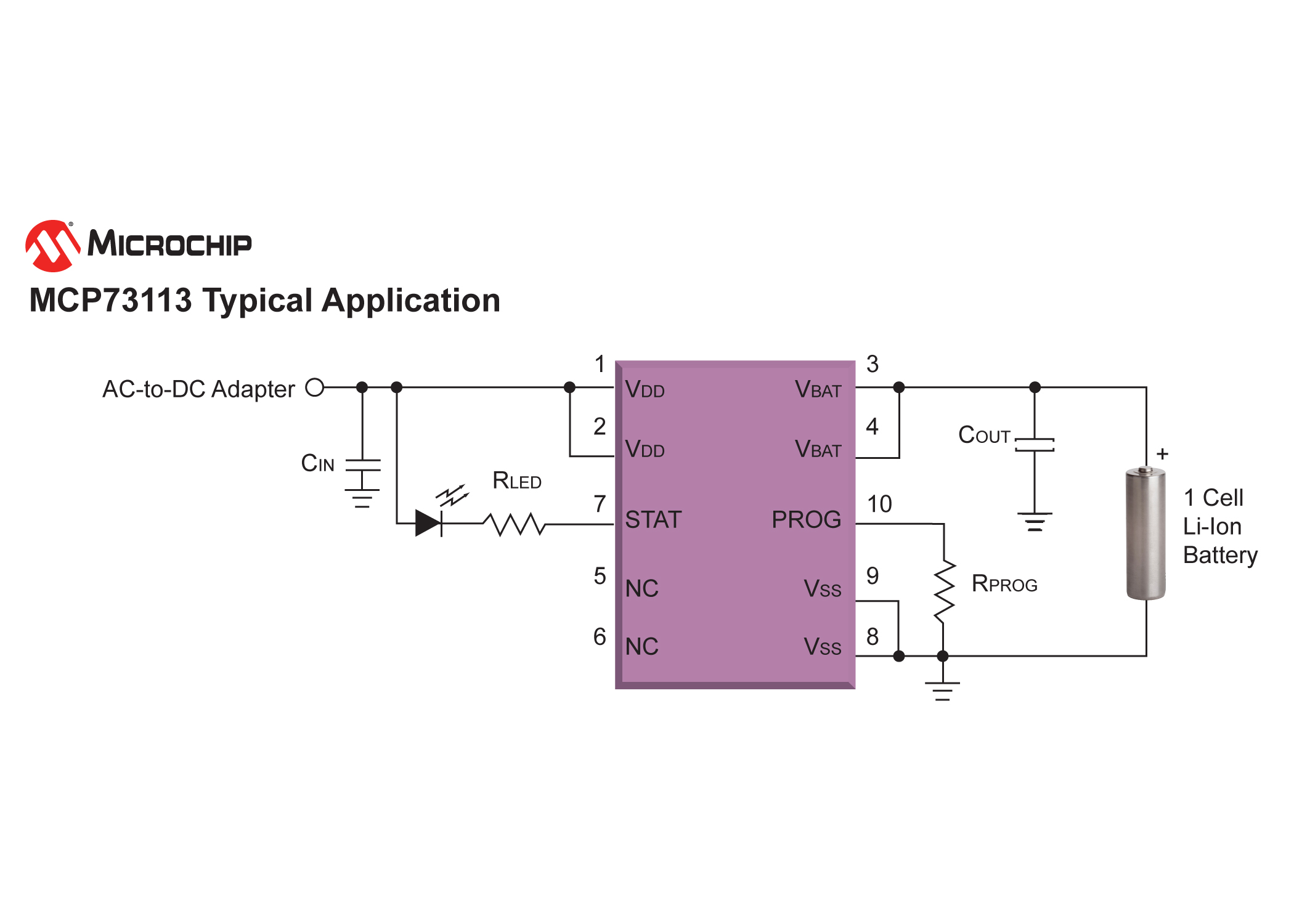
Microchips MCP73113 Li-Ion Battery Charger
Microchip Technology's MCP73113, MCP73114, and MCP73213 Lithium-Ion (Li-Ion) chargers, as well as the MCP73123 and MCP73223 Lithium Iron Phosphate (LiFePO4) chargers, are equipped with Overvoltage Protection (OVP) to prevent overheating and damage to the battery-charger circuit from input voltage spikes....
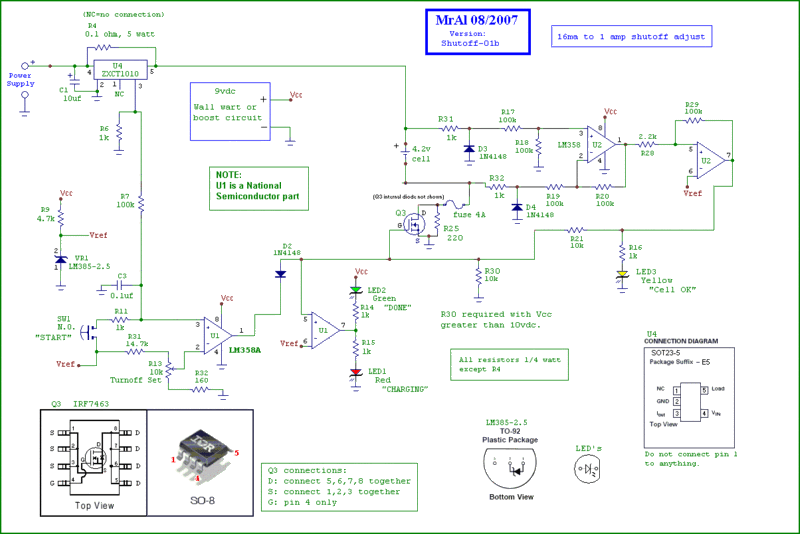
DIY Li ion battery charger w adjustable shut off current
This project originated from the need for a Li-ion charging circuit that offers more flexibility than typical do-it-yourself circuits while being more affordable than programmable computerized chargers. The primary objective was to design, build, test, and share a charger capable...

Ultra Low Current Oscillator
The circuit operates as a unijunction transistor relaxation oscillator. The base of the lower PNP transistor is biased at approximately half of the supply voltage. As the 100pF capacitor charges through the 1GΩ resistor, the base of the upper NPN...
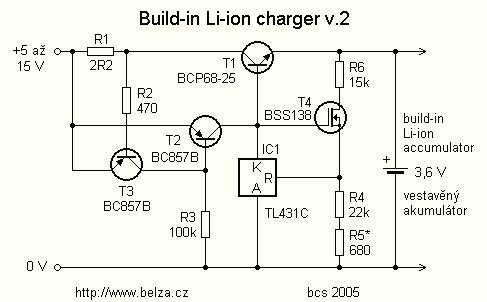
Built-in battery charger, Li-Ion
Build-in charger for instruments powered by single lithium-ion or Li-Pol accumulator. If external power supply not connected to charger, current back from the accu charger is very small. New version improved temperature stability and Not Needed NTC thermistor. After a...
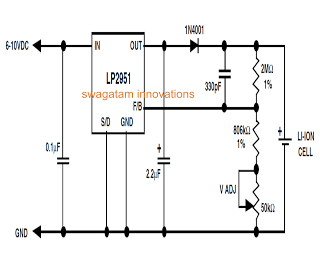
Li Ion Battery Charger Circuit Using IC LP2951
Unlike lead-acid batteries, one advantage of lithium-ion (Li-Ion) batteries is that they can be charged at a 1C rate initially. This means the charging current can be as high as the rated ampere-hour (AH) capacity of the battery at the...
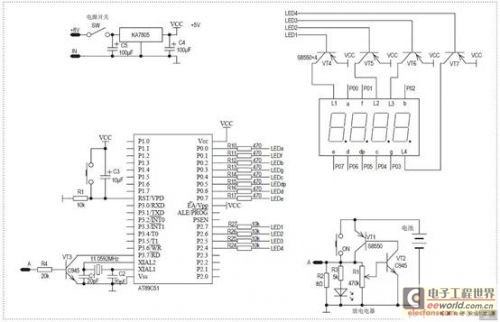
Charge the battery capacity tester and realize the scheme
Battery capacity is a crucial indicator of battery quality. There are various methods for testing the volume of rechargeable batteries. One approach involves analyzing the discharge curve of the battery through short-term discharge tests, which can provide a rough estimate...
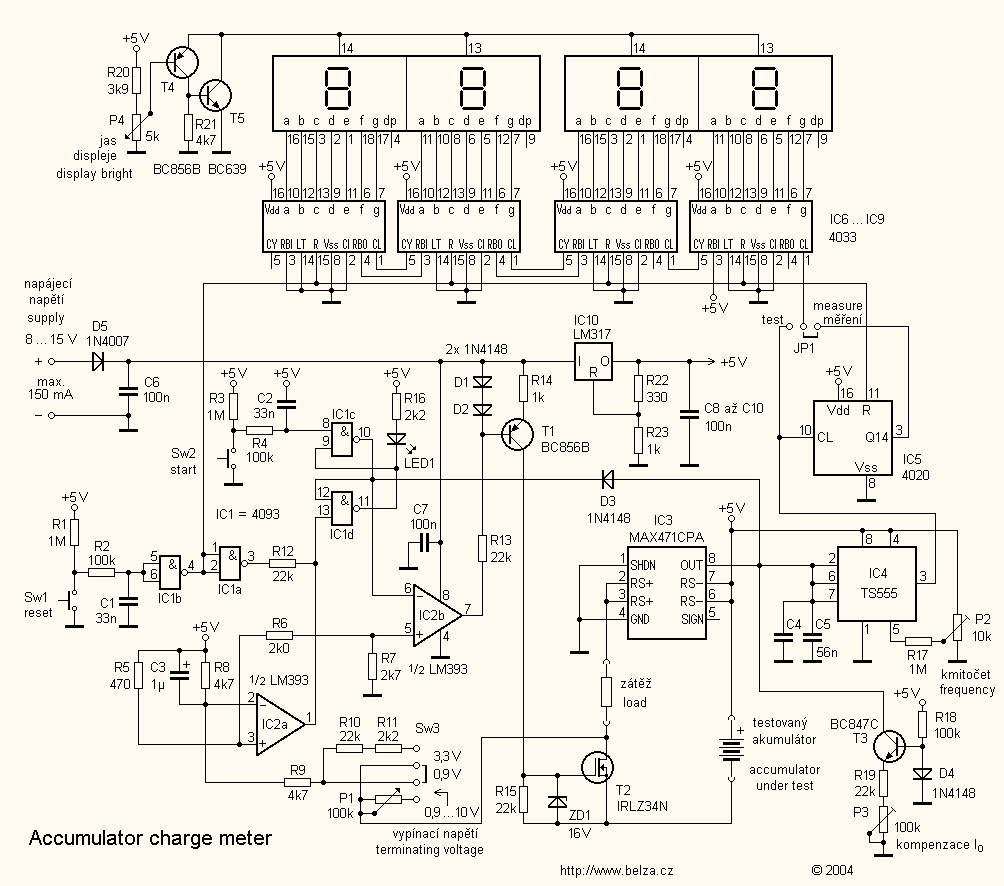
Battery capacity / Accumulator Charge Meter
The instrument used to measure battery capacity. The battery may be charged to any current in the range 0-3 A. The load current may be constant, may change over time or even break off completely. Unloading stops when the battery...
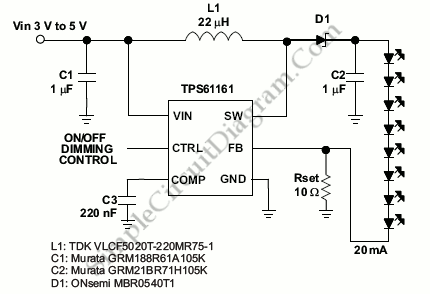
Li-Ion Driver for 8 White LEDs
A boost converter, such as the TPS61160/1, can be utilized with a 40V rated integrated switch FET to drive multiple LEDs in series. This configuration can help reduce output ripple.
The TPS61160/1 is a highly efficient boost converter designed for LED...
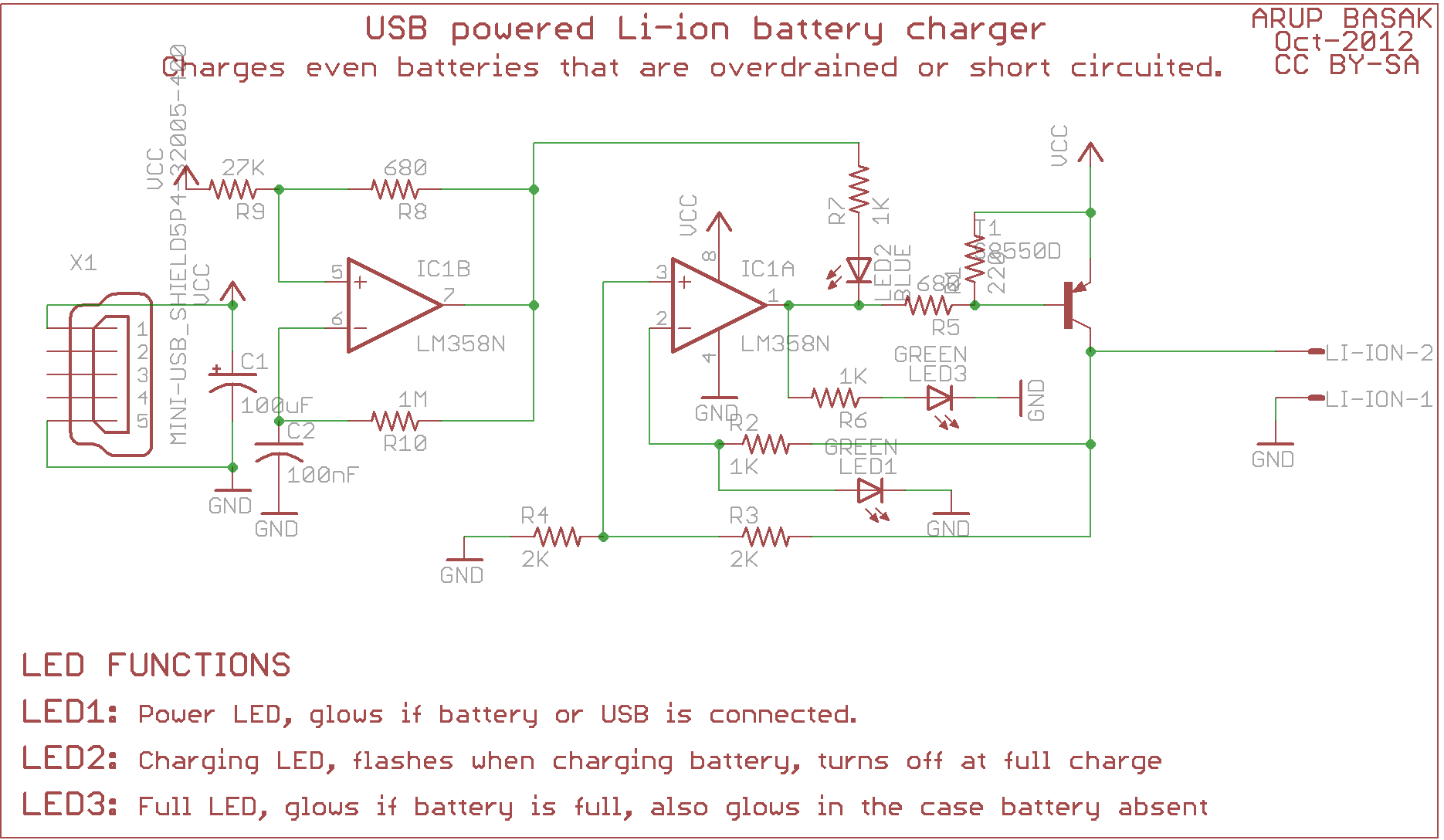
USB li-ion charger revision
A year ago, a circuit of a USB Li-ion charger based on the LM358 op-amp was shared. The circuit had some issues reported by commentators, including incorrect LED orientation. It is advised not to post email addresses or phone numbers...