


100mA Ultralow Noise LED Supply with Current Adjust
#LED supply
#ultralow noise
#current adjust
#DC/DC converter
#white LEDs
#brightness control
#charge pump
#LTC3201
#backlighting
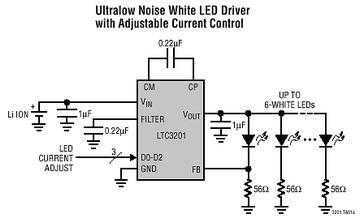
Description: The LTC3201 contains overtemperature protection and can survive an indefinite output short to GND. Low external parts count (one small flying capacitor and three small bypass capacitors) and small MSOP-10 package size make the LTC3201 ideally suited for space constrained applications. An input noise filter further reduces input noise, thus enabling direct connection to the battery. The LTC3201 is an ultralow noise, constant frequency, charge pump DC/DC converter specifically designed for powering white LEDs. The part produces a low noise boosted supply capable of supplying 100mA of output current. LED current is regulated for accurate and stable backlighting. A 3-bit DAC provides output current adjust for brightness control.
The LTC3201 is an advanced charge pump DC/DC converter that operates with high efficiency and low output noise, making it particularly suitable for applications requiring precise LED backlighting, such as in mobile devices and portable electronics. The device integrates several protective features, including overtemperature protection, which ensures reliability during operation under various thermal conditions. The ability to withstand an indefinite short circuit to ground enhances the robustness of the design, allowing it to maintain functionality even in fault conditions.
The use of a minimal external component count is a significant advantage in space-constrained environments. The circuit requires only one flying capacitor and three bypass capacitors, which simplifies the design and reduces the footprint on the printed circuit board (PCB). The MSOP-10 package further contributes to the compactness of the implementation, making it ideal for portable applications where size is critical.
The input noise filter incorporated into the LTC3201 plays a crucial role in minimizing voltage ripple and ensuring stable operation. This feature allows for a direct connection to battery sources, which is particularly beneficial in battery-powered devices. The charge pump operates at a constant frequency, providing a steady output voltage that is essential for the consistent performance of white LEDs.
The device can supply up to 100mA of output current, which is sufficient for driving multiple LEDs or providing enhanced brightness levels. The output current regulation feature ensures that the LEDs receive a stable current, which is vital for maintaining uniform brightness and extending the lifespan of the LEDs. The addition of a 3-bit digital-to-analog converter (DAC) allows for adjustable output current, enabling dynamic brightness control based on user preferences or ambient light conditions.
Overall, the LTC3201 is a highly effective solution for applications requiring low-noise, efficient LED power supplies, combining compact design with advanced features for enhanced performance and reliability.The LTC3201 contains overtemperature protection and can survive an indefinite output short to GND. Low external parts count (one small flying capacitor and three small bypass capacitors) and small MSOP-10 package size make the LTC3201 ideally suited for space constrained applications. An input noise filter further reduces input noise,thus enabling direct connection to the battery. The LTC®3201 is an ultralow noise, constant frequency, charge pump DC/DC converter specifically designed for powering white LEDs.
The part produces a low noise boosted supply capable of supplying 100mA of output current. LED current is regulated for accurate and stable backlighting. A 3-bit DAC provides output current adjust for brightness control.
The LTC3201 is an advanced charge pump DC/DC converter that operates with high efficiency and low output noise, making it particularly suitable for applications requiring precise LED backlighting, such as in mobile devices and portable electronics. The device integrates several protective features, including overtemperature protection, which ensures reliability during operation under various thermal conditions. The ability to withstand an indefinite short circuit to ground enhances the robustness of the design, allowing it to maintain functionality even in fault conditions.
The use of a minimal external component count is a significant advantage in space-constrained environments. The circuit requires only one flying capacitor and three bypass capacitors, which simplifies the design and reduces the footprint on the printed circuit board (PCB). The MSOP-10 package further contributes to the compactness of the implementation, making it ideal for portable applications where size is critical.
The input noise filter incorporated into the LTC3201 plays a crucial role in minimizing voltage ripple and ensuring stable operation. This feature allows for a direct connection to battery sources, which is particularly beneficial in battery-powered devices. The charge pump operates at a constant frequency, providing a steady output voltage that is essential for the consistent performance of white LEDs.
The device can supply up to 100mA of output current, which is sufficient for driving multiple LEDs or providing enhanced brightness levels. The output current regulation feature ensures that the LEDs receive a stable current, which is vital for maintaining uniform brightness and extending the lifespan of the LEDs. The addition of a 3-bit digital-to-analog converter (DAC) allows for adjustable output current, enabling dynamic brightness control based on user preferences or ambient light conditions.
Overall, the LTC3201 is a highly effective solution for applications requiring low-noise, efficient LED power supplies, combining compact design with advanced features for enhanced performance and reliability.The LTC3201 contains overtemperature protection and can survive an indefinite output short to GND. Low external parts count (one small flying capacitor and three small bypass capacitors) and small MSOP-10 package size make the LTC3201 ideally suited for space constrained applications. An input noise filter further reduces input noise,thus enabling direct connection to the battery. The LTC®3201 is an ultralow noise, constant frequency, charge pump DC/DC converter specifically designed for powering white LEDs.
The part produces a low noise boosted supply capable of supplying 100mA of output current. LED current is regulated for accurate and stable backlighting. A 3-bit DAC provides output current adjust for brightness control.
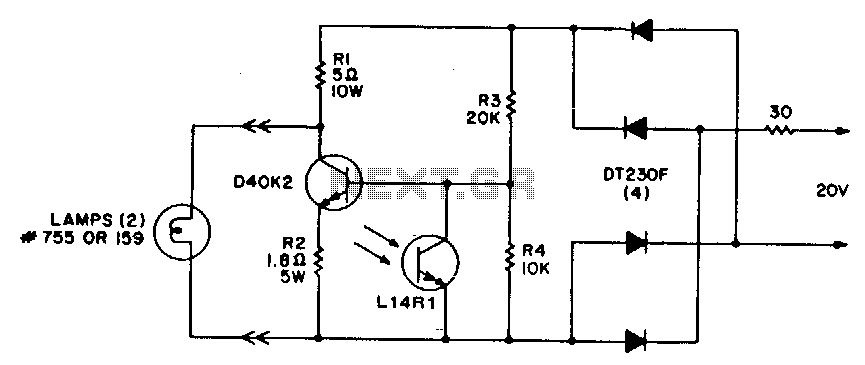
Lighted-display-brightness-control
This circuit offers a cost-effective method for controlling light levels. Power for the circuit is derived from a relatively high source impedance transformer or motor windings, which are typically used to drive low-voltage lamps in these applications. It is important...
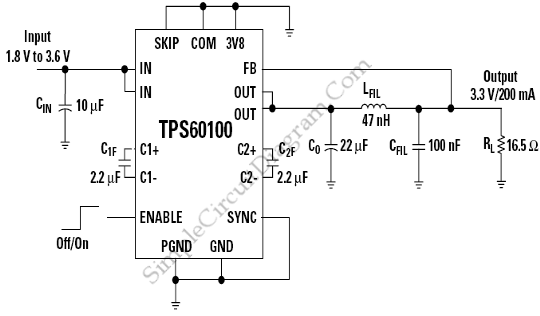
Ultra-Low-Ripple DC/DC Boost Converter with TPS60100
A DC/DC step-up converter is suitable for use in battery-powered equipment. This converter can be employed to generate supply voltages for internal circuits.
The DC/DC step-up converter, also known as a boost converter, is a critical component in various electronic applications,...
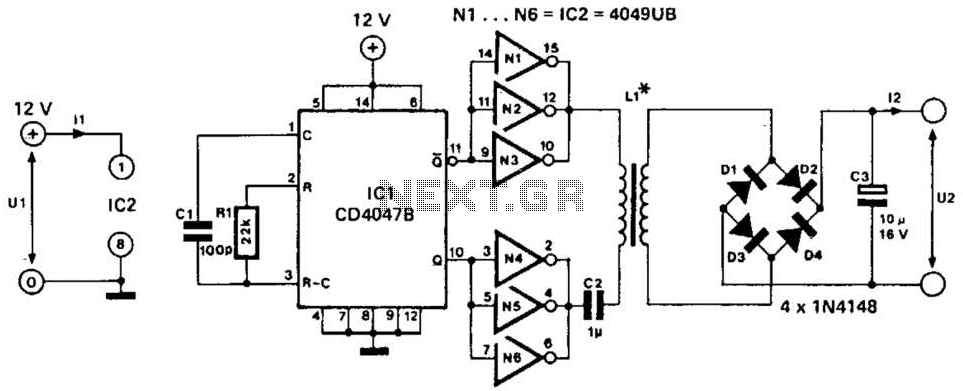
Dc/Dc Converter Circuit
This low-power converter supplies approximately 100 mW of DC power to a load and is useful for isolating or deriving DC voltages. It operates at a frequency of around 200 kHz. The inductor is wound on a 22-mm diameter, 13-mm...
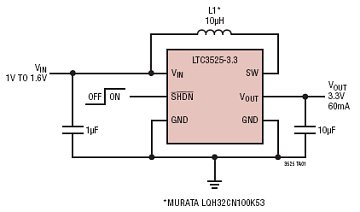
400mA Micropower Synchronous Step-Up DC/DC Converter with Output Disconnect
The LTC3525-3/LTC3525-3.3/LTC3525-5 are high-efficiency synchronous step-up DC/DC converters with output disconnect capability that can operate with an input voltage as low as 1V. These converters provide a compact and efficient alternative to charge pumps for single-cell or dual-cell alkaline or...
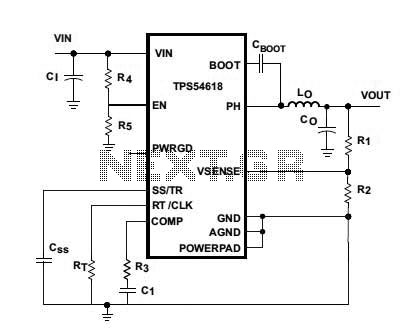
TPS54618 6-A Step-Down SWIFT DC/DC Converter
Texas Instruments introduced the TPS54618, a 6-A step-down SWIFT DC/DC converter. The new TPS54618 is a monolithic synchronous switcher featuring two integrated 12-milliohm MOSFETs.
The TPS54618 is designed to provide high efficiency and compact solutions for powering a variety of applications,...
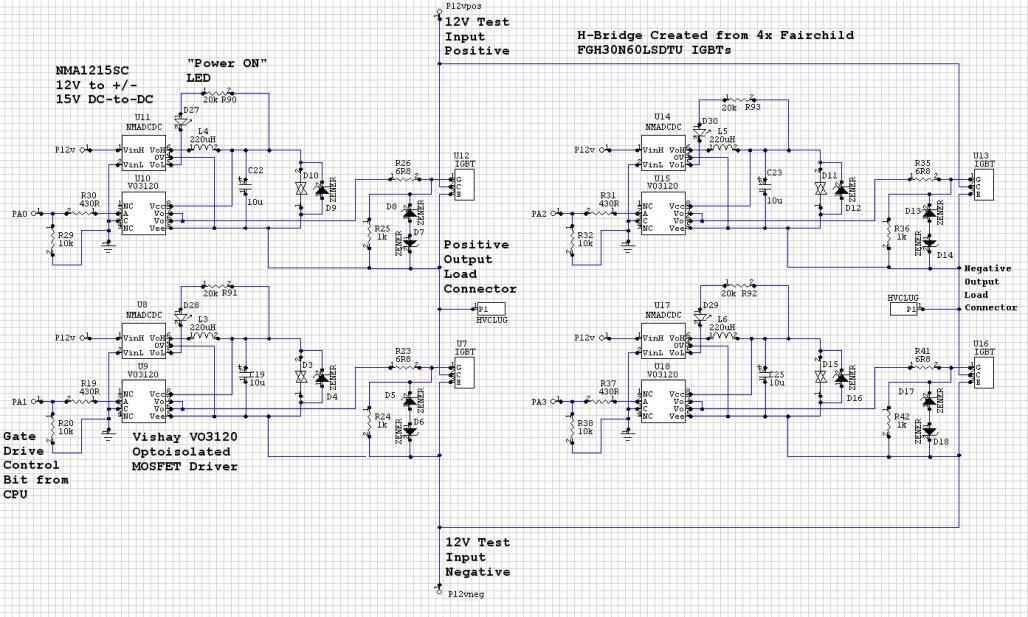
Problems with DC/DC converters in isolated H-Bridge design
The Murata NMC1215SC DC/DC converters in a CPU-controlled H-Bridge design are experiencing repeated failures, with no obvious signs of the cause.
The Murata NMC1215SC is a step-down DC-DC converter renowned for its efficiency and compact design, making it suitable for various...
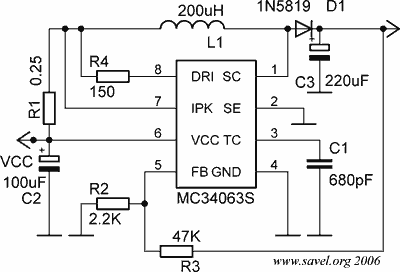
Step Up PSU for LCD
To operate the old Optrex DMC50264N LCD module, a bias voltage of +24V is required. If only low voltage options of 3V to 5V are available, a small DC/DC converter can be constructed, as the LCD module consumes very little...
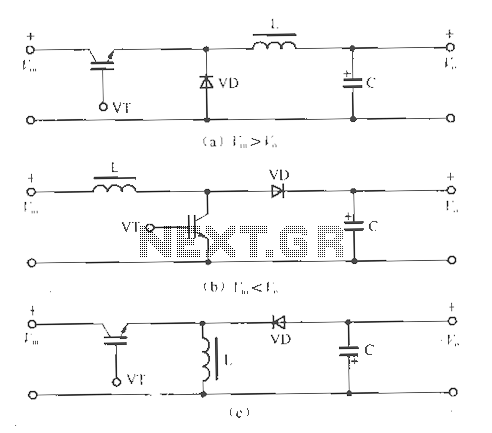
A non-isolated DC/DC converter circuit diagram
The circuit operates without isolation for both input and output voltage, utilizing a working switch along with an inductor (L), diode (D), and capacitor (C) to form a basic inverter circuit. There are three types of converters: the step-down converter...
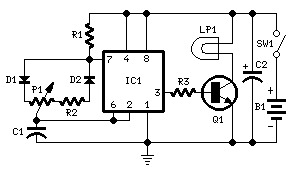
3V Lamp Brightness Controller circuit diagram
Here is a circuit diagram for adjusting the brightness of a light bulb. The second battery is utilized to power the circuit. This circuit can be used to modify the brightness of images during close-up photography with a digital camera....