


A voice-activated lights control circuit
#voice-activated
#microphone
#audio signal
#regulated power supply
#light control
#3V DC
#RC circuit
#filtering
#rectifier
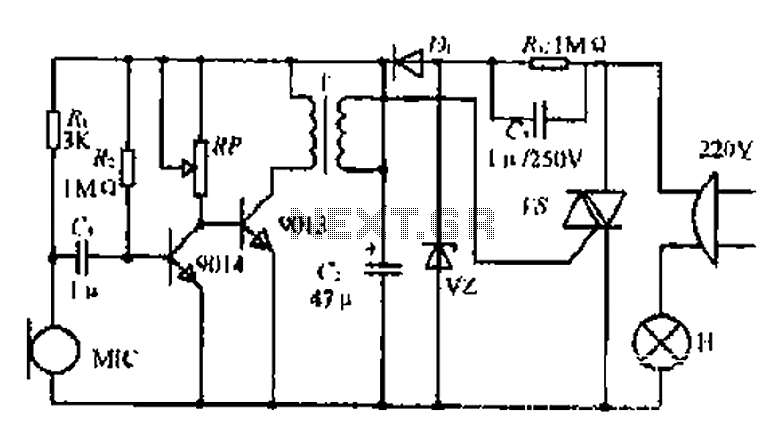
Description: 22W by Ct and R, RC Buck, rectified by n. c, filtering. vz 3V DC regulated output power, before U, V2 and MIC power supply. When the audio signal reaches the beam, the microphone MI converts acoustic energy into electrical energy. This is then processed through a general discharge tube T and after coupling, can be entrusted to a two-way silicon controlled rectifier (SCR) to dispatch a trigger voltage control. This setup uses audio signals to control thyristor conduction, resulting in the generation of light effects.
The circuit operates as a 22W power supply utilizing an RC buck converter topology, which efficiently steps down voltage while maintaining a regulated output. The rectification process is achieved through a normally closed (n.c.) configuration, followed by filtering to smooth out the rectified output, ensuring a stable 3V DC supply. This regulated output is essential for powering components labeled as U, V2, and the microphone (MIC).
The microphone (MI) plays a crucial role in the system by converting incoming acoustic signals into corresponding electrical signals. When an audio signal is detected, it triggers the discharge tube (T), which acts as a switch to control the flow of current. The output from the discharge tube is then coupled to a two-way silicon controlled rectifier (SCR), which is responsible for controlling the timing of the electrical pulses sent to the load.
The SCR is triggered by the audio signal, allowing it to conduct and control the discharge of energy to the connected load. This results in a visually appealing light effect, where the intensity and frequency of the light can vary based on the characteristics of the incoming audio signal. The entire system is designed to respond dynamically to sound, creating an interactive experience that links audio input with visual output.22W by Ct and R, RC Buck, rectified by n. c, filtering. vz 3V DC regulated output power, before U, V2 and MIC power supply. When the audio signal to the beam, the microphone MI C acoustic energy into electrical energy, and then the general discharge tube T and after coupling, can be entrusted to two-way silicon v dispatch a trigger voltage control, use audio to control thyristor conduction and cut u :, D generated so lights sparkle.
The circuit operates as a 22W power supply utilizing an RC buck converter topology, which efficiently steps down voltage while maintaining a regulated output. The rectification process is achieved through a normally closed (n.c.) configuration, followed by filtering to smooth out the rectified output, ensuring a stable 3V DC supply. This regulated output is essential for powering components labeled as U, V2, and the microphone (MIC).
The microphone (MI) plays a crucial role in the system by converting incoming acoustic signals into corresponding electrical signals. When an audio signal is detected, it triggers the discharge tube (T), which acts as a switch to control the flow of current. The output from the discharge tube is then coupled to a two-way silicon controlled rectifier (SCR), which is responsible for controlling the timing of the electrical pulses sent to the load.
The SCR is triggered by the audio signal, allowing it to conduct and control the discharge of energy to the connected load. This results in a visually appealing light effect, where the intensity and frequency of the light can vary based on the characteristics of the incoming audio signal. The entire system is designed to respond dynamically to sound, creating an interactive experience that links audio input with visual output.22W by Ct and R, RC Buck, rectified by n. c, filtering. vz 3V DC regulated output power, before U, V2 and MIC power supply. When the audio signal to the beam, the microphone MI C acoustic energy into electrical energy, and then the general discharge tube T and after coupling, can be entrusted to two-way silicon v dispatch a trigger voltage control, use audio to control thyristor conduction and cut u :, D generated so lights sparkle.
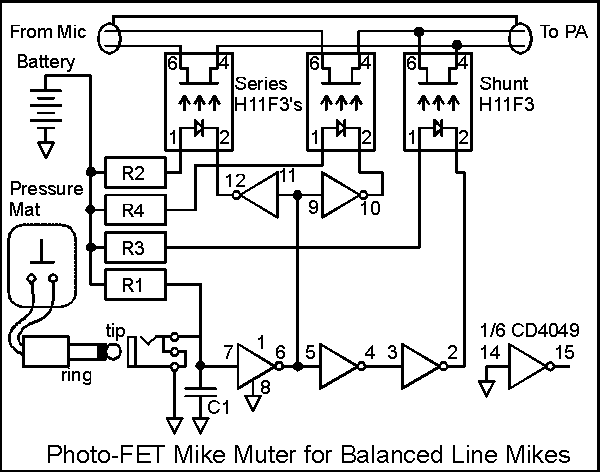
Auto Microphone Muter
If you've crossed the line and play guitar or bass and also sing in a band, you're almost certain to have run into the situation that you step away from the mike to do a solo (or one of those...
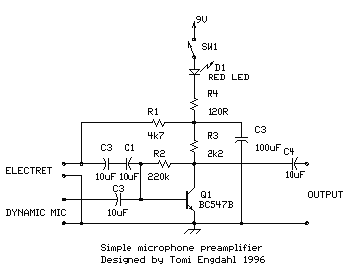
Simple Microphone Preamplifier Project
This is a simple microphone preamplifier circuit designed for use between a microphone and a stereo amplifier. This circuit is compatible with standard home stereo amplifier line, CD, aux, and tape inputs. It can accept both dynamic and electret microphone...
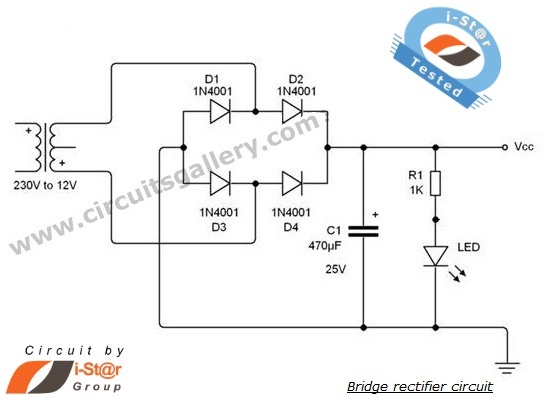
diode bridge rectifier circuits
A rectifier is an electronic circuit that converts AC voltage to DC voltage. It can be implemented using a combination of capacitors and diodes. The unique property of diodes, which allows current to flow in a single direction, is utilized...
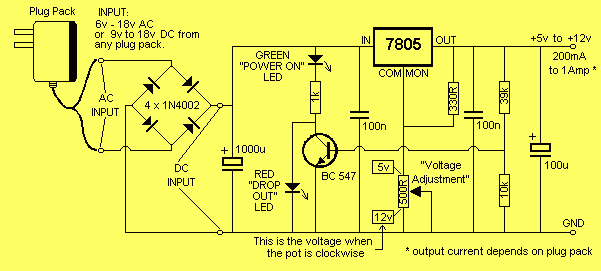
5-12V 200mA Regulated Power supply
It will accept AC from 6v to 18v or DC from 9v to 18v and any current up to 1 amp. The diode bridge on the input converts AC to DC and it doesn't matter which way around the leads...
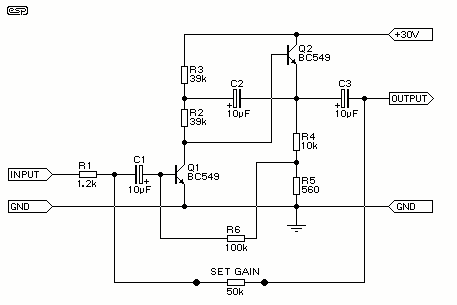
Low Noise Microphone Preamplifier
Cleaned Input: This is a design for a low noise microphone preamplifier, which is ideally suited to low impedance (600 Ohm nominal) microphones. One limitation is that it is not balanced, which is not a problem in a home recording...
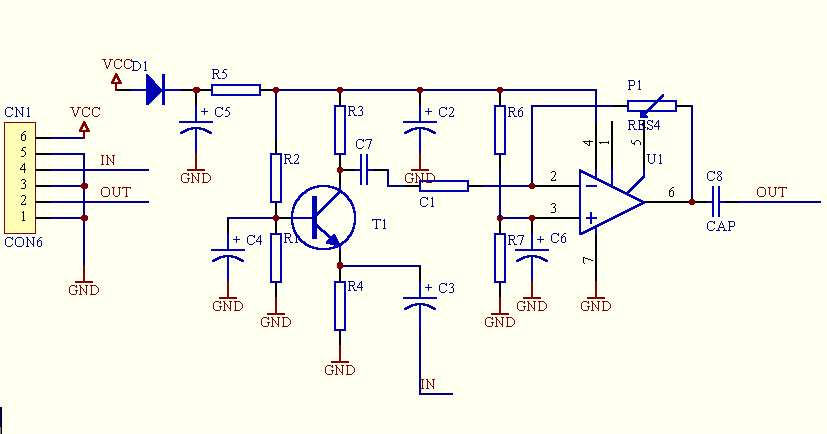
Low impedance microphone amplifiers
The circuit is a microphone amplifier designed for low impedance microphones, approximately 200 ohms. It operates with stabilized voltages ranging from 6 to 30 VDC. If the impedance adapter section with T1 is not constructed, the circuit can be utilized...
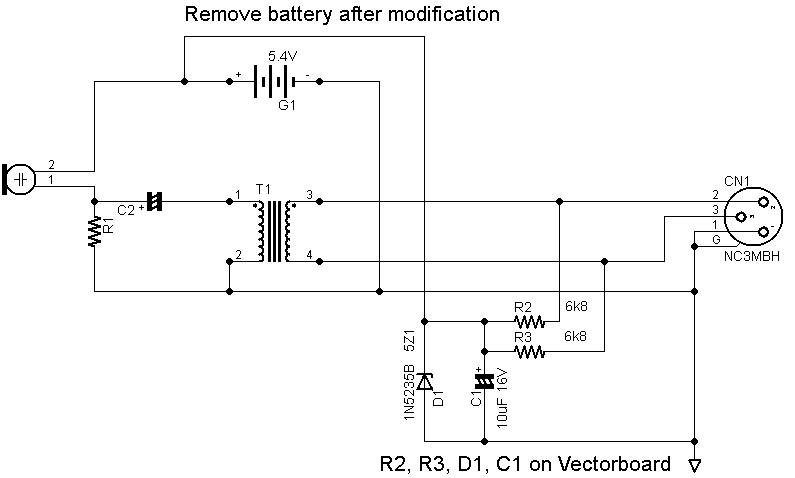
Converting an EV PL-76 or 1776 microphone to p48 powering
The resistors may be rated at 1/8 watt. The zener diode can be either a 250 mW or a 1W component (the part number will differ). The electrolytic capacitor is a standard type, and its value can vary (larger capacitance...
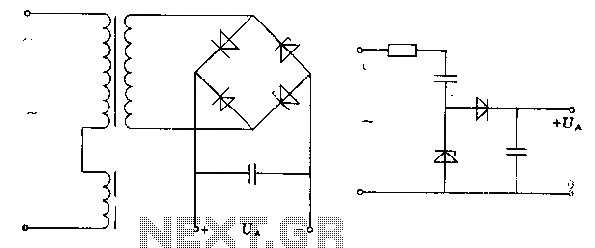
Zero rectifier regulator schematic
The pre-regulator circuit is connected to a capacitor and a resistor element. The regulator operates in its conducting direction through the input. A capacitor is connected to AC power, and in the blocking direction, it limits the current, allowing the...
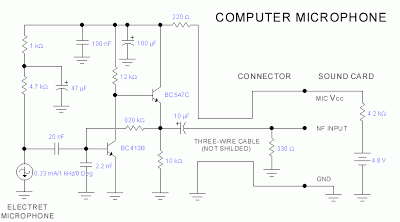
Computer Microphone
This circuit was submitted by Lazar Pancic from Yugoslavia. The sound card for a PC typically includes a microphone input, speaker output, and sometimes line inputs and outputs. The microphone input is designed specifically for dynamic microphones, operating within an...