


Battery Guard for Emergency Lights
#emergency light
#battery operated
#rechargeable battery
#automatic system
#power backup
#LED lighting
#safety
#energy efficiency
#home automation
#battery guard
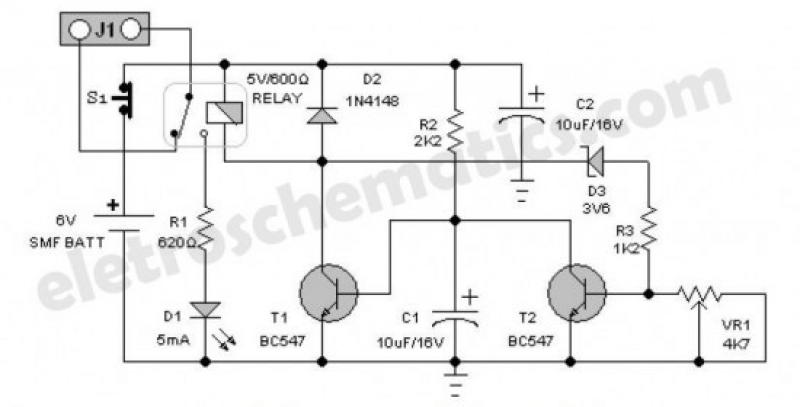
Description: An emergency light is a light source designed to be available during emergencies. It operates automatically and is powered by a rechargeable battery.
An emergency light system typically consists of several key components: a light source, a rechargeable battery, a charging circuit, and an automatic control mechanism. The light source is usually an LED or incandescent bulb that provides illumination when the main power supply is interrupted.
The rechargeable battery stores energy to power the light source during outages. Common battery types include nickel-cadmium (NiCd), nickel-metal hydride (NiMH), or lithium-ion (Li-ion), chosen for their ability to hold charge and provide reliable performance.
The charging circuit is responsible for maintaining the battery's charge when the main power is available. This circuit ensures that the battery is adequately charged without overcharging, which could reduce its lifespan. It typically includes a transformer, rectifier, and voltage regulator to convert AC mains voltage to a suitable level for charging the battery.
The automatic control mechanism detects power failure and activates the light source. This can be achieved using a relay or a solid-state switch that monitors the input voltage. When the mains power drops below a certain threshold, the control circuit engages the light source, providing immediate illumination.
Overall, an emergency light system is essential for safety in various environments, including residential, commercial, and industrial settings, ensuring visibility and guidance during power outages or emergencies.As the name implies,emergency light is a source of light available during an emergency.It is an automatic system in which a rechargeable battery operated l..
An emergency light system typically consists of several key components: a light source, a rechargeable battery, a charging circuit, and an automatic control mechanism. The light source is usually an LED or incandescent bulb that provides illumination when the main power supply is interrupted.
The rechargeable battery stores energy to power the light source during outages. Common battery types include nickel-cadmium (NiCd), nickel-metal hydride (NiMH), or lithium-ion (Li-ion), chosen for their ability to hold charge and provide reliable performance.
The charging circuit is responsible for maintaining the battery's charge when the main power is available. This circuit ensures that the battery is adequately charged without overcharging, which could reduce its lifespan. It typically includes a transformer, rectifier, and voltage regulator to convert AC mains voltage to a suitable level for charging the battery.
The automatic control mechanism detects power failure and activates the light source. This can be achieved using a relay or a solid-state switch that monitors the input voltage. When the mains power drops below a certain threshold, the control circuit engages the light source, providing immediate illumination.
Overall, an emergency light system is essential for safety in various environments, including residential, commercial, and industrial settings, ensuring visibility and guidance during power outages or emergencies.As the name implies,emergency light is a source of light available during an emergency.It is an automatic system in which a rechargeable battery operated l..
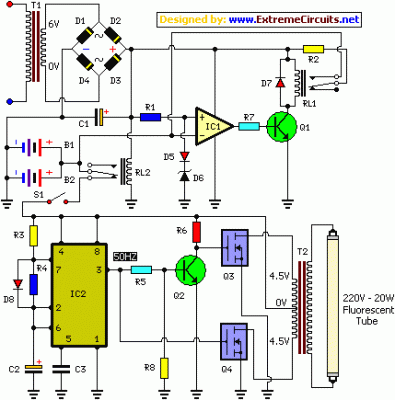
IC Controlled Emergency Light with Charger Circuit Schematic Free With Explanation
The circuit presented is an integrated circuit (IC) controlled emergency light. Its key features include automatic activation of the light during mains failure and a battery charger equipped with overcharge protection. In the absence of mains power, relay RL2 remains...
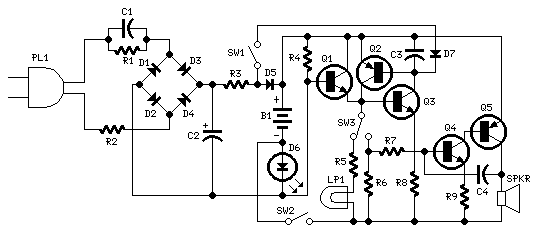
Emergency Light & Alarm
This circuit is permanently plugged into a mains socket and NI-CD batteries are trickle-charged. When a power outage occurs, the lamp automatically illuminates. Instead of illuminating a lamp, an alarm sounder can be chosen. When power supply is restored, the...
Emergency Light With Battery Charger
The following circuit illustrates an Emergency Light with a Battery Charger Circuit Diagram. Features include automatic activation of the light when mains power is available.
The Emergency Light with Battery Charger Circuit is designed to provide illumination during power outages while...
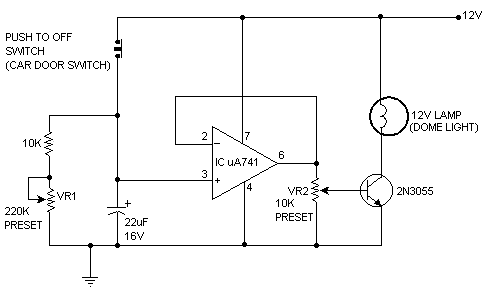
emergency light circuit diagram
The automatic emergency light circuit has the following features: 1. When the mains supply (230V AC) is available, it charges a 12V battery up to 13.5V, after which the battery is disconnected from the charging section. 2. When the battery...
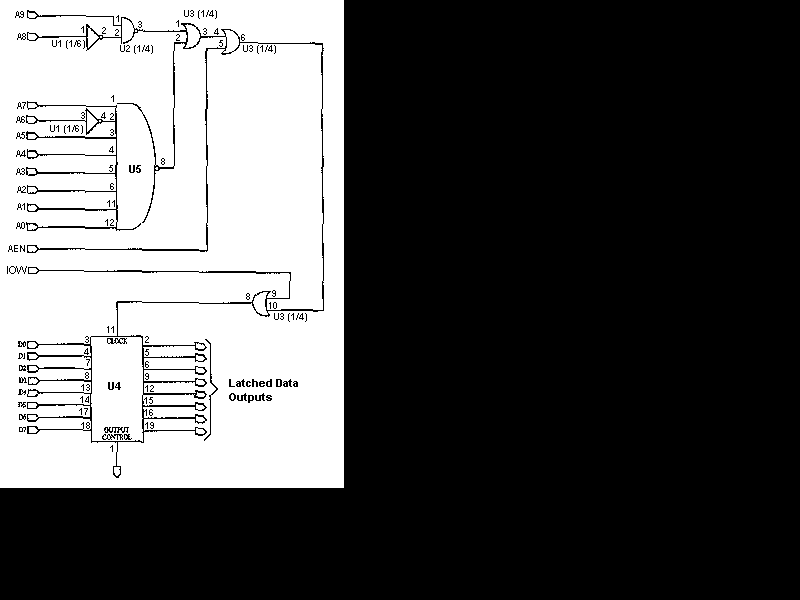
Computerize Your Room/House
You have read about computerized rooms or seen home automation products advertised in electronics magazines. You have decided to try it yourself. However, it is important to note that this project is not inexpensive. A computer is required, which is...
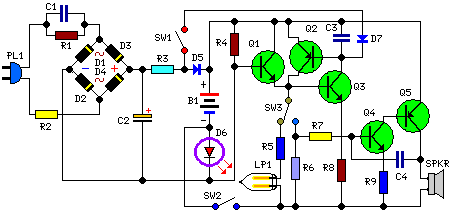
Emergency Light and Alarm circuit
This circuit is permanently connected to a mains socket and is designed for trickle charging nickel-cadmium (Ni-Cd) batteries. In the event of a power outage, the lamp automatically turns on. An alarm sounder can be used in place of the...
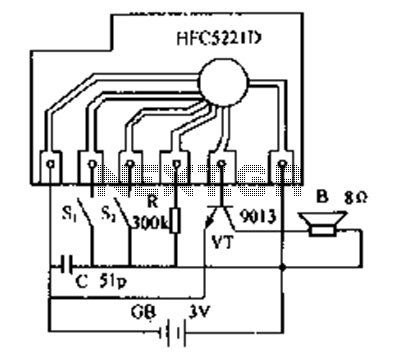
Do not drink and drive I wish you a safe journey home Language Integrated Circuits
Do not drink and drive. Wishing you a safe journey home. Language Integrated Circuits.
Language Integrated Circuits (LICs) are specialized electronic components designed to facilitate the processing of language-based data within various applications. These circuits integrate multiple functions, such as signal...
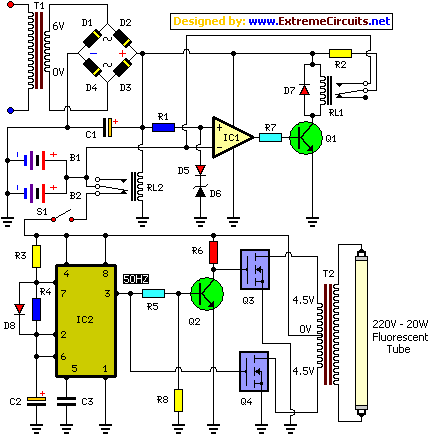
IC Controlled Emergency Light With Charger Circuit
This document presents the circuit diagram of an IC-controlled emergency light with a charger, which functions as a 12V to 220V AC inverter circuit. The primary features of this circuit include automatic activation of the light during mains failure and...
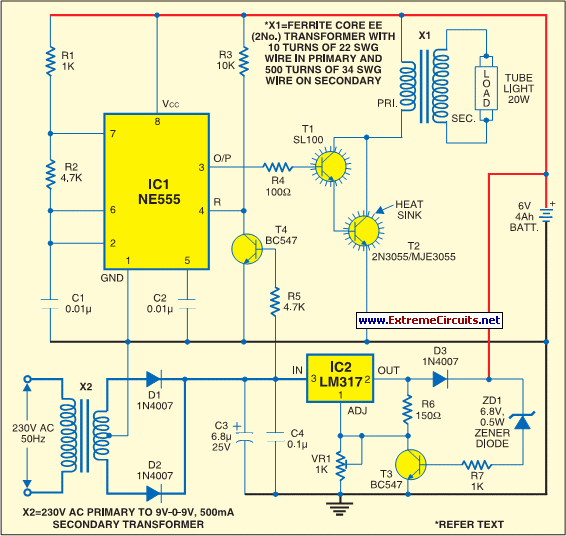
Fully Automatic Emergency Light
This simple automatic emergency light has advantages over conventional emergency lights: the charging circuit stops automatically when the battery is fully charged.
This automatic emergency light features a straightforward design that enhances its operational efficiency compared to traditional emergency lighting systems....