


disco lighting
#disco lighting
#triac
#mains control
#channel control
#3 Amp
#PCB design
#silent operation
#mains appliance
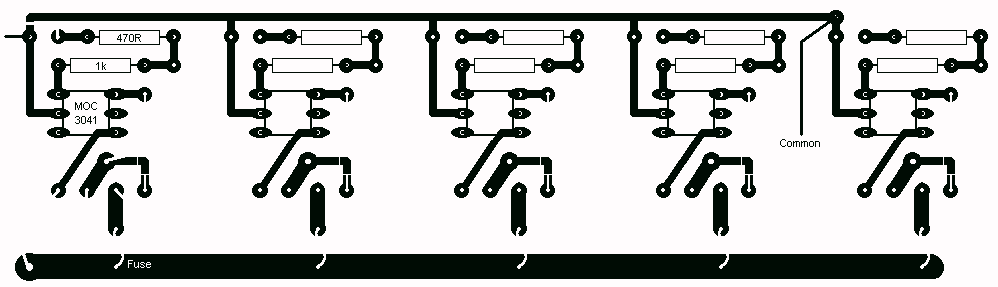
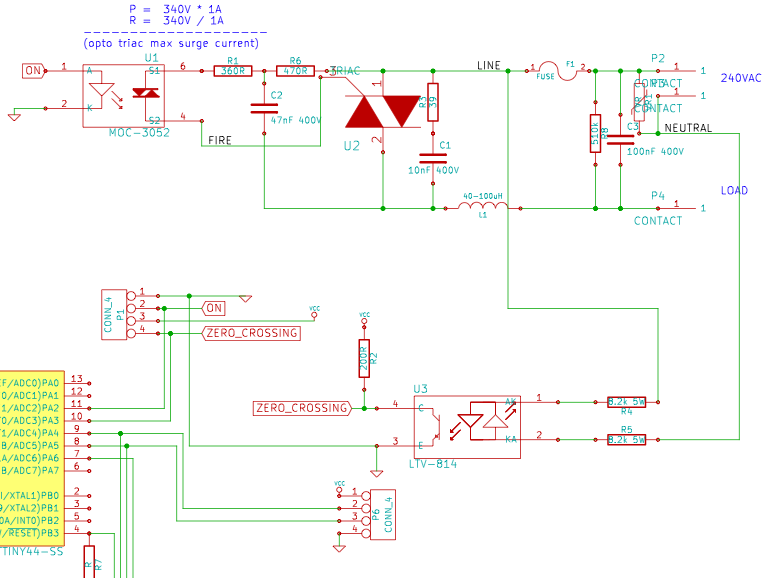
Description: This project is intended for controlling mains powered disco lighting, although there are many other possible uses for controlling almost any mains appliance. It will control five separate channels at up to 3 Amp per channel. This could be increased by designing another PCB with wider tracks than the PCB included with this design. I could have used relays to control my lights, but triacs seemed like a more sensible solution as they react quicker and are totally silent as they contain no mechanical parts. The low voltage control side and the mains side are totally isolated, as opto-couplers are used to fire the triacs. I have not included any schematics as this project is very simple, especially due to the fact I have included a PCB.
This project employs a triac-based control system for managing mains-powered lighting, specifically tailored for disco applications. The design features five independent channels, each capable of handling a load of up to 3 Amperes. This load capacity can be enhanced by creating an alternative printed circuit board (PCB) with wider trace widths, accommodating higher currents if necessary.
The choice of triacs over traditional relays is significant in this application. Triacs provide rapid switching capabilities and operate silently, eliminating the mechanical noise associated with relay actuation. This is particularly advantageous in environments where sound quality is critical, such as in disco settings.
To ensure safety and reliability, the design incorporates opto-couplers that provide electrical isolation between the low voltage control circuitry and the high voltage mains side. This isolation is crucial for protecting the control circuitry from voltage spikes and ensuring user safety when interfacing with high voltage systems.
The absence of a detailed schematic is noted, but the simplicity of the project allows for straightforward implementation. The included PCB is designed to facilitate easy assembly and integration, making it accessible for both hobbyists and professionals looking to control lighting or other mains appliances. The overall design emphasizes efficiency, safety, and performance, making it a versatile solution for various applications beyond disco lighting.This project is intended for controlling mains powered disco lighting, although there are many other possible uses for controlling almost any mains appliance. It will control five seperate channels at up to 3 Amp per channel. This could be increased by designing another PCB with wider tracks than the PCB included with this design.
I could have used relays to control my lights, but triacs seemed like a more sensible solution as they react quicker and are totally silent as they contain no mechanical parts. The low voltage control side and the mains side are totally isolated, as opto-couplers are used to fire the triacs. I have not included any schematics as this project is very simple, expecially due to the fact I have included a PCB.
Notes: There isn&#
This project employs a triac-based control system for managing mains-powered lighting, specifically tailored for disco applications. The design features five independent channels, each capable of handling a load of up to 3 Amperes. This load capacity can be enhanced by creating an alternative printed circuit board (PCB) with wider trace widths, accommodating higher currents if necessary.
The choice of triacs over traditional relays is significant in this application. Triacs provide rapid switching capabilities and operate silently, eliminating the mechanical noise associated with relay actuation. This is particularly advantageous in environments where sound quality is critical, such as in disco settings.
To ensure safety and reliability, the design incorporates opto-couplers that provide electrical isolation between the low voltage control circuitry and the high voltage mains side. This isolation is crucial for protecting the control circuitry from voltage spikes and ensuring user safety when interfacing with high voltage systems.
The absence of a detailed schematic is noted, but the simplicity of the project allows for straightforward implementation. The included PCB is designed to facilitate easy assembly and integration, making it accessible for both hobbyists and professionals looking to control lighting or other mains appliances. The overall design emphasizes efficiency, safety, and performance, making it a versatile solution for various applications beyond disco lighting.This project is intended for controlling mains powered disco lighting, although there are many other possible uses for controlling almost any mains appliance. It will control five seperate channels at up to 3 Amp per channel. This could be increased by designing another PCB with wider tracks than the PCB included with this design.
I could have used relays to control my lights, but triacs seemed like a more sensible solution as they react quicker and are totally silent as they contain no mechanical parts. The low voltage control side and the mains side are totally isolated, as opto-couplers are used to fire the triacs. I have not included any schematics as this project is very simple, expecially due to the fact I have included a PCB.
Notes: There isn&#
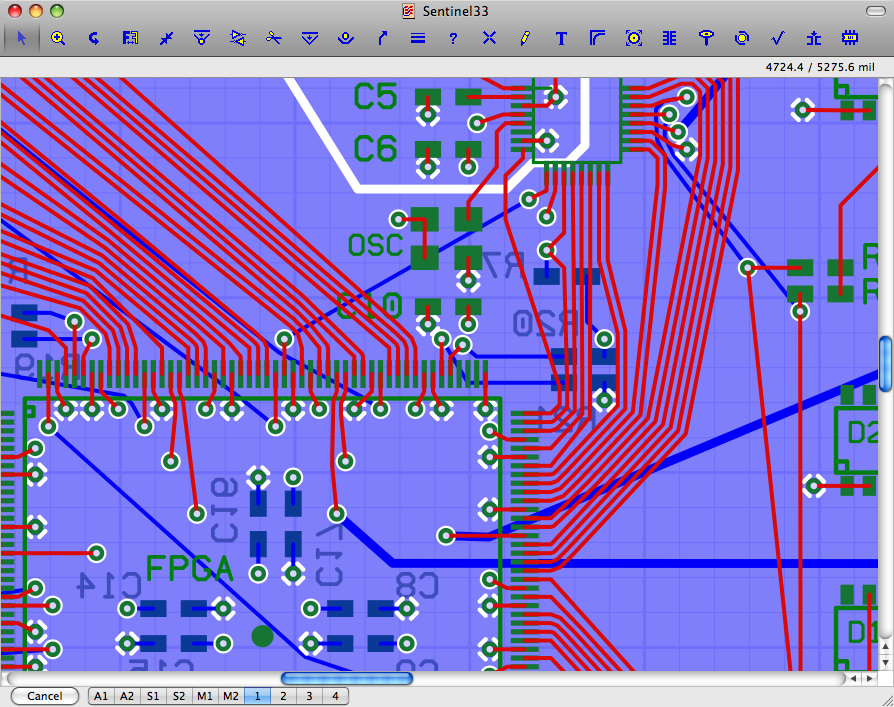
Osmond PCB
Osmond PCB is a flexible tool for designing printed circuit boards. It runs on Macintosh. Its many features include: * Virtually unlimited board sizes * Virtually unlimited number of board layers * Virtually unlimited number of parts.. More: * Spatial...
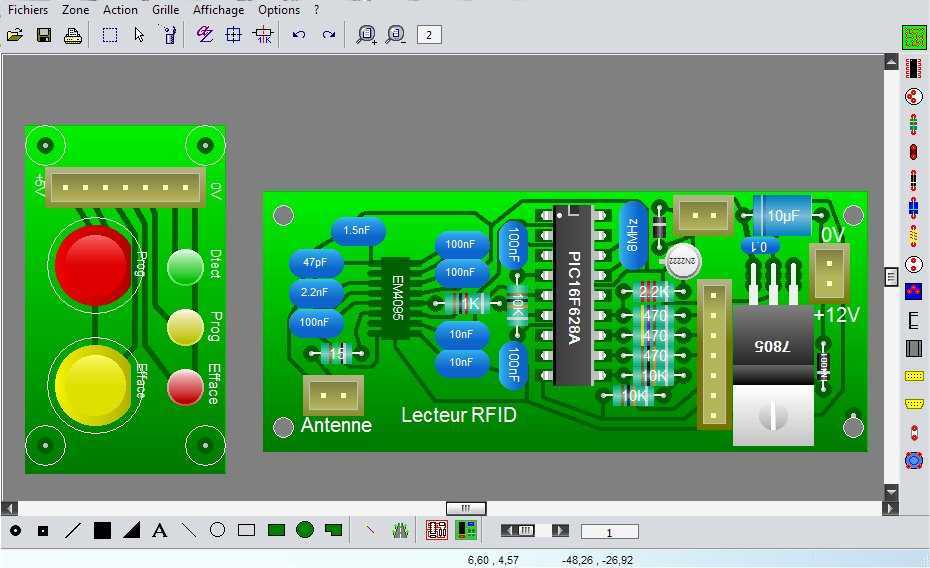
WinCircuit
WinCircuit is a software of realization of drawing of printed circuit in single or double layers. Principal qualities are the facility of use and the sight in pseudo 3D which gets a vision of the circuit close to reality. More:...
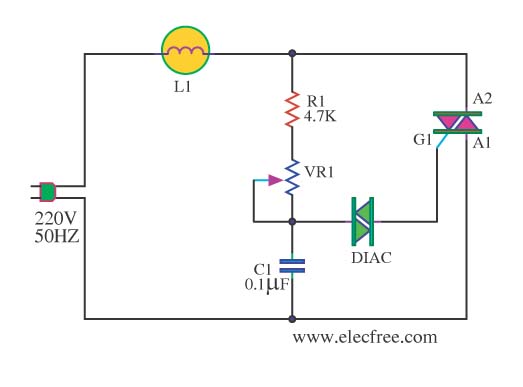
AC lights dimmer with triac
This circuit is designed to dim a light bulb with a maximum power rating of 100W. If the triac experiences high temperatures, it is essential to use a heat sink or allow for adequate heat dissipation. The diac functions as...

simple lamp dimmer 220v using triac
A very simple dimmer circuit with only the essentials. In this circuit, the values are given for a BT138 at 220V AC. For 115V AC, experimentation with values may be necessary. R1 can vary from one triac to another; it...
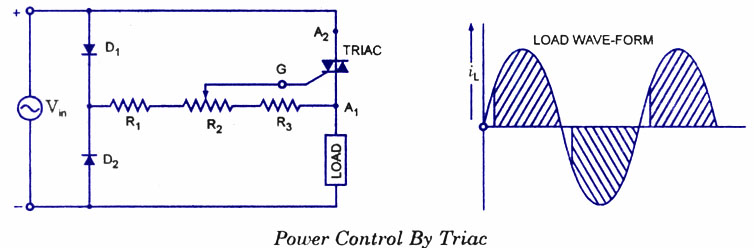
Triac Applications
Next to SCR, the triac is the second most commonly used component in the thyristor family. It has largely replaced SCR in many control applications due to its bidirectional conductivity. Key applications include motor speed regulation, temperature control, illumination control,...
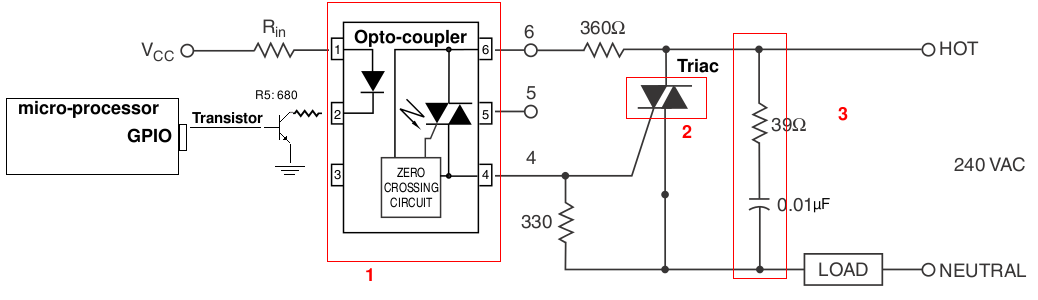
ac TRIAC dimmer circuit design help (resistive load)
A light-dimming control system is being developed for a 240V heat lamp with a power dissipation of approximately 250W. The objective is to adjust the heat output of the lamp using control from a microprocessor. The development is based on...
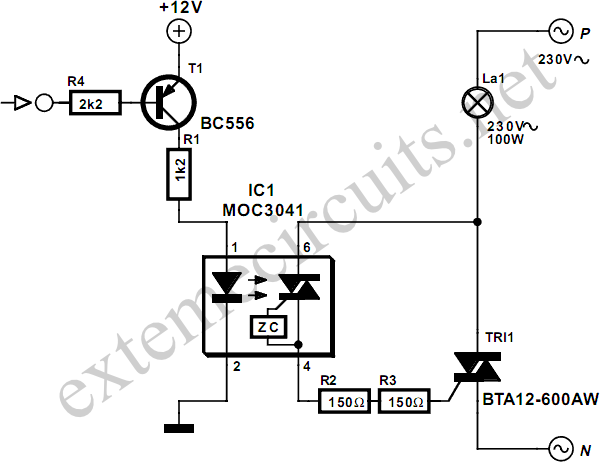
DC Control for Triacs
A relay is an effective solution for switching a mains voltage circuit, particularly in applications where long switching times and high currents are present. However, a...
A relay is an electromechanical switch that uses an electromagnetic coil to control the opening...
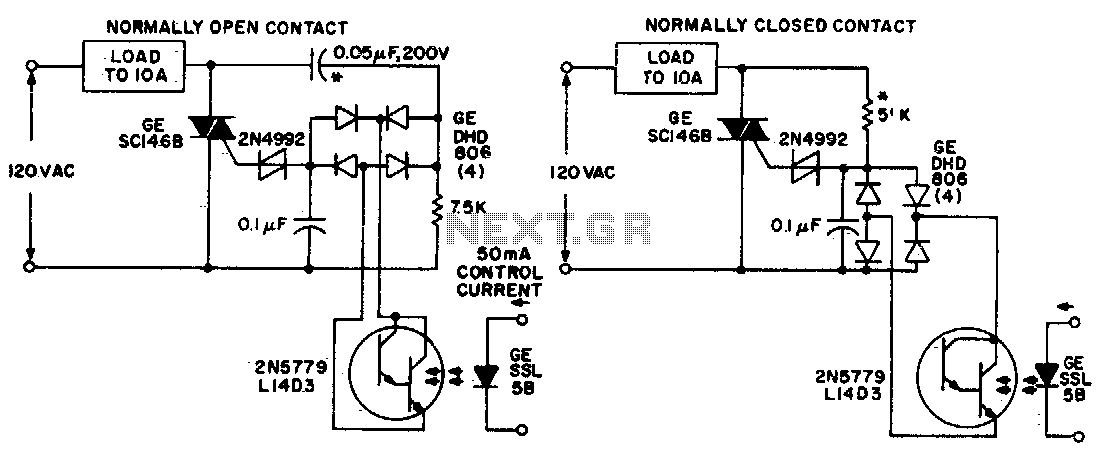
Light isolated solid state power relay circuits
Both circuits utilize the GE SC146B, a 200 V, 10 A Triac for load current contacts. These triacs are activated by standard SBS (2N4992) trigger circuits, which are managed by a photo-Darlington configuration, functioning through the DA806 bridge as an...
What should I take in account when using a more powerful triac
The resistance of the heater is constructed using 9 Ω nichrome wire with a diameter of 3 mm. When supplied with 240V (rms) voltage, this configuration results in a current of 25A (rms). Access to a mains line that can...