


A radiation detector with a solid-state PIN-diode sensor
#radiation detector
#PIN-diode
#sensor
#gamma-photon
#Maxim
#measurement
#electronics
#DIY
#instrumentation
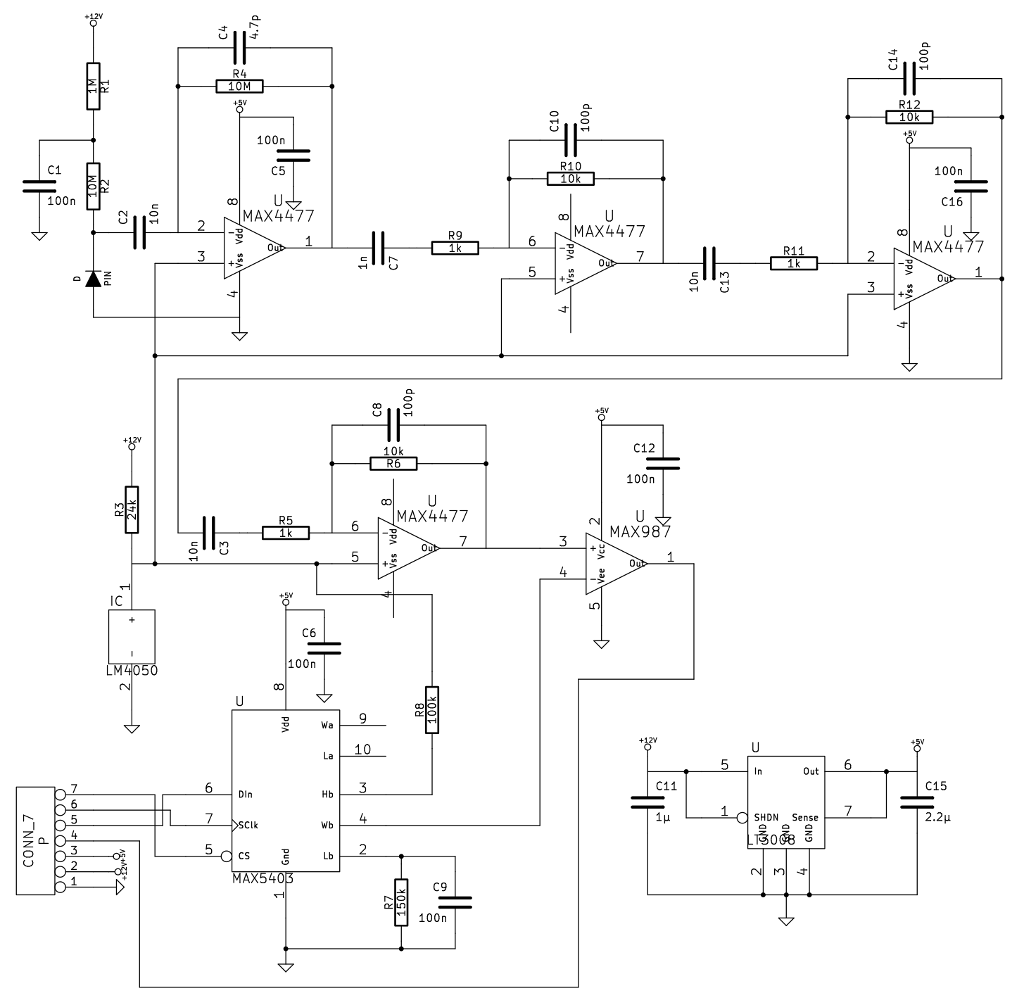
Description: A noteworthy application note from Maxim detailed a gamma-photon detector utilizing a standard PIN diode as its sensing element. The circuit design appeared straightforward, prompting the decision to construct it, as having multiple measurement instruments is always beneficial.
The gamma-photon detector circuit primarily employs a PIN diode, which is favored for its sensitivity and fast response time to gamma radiation. The PIN diode operates in reverse bias, allowing it to detect the ionization produced by incoming gamma photons. When a gamma photon interacts with the diode, it generates electron-hole pairs, leading to a measurable current flow proportional to the intensity of the radiation.
The circuit typically includes a few essential components: a biasing resistor, an operational amplifier (op-amp) for signal amplification, and a microcontroller or analog-to-digital converter (ADC) for processing the output signal. The biasing resistor is crucial for establishing the reverse bias across the PIN diode, ensuring optimal performance and sensitivity.
The op-amp is configured in a non-inverting amplifier configuration, which boosts the small current generated by the diode. The gain of the op-amp can be adjusted to suit the specific application requirements, allowing for versatile usage in different radiation environments.
The output from the op-amp can be fed into a microcontroller, which can process the signal further, providing digitized data for display or logging. This microcontroller can also implement additional features, such as threshold detection, alarm systems for high radiation levels, or data transmission capabilities for remote monitoring.
Overall, the simplicity of the circuit design, combined with the effectiveness of the PIN diode as a sensor, makes this gamma-photon detector an accessible and valuable tool for radiation measurement in various applications, from scientific research to safety monitoring in nuclear facilities.I saw a cool app-note from Maxim that described a gamma-photon detector which used a regular PIN-diode as a sensor. The actual circuit looked simple enough so I decided build it, you can never have too many measurement instruments right?..
The gamma-photon detector circuit primarily employs a PIN diode, which is favored for its sensitivity and fast response time to gamma radiation. The PIN diode operates in reverse bias, allowing it to detect the ionization produced by incoming gamma photons. When a gamma photon interacts with the diode, it generates electron-hole pairs, leading to a measurable current flow proportional to the intensity of the radiation.
The circuit typically includes a few essential components: a biasing resistor, an operational amplifier (op-amp) for signal amplification, and a microcontroller or analog-to-digital converter (ADC) for processing the output signal. The biasing resistor is crucial for establishing the reverse bias across the PIN diode, ensuring optimal performance and sensitivity.
The op-amp is configured in a non-inverting amplifier configuration, which boosts the small current generated by the diode. The gain of the op-amp can be adjusted to suit the specific application requirements, allowing for versatile usage in different radiation environments.
The output from the op-amp can be fed into a microcontroller, which can process the signal further, providing digitized data for display or logging. This microcontroller can also implement additional features, such as threshold detection, alarm systems for high radiation levels, or data transmission capabilities for remote monitoring.
Overall, the simplicity of the circuit design, combined with the effectiveness of the PIN diode as a sensor, makes this gamma-photon detector an accessible and valuable tool for radiation measurement in various applications, from scientific research to safety monitoring in nuclear facilities.I saw a cool app-note from Maxim that described a gamma-photon detector which used a regular PIN-diode as a sensor. The actual circuit looked simple enough so I decided build it, you can never have too many measurement instruments right?..
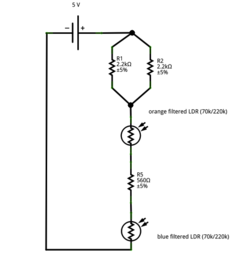
Instrumentation circuit
The mechanical chassis prototype, as illustrated in the accompanying image, was constructed using two materials: foam and aluminum. Foam was selected for its ease of manipulation, while aluminum was chosen for its excellent strength-to-weight ratio. The prototype features a rotary...
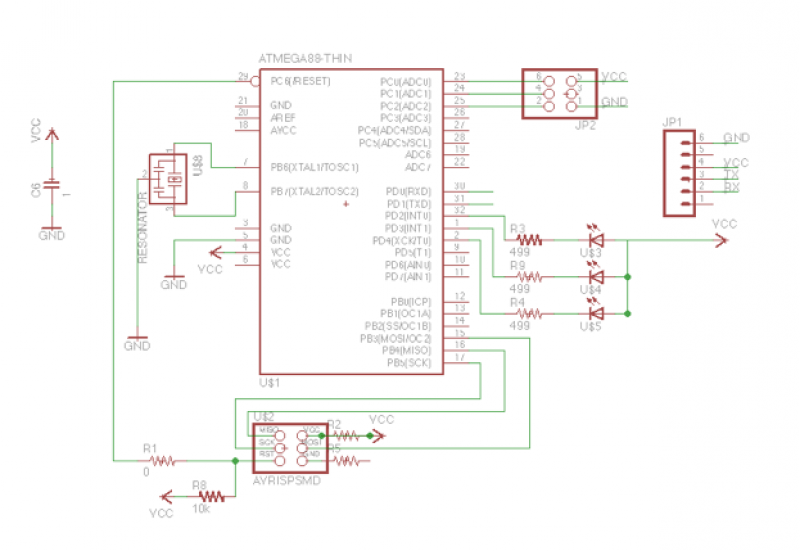
Add a sensor to a board and measure something with it
This week's plan is to build a device that warns of the potential for a knockdown, which is the process by which an over-canvassed ship is laid over on her beam-ends. The risk of sinking is high during this event,...
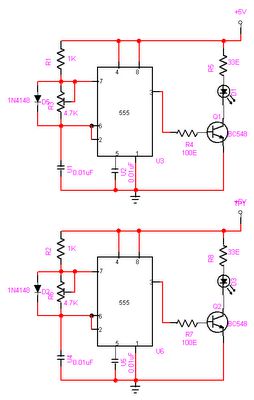
Automatic Room light Control With Bi Directional Visitor Counter
The objective of this project is to create a controller-based model that counts the number of individuals entering a specific room and activates the lighting accordingly. This is achieved through the use of sensors that detect the current number of...
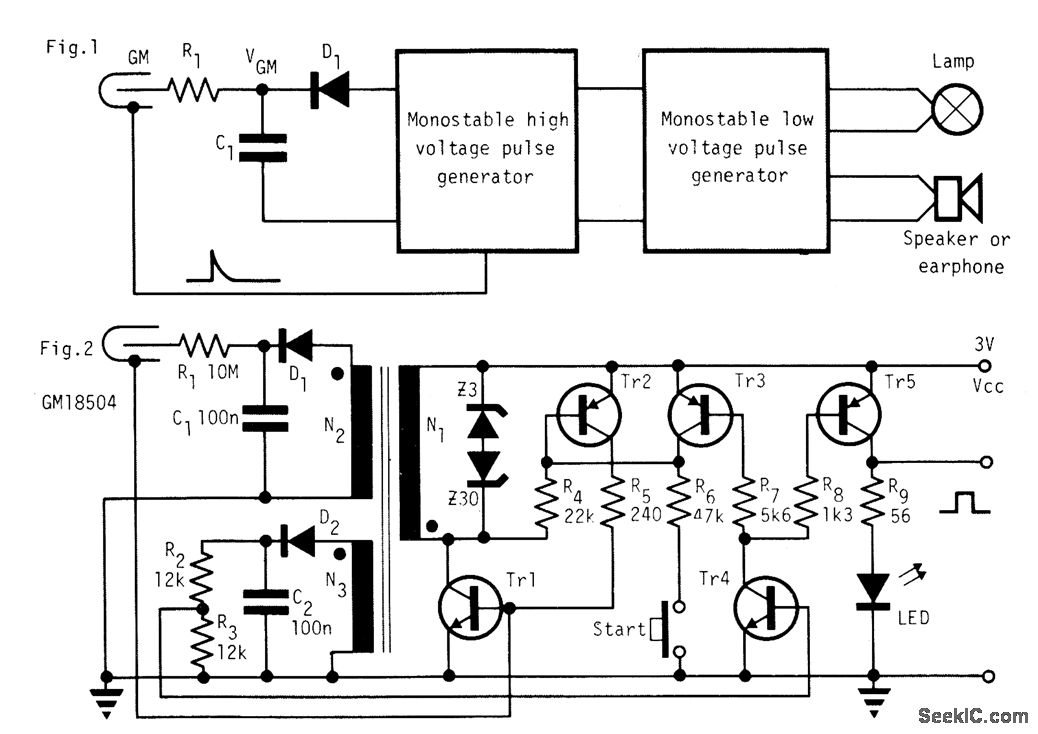
MICROPOWER RADIOACTIVE RADIATION DETECTOR
In the absence of radiation, no current is drawn. At normal background radiation levels, the power consumption is extremely low. The instrument may be left on for several months without changing batteries. In this way, the detector is always ready...
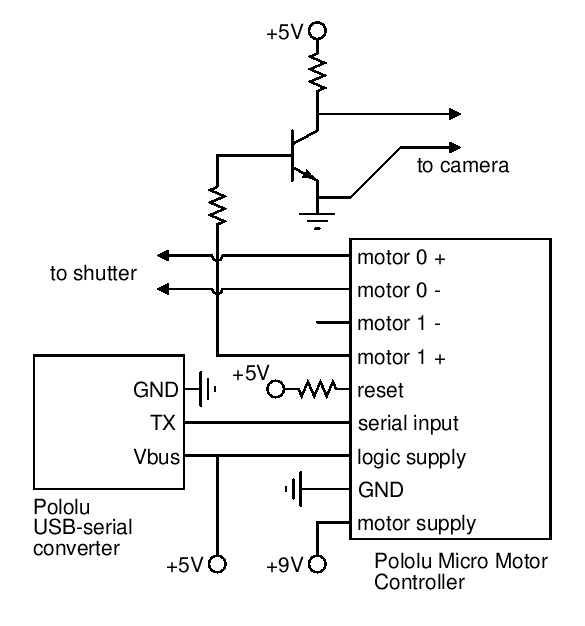
5 Minute Signal
For the past year and a half, a group based in Ann Arbor, Michigan, named GO-Tech has been formed, uniting individuals interested in creating projects using technology, such as hardware, software, metal, and wood. This initiative is referred to as...
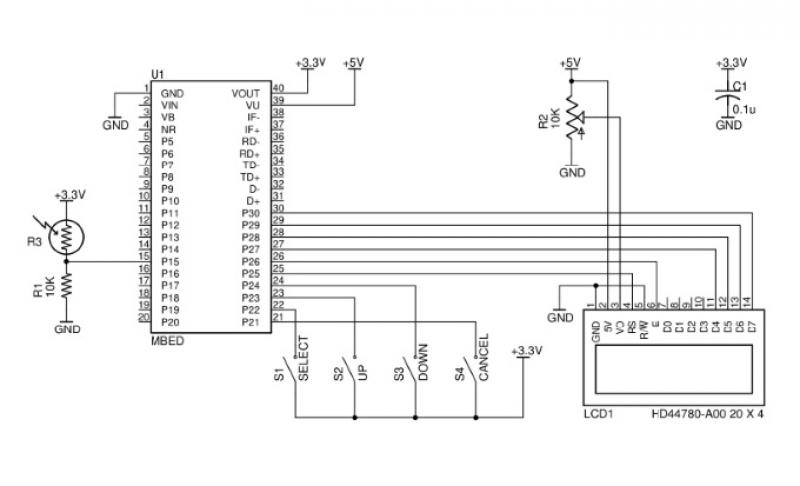
Advances in Measurement & Sensor Tech
This issue features articles on various measurement and sensor-related embedded design projects. Readers are encouraged to attempt similar projects and share their results. Starting on page 14, Petre Tzvetanov Petrov describes a multilevel audible logical probe design. Petrov notes that...
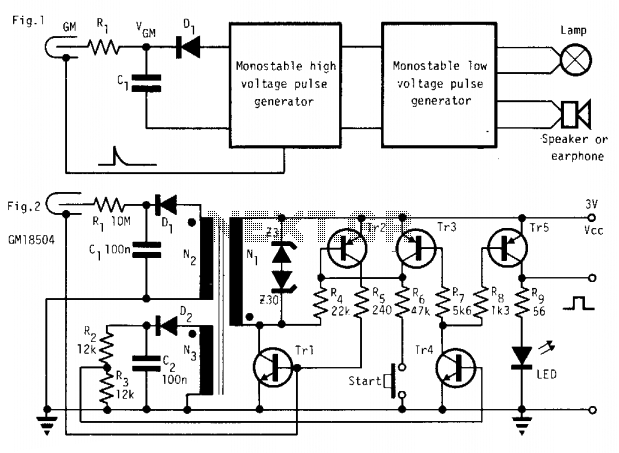
Micropower radioactive radiation detector
In the absence of radiation, no current is drawn. At normal background radiation levels, the power consumption is extremely low. The instrument may be left on for several months without changing batteries. In this way, the detector is always ready...
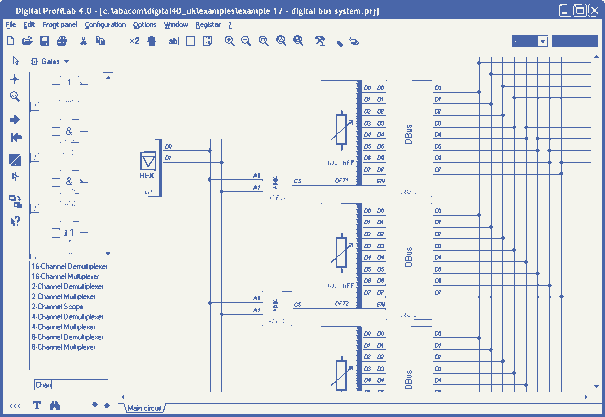
Digital-ProfiLab 4.0
Digital-ProfiLab was designed for measurement and control applications, combining features like circuit and logic simulation, front panel design, and hardware control to one powerful tool. Incoming signals from external devices may be processed and displayed. A circuit editor is used...
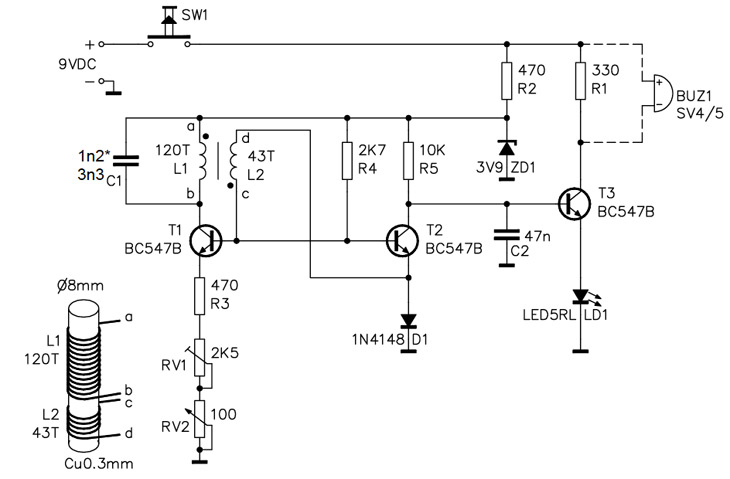
Homemade Metal Detector Kit
A simple home project can quickly become problematic if it encounters electric cables, gas, or water pipes, or the central heating system. Using a metal detector allows one to check for metal objects within walls, ceilings, or floors beforehand. An...