


MICROPOWER RADIOACTIVE RADIATION DETECTOR
#radiation detector
#low power
#LED indicator
#background radiation
#battery operated
#sensor circuit
#micropower
#radiation monitoring
#safety
#environmental sensing
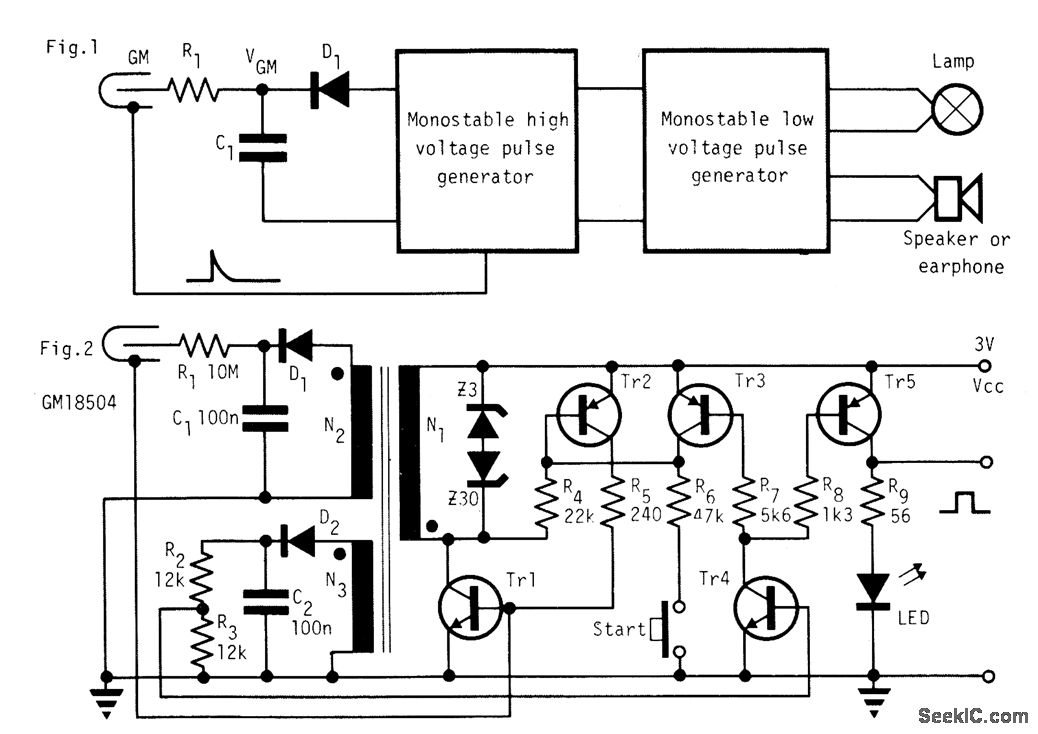
Description: In the absence of radiation, no current is drawn. At normal background radiation levels, the power consumption is extremely low. The instrument may be left on for several months without changing batteries. In this way, the detector is always ready to indicate an increase in radiation. An LED is used as an indicator lamp. With background radiation, it draws less than 50 µA. A ferrite pot core is used for the transformer with N1=30, N2=550, and N3=7. Using two 1.5V batteries with a total capacity of 0.5 Ah, the detector can operate at background radiation levels for 10,000 hours, which is more than a year.
The described radiation detector operates with minimal power consumption, ensuring prolonged functionality without the need for frequent battery replacements. The absence of radiation results in no current draw, allowing the device to remain in a standby state for extended periods. Under typical background radiation conditions, the power usage is significantly low, measured at less than 50 µA. This low power requirement is crucial for maintaining the operational readiness of the device, which can remain powered for several months on a single battery charge.
The design incorporates an LED indicator that visually signals the presence of radiation, providing immediate feedback to the user. The use of a ferrite pot core transformer is a notable feature, with winding counts of N1=30, N2=550, and N3=7, which helps in efficiently managing the voltage and current levels required for the device's operation. The transformer plays a critical role in ensuring that the detector remains sensitive to radiation changes while consuming minimal energy.
The power supply consists of two 1.5V batteries, yielding a total capacity of 0.5 Ah. This configuration allows the detector to function effectively for an impressive duration of 10,000 hours under normal background radiation levels. This longevity—exceeding one year—highlights the efficiency of the design, making it suitable for applications where continuous monitoring is essential without the burden of regular maintenance or battery replacement. The combination of low power consumption, effective battery life, and immediate visual indication of radiation levels makes this detector a valuable tool in various settings, including environmental monitoring and safety applications.In the absence of radiation, no current is drawn. At normal background radiation levels the power consumption is extremely low. The instrument may be left on for several months without changing batteries. In this way the detector is always ready to indicate an increase in radiation. An LED is used as an indicator lamp. With background radiation it draws less than 50 A ferrite pot core is used for the transformer with N1=30, N2=550, and N3=7. Using two 1. 5V batteries with 0. 5 Ah total capacity, the detector can work at background radiation levels for 0. 5 Ah + 50 A=10, 000 hours, which is more than a year.
The described radiation detector operates with minimal power consumption, ensuring prolonged functionality without the need for frequent battery replacements. The absence of radiation results in no current draw, allowing the device to remain in a standby state for extended periods. Under typical background radiation conditions, the power usage is significantly low, measured at less than 50 µA. This low power requirement is crucial for maintaining the operational readiness of the device, which can remain powered for several months on a single battery charge.
The design incorporates an LED indicator that visually signals the presence of radiation, providing immediate feedback to the user. The use of a ferrite pot core transformer is a notable feature, with winding counts of N1=30, N2=550, and N3=7, which helps in efficiently managing the voltage and current levels required for the device's operation. The transformer plays a critical role in ensuring that the detector remains sensitive to radiation changes while consuming minimal energy.
The power supply consists of two 1.5V batteries, yielding a total capacity of 0.5 Ah. This configuration allows the detector to function effectively for an impressive duration of 10,000 hours under normal background radiation levels. This longevity—exceeding one year—highlights the efficiency of the design, making it suitable for applications where continuous monitoring is essential without the burden of regular maintenance or battery replacement. The combination of low power consumption, effective battery life, and immediate visual indication of radiation levels makes this detector a valuable tool in various settings, including environmental monitoring and safety applications.In the absence of radiation, no current is drawn. At normal background radiation levels the power consumption is extremely low. The instrument may be left on for several months without changing batteries. In this way the detector is always ready to indicate an increase in radiation. An LED is used as an indicator lamp. With background radiation it draws less than 50 A ferrite pot core is used for the transformer with N1=30, N2=550, and N3=7. Using two 1. 5V batteries with 0. 5 Ah total capacity, the detector can work at background radiation levels for 0. 5 Ah + 50 A=10, 000 hours, which is more than a year.
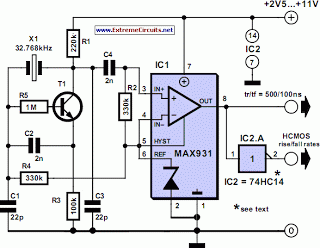
Very Low Power 32kHz Oscillator
The 32-kHz low-power clock oscillator provides several advantages compared to traditional oscillator circuits that utilize a CMOS inverter. These inverter circuits often exhibit issues such as significant fluctuations in supply currents across a 3V to 6V supply range, making it...
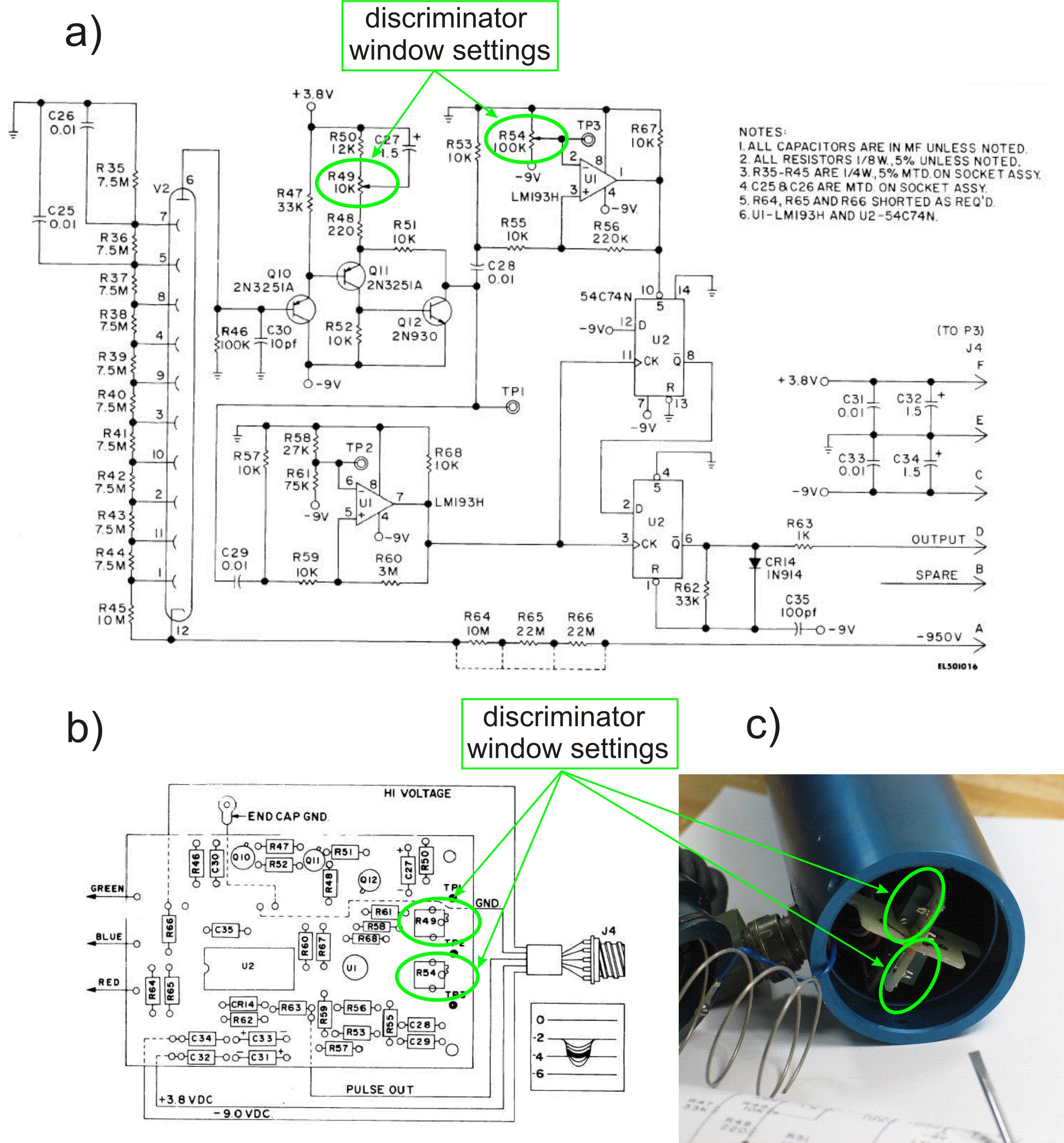
Radiation Detector and Meter DT-590A/PDR-56F Scintillation Probe
This PDF file presents the schematic diagram of a custom-built circuit designed to drive the PDR-56 probe. A JKL BXA-12579 inverter, typically used for powering cold-cathode fluorescent lamps, serves as the high-voltage power supply. The BXA-12579 generates 1,500 VAC RMS...
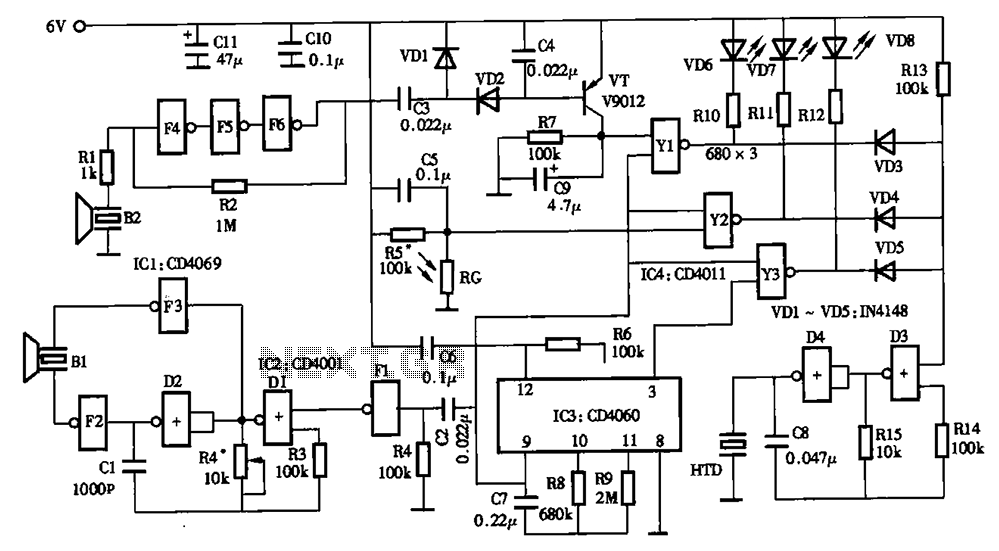
Low power timer switch
The timing circuit utilizes an electronic switch composed of F1, F2, and VT1 to reduce quiescent current to approximately 1 to 2 A with the 555 timer. Upon initial power-up, the voltage across capacitor C2 cannot instantly change, causing the...
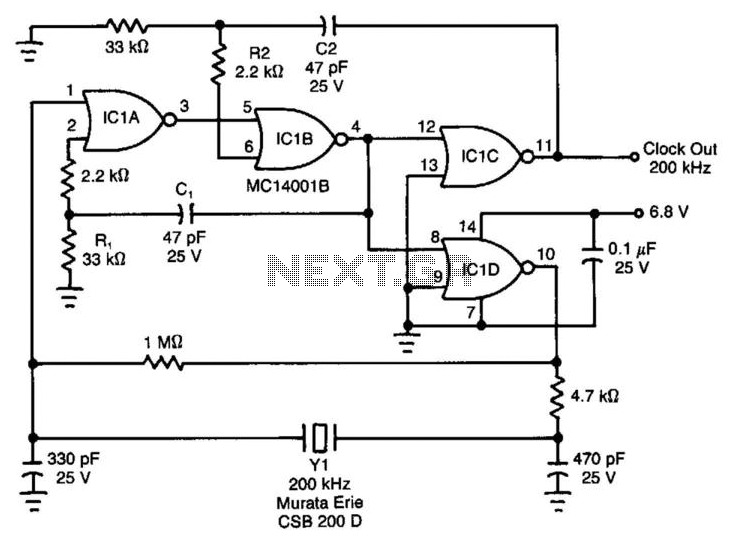
Micropower Clock
Ceramic resonators are suitable for low-power, low-frequency clock sources, despite their 30-ppm temperature coefficient. However, they exhibit troublesome spurious-resonance modes. This circuit effectively rejects all but the fundamental mode of the resonator. The clock circuit operates within a temperature range...
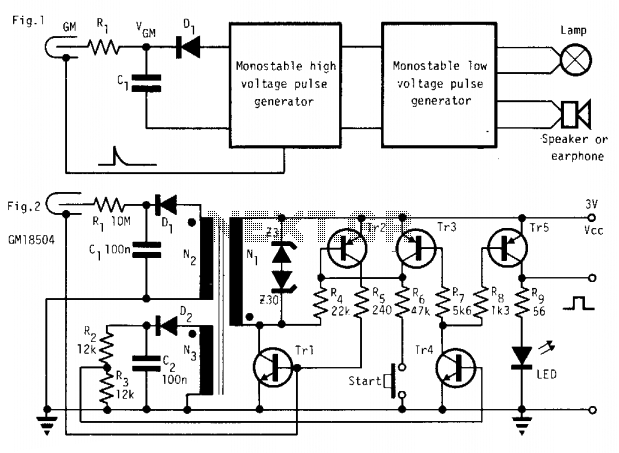
Micropower radioactive radiation detector
In the absence of radiation, no current is drawn. At normal background radiation levels, the power consumption is extremely low. The instrument may be left on for several months without changing batteries. In this way, the detector is always ready...
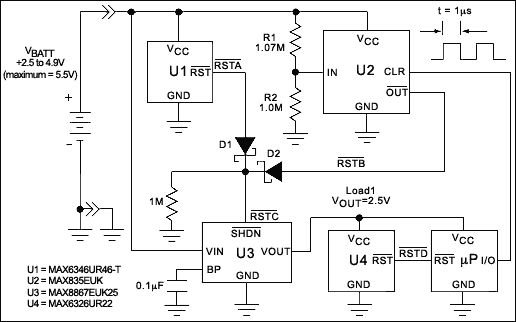
Micropower Circuit Offers Automatic Shutdown and Low-Battery Lockout
The micropower circuit automatically provides shutdown, power-up, and low-battery lockout functions without requiring software or operator control.
The micropower circuit is designed to manage power efficiently in battery-operated devices, ensuring optimal functionality while conserving energy. The shutdown feature is activated when...
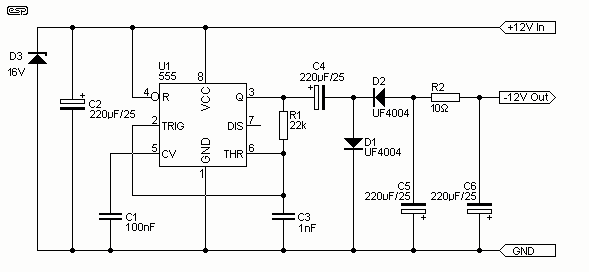
Low Power Negative Car Power Supply
I have had a lot of queries about getting a low power negative supply in cars, to power Linkwitz transform circuits and the like. There is a switchmode converter, but I must admit that it is overkill for what most...
Radiation Indicator
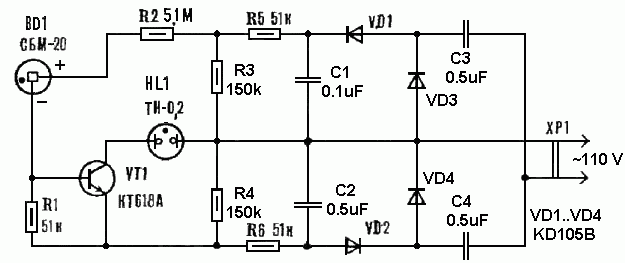
Measuring radiation does not require expensive factory-made instruments. A simple device can be constructed using a radiation detector, such as the SBM-20 or a similar type. The circuit operates on 220 volts AC at 50/60Hz. The double-voltage rectifier circuit consists...
Low Power consumption 5V regulator circuit
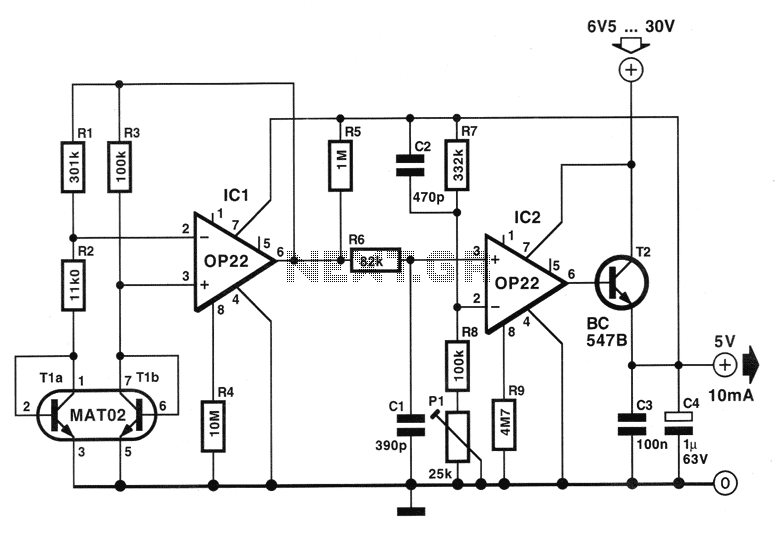
The circuit described below is notable for its low power consumption. With a 9V input and no load at the output, it draws only 50 mA, which is significantly lower than the quiescent current of a 78L05 regulator. The circuit...