


Frequency To Voltage Converter: Change Your Voltmeter To Frequency Meter
#frequency meter
#voltage converter
#tachometer
#speed sensor
#repetitive signals
#FVC
#measurement
#instrumentation
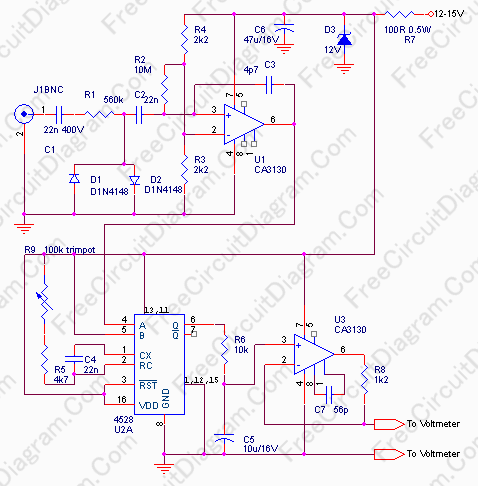
Description: A frequency meter can be utilized in speed sensors, tachometers, or any application that requires the measurement of repetitive signals. This frequency-to-voltage converter (FVC) is designed to facilitate the conversion process.
The frequency meter is an essential instrument in various applications, including automotive speed sensing and industrial tachometry. It operates by measuring the frequency of input signals, which can be derived from rotating machinery, electrical pulses, or other periodic phenomena. The output from the frequency meter can be used to determine the speed of a rotating object or the frequency of an electrical signal.
The frequency-to-voltage converter (FVC) plays a crucial role in this measurement process. It takes the frequency input and converts it into a proportional voltage output. This conversion is typically achieved through the use of operational amplifiers, resistors, and capacitors configured in a specific manner to ensure accurate linearity and response time.
In practical applications, the FVC can be integrated into a microcontroller or microprocessor system for further processing and display. The output voltage can be calibrated to represent different units, such as RPM (revolutions per minute) or Hz (hertz), allowing for easy interpretation of the data.
When designing a frequency meter circuit, considerations must include the frequency range to be measured, the input signal characteristics, and the desired output format. Additionally, filtering techniques may be employed to eliminate noise and ensure the integrity of the measurements.
Overall, the combination of a frequency meter and a frequency-to-voltage converter provides a versatile solution for measuring and interpreting repetitive signals in various engineering and industrial applications.Frequency meter can be used in speed sensor, tachometer, or any measurement of repetitive signals. This frequency to voltage converter (FVC) can be used to turn.
The frequency meter is an essential instrument in various applications, including automotive speed sensing and industrial tachometry. It operates by measuring the frequency of input signals, which can be derived from rotating machinery, electrical pulses, or other periodic phenomena. The output from the frequency meter can be used to determine the speed of a rotating object or the frequency of an electrical signal.
The frequency-to-voltage converter (FVC) plays a crucial role in this measurement process. It takes the frequency input and converts it into a proportional voltage output. This conversion is typically achieved through the use of operational amplifiers, resistors, and capacitors configured in a specific manner to ensure accurate linearity and response time.
In practical applications, the FVC can be integrated into a microcontroller or microprocessor system for further processing and display. The output voltage can be calibrated to represent different units, such as RPM (revolutions per minute) or Hz (hertz), allowing for easy interpretation of the data.
When designing a frequency meter circuit, considerations must include the frequency range to be measured, the input signal characteristics, and the desired output format. Additionally, filtering techniques may be employed to eliminate noise and ensure the integrity of the measurements.
Overall, the combination of a frequency meter and a frequency-to-voltage converter provides a versatile solution for measuring and interpreting repetitive signals in various engineering and industrial applications.Frequency meter can be used in speed sensor, tachometer, or any measurement of repetitive signals. This frequency to voltage converter (FVC) can be used to turn.
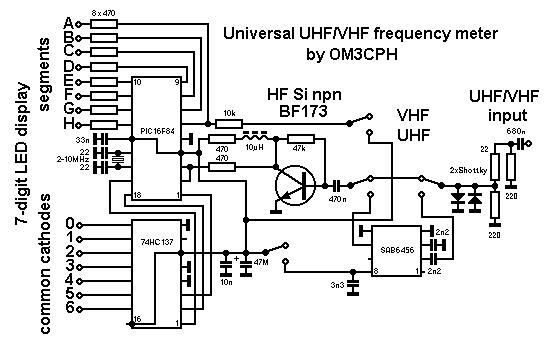
1300 Mhz Frequency meter with prescaler
Having found a u664b prescaler chip (Telefunken) from an old TV tuner, I decided to build a valid frequency counter using PIC16F84. The prescaler I use is able to divide by 64 every frequency from 30 to 1300 MHz. The...
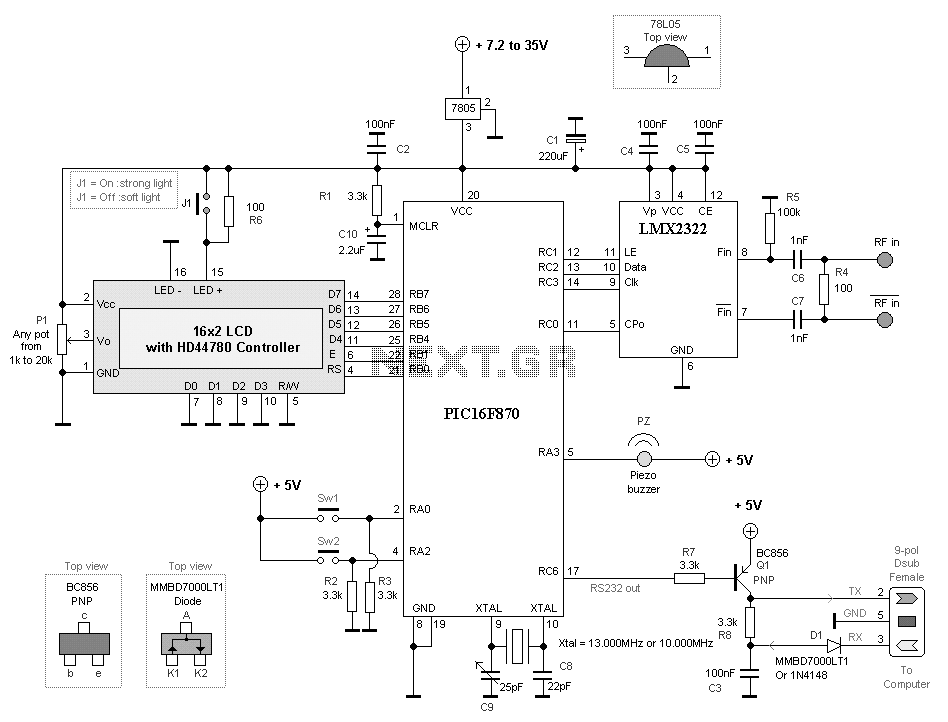
2.5 GHz Frequency meter with 2x16 LCD display
This project explains a very powerful frequency counter which has many useful software functions. The software can add or subtract 3 different IF frequencies (±455 kHz, ±10.7 MHz, and ±21.4 MHz). You have also two levels of resolutions, 1 kHz...
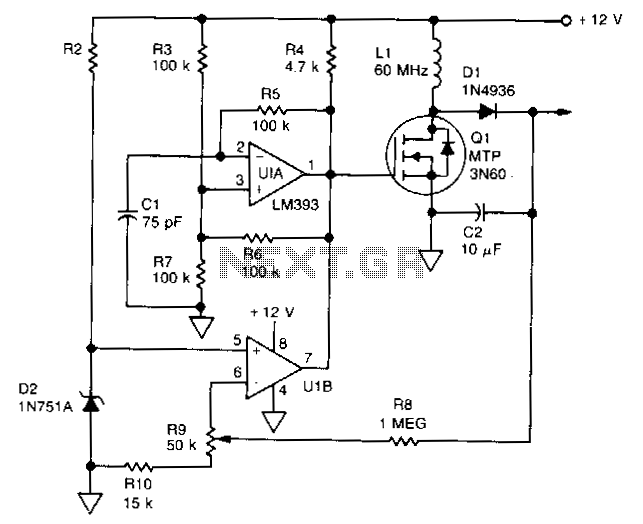
High-efficiency-flyback-voltage-converter
U1 is a dual voltage comparator with open collector outputs. The A side functions as an oscillator operating at 100 kHz, while the B side is part of the regulation circuit that compares a fraction of the output voltage to...
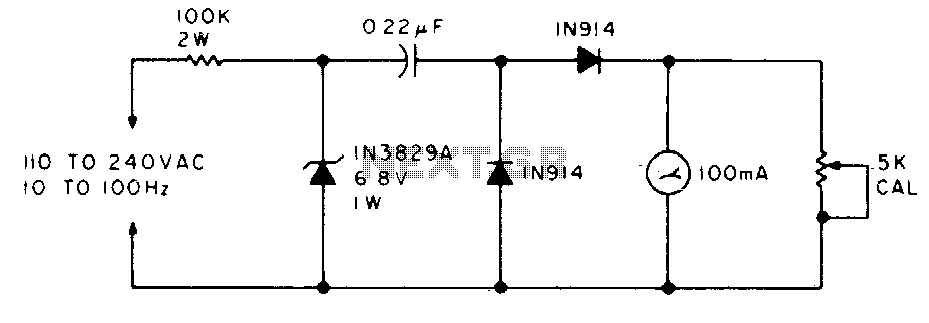
Power-line frequency meter
The meter will display the frequency from a power generator. Incoming sine waves are transformed into square waves by the 100K resistor and the 6.8 V zener diode. The square wave is differentiated by the capacitor, and the current is...
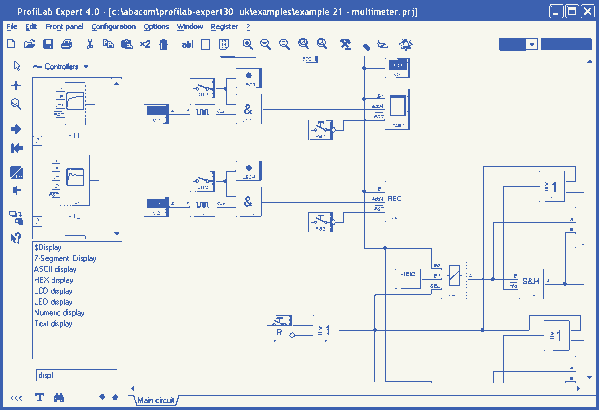
ProfiLab-Expert 4.0
The ProfiLab-Expert software allows you to develop your own digital or analogue measuring technology projects. It doesn't matter if you want to create analogue measurements or digital controls - you can realize it all. And for all this you don't...

Multi function frequency meter 0-100MHz using ICM7226B
The multifunction frequency meter is an instrument that can measure various parameters on a single display using an 8-digit 7-segment LED. The controls measure...
The multifunction frequency meter is designed to provide accurate measurements of frequency, voltage, current, and other electrical...
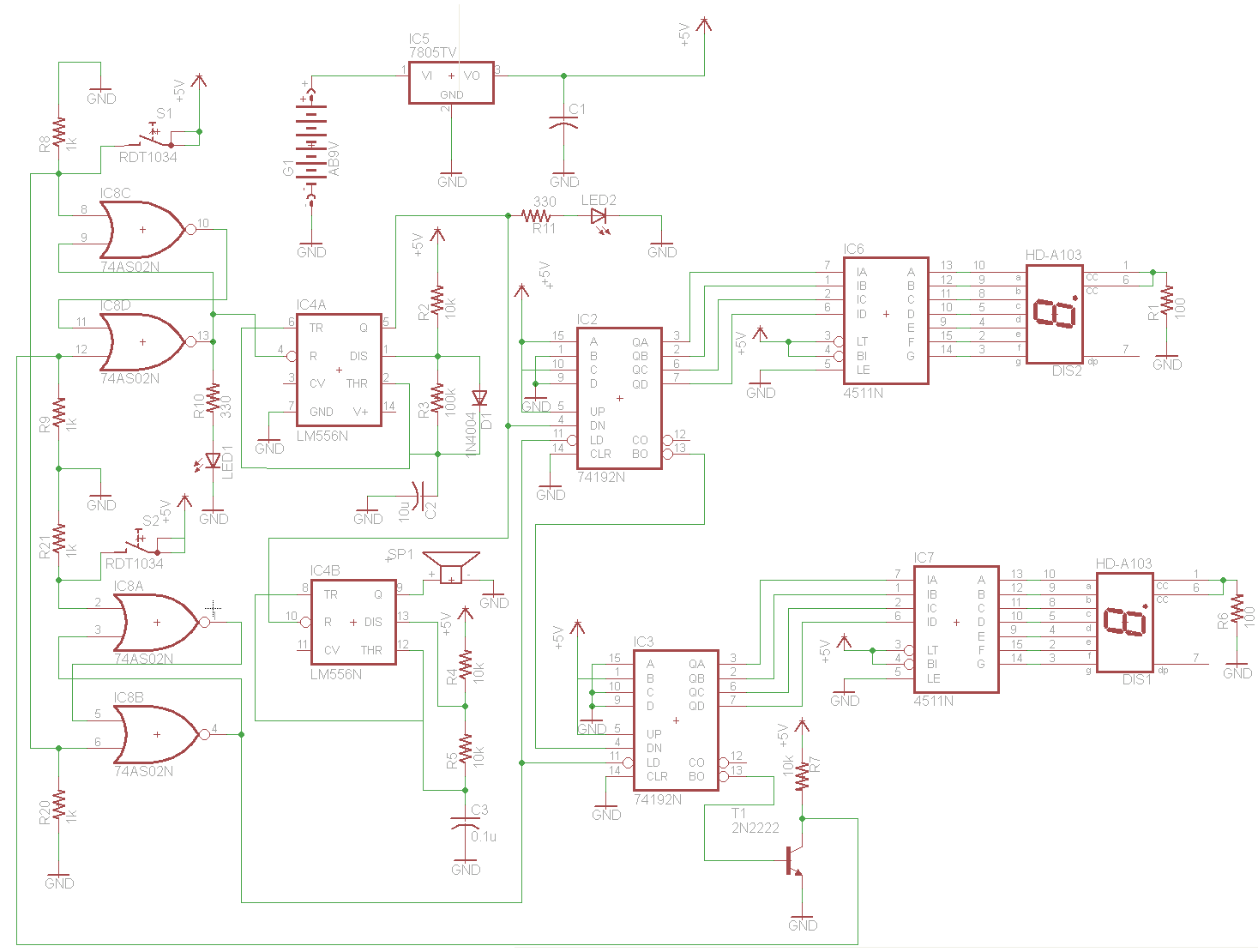
Build A Digital Tachometer/RPM Counter Circuit
The circuit for the Digital Tachometer/RPM Counter consists of a few components. They should be connected according to the provided circuit diagram. The PIC used is on a demonstration board, meaning the clock, power, and ground pins are already connected,...
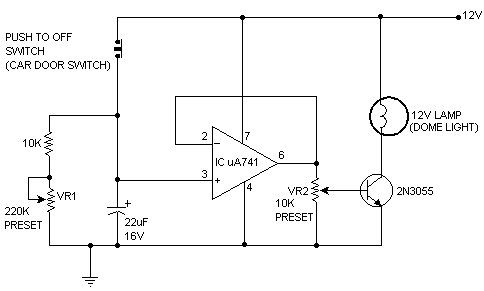
PC computer based frequency meter circuit diagram
A simple technique for measuring frequencies across a wide range with acceptable accuracy limits using a PC is presented. This method follows the basic principle of measuring low frequencies, where the period of a complete wave is measured and the...
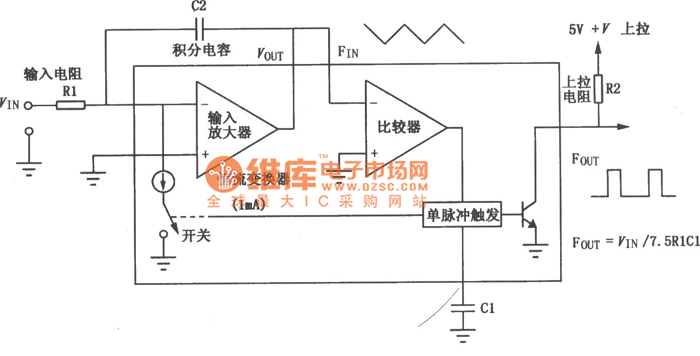
VFC62 voltage / frequencyfrequency / voltage converter circuit
The VFC62 is a voltage-to-frequency and frequency-to-voltage converter that effectively transforms analog signals into digital signals. The digital output is presented in an open collector format, where the digital pulse repetition rate is directly proportional to the amplitude of the...