


RTD Amplifier Circuit (A/D)
#RTD
#amplifier
#A/D converter
#resistance measurement
#data acquisition
#precision measurement
#sensor interface
#programmable gain amplifier
#24-bit ADC
#temperature sensor
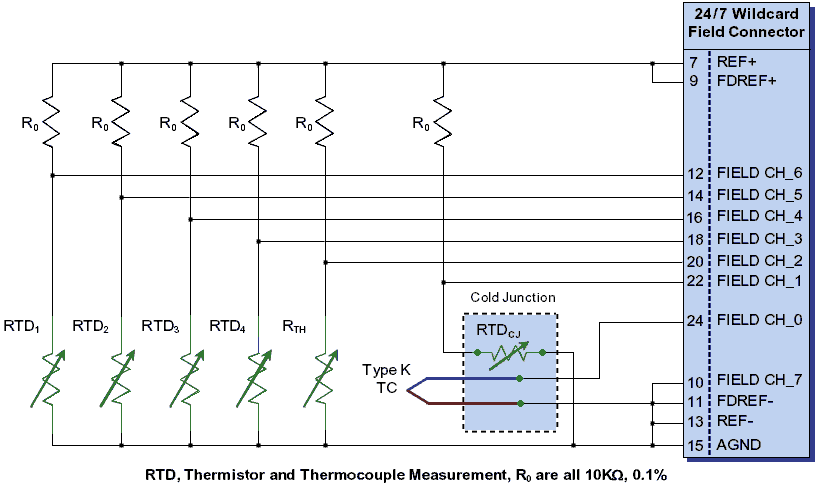
RTD sensors are measured using a precision 24-bit analog-to-digital converter (A/D) that includes a built-in programmable gain amplifier. The connections for 2-wire, 3-wire, and 4-wire RTDs are illustrated. This setup facilitates the connection and measurement of RTDs with amplifiers and data acquisition systems, ensuring precision in RTD resistance measurement.
RTD (Resistance Temperature Detector) sensors are widely utilized for temperature measurement due to their accuracy and stability. The precision 24-bit A/D converter enhances the resolution of the measured signals, allowing for fine detection of temperature changes. The built-in programmable gain amplifier is crucial as it adjusts the signal level to optimize the A/D conversion process, particularly when dealing with low-level signals that may be generated by RTDs.
In terms of wiring configurations, RTDs can be connected in three different ways: 2-wire, 3-wire, and 4-wire. The 2-wire configuration is the simplest but is prone to errors due to lead resistance. The 3-wire configuration compensates for lead resistance, making it more accurate than the 2-wire setup. The 4-wire configuration is the most accurate, as it eliminates the effects of lead resistance entirely by using separate pairs of wires for the current supply and voltage measurement.
The integration of amplifiers and data acquisition systems with RTD sensors allows for enhanced measurement capabilities. Amplifiers can boost the output signal from the RTD to a level suitable for processing by the A/D converter, while data acquisition systems can digitize the signal for further analysis and monitoring. This combination is essential in applications where precision temperature measurement is critical, such as in industrial processes, HVAC systems, and laboratory environments.
Overall, the use of a precision 24-bit A/D converter, along with a programmable gain amplifier and various RTD connection configurations, provides a robust solution for accurate temperature measurement and monitoring in diverse applications.RTD sensors are measured with a precision 24-bit A/D (analog to digital converter) with built-in programmable gain amplifier. Connections for 2-wire RTDs, 3-wire RTDs, and 4-wire RTDs are shown. Connecting and measuring RTDs with amplifiers and data acquisition systems. Precision RTD resistance measurement..
RTD (Resistance Temperature Detector) sensors are widely utilized for temperature measurement due to their accuracy and stability. The precision 24-bit A/D converter enhances the resolution of the measured signals, allowing for fine detection of temperature changes. The built-in programmable gain amplifier is crucial as it adjusts the signal level to optimize the A/D conversion process, particularly when dealing with low-level signals that may be generated by RTDs.
In terms of wiring configurations, RTDs can be connected in three different ways: 2-wire, 3-wire, and 4-wire. The 2-wire configuration is the simplest but is prone to errors due to lead resistance. The 3-wire configuration compensates for lead resistance, making it more accurate than the 2-wire setup. The 4-wire configuration is the most accurate, as it eliminates the effects of lead resistance entirely by using separate pairs of wires for the current supply and voltage measurement.
The integration of amplifiers and data acquisition systems with RTD sensors allows for enhanced measurement capabilities. Amplifiers can boost the output signal from the RTD to a level suitable for processing by the A/D converter, while data acquisition systems can digitize the signal for further analysis and monitoring. This combination is essential in applications where precision temperature measurement is critical, such as in industrial processes, HVAC systems, and laboratory environments.
Overall, the use of a precision 24-bit A/D converter, along with a programmable gain amplifier and various RTD connection configurations, provides a robust solution for accurate temperature measurement and monitoring in diverse applications.RTD sensors are measured with a precision 24-bit A/D (analog to digital converter) with built-in programmable gain amplifier. Connections for 2-wire RTDs, 3-wire RTDs, and 4-wire RTDs are shown. Connecting and measuring RTDs with amplifiers and data acquisition systems. Precision RTD resistance measurement..
Amplifier Timer Circuit Schematic
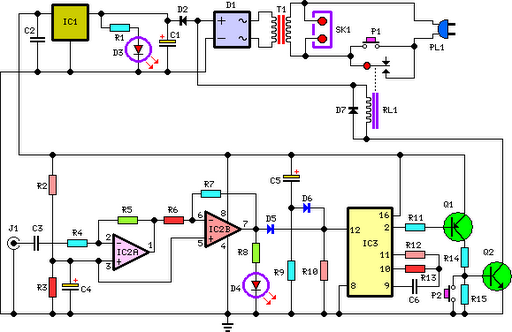
This circuit deactivates an amplifier or any connected device when a low-level audio signal at its input is absent for at least 15 minutes. Pressing P1 turns the device on, supplying power to any appliance connected to SK1. The input...
A/D converter 16Bit with LCD and PIC18F2550
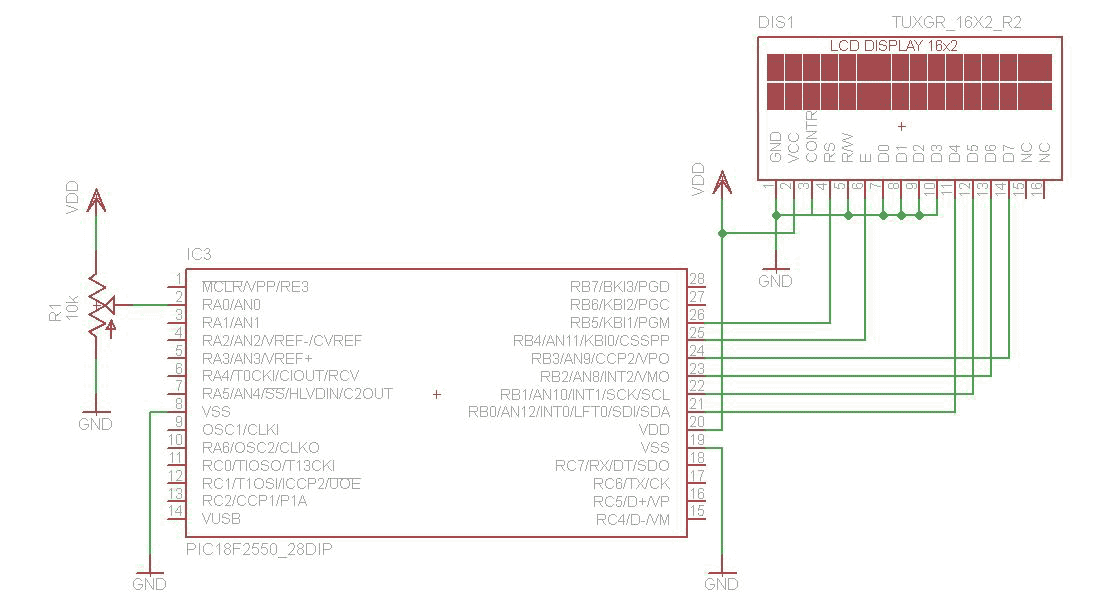
The analog to digital converter (ADC) is commonly required in most of the projects. Analog voltage measurement can be done using the ADC hardware built in together in a PIC. The picture below shows a simple setup for measuring the...
Linear Resistance Meter
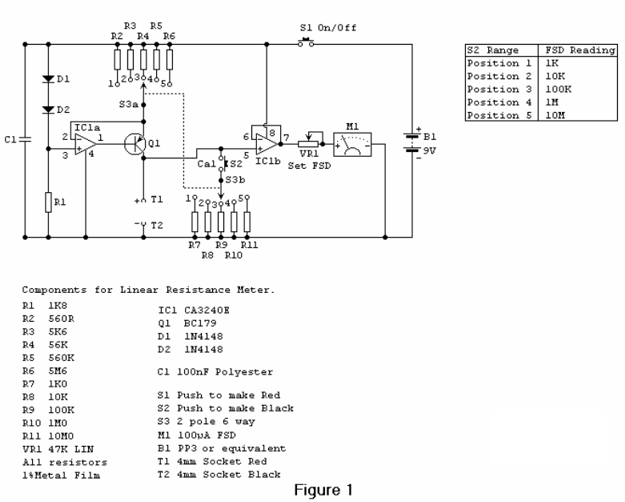
Most analog multimeters are capable of measuring resistance over a wide range of values, but they can be inconvenient to use due to the reverse reading scale, which is also non-linear.
Analog multimeters, often referred to as VOMs (Volt-Ohm-Milliammeter), are versatile...
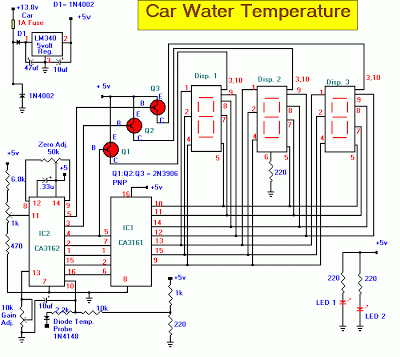
car temperature gauge
The Car Temperature Gauge is fundamentally similar to March's project, with some minor modifications to the input circuit. This circuit will display the water temperature with a resolution of 1 degree.
The Car Temperature Gauge circuit is designed to accurately monitor...
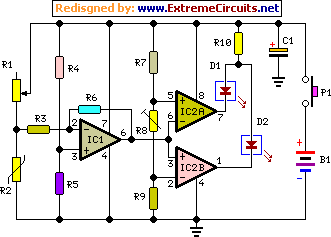
Energy Leak Detector
This sensitive circuit functions as a comparator, detecting minor temperature variations relative to the ambient temperature. It was primarily designed to identify drafts around doors and windows that lead to energy loss, but it can also be utilized in various...
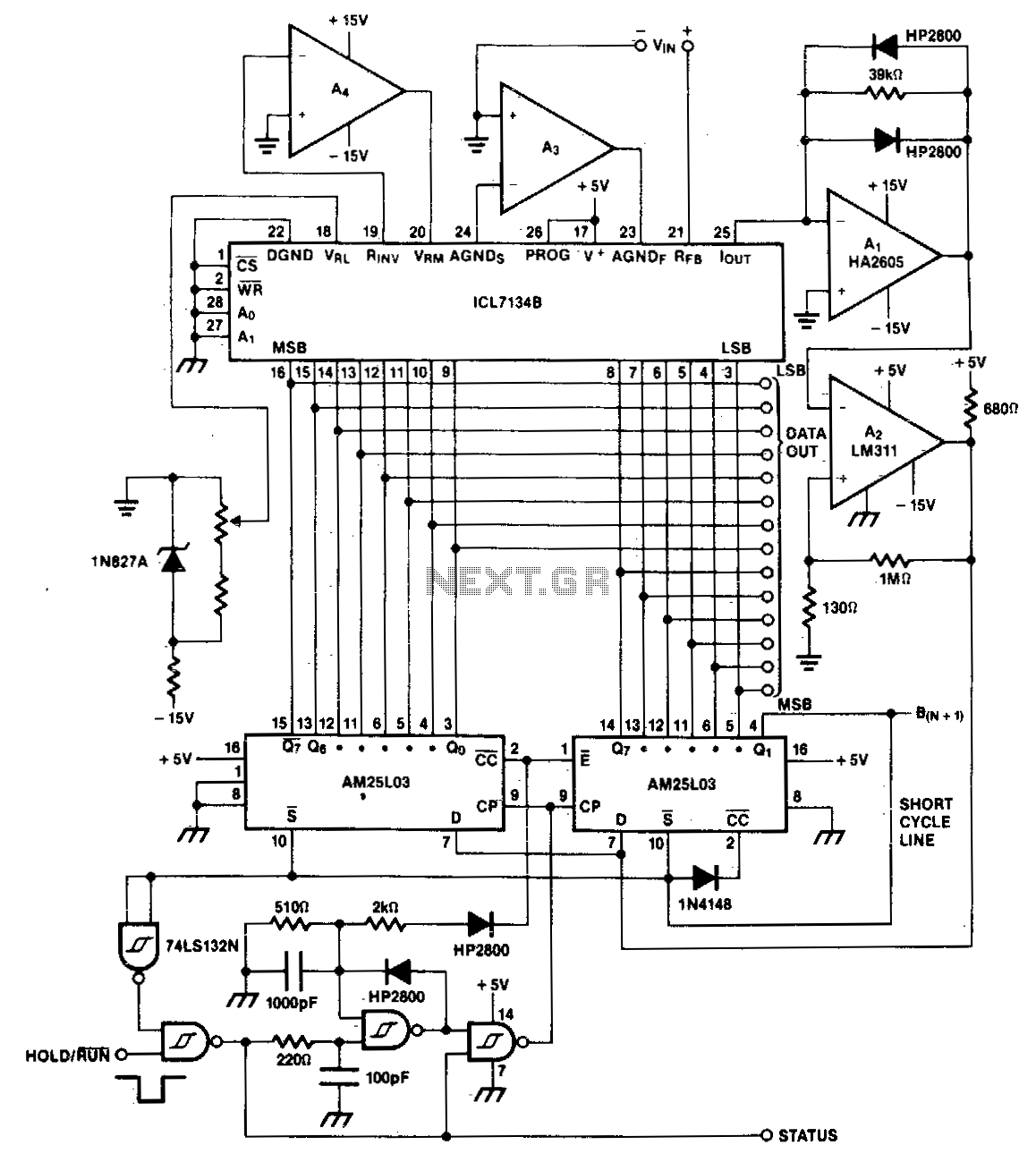
Successive approximation a-d converter
A bipolar input, high-speed A/D converter utilizes two AM25L03 devices to create a 14-bit successive approximation register. The comparator consists of a two-stage circuit featuring an HA2605 front-end amplifier, which is employed to minimize settling time issues at the summing...
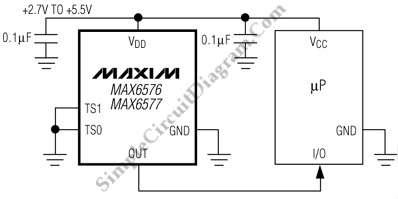
SOT Temperature Sensors with Period/Frequency Output
This is a low-current temperature sensor with a single-wire output. The number of pins required to interface with a microprocessor is minimized by this design.
The low-current temperature sensor operates efficiently by utilizing a single-wire communication protocol, which significantly reduces the...
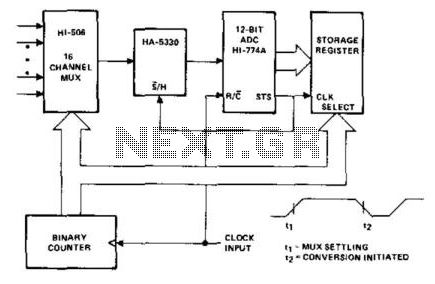
Data Acquisition System I
The HI-506 multiplexer functions as an analog input selector, which is controlled by a binary counter to select the appropriate channel. The HA-5330 serves as a high-speed sample and hold circuit. The sample/hold control is connected to the status (STS)...
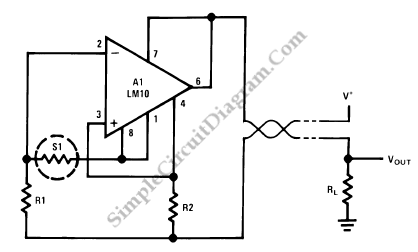
Resistance Thermometer Current Loop Transmitter
A resistance temperature sensor (RTD, resistive temperature device) is available in two types: NTC (negative temperature coefficient) and PTC (positive temperature coefficient).
Resistance Temperature Detectors (RTDs) are essential components in temperature measurement systems. They operate on the principle that the electrical...