


ATmega8 based RPM Meter
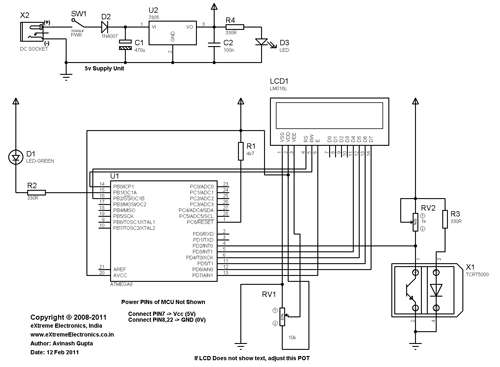
Description: This document outlines the procedure for creating a simple RPM meter using the AVR ATmega8 microcontroller. The RPM meter designed will operate in a contactless manner.
The RPM meter circuit utilizes the AVR ATmega8 microcontroller, which is a popular 8-bit microcontroller known for its versatility and efficiency in handling various applications. The contactless feature of the RPM meter allows it to measure the rotational speed of a shaft or wheel without the need for physical contact, which minimizes wear and tear on both the sensor and the measured object.
The circuit typically includes a light source, such as an infrared LED, and a photodetector, like a phototransistor or photodiode. The infrared LED emits a beam that reflects off a reflective surface on the rotating object. As the object rotates, the reflective surface interrupts the beam, which is detected by the photodetector. The microcontroller processes the incoming signals from the photodetector to calculate the RPM based on the frequency of the interruptions.
The ATmega8 is programmed using embedded C or assembly language to interpret the signals and calculate the RPM. The program can be designed to display the RPM value on an LCD or send it to a computer for further analysis. Key considerations in the design include the selection of suitable components, calibration of the system for accurate measurements, and the implementation of noise filtering techniques to ensure reliable operation in various environmental conditions.
Power supply considerations should also be addressed, with the circuit typically powered by a regulated DC source to ensure stable operation of the microcontroller and peripheral components. Proper grounding and layout techniques are essential to minimize electromagnetic interference and ensure accurate readings.Hello All, Today I will show you how you can make a simple RPM Meter using AVR ATmega8. The RPM meter we will be making is a contact less type.
The RPM meter circuit utilizes the AVR ATmega8 microcontroller, which is a popular 8-bit microcontroller known for its versatility and efficiency in handling various applications. The contactless feature of the RPM meter allows it to measure the rotational speed of a shaft or wheel without the need for physical contact, which minimizes wear and tear on both the sensor and the measured object.
The circuit typically includes a light source, such as an infrared LED, and a photodetector, like a phototransistor or photodiode. The infrared LED emits a beam that reflects off a reflective surface on the rotating object. As the object rotates, the reflective surface interrupts the beam, which is detected by the photodetector. The microcontroller processes the incoming signals from the photodetector to calculate the RPM based on the frequency of the interruptions.
The ATmega8 is programmed using embedded C or assembly language to interpret the signals and calculate the RPM. The program can be designed to display the RPM value on an LCD or send it to a computer for further analysis. Key considerations in the design include the selection of suitable components, calibration of the system for accurate measurements, and the implementation of noise filtering techniques to ensure reliable operation in various environmental conditions.
Power supply considerations should also be addressed, with the circuit typically powered by a regulated DC source to ensure stable operation of the microcontroller and peripheral components. Proper grounding and layout techniques are essential to minimize electromagnetic interference and ensure accurate readings.Hello All, Today I will show you how you can make a simple RPM Meter using AVR ATmega8. The RPM meter we will be making is a contact less type.
lf352 Programming the AVR microcontroller with GCC libc 1.0.4
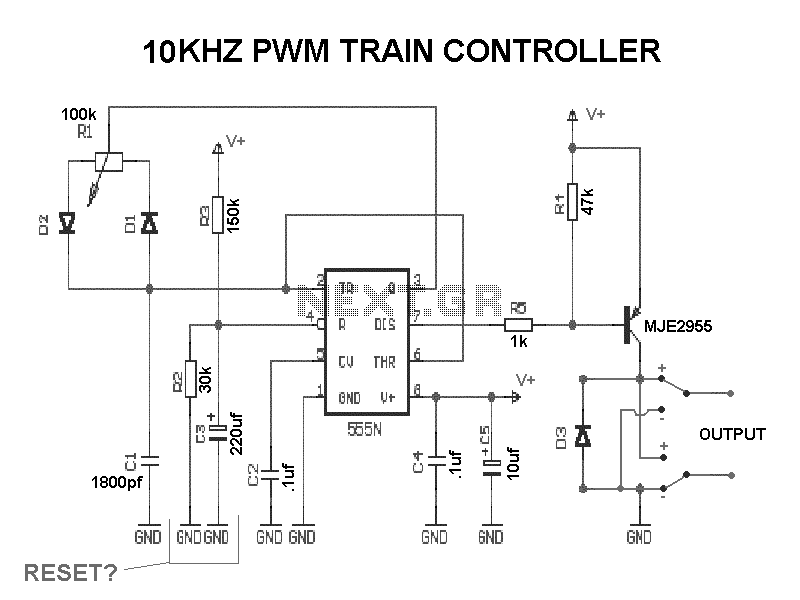
The AVR 8-Bit RISC microcontroller from Atmel is a widely used microcontroller. This microcontroller integrates EEPROM, RAM, an Analog to Digital converter, numerous digital input and output lines, timers, UART for RS-232 communication, and various other features. An article was...
AVR Programming The Hardware
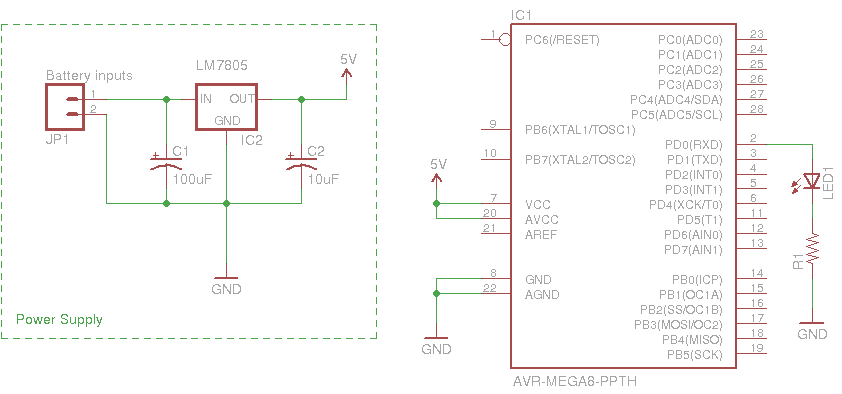
The most eloquent code in the history of embedded systems is rendered worthless without a means to execute it on the hardware.
In embedded systems design, the execution of code on hardware is a critical aspect that determines the overall functionality...
Talking Yoda head
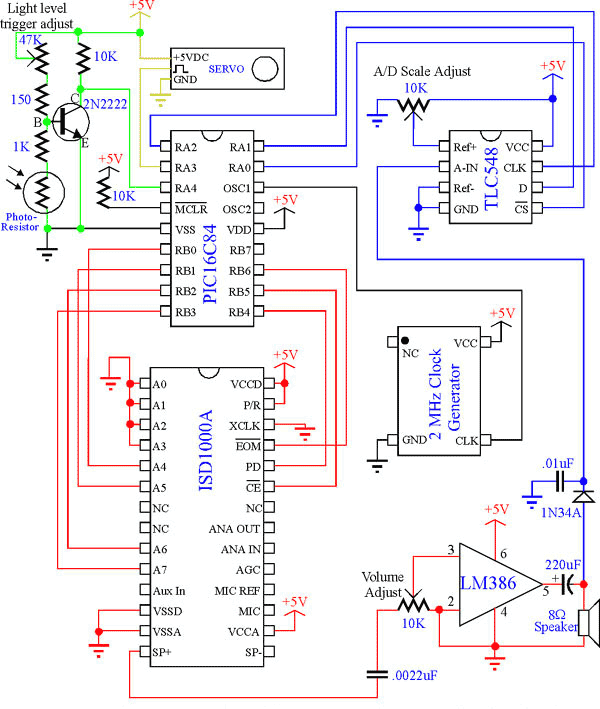
The talking Yoda head consists of a Yoda mask and a microcontroller system to achieve the desired operation/effect. The basic operation of the project was specified as follows: The head was to be placed inside a closed box. Upon opening...
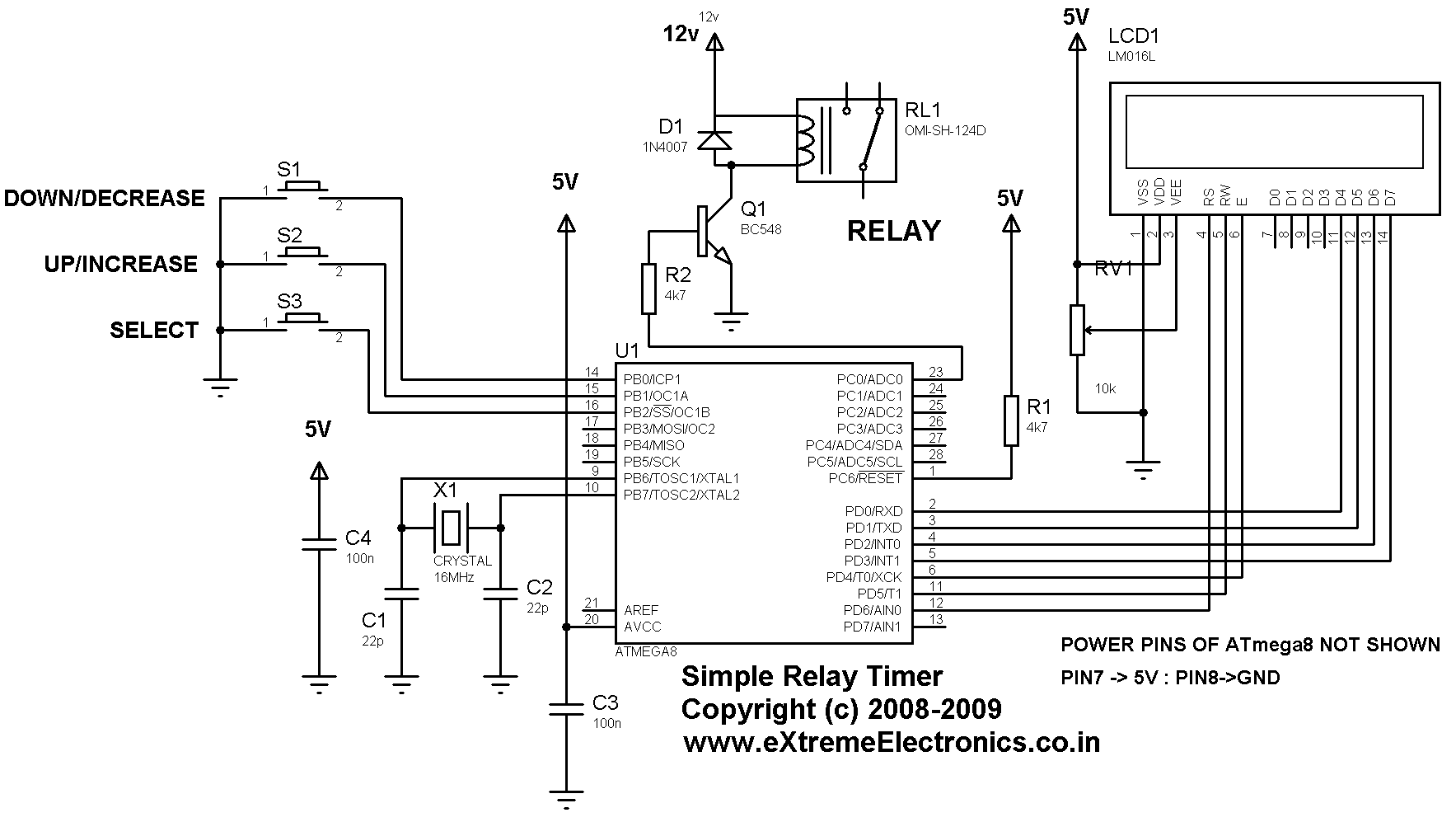
Relay Timer with ATmega8 AVR MCU
A simple timer that can be used to turn a load on or off after a user-specified time. The prototype was developed using the xBoard MINI, a low-cost and easy-to-use ATmega8 development board. The program was burned to the MCU's...
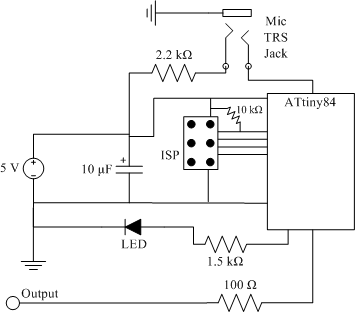
clap sensor construction
The clap sensor is a straightforward circuit that consists of a PC microphone, a microcontroller, and an output. The circuit design features the ATtiny84 microcontroller, chosen for familiarity with the AVR architecture and accessibility to necessary tools. The ATtiny84 is...
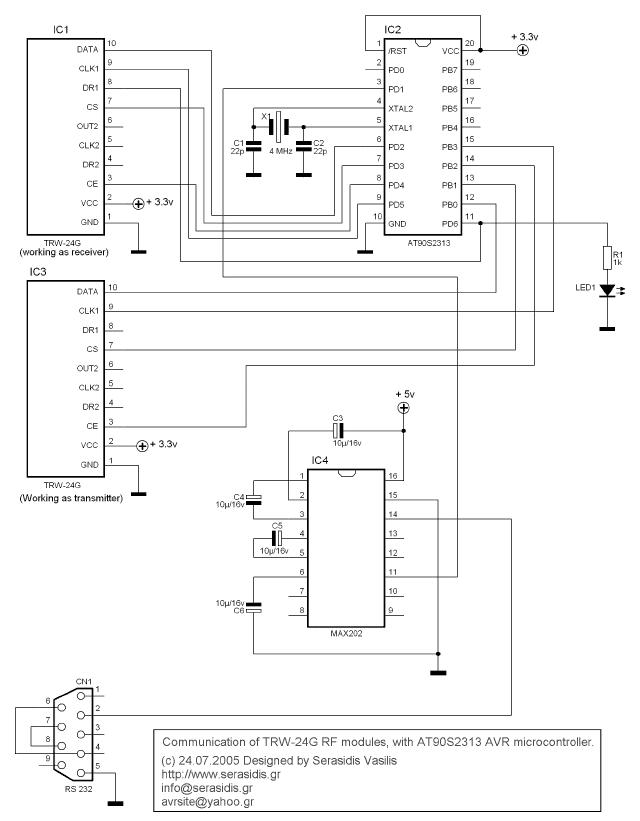
communication with AVR microcontroller
The TRW-24G connector pins are quite small, approximately 1mm apart. To address this issue, an adaptor PCB has been ordered to convert the small connector of the RF module to a standard pin connector. The pin arrangement of the RF...
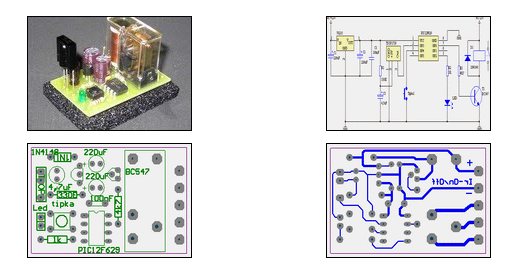
IR On/Off Switch Using Microcontroller
The ability to turn electrical devices ON or OFF using a remote control is a well-established concept, with numerous devices effectively performing this function.
To implement a remote control system for switching electrical devices, a typical schematic would include several key...
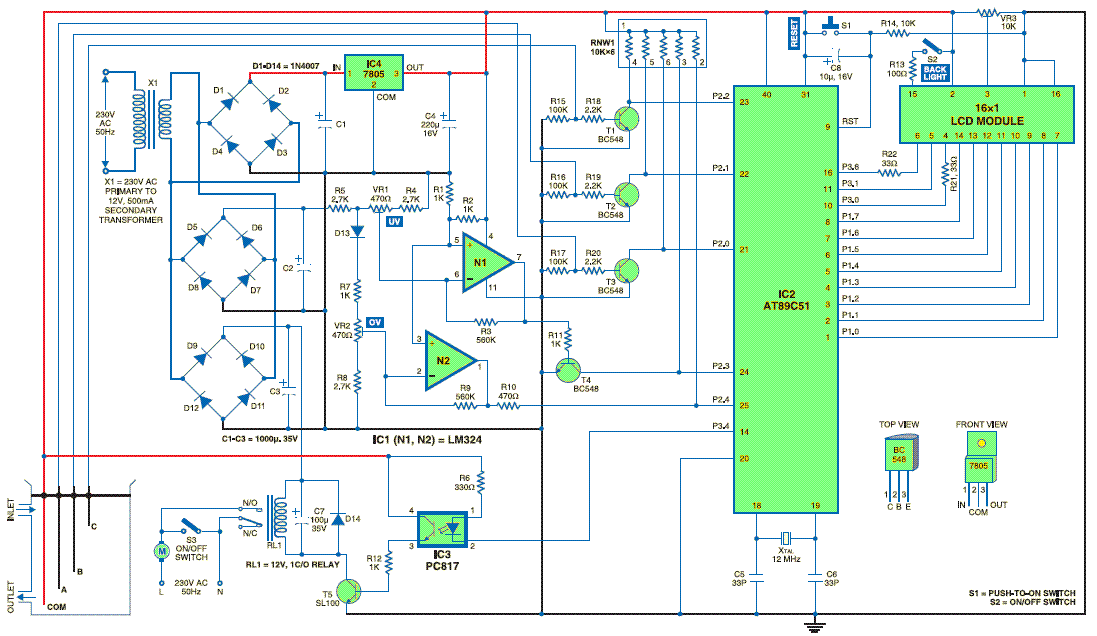
Water Level controller
The microcontroller-based water level controller and motor protector manages the on and off states of the motor based on the water level in the overhead tank (OHT). It regulates the tank's water level through a microcontroller, thereby providing automatic protection...
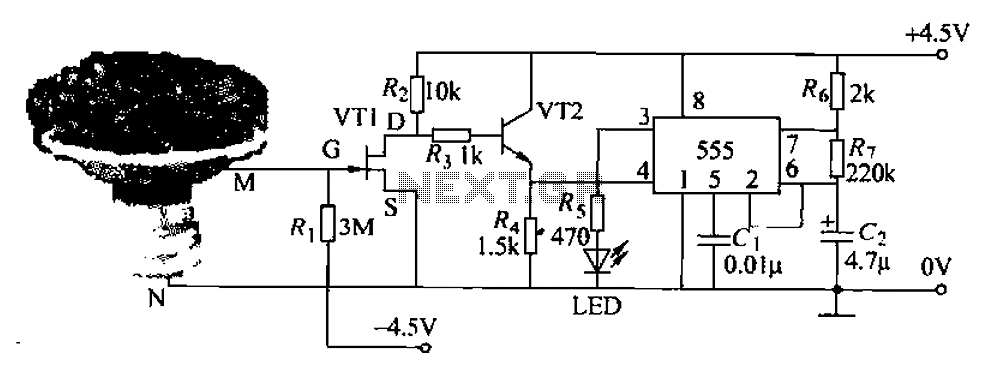
Pots water alarm circuit
The flowers in pots require watering, as relying solely on the observation of moist soil surfaces can be unreliable. To address this issue, a flower watering indicator has been developed. This circuit includes a field effect transistor (VT1), a second...