


Make-Yourself ATmega32 Starters Kit with LCD I2C SPI RTC ADC interfaces
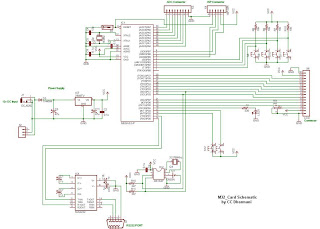
Description: This is a home-made kit featuring the ATmega32 microcontroller interface. The ATmega32 controller is equipped with various features, including 32kB of in-system programmable flash memory, 1KB of EEPROM, 2KB of SRAM, a 10-bit ADC with 8 channels, an SPI bus interface, a TWI interface compatible with I2C, a USART, and an analog comparator. These features make it an ideal choice for this kit. The M32 card includes an LCD interface with contrast adjustment, an RS232 port for PC connectivity, a connector for 8 analog voltage inputs for ADC measurement, a Real-Time Clock IC DS1307 with battery backup, four general-purpose keys, two interrupt-generating keys, and an LED. The PCB is entirely home-made, created using the etching technique with Ferric Chloride.
The ATmega32 microcontroller is a versatile and powerful component widely used in embedded systems. It operates at a maximum clock speed of 16 MHz and supports multiple communication protocols, making it suitable for various applications. The integration of 32kB flash memory allows for substantial program storage, while the 1KB EEPROM provides non-volatile data storage, ideal for retaining configuration settings or calibration data.
The kit's design incorporates an LCD interface, which facilitates user interaction by displaying information and enabling user inputs. The contrast adjustment feature enhances visibility under different lighting conditions. The inclusion of an RS232 port allows for serial communication with a PC, enabling data exchange and monitoring of the microcontroller's operation.
The analog inputs connected to the ADC enable the measurement of varying voltage levels, making the kit suitable for sensor interfacing and data acquisition applications. The Real-Time Clock (RTC) IC DS1307 is crucial for timekeeping, providing accurate time and date information, with battery backup ensuring continued operation during power outages.
The user interface is enhanced by four general-purpose keys that can be programmed for various functions, while the two interrupt keys allow for immediate response to specific events, improving the kit's interactivity. The presence of an LED can be utilized for status indication or debugging purposes.
The home-made PCB, created using the etching method with Ferric Chloride, demonstrates a practical approach to prototyping and circuit design. This method allows for the customization of the circuit layout to meet specific project requirements, making it an invaluable skill for electronics enthusiasts and professionals alike. For those interested in PCB fabrication, tutorials and resources are available online to guide users through the process from layout design to etching and finishing.Here is my home-made kit of ATmega32 microcontroller interfacing. The ATmega32 controller is rich with features like onboard 32kB in-System programmable flash, 1 KB EEPROM, 2KB SRAM, 10bit ADC (8 channel), SPI bus inteface, TWI (compatible with I2C bus) interface, an USART, analog comparator, etc. That`s why I`ve selected it to load my kit with al l those features. This M32 card is having an LCD inteface with contrast adjustment, an RS232 port for connecting with PC, a connector for 8 analog voltage inputs to measure by ADC, a Real Time Clock IC DS1307 from maxim with battery back-up, four general purpose keys, two keys for generating interrupts and an LED. The PCB is completely home-made, using the etching technique with the Ferric Chloride chemical. If you want to know how to make a PCB yourself from your layout, visit following webpage, it`s really helpful:
The ATmega32 microcontroller is a versatile and powerful component widely used in embedded systems. It operates at a maximum clock speed of 16 MHz and supports multiple communication protocols, making it suitable for various applications. The integration of 32kB flash memory allows for substantial program storage, while the 1KB EEPROM provides non-volatile data storage, ideal for retaining configuration settings or calibration data.
The kit's design incorporates an LCD interface, which facilitates user interaction by displaying information and enabling user inputs. The contrast adjustment feature enhances visibility under different lighting conditions. The inclusion of an RS232 port allows for serial communication with a PC, enabling data exchange and monitoring of the microcontroller's operation.
The analog inputs connected to the ADC enable the measurement of varying voltage levels, making the kit suitable for sensor interfacing and data acquisition applications. The Real-Time Clock (RTC) IC DS1307 is crucial for timekeeping, providing accurate time and date information, with battery backup ensuring continued operation during power outages.
The user interface is enhanced by four general-purpose keys that can be programmed for various functions, while the two interrupt keys allow for immediate response to specific events, improving the kit's interactivity. The presence of an LED can be utilized for status indication or debugging purposes.
The home-made PCB, created using the etching method with Ferric Chloride, demonstrates a practical approach to prototyping and circuit design. This method allows for the customization of the circuit layout to meet specific project requirements, making it an invaluable skill for electronics enthusiasts and professionals alike. For those interested in PCB fabrication, tutorials and resources are available online to guide users through the process from layout design to etching and finishing.Here is my home-made kit of ATmega32 microcontroller interfacing. The ATmega32 controller is rich with features like onboard 32kB in-System programmable flash, 1 KB EEPROM, 2KB SRAM, 10bit ADC (8 channel), SPI bus inteface, TWI (compatible with I2C bus) interface, an USART, analog comparator, etc. That`s why I`ve selected it to load my kit with al l those features. This M32 card is having an LCD inteface with contrast adjustment, an RS232 port for connecting with PC, a connector for 8 analog voltage inputs to measure by ADC, a Real Time Clock IC DS1307 from maxim with battery back-up, four general purpose keys, two keys for generating interrupts and an LED. The PCB is completely home-made, using the etching technique with the Ferric Chloride chemical. If you want to know how to make a PCB yourself from your layout, visit following webpage, it`s really helpful:
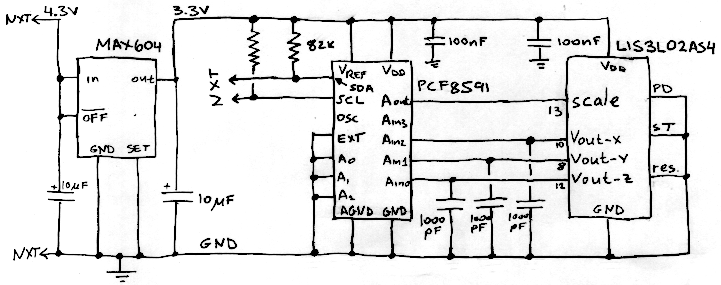
I2C Interfacing Acceleration Sensing PCF8591
This section of the I2C interfacing project focuses on constructing an acceleration sensor while also addressing two additional aspects: the advanced application of the PCF8591 chip (previously discussed in the context of the pressure sensor) and operating the bus at...
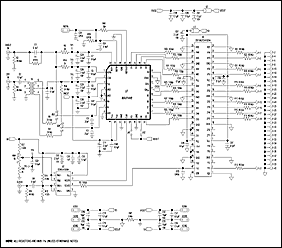
Dynamic Testing of High-Speed ADCs Part 2
The following article is a continuation of the application note titled "Defining and Testing Dynamic Parameters in High-Speed ADCs, Part 1." It outlines the test conditions and setup recommendations necessary for effectively measuring the dynamic performance parameters of high-speed analog-to-digital...
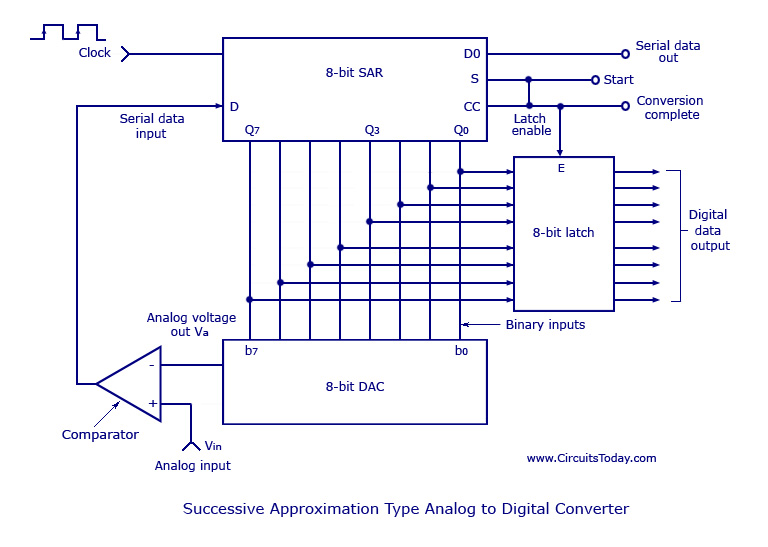
Analog to Digital Converters - Successive Approximation Typeworking
Analog to Digital Converters - Successive Approximation Type Analog to Digital Converter, working, circuit diagram.
The Successive Approximation Register (SAR) Analog to Digital Converter (ADC) is a widely used type of ADC that converts an analog signal into a digital output....
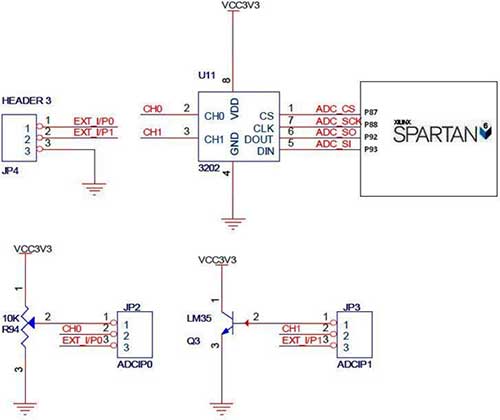
interfacing spi adc with spartan 6 fpga
The Spartan-6 board features a 2-channel, 12-bit SPI ADC, as shown in the accompanying figure. In synchronous serial communication, a clock line (SCK in the case of SPI) is used to synchronize data transfer, with the clock being controlled by...

SAA1064
Each integrated circuit (IC) on the I²C bus requires a unique address. Typically, these ICs can choose from a range of 2 to 8 possible addresses, enabling multiple chips of the same type to coexist on a single bus. The...
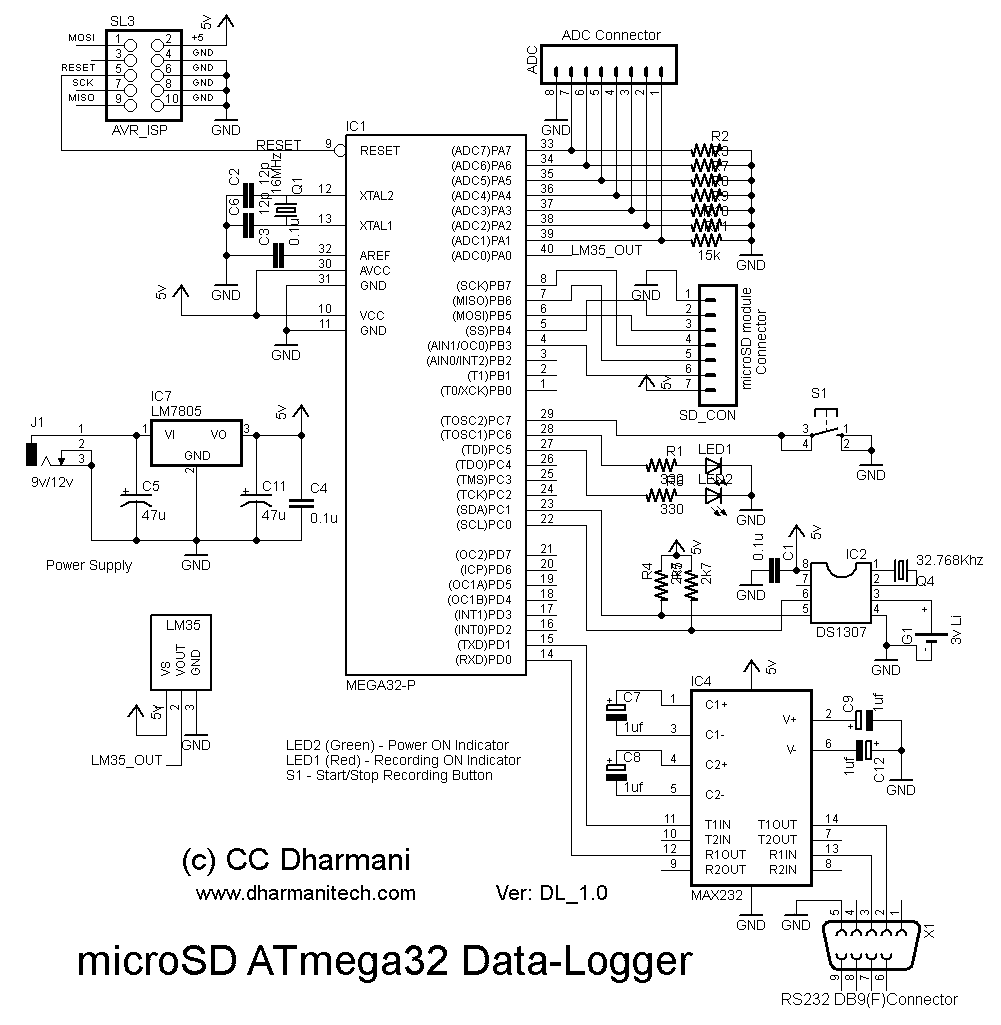
ATMEGA32 8-bit AVR Microcontroller with 32K Bytes In-System Programmable Flash
This article discusses the Gadgets, Gizmos, and Arduino (ATMega328). The content is straightforward and informative. The components mentioned in this article can enhance the understanding of the subject. For instance, readers can find and purchase components such as the ATMega328....
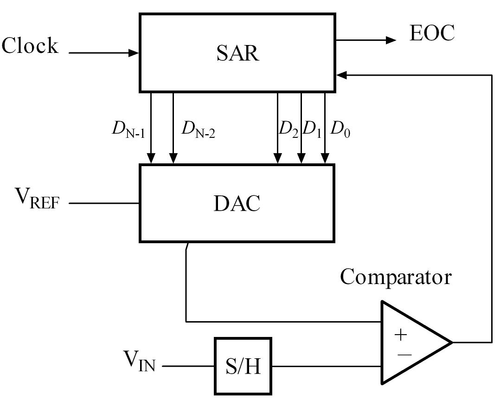
Successive Approximation ADC
An analog-to-digital converter is a device that converts a continuous quantity to a discrete time digital representation. An ADC may also provide an isolated measurement. An analog signal is any continuous signal where the time-varying feature represents another time-varying quantity....
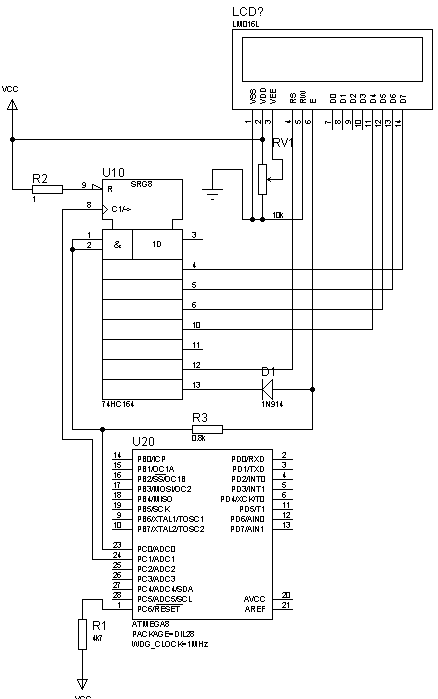
Interfacing LCD to Atmega using two wires
This is not a new idea for interfacing an LCD using two wires, but it can be beneficial in situations where there are insufficient microcontroller pins. This example is based on the Hitachi 44780 alphanumeric LCD. The provided circuit serves...
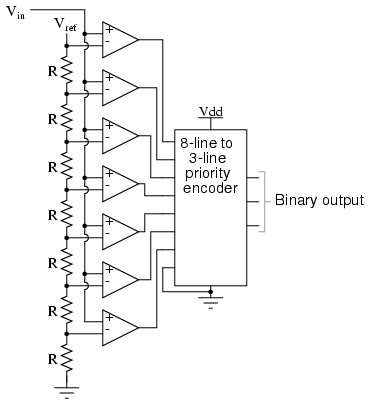
Flash ADC
Also known as the parallel A/D converter, this circuit is the simplest to understand. It consists of a series of comparators, each comparing the input voltage to a reference voltage.
The parallel analog-to-digital (A/D) converter is a fundamental circuit in electronics,...