


External circuit configuration CPU clock circuit
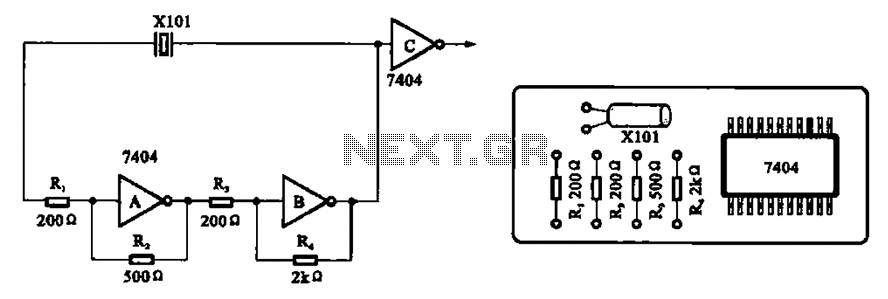
Description: A clock oscillator is commonly utilized in digital signal processing circuits and microprocessor circuits. Digital signal transmission and signal processors necessitate a clock, which serves as the system's timing signal, while the data signal functions as a synchronization signal. The most prevalent type of clock oscillator is the crystal oscillator, which supplies the clock signal necessary for digital products within the circuit configuration. It typically consists of three quartz crystals (XL01) and an inverting amplifier unit (such as the 74HC04).
The clock oscillator plays a critical role in ensuring the reliable operation of digital circuits by providing a stable and precise timing reference. In digital signal processing, accurate timing is essential for sampling, processing, and transmitting data. The oscillator generates a periodic square wave signal that is used to synchronize various components within a microprocessor or digital signal processing circuit.
The crystal oscillator is favored for its high stability and accuracy, which are achieved through the mechanical properties of quartz crystals. When an electrical signal is applied to the crystal, it vibrates at its natural resonant frequency, generating a consistent output frequency. This output can be further shaped by the inverting amplifier, which enhances the signal integrity and ensures that it meets the required voltage levels for digital logic circuits.
In the configuration involving three quartz crystals (XL01), each crystal may be tuned to different frequencies or used to create a more complex timing signal through frequency division or mixing techniques. The inverting amplifier unit, such as the 74HC04, is crucial for buffering the oscillator output, providing the necessary drive strength to interface with other digital components.
The design and implementation of clock oscillators must consider factors such as power consumption, frequency stability, and temperature variations, which can affect the performance of the oscillator. Therefore, careful selection of components and circuit topology is essential to achieve the desired specifications for a particular application. Clock oscillator is typically used digital signal processing circuit and a microprocessor circuit (digital signal processing circuit is a microprocessor). Digital signal transm ission, signal processors require a clock, which is the system and the beat signal is a time signal, while the data signal identification of a synchronization signal. Common clock oscillator crystal oscillator. It is to provide a clock signal circuit for digital products in the circuit configuration. It is made of three quartz XL01 and the inverting amplifier unit (in the 7074 A, B, c) formed.
The clock oscillator plays a critical role in ensuring the reliable operation of digital circuits by providing a stable and precise timing reference. In digital signal processing, accurate timing is essential for sampling, processing, and transmitting data. The oscillator generates a periodic square wave signal that is used to synchronize various components within a microprocessor or digital signal processing circuit.
The crystal oscillator is favored for its high stability and accuracy, which are achieved through the mechanical properties of quartz crystals. When an electrical signal is applied to the crystal, it vibrates at its natural resonant frequency, generating a consistent output frequency. This output can be further shaped by the inverting amplifier, which enhances the signal integrity and ensures that it meets the required voltage levels for digital logic circuits.
In the configuration involving three quartz crystals (XL01), each crystal may be tuned to different frequencies or used to create a more complex timing signal through frequency division or mixing techniques. The inverting amplifier unit, such as the 74HC04, is crucial for buffering the oscillator output, providing the necessary drive strength to interface with other digital components.
The design and implementation of clock oscillators must consider factors such as power consumption, frequency stability, and temperature variations, which can affect the performance of the oscillator. Therefore, careful selection of components and circuit topology is essential to achieve the desired specifications for a particular application. Clock oscillator is typically used digital signal processing circuit and a microprocessor circuit (digital signal processing circuit is a microprocessor). Digital signal transm ission, signal processors require a clock, which is the system and the beat signal is a time signal, while the data signal identification of a synchronization signal. Common clock oscillator crystal oscillator. It is to provide a clock signal circuit for digital products in the circuit configuration. It is made of three quartz XL01 and the inverting amplifier unit (in the 7074 A, B, c) formed.
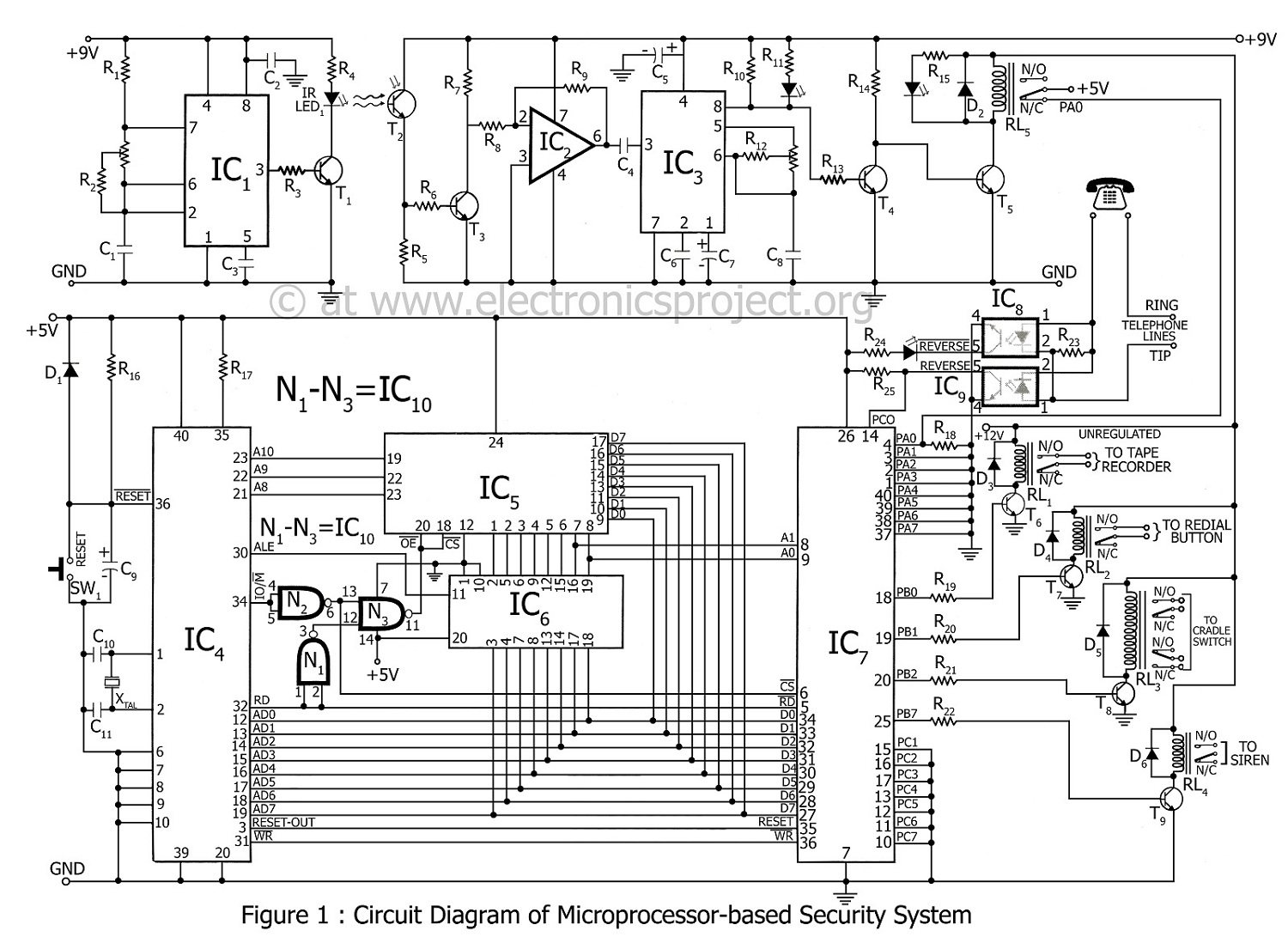
Microprocessor-based home security system
A microprocessor-based home security system project. This advanced security system not only notifies the user but also alerts the police immediately. In the 8085 microprocessor-based home security system, control is exercised over a siren, telephone (via cradle and redial switches),...
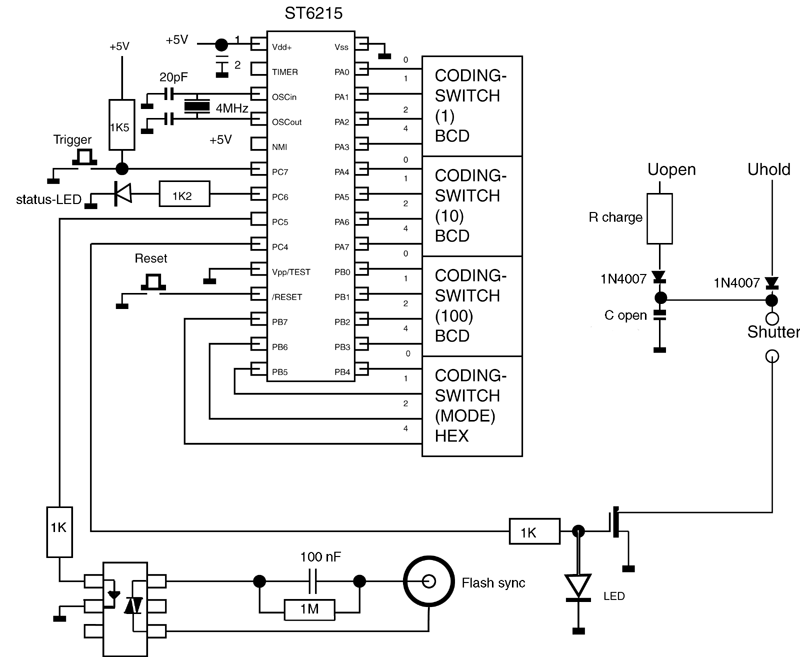
shutter
A microprocessor-controlled shutter control box for electrically driven shutters, such as the MELLES GRIOT 04 IES 003 and ILEX electric shutters. Older view camera lenses often feature shutters that may develop issues due to age or wear. While a clean,...
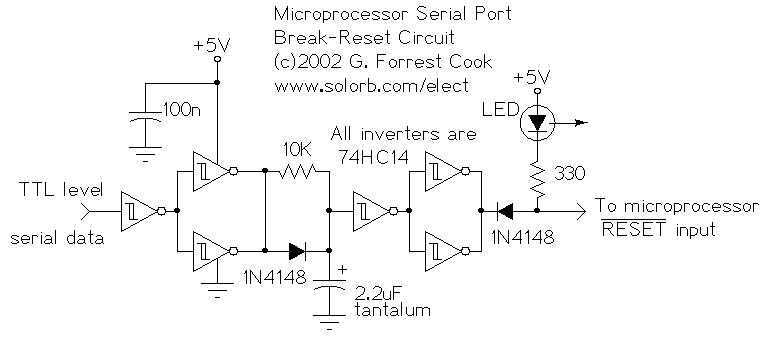
Microprocessor RS-232 Reset
This circuit allows a remote microprocessor to be reset by a controlling host over a remote RS-232 or similar protocol serial line. With the use of a program loader on the remote host, a program may be downloaded and run....
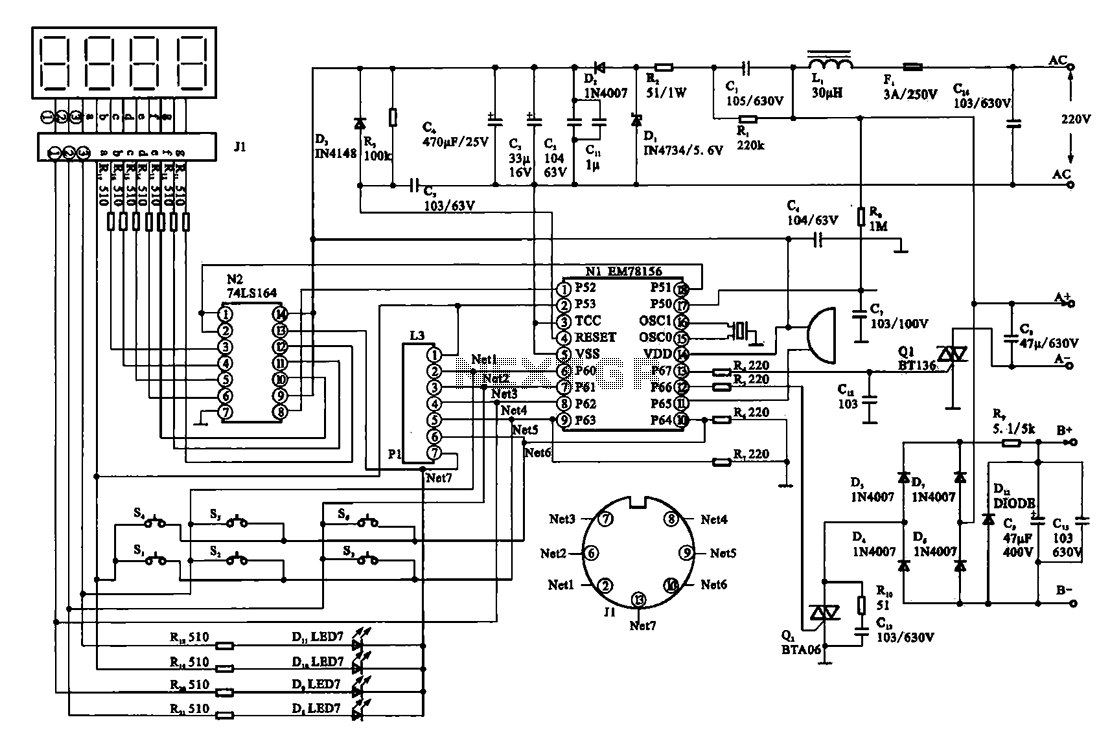
Massage digital display circuit
The display circuit is utilized in a typical digital massager. At the heart of the control circuit is the microprocessor EM78156, which receives manual operation instructions. It triggers two transistors to supply voltage to the DC motor (A +, A-...
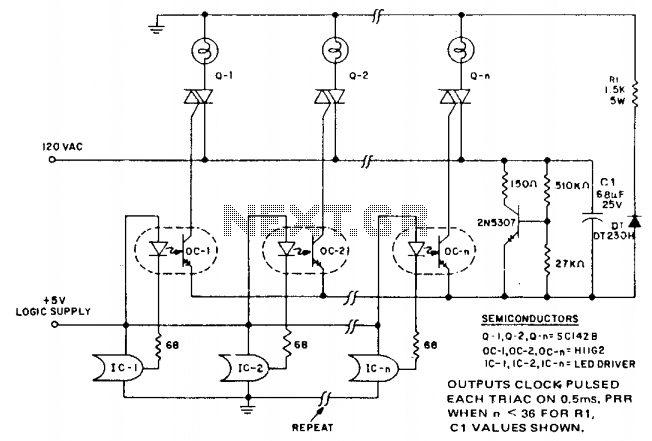
Microprocessor triac array driver
In microprocessor control of multiple loads, minimizing the cost per load is essential. A typical application is a large display that drives arrays of incandescent lamps. This circuit achieves minimal component cost per stage by utilizing optocoupler triggering of triac...
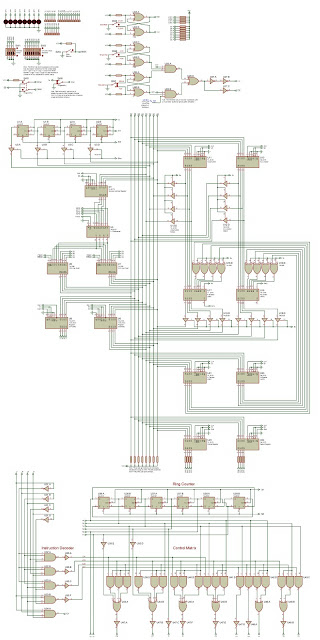
sap 1 simple as possible computer
An almost identical recreation of the SAP-1 Simple As Possible microprocessor, as published in "Digital Computer Electronics" by Albert Malvino and Jerald Brown. While the book is out of print, an eBook can be found relatively easily if one knows...
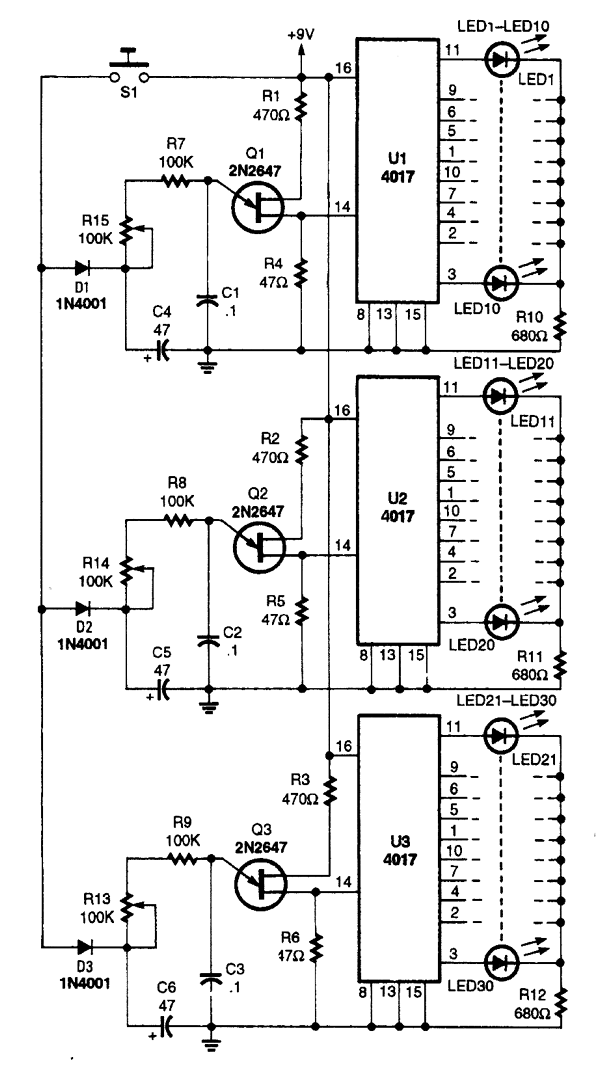
ELECTRONIC_ONE_ARM_BANDIT
The one-arm bandit circuit consists of three clock circuits and three counter/readout circuits. A single roll switch, S1, activates all three clocks simultaneously. When S1 is closed, capacitors C4, C5, and C6 charge through diodes D31, D32, and D33 to...
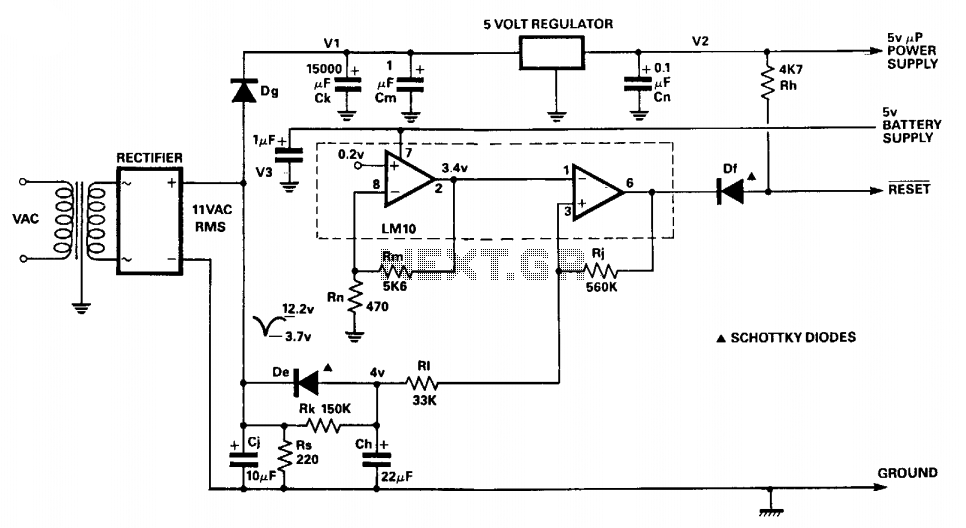
Microprocessor power supply watchdog
The circuit monitors the input to the microprocessor's 5 V regulated supply for voltage drops and initiates a reset sequence before supply regulation is lost. In operation, the resistor-capacitor combination Rs and Cj forms a short time constant smoothing network...
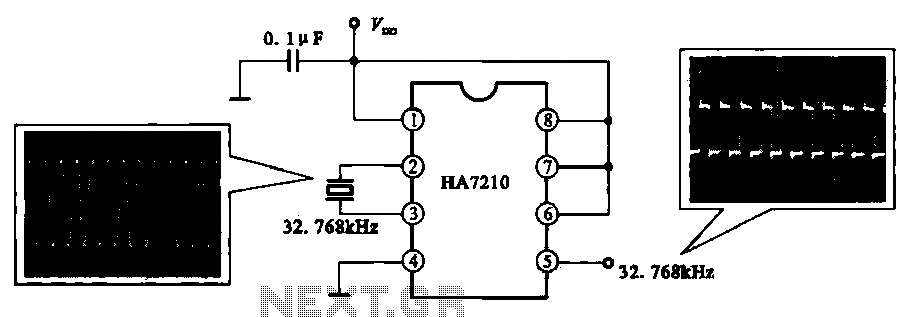
Micro-power 32.768kHz clock oscillator circuit
This circuit illustrates a 32.768 kHz micro-power clock oscillator, suitable for use in mobile phones, laptop computers, and home appliances. It generates a clock signal that can be utilized in various applications.
The 32.768 kHz micro-power clock oscillator circuit is designed...