


Micro-power 32.768kHz clock oscillator circuit
#clock oscillator
#32.768kHz
#micro-power
#clock signal
#mobile phones
#laptop computers
#home appliances
#timing circuit
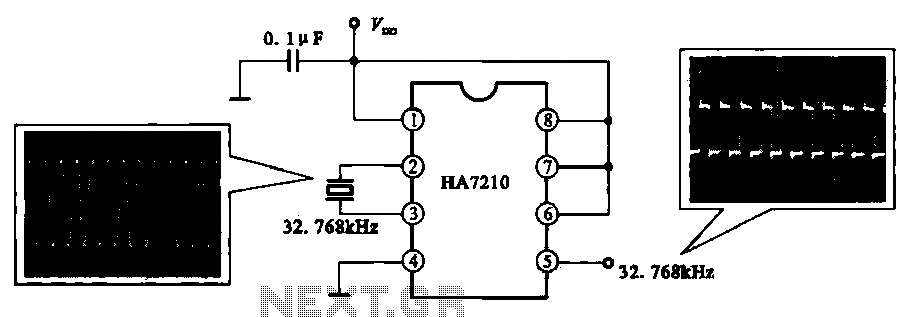
Description: This circuit illustrates a 32.768 kHz micro-power clock oscillator, suitable for use in mobile phones, laptop computers, and home appliances. It generates a clock signal that can be utilized in various applications.
The 32.768 kHz micro-power clock oscillator circuit is designed to provide a stable and low-power clock signal, which is essential for timing applications in electronic devices. The circuit typically employs a crystal oscillator, which utilizes the mechanical resonance of a quartz crystal to produce a precise frequency.
In this configuration, the crystal is connected to an inverter or operational amplifier configured as an oscillator. The output of the oscillator is a square wave clock signal, which can be used to synchronize operations in digital circuits. The low power consumption of this oscillator makes it particularly advantageous for battery-operated devices, ensuring extended operational life.
The circuit should include output terminals that allow for the detection of the clock signal. These terminals enable interfacing with microcontrollers or other digital logic devices that require timing signals. The design may also incorporate decoupling capacitors to filter any noise and ensure stable operation of the oscillator.
Overall, the 32.768 kHz micro-power clock oscillator circuit is a critical component in modern electronic systems, providing essential timing functions while maintaining energy efficiency.Shows a 32.768 kl-b: micro-power clock oscillator circuit, and can be used in mobile phones, laptop computers and home appliances production generates a clock signal supplements. Feet should detect the output clock signal, detecting its feet , feet due oscillator signal.
The 32.768 kHz micro-power clock oscillator circuit is designed to provide a stable and low-power clock signal, which is essential for timing applications in electronic devices. The circuit typically employs a crystal oscillator, which utilizes the mechanical resonance of a quartz crystal to produce a precise frequency.
In this configuration, the crystal is connected to an inverter or operational amplifier configured as an oscillator. The output of the oscillator is a square wave clock signal, which can be used to synchronize operations in digital circuits. The low power consumption of this oscillator makes it particularly advantageous for battery-operated devices, ensuring extended operational life.
The circuit should include output terminals that allow for the detection of the clock signal. These terminals enable interfacing with microcontrollers or other digital logic devices that require timing signals. The design may also incorporate decoupling capacitors to filter any noise and ensure stable operation of the oscillator.
Overall, the 32.768 kHz micro-power clock oscillator circuit is a critical component in modern electronic systems, providing essential timing functions while maintaining energy efficiency.Shows a 32.768 kl-b: micro-power clock oscillator circuit, and can be used in mobile phones, laptop computers and home appliances production generates a clock signal supplements. Feet should detect the output clock signal, detecting its feet , feet due oscillator signal.
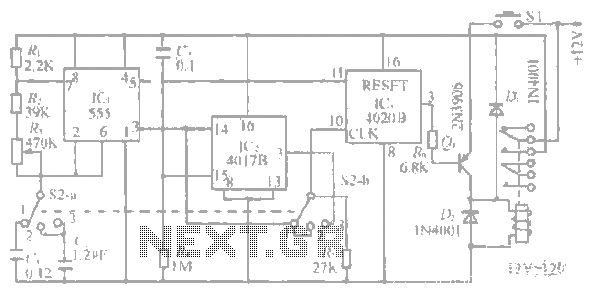
1-20 minutes a timing circuit
The system operates between 10 minutes to 2 hours, featuring a 100-line bell controlled by a multi-gear stick labeled S2 41f. The integrated circuit (IC) functions as a self-excited multivibrator. The device can manage binary pulses ranging from 3 to...
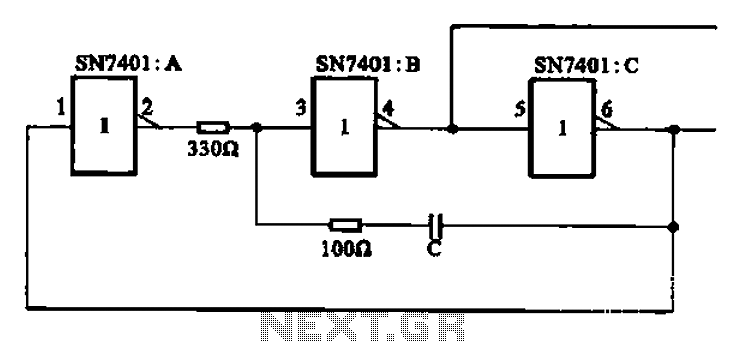
RC clock signal generating circuit
The clock signal generating circuit utilizes an RC configuration, commonly applicable in most TTL systems. This circuit requires a set of six inverters, specifically three inverters from the SN7401 series. The clock frequency is determined by the values of the...
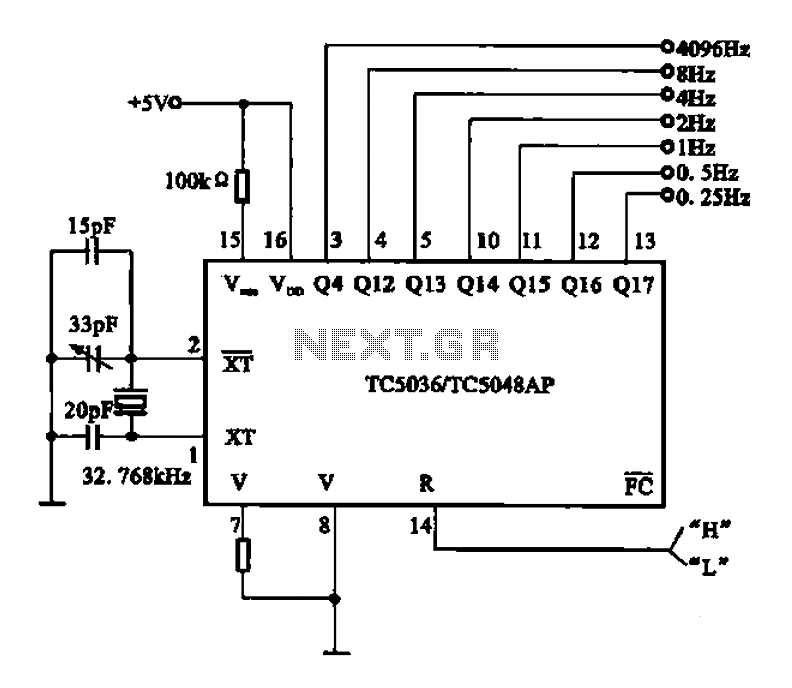
Reference time signal generation circuit 32.768kHz
32.768 kHz; In MP3/MP4 devices, mobile phones, laptops, and other digital products, a real-time clock signal generating circuit is utilized, primarily composed of crystal resonators and TC5036/TC5048AP chip oscillators. This setup produces a raw 32.768 kHz crystal oscillator signal, which...
1-20 minutes a timing circuit
The system operates between 10 minutes to 2 hours, featuring a 100-line bell controlled by a multi-gear stick labeled S2 41f. The integrated circuit (IC) functions as a self-excited multivibrator. The device can manage binary pulses ranging from 3 to...
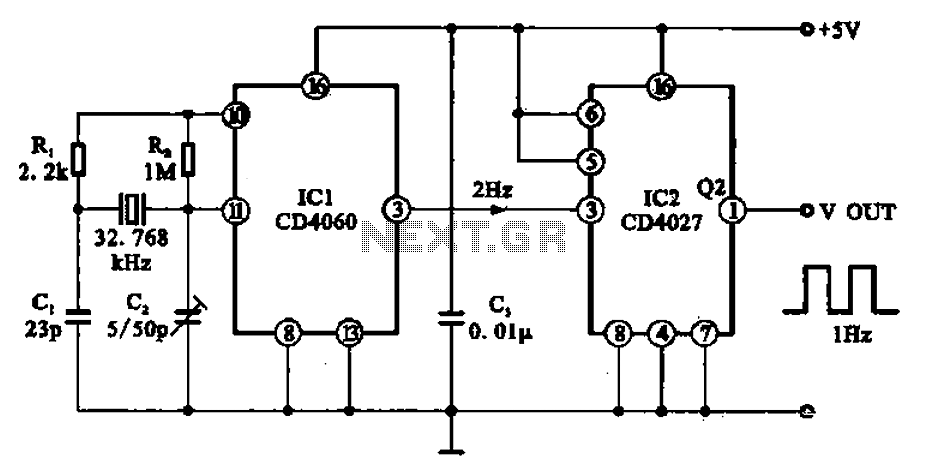
1Hz clock signal generator circuit
A 1Hz clock signal generator circuit is presented, which demonstrates a sophisticated clock signal generating mechanism. This circuit can be utilized for digital clocks and timing applications. It comprises a binary counter (CD4060), a JK flip-flop (CD4027), and a 32.768...
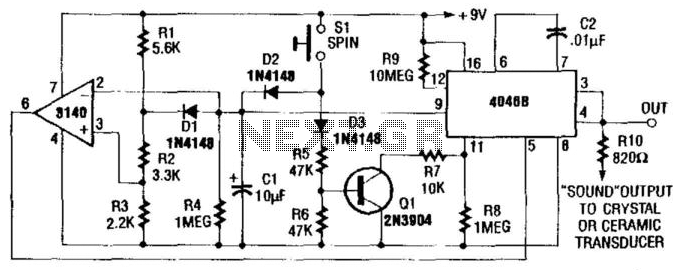
Run-Down Clock/Sound Generator
Used in electronic roulette or dice games, this circuit produces a clock signal that initially is several tens of kHz (depending on C2) and gradually decreases to zero in about 15 seconds, as C1 discharges through R4.
The described circuit is...
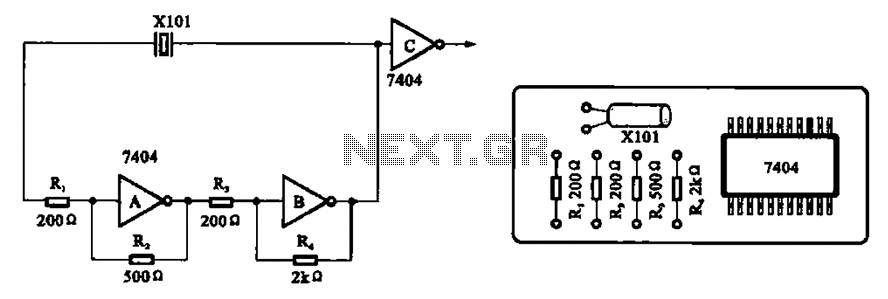
External circuit configuration CPU clock circuit
A clock oscillator is commonly utilized in digital signal processing circuits and microprocessor circuits. Digital signal transmission and signal processors necessitate a clock, which serves as the system's timing signal, while the data signal functions as a synchronization signal. The...
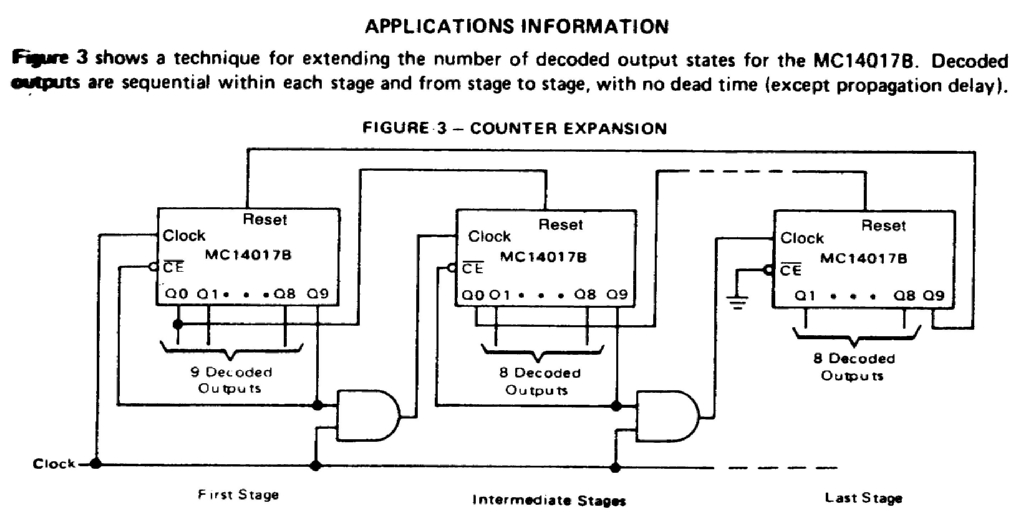
timing circuit
Assistance is needed for the design of a timing circuit intended to activate a spark plug every 10 or 20 revolutions of a shaft.
The timing circuit for firing a spark plug at specified intervals can be designed using a combination...
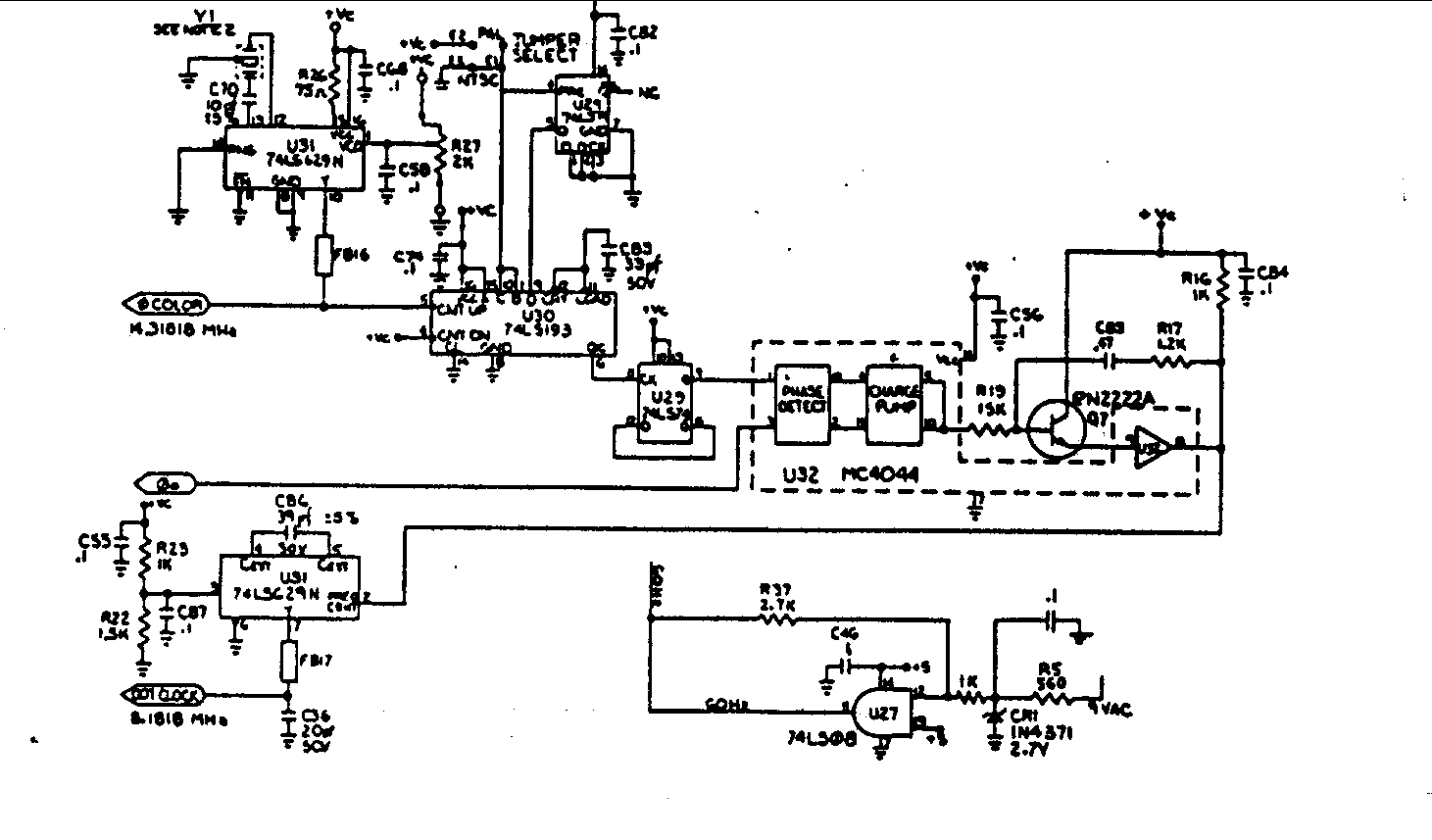
Commodore 64 Clock Circuits
Crystal Y1 generates a fundamental frequency clock signal of 14.31818 MHz. U31 is a Dual Voltage Controlled Oscillator (VCO) that produces a 14.31818 MHz clock signal, referred to as the color clock, at pin 10. The output frequency can be...