


High Performance Sawtooth Generator
#sawtooth generator
#square wave
#frequency sweep
#voltage-controlled current source
#low cost
#IC1
#R1
#Q1
#C1
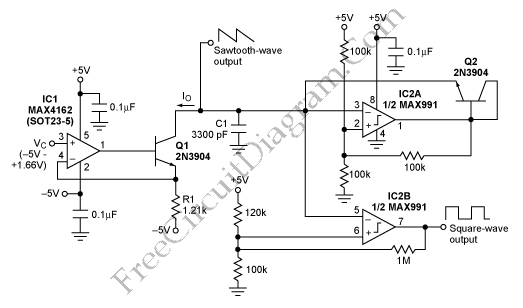
Description: This is a simple sawtooth generator circuit. The advantages of this circuit include low cost and the ability to produce an auxiliary square wave at the same frequency. This circuit can be utilized to sweep the frequency of another generator. The circuit comprises a voltage-controlled current source formed by IC1, R1, and Q1. Capacitor C1 is discharged by current Io until its voltage falls below 1.66V. Once this occurs, the output swings to 5V, triggering the IC2A comparator. Capacitor C1 is then charged by current through the diode-connected transistor Q2 until its voltage reaches 3.33V, causing the IC2A output to return to ground. The output frequency can be adjusted by modifying the values of C1 and R1, within the limitations imposed by the slew rate and settling time of comparator IC2A. The operational frequency range is determined by the linearity of the generator.
The sawtooth generator circuit operates by utilizing a combination of active and passive components to create a linear ramp voltage that periodically resets. The core of the circuit consists of an operational amplifier configured as a comparator, which is essential for generating the sawtooth waveform. The voltage-controlled current source, formed by the integrated circuit (IC1), resistor (R1), and transistor (Q1), regulates the charge and discharge cycles of the capacitor (C1).
During the discharge phase, when the voltage across C1 drops below 1.66V, the output of the comparator (IC2A) transitions high to 5V, initiating the charging phase. The charging of C1 is facilitated through the diode-connected transistor (Q2), which allows current to flow into C1, raising its voltage until it reaches 3.33V. At this point, the comparator output switches low, effectively resetting the cycle.
The frequency of the output waveform is primarily influenced by the values of C1 and R1. By adjusting these components, the output frequency (fOUT) can be set to a desired level, allowing for a wide range of operational frequencies. However, the maximum achievable frequency is constrained by the slew rate and settling time of the comparator IC2A, which affects how quickly the circuit can respond to changes in voltage.
This sawtooth generator circuit is particularly useful in applications requiring a repetitive waveform, such as in signal processing, modulation, and as a timing reference for other electronic circuits. Its simplicity and low cost make it an attractive solution for various electronic design projects.This is a simple sawtooth generator circuit. The advantages of this circuit are low cost and produces an auxiliary square wave at the same frequency. This circuit can be used to sweep the frequency of another generator. Here is the circuit : A voltage-controlled current source is formed by IC1 with R1 and Q1. The C1 is discharged by current Io unt il it`s voltage is less than 1. 66V. It will swing its output to 5V and trips the IC2A comparator. The C1 is charged by current through the diode-connected transistor (Q2) until its voltage reaches 3. 33V, so the IC2A output to swing back to ground. The output frequency is determined by : We can set the fOUT as high as desired by adjusting the values of C1and R1, subject to the limitations of comparator IC2A`s slew settling and rate time.
The frequency range over which it can operate determined by generator`s linearity. [Source: maxim-ic. com] We aim to transmit more information by carrying articles. Please send us an E-mail to wanghuali@hqew. net within 15 days if we are involved in the problems of article content, copyright or other problems. We will delete it soon.
The sawtooth generator circuit operates by utilizing a combination of active and passive components to create a linear ramp voltage that periodically resets. The core of the circuit consists of an operational amplifier configured as a comparator, which is essential for generating the sawtooth waveform. The voltage-controlled current source, formed by the integrated circuit (IC1), resistor (R1), and transistor (Q1), regulates the charge and discharge cycles of the capacitor (C1).
During the discharge phase, when the voltage across C1 drops below 1.66V, the output of the comparator (IC2A) transitions high to 5V, initiating the charging phase. The charging of C1 is facilitated through the diode-connected transistor (Q2), which allows current to flow into C1, raising its voltage until it reaches 3.33V. At this point, the comparator output switches low, effectively resetting the cycle.
The frequency of the output waveform is primarily influenced by the values of C1 and R1. By adjusting these components, the output frequency (fOUT) can be set to a desired level, allowing for a wide range of operational frequencies. However, the maximum achievable frequency is constrained by the slew rate and settling time of the comparator IC2A, which affects how quickly the circuit can respond to changes in voltage.
This sawtooth generator circuit is particularly useful in applications requiring a repetitive waveform, such as in signal processing, modulation, and as a timing reference for other electronic circuits. Its simplicity and low cost make it an attractive solution for various electronic design projects.This is a simple sawtooth generator circuit. The advantages of this circuit are low cost and produces an auxiliary square wave at the same frequency. This circuit can be used to sweep the frequency of another generator. Here is the circuit : A voltage-controlled current source is formed by IC1 with R1 and Q1. The C1 is discharged by current Io unt il it`s voltage is less than 1. 66V. It will swing its output to 5V and trips the IC2A comparator. The C1 is charged by current through the diode-connected transistor (Q2) until its voltage reaches 3. 33V, so the IC2A output to swing back to ground. The output frequency is determined by : We can set the fOUT as high as desired by adjusting the values of C1and R1, subject to the limitations of comparator IC2A`s slew settling and rate time.
The frequency range over which it can operate determined by generator`s linearity. [Source: maxim-ic. com] We aim to transmit more information by carrying articles. Please send us an E-mail to wanghuali@hqew. net within 15 days if we are involved in the problems of article content, copyright or other problems. We will delete it soon.
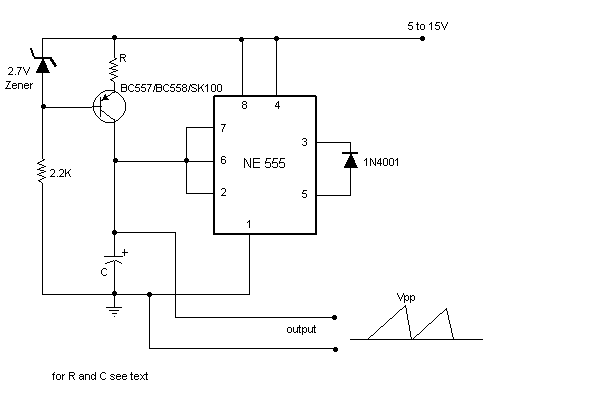
Sawtooth generator circuit
Sawtooth wave generators using opamp are very common. But the disadvantage is that it requires a bipolar power supply. A sawtooth wave generator can be built using a simple 555 timer IC and a transistor as shown in the circuit...
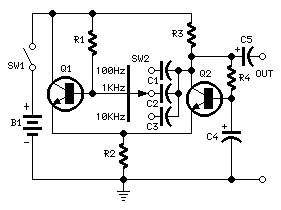
Simple Square wave Generator
This simple circuit generates a good and stable 1V peak-to-peak square wave at 100Hz, 1KHz and 10KHz using a single 1.5V cell as power supply. An useful feature of this circuit is that frequency changes can be obtained by switching...
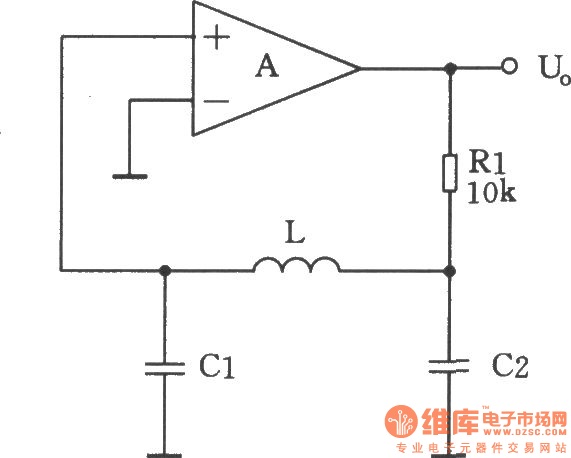
LC square wave generator
A square-wave generator utilizing an LC circuit can achieve improved frequency stability, as illustrated in the accompanying chart. This three-terminal capacitor oscillator is capable of generating a square wave, with an operational amplifier serving as the active component.
The square-wave generator...
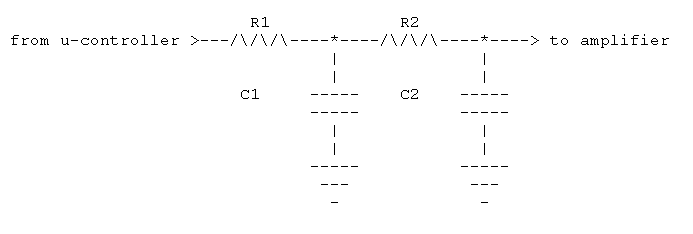
Rounding Off a square wave
To "round" your square wave, you need to integrate it twice; once to produce a triangular wave, and a second time to produce a parabolic waveform. A parabolic wave looks pretty much sinusoidal. You can do this passively using a...
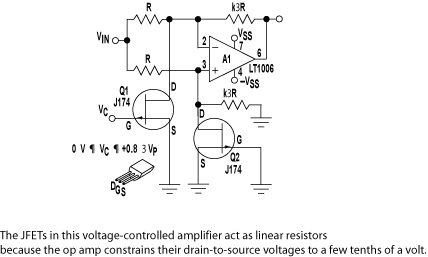
Standalone Circuit Converts Square Waves To Sine Waves
Many microcontrollers or PICs have uncommitted digital-to-analog converter (DAC) outputs that can generate sine waves. However, these outputs typically have low resolution (8 to 10 bits), resulting in total harmonic distortion (THD) in the range of 1%. Alternatively, using a...
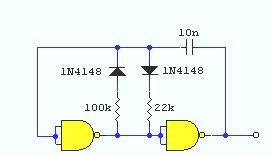
square wave oscillator circuit
A simple square wave oscillator can be created using two gates from a CMOS 4011 NAND chip. Alternatively, a CMOS 4001 chip or a TTL equivalent can also be utilized. In this circuit, the mark-space ratio can be independently controlled...
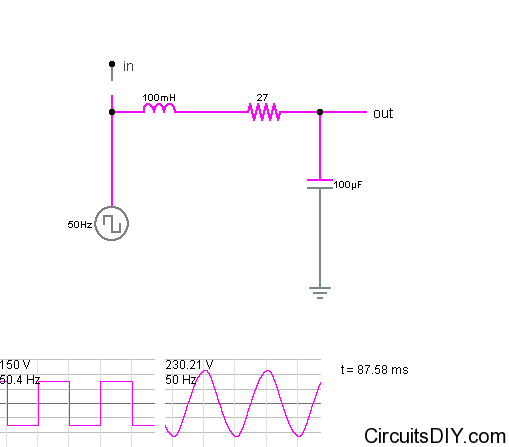
convert square wave inverters to sine wave inverter
It is relatively easy to find square wave inverter circuits online. However, to operate most loads such as fans and televisions, a sine wave inverter is required. Constructing a sine wave or near-sine wave inverter is more complex and expensive....
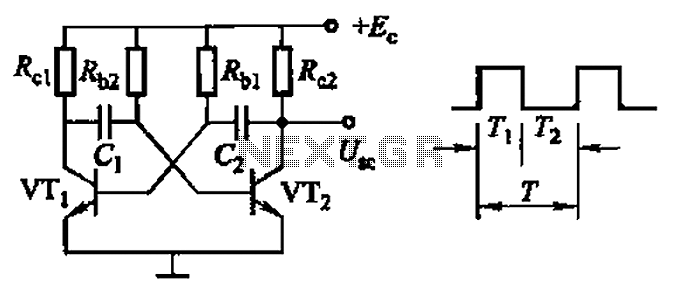
Common non-sinusoidal oscillator circuit waveform square wave oscillator self-excited multivibrator
Common non-sinusoidal oscillator circuit, waveform and frequency formula - square wave oscillator - self-excited multivibrator
The common non-sinusoidal oscillator circuit, specifically the square wave oscillator, is a fundamental electronic circuit utilized to generate square wave signals. It operates based on the...
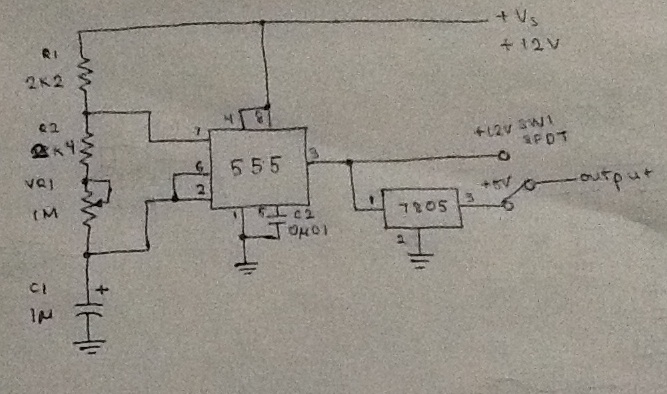
Building a square wave generator
Assistance is requested for building a square wave generator. The design should include a control for variable frequency ranging from 1 Hz to 200 Hz, as well as a switchable voltage feature.
The square wave generator circuit can be designed using...