


UPB1009K Necs Low Power Gps Rf Receiver Bipolar Analog Integrated Circuit
#GPS
#RF receiver
#bipolar
#analog
#integrated circuit
#low power
#USB
#voltage regulator
#current limit
#performance data
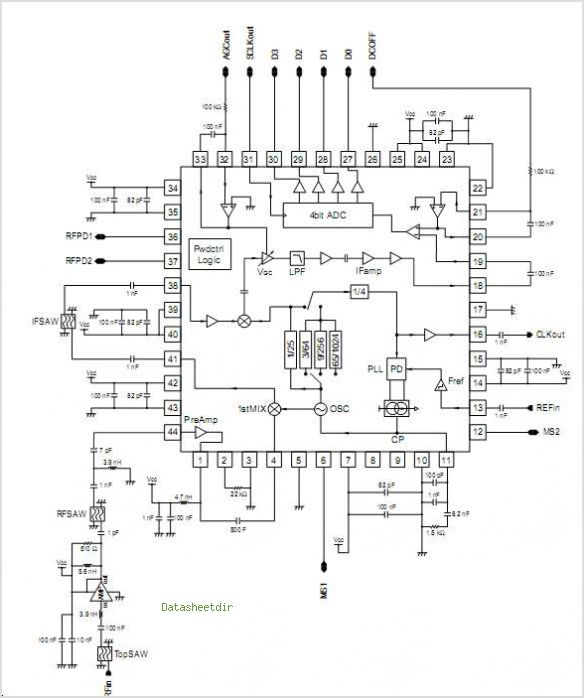
Description: The MAX1896, MAX1973, and MAX8863 are integrated circuits that provide output voltages of 5V at 225mA, 1.8V at 220mA, and 3.3V at 60mA, sourced from a USB port. USB devices typically draw power with a voltage range of 4.5V to 5.25V and an initial current limit of 100mA, which can be increased to a maximum of 500mA after device enumeration. This limits practical power consumption to about 2W at 4.5V. To maximize power utilization, switching power supplies are preferred. The DSL frequency band extends up to approximately 1.1MHz, and to ensure optimal data throughput in DSL modems, the fundamental switching frequency should be at least 1.2MHz. The MAX1896 is configured as a SEPIC step-up regulator operating at 1.4MHz, while the MAX1973 functions as a step-down regulator, also switching at 1.4MHz. The MAX8863 is a 100mA linear regulator. Each component includes a shutdown control for USB port enumeration and standby mode. The total input current required at a 4.5V input to achieve maximum output power is under 491mA, with an overall efficiency of 79.8% for a 1.76W output at 4.5V. The tallest component in the design is a 3.3 µH Sumida inductor, measuring a maximum height of 1.8mm.
The circuit design integrating the MAX1896, MAX1973, and MAX8863 is optimized for providing multiple output voltages suitable for various USB-powered devices. The arrangement of these components allows for efficient voltage regulation through both step-up and step-down conversion techniques, essential for maintaining stable output under varying load conditions.
The MAX1896 operates as a SEPIC (Single-Ended Primary Inductor Converter) regulator, allowing for a stable output voltage higher than the input voltage. This is particularly useful when the input voltage dips below the desired output voltage, ensuring that devices requiring 5V can still operate effectively. The switching frequency of 1.4MHz helps to minimize the size of passive components while maintaining high efficiency.
The MAX1973, functioning as a step-down regulator, efficiently converts higher input voltages down to the required 1.8V and 3.3V outputs. Its design is crucial for applications where lower voltages are needed without excessive power loss. The synchronous rectification employed in the MAX1973 enhances efficiency, reducing heat generation and allowing for more compact designs.
The MAX8863 provides a linear regulation option for the 3.3V output, ideal for sensitive analog circuits that require low noise. Its linear nature ensures minimal ripple and noise, which is essential for high-performance applications.
The shutdown control feature integrated into each of these regulators facilitates easy management of power consumption, allowing the system to enter a low-power state when not in use. This feature is particularly useful in battery-operated devices, extending operational time by reducing unnecessary power draw.
Overall, the combined efficiency of 79.8% at a 1.76W output demonstrates the effectiveness of this design in maximizing power utilization from a USB source while maintaining compliance with USB power delivery specifications. The inclusion of a compact 3.3 µH inductor contributes to the overall space efficiency of the circuit, making it suitable for applications where size constraints are critical.Abstract: The MAX1896 MAX1973 and MAX8863 combine to deliver 5V at 225mA, 1. 8V at 220mA, and 3. 3V at 60mA from a USB port. The schematics, BOM and performance data appear below. USB devices draw power from the USB port. The voltage is 4. 5V to 5. 25V and the current is limited initially to 100mA maximum. After enumeration, the current limit may be i ncreased to 500mA maximum. Therefore, the practical power consumption is limited to about 2W at 4. 5V. Switching power supplies are preferred so that this limited power CAN be fully utilized. The DSL frequency band extends to about 1. 1MHz. To maintain maximum data throughput in DSL modems, the fundamental switching frequency should be 1. 2MHz or higher. The MAX1896 MAX1973 and MAX8863 combine to deliver 5V at 225mA, 1. 8V at 220mA, and 3. 3V at 60mA from a USB port. The schematics, BOM and performance data appear below. The MAX1896 is a Step-up Regulator configured as a SEPIC that switches at 1. 4MHz. The MAX1973 is a Step-down Regulator that switches at 1. 4MHz. The MAX8863 is a 100mA linear Regulator Each has a shutdown control to facilitate USB port enumeration and standby mode. The total input current required at 4. 5V input to provide maximum output power is less than 491mA. The overall efficiency is 79. 8% for 1. 76W output at 4. 5V input. The tallest component is the 3. 3 µH Sumida inductor at 1. 8mm maximum.
The circuit design integrating the MAX1896, MAX1973, and MAX8863 is optimized for providing multiple output voltages suitable for various USB-powered devices. The arrangement of these components allows for efficient voltage regulation through both step-up and step-down conversion techniques, essential for maintaining stable output under varying load conditions.
The MAX1896 operates as a SEPIC (Single-Ended Primary Inductor Converter) regulator, allowing for a stable output voltage higher than the input voltage. This is particularly useful when the input voltage dips below the desired output voltage, ensuring that devices requiring 5V can still operate effectively. The switching frequency of 1.4MHz helps to minimize the size of passive components while maintaining high efficiency.
The MAX1973, functioning as a step-down regulator, efficiently converts higher input voltages down to the required 1.8V and 3.3V outputs. Its design is crucial for applications where lower voltages are needed without excessive power loss. The synchronous rectification employed in the MAX1973 enhances efficiency, reducing heat generation and allowing for more compact designs.
The MAX8863 provides a linear regulation option for the 3.3V output, ideal for sensitive analog circuits that require low noise. Its linear nature ensures minimal ripple and noise, which is essential for high-performance applications.
The shutdown control feature integrated into each of these regulators facilitates easy management of power consumption, allowing the system to enter a low-power state when not in use. This feature is particularly useful in battery-operated devices, extending operational time by reducing unnecessary power draw.
Overall, the combined efficiency of 79.8% at a 1.76W output demonstrates the effectiveness of this design in maximizing power utilization from a USB source while maintaining compliance with USB power delivery specifications. The inclusion of a compact 3.3 µH inductor contributes to the overall space efficiency of the circuit, making it suitable for applications where size constraints are critical.Abstract: The MAX1896 MAX1973 and MAX8863 combine to deliver 5V at 225mA, 1. 8V at 220mA, and 3. 3V at 60mA from a USB port. The schematics, BOM and performance data appear below. USB devices draw power from the USB port. The voltage is 4. 5V to 5. 25V and the current is limited initially to 100mA maximum. After enumeration, the current limit may be i ncreased to 500mA maximum. Therefore, the practical power consumption is limited to about 2W at 4. 5V. Switching power supplies are preferred so that this limited power CAN be fully utilized. The DSL frequency band extends to about 1. 1MHz. To maintain maximum data throughput in DSL modems, the fundamental switching frequency should be 1. 2MHz or higher. The MAX1896 MAX1973 and MAX8863 combine to deliver 5V at 225mA, 1. 8V at 220mA, and 3. 3V at 60mA from a USB port. The schematics, BOM and performance data appear below. The MAX1896 is a Step-up Regulator configured as a SEPIC that switches at 1. 4MHz. The MAX1973 is a Step-down Regulator that switches at 1. 4MHz. The MAX8863 is a 100mA linear Regulator Each has a shutdown control to facilitate USB port enumeration and standby mode. The total input current required at 4. 5V input to provide maximum output power is less than 491mA. The overall efficiency is 79. 8% for 1. 76W output at 4. 5V input. The tallest component is the 3. 3 µH Sumida inductor at 1. 8mm maximum.
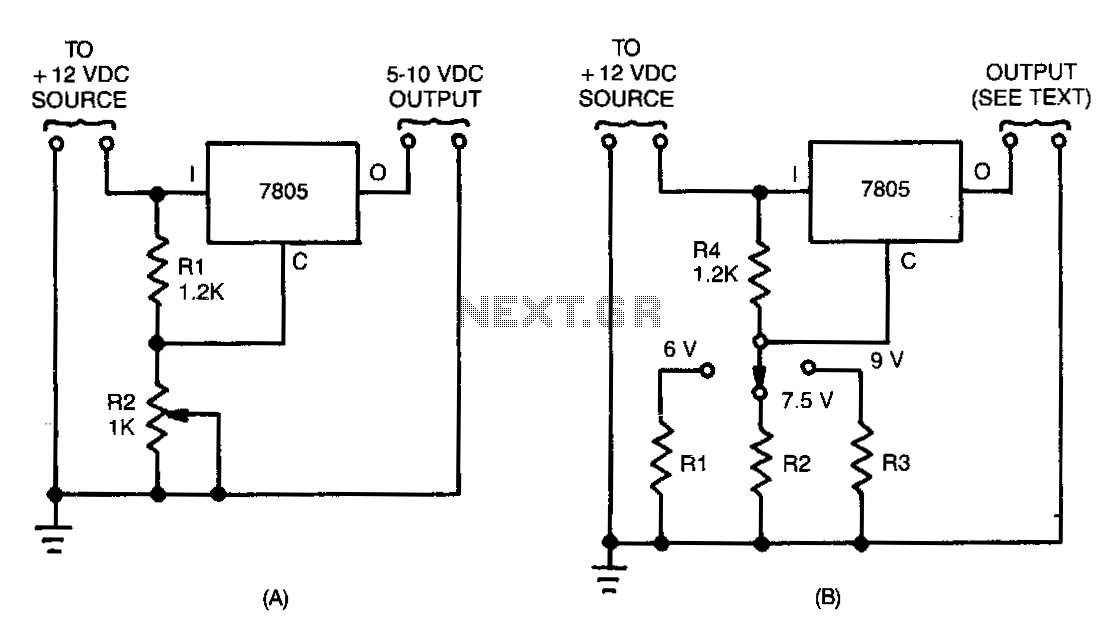
12-16V-converter
Many devices operate from a car's 12-V electrical system. Some require 12 V, while others need a lower voltage. An automobile battery's output can vary from 12 to 13.8 V under normal circumstances. The load requirements of the device may...
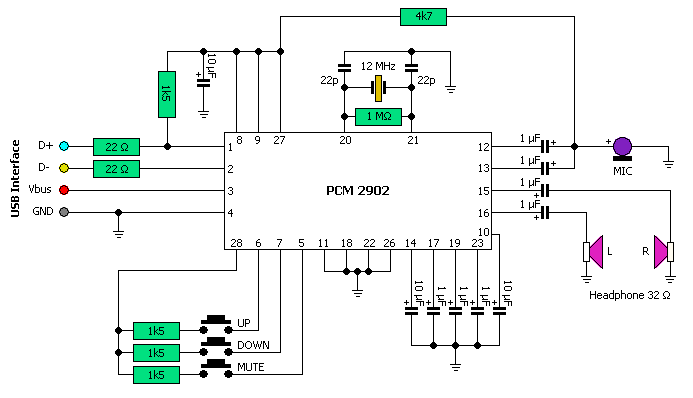
usb player circuit diagram
This USB circuit utilizes an integrated circuit (IC) to convert digital voice data into an analog signal, enabling it to be used with headphones. The output can also be amplified through a power amplifier to drive speakers. The IC employed...
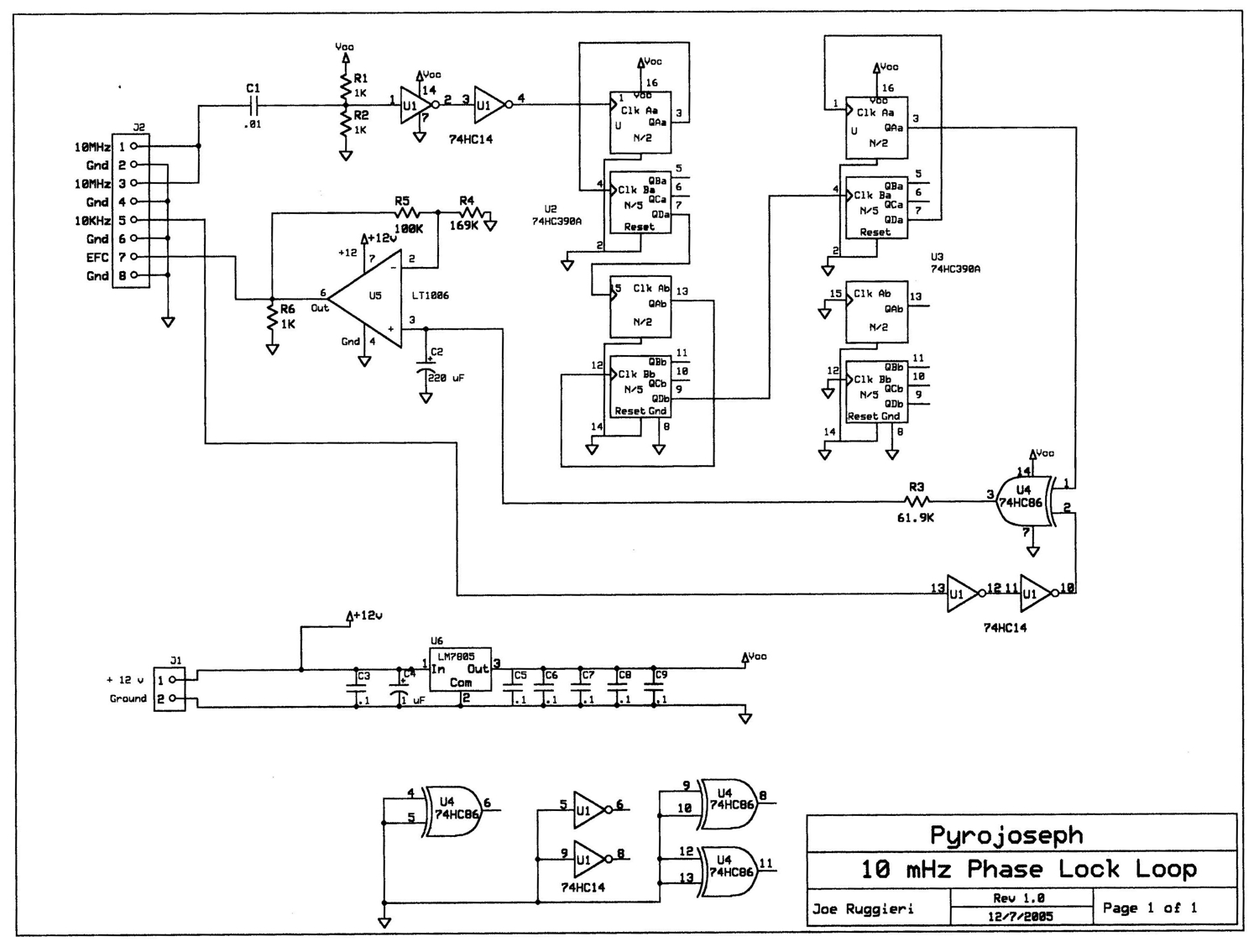
GPS-Disciplined 10 MHz Frequency Standard / GPS-Based Universal Time Clock
The block diagram illustrates that a 10 MHz signal is generated by an oven-stabilized 10 MHz crystal oscillator, which is locked to a precision 10 kHz signal produced by a GPS receiver module through a phase-locked-loop (PLL) circuit. In addition...
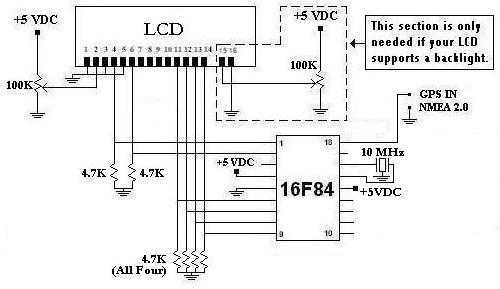
My GPS LCD Display Project
This is a project that I started back late 2003 when I just starting to learn PIC programming. I wanted to building something that actually did something useful. This project is based on a PIC16F84. I actually came up with...
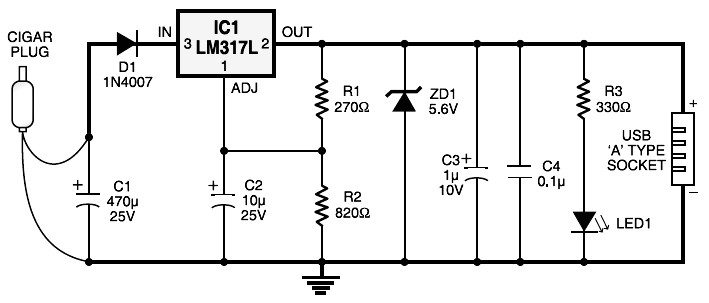
Cigar Lighter Plug to USB Power Socket
Cigar lighter plug to USB power socket. This circuit converts a 12V DC source from a car cigar lighter plug into a USB power socket with a 5V DC output. This circuit can be used to power 5V electronic devices...
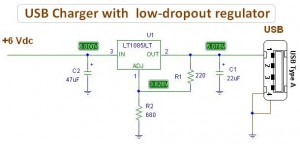
USB Charge PCB
The USB (Universal Serial Bus) specification provides both connectivity and power. This advancement emphasizes the transition from series and parallel connections of the past, enabling an increased number of devices to interface with a personal computer. A basic circuit USB...
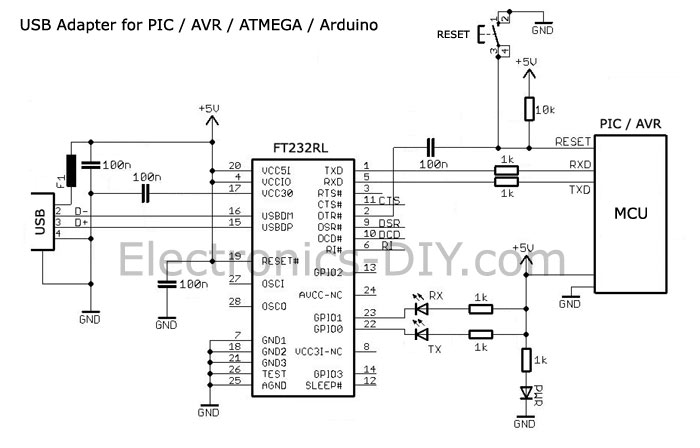
FT232RL USB to Serial Adapter for PIC AVR ATMEGA ARDUINO MCUs
The FT232RL USB to Serial UART (TTL) Adapter is an affordable and straightforward solution for connecting PIC, AVR, or ATMEGA microcontrollers to a PC or Mac via a USB interface. The FT232RL chip is noteworthy for its compliance with the...
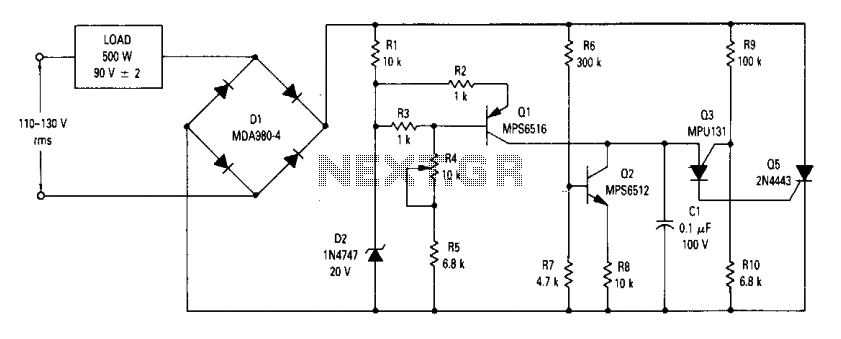
90Vrms voltage regulator
The circuit is an open-loop RMS voltage regulator designed to deliver 500 watts of power at 90 V RMS, maintaining good regulation within an input voltage range of 110-130 V RMS. When the input voltage is applied, capacitor C1 charges...
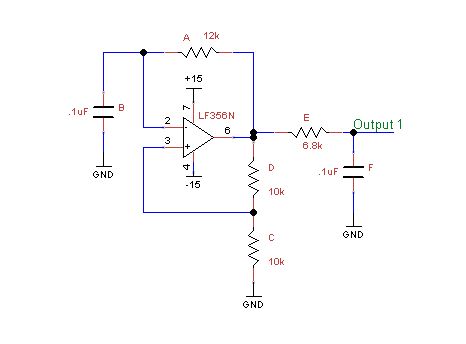
Analog Laser Guitar Hero
Above is the schematic of an oscillator circuit. In technical terms, the oscillator is a Schmitt trigger relaxation oscillator.
The Schmitt trigger relaxation oscillator is a type of electronic oscillator that generates a periodic waveform, typically a square wave, by...