


Varactor The Core of Voltage Controlled LC Tuner
#varactor
#voltage controlled
#LC tuner
#DAC
#analog
#digital control
#hybrid system
#tuning circuit
#RF
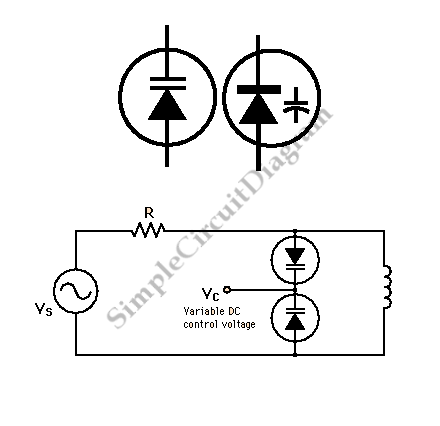
Description: In a hybrid system, an analog system with digital control, voltage-controlled components are crucial as they can be interfaced with a Digital-to-Analog Converter (DAC) from the digital system.
In hybrid systems, the integration of analog and digital components allows for enhanced functionality and versatility in various applications. The voltage-controlled elements serve as a bridge between the digital and analog domains, enabling precise control over analog signals. The DAC plays a pivotal role in this setup by converting digital signals into corresponding analog voltages, which can then be used to control various analog devices, such as motors, sensors, and amplifiers.
The design of such a hybrid system typically involves several key components: the digital control unit, the DAC, and the analog subsystems. The digital control unit, often implemented using microcontrollers or digital signal processors (DSPs), generates the digital signals based on the desired output or control parameters. These digital signals are then fed into the DAC, which converts them into analog voltages. The output voltage of the DAC can be adjusted based on the input digital values, allowing for fine-tuned control over the connected analog devices.
Additionally, feedback mechanisms may be incorporated to monitor the performance of the analog components. Sensors can be used to provide real-time data to the digital control unit, enabling dynamic adjustments to the output voltage as needed. This feedback loop enhances the system's responsiveness and accuracy, making it suitable for applications such as robotics, automated control systems, and audio processing.
Overall, the combination of analog systems with digital control through voltage-controlled components and DACs is fundamental in creating efficient, high-performance hybrid systems that meet the demands of modern electronic applications.In hybrid system, analog system with digital control, a voltage controlled things is very important since it can be interfaced by DAC from digital system. For..
In hybrid systems, the integration of analog and digital components allows for enhanced functionality and versatility in various applications. The voltage-controlled elements serve as a bridge between the digital and analog domains, enabling precise control over analog signals. The DAC plays a pivotal role in this setup by converting digital signals into corresponding analog voltages, which can then be used to control various analog devices, such as motors, sensors, and amplifiers.
The design of such a hybrid system typically involves several key components: the digital control unit, the DAC, and the analog subsystems. The digital control unit, often implemented using microcontrollers or digital signal processors (DSPs), generates the digital signals based on the desired output or control parameters. These digital signals are then fed into the DAC, which converts them into analog voltages. The output voltage of the DAC can be adjusted based on the input digital values, allowing for fine-tuned control over the connected analog devices.
Additionally, feedback mechanisms may be incorporated to monitor the performance of the analog components. Sensors can be used to provide real-time data to the digital control unit, enabling dynamic adjustments to the output voltage as needed. This feedback loop enhances the system's responsiveness and accuracy, making it suitable for applications such as robotics, automated control systems, and audio processing.
Overall, the combination of analog systems with digital control through voltage-controlled components and DACs is fundamental in creating efficient, high-performance hybrid systems that meet the demands of modern electronic applications.In hybrid system, analog system with digital control, a voltage controlled things is very important since it can be interfaced by DAC from digital system. For..
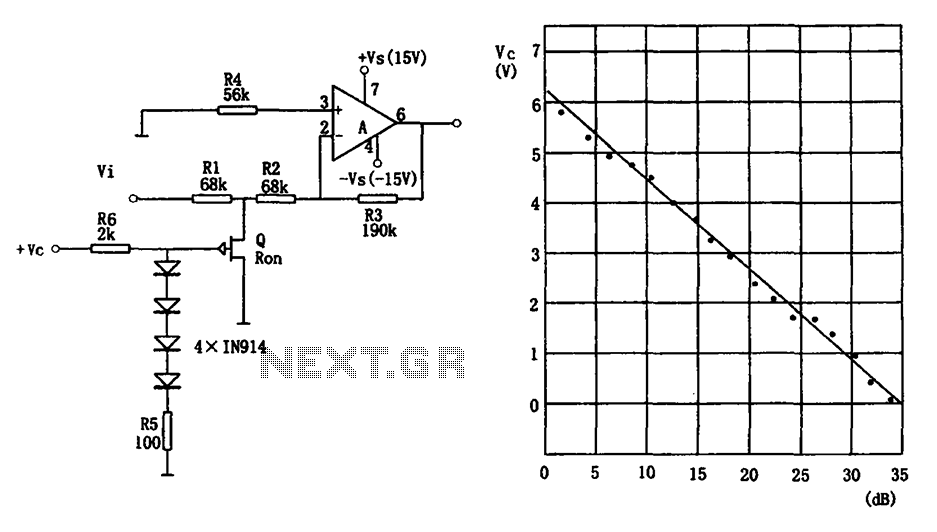
Voltage controlled gain amplifier LM307
The voltage-controlled gain amplifier utilizes a FET gate voltage and the drain-source resistance (RSD) to approximate a logarithmic relationship. The integrated circuit chip LM307 is employed in the amplifier circuit with the inverting input configuration. In the circuit, RSD and...
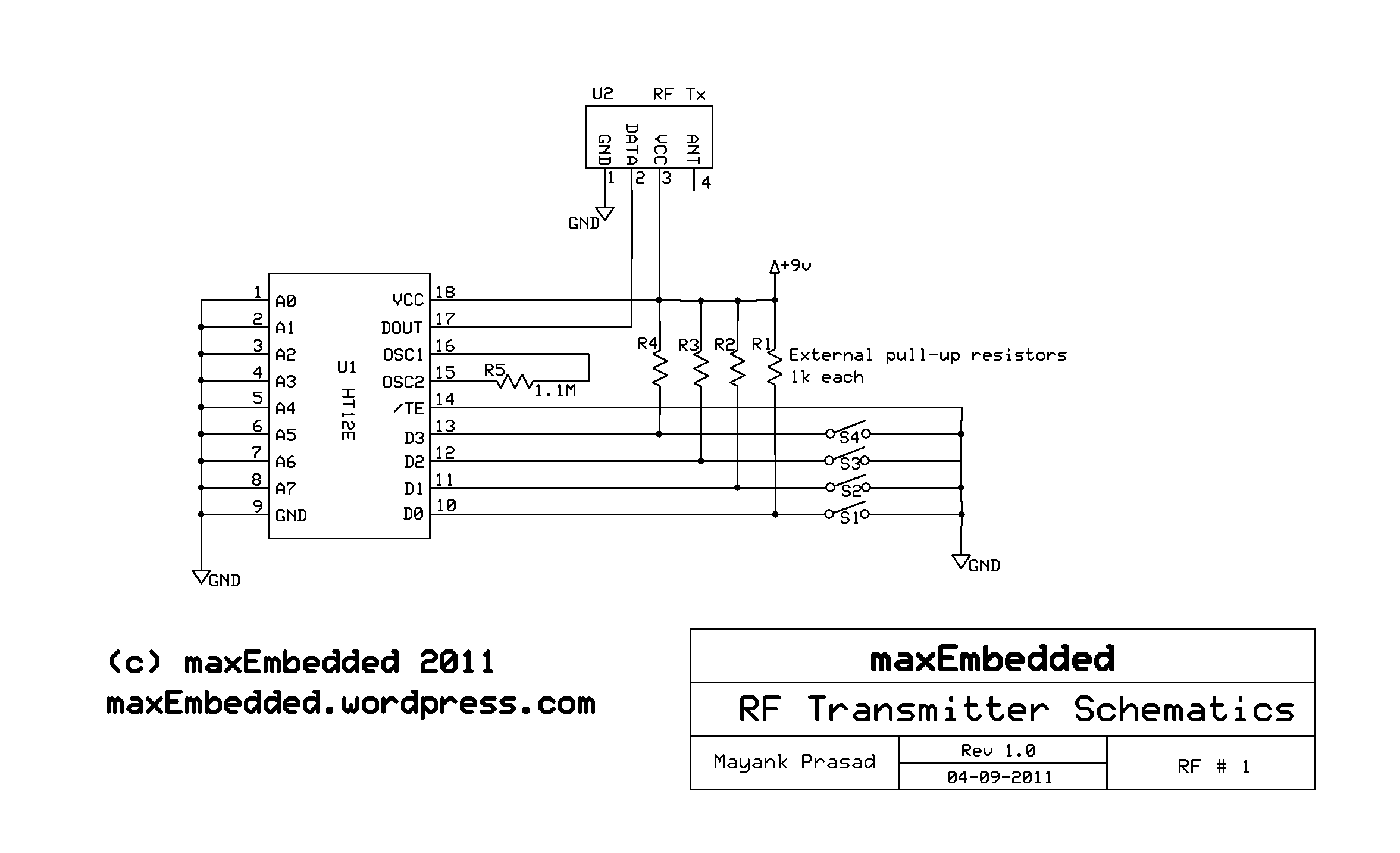
making an rf car
This article is authored by Yash Tambi, a Core Committee Member of roboVITics. It discusses RF-controlled robots, which are among the simplest types of robots. The essential components include a few readily available integrated circuits (ICs), a 433 MHz transmitter...
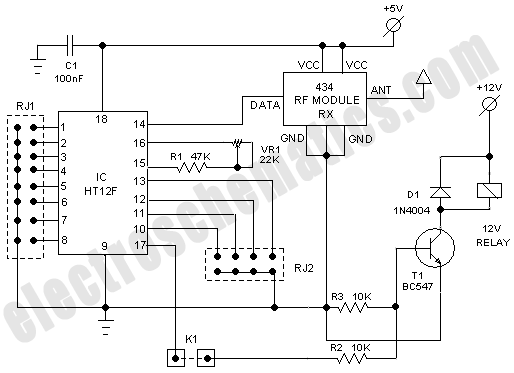
RF Based Wireless Remote Control Switch
It is often necessary to control electrical appliances remotely, even when there is no direct line of sight between the transmitter and receiver.
In modern electronic applications, remote control systems are increasingly utilized for various purposes, including home automation, industrial control,...
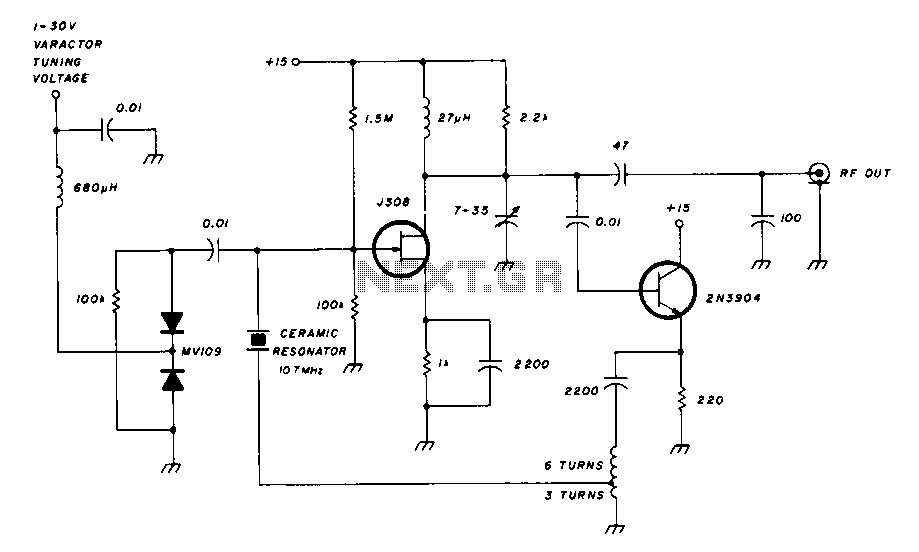
Varactor - tuned 10MHz ceramic resonator oscillator circuit diagram
A field effect transistor amplifier features a fixed bias input source with feedback, resulting in very high input impedance and low capacitance. It drives a field effect transistor or emitter follower, despite having a very low output impedance, utilizing a...
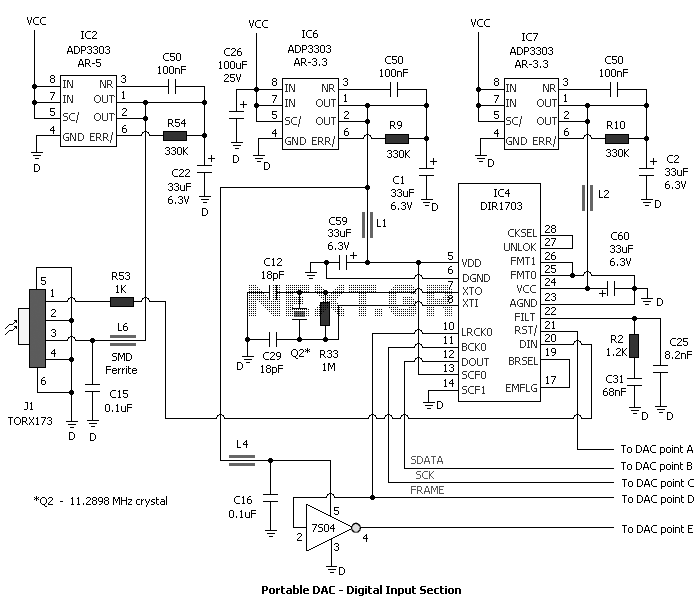
DAC and Headphone Amplifier
The idea behind the portable DAC is to get better sound than from the line out or headphone out of portable CD player, a pc sound card or other digital audio source. Many of us want to listen to music...
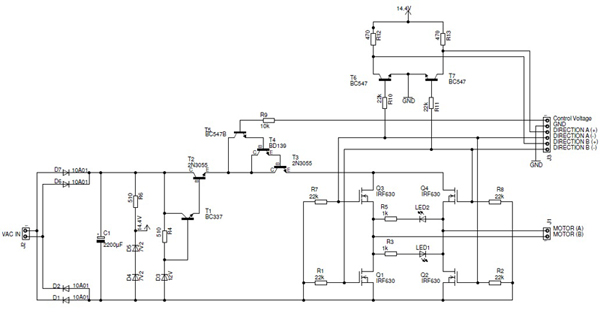
hp dac circuit
The K8000 DAC High Power Amplifier is an electronic amplifier with an adjustable output voltage ranging from 0 to 9 V and capable of delivering an output current of up to 9 Amperes.
The K8000 DAC High Power Amplifier is designed...
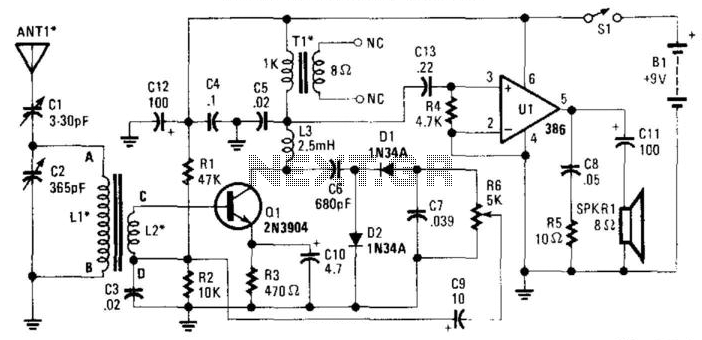
Reflex Radio Receiver
The RF signal is transmitted from the antenna through CI to a tuned circuit consisting of LI and C2. One end of L2 delivers the RF signal to the base of Q1 for amplification, while the other end connects to...
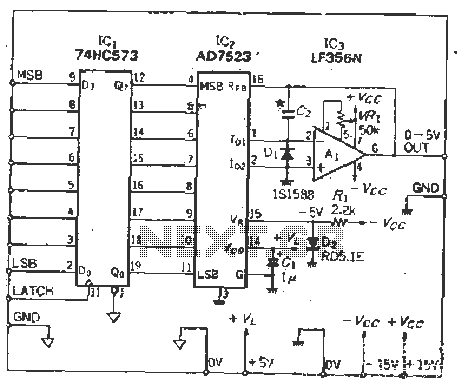
Multiplicative DA converter IC inexpensive 8 DA circuit
The IC latch is utilized to hold the digital data when the clock signal rises. The configuration includes a holding data port AD7s23, a thin film resistor ladder, and a switch that together form an 8-bit Digital-to-Analog Converter (DAC). The...
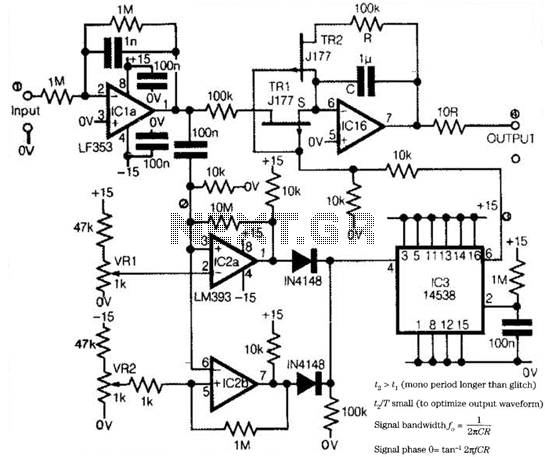
Analog De-Glitch Circuit Circuit
Low-frequency signals produced by transducers, measurement equipment, or data loggers often resemble the first waveform in the figure. The circuit operates as a tracking sample-and-hold, where transients are replaced in the output by the stored value of the current signal...