


Asia ultrasonic remote control fan speed control circuit diagram
#ultrasonic
#fan speed control
#remote control
#household switches
#sub-transmission
#speed regulation
#wireless control
#home automation
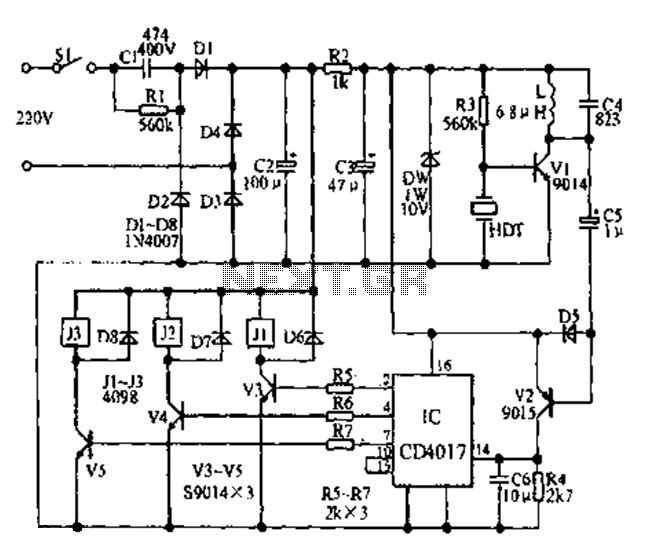
Description: Fans can be controlled remotely with a switch that allows for speed adjustments, and this remote control can also be integrated with other household switches. Its primary feature is the use of a sub-transmission ultrasonic transmitter, which operates without directional restrictions, requires no power, and boasts durability. An ultrasonic signal from Asia is received by a piezoelectric buzzer (V1) for amplification. The circuit includes an inductor (L) and a capacitor (C4) for frequency selection, followed by further amplification through V2, resulting in an output pulse. Each operation involves pressing the transmitter, which causes the collector of V2 to output a positive pulse trigger signal, leading to the counting action of the decimal counter CD4017. The Q1, Q2, and Q3 outputs of the CD4017 are utilized, and when the fourth signal is detected, the integrated circuit (IC) is cleared. This IC also controls a transistor that drives relays. The relay coil contacts are connected to a governor that adjusts the fan speed. The circuit can be slightly modified to accommodate up to nine channels.
The described circuit employs an ultrasonic remote control mechanism for fan operation, allowing for seamless integration into home automation systems. The ultrasonic transmitter emits signals that are omnidirectional, enhancing the usability of the remote control. The piezoelectric buzzer (V1) acts as a receiver, converting ultrasonic waves into electrical signals. The inclusion of an inductor (L) and capacitor (C4) forms a tuned circuit that filters the incoming signal to the desired frequency, ensuring reliable operation.
Once the signal is processed, it is amplified by transistor V2, which ultimately generates a pulse output. This pulse serves as a trigger for the CD4017 decimal counter, a versatile component known for its ability to count up to ten inputs. The outputs Q1, Q2, and Q3 are sequentially activated based on the count, allowing for precise control over the connected devices. When the fourth pulse is received, the counter resets, readying the system for the next cycle of operation.
The integration of a transistor to drive relays is a critical aspect of the design, enabling the control of higher power devices such as fans. The relay contacts are configured to adjust the speed of the fan via a governor, which modulates the power supplied to the fan motor based on the control signals received.
This circuit can be further expanded to support up to nine channels, providing a scalable solution for controlling multiple fans or other devices within a household. Such modifications would involve additional relays and possibly a more complex control logic to manage the increased number of outputs effectively. Overall, this design exemplifies a robust approach to remote control applications in home environments, leveraging ultrasonic technology for enhanced functionality.Fans can achieve remote control switch, speed control, remote control can also be achieved in other household switches. Its main feature is the use of sub-transmission side ult rasonic transmitter, no direction restriction, without power, and durability. Asia ultrasonic signal received by the piezoelectric buzzer V1 amplification, L, C4 frequency selection, and then amplified by V2, and the output pulse. Each operation, pinching at the transmitter, V2 collector outputs a positive pulse trigger signal, the decimal counter CD4017 count.
Use CD4017s Q1, Q2, Q3 gear. When the fourth signal arrives, IC cleared. IC control transistor driven relays. Speed relay coil contacts to the former governor to change the fan speed. Slightly modified circuit can be expanded to 9 road.
The described circuit employs an ultrasonic remote control mechanism for fan operation, allowing for seamless integration into home automation systems. The ultrasonic transmitter emits signals that are omnidirectional, enhancing the usability of the remote control. The piezoelectric buzzer (V1) acts as a receiver, converting ultrasonic waves into electrical signals. The inclusion of an inductor (L) and capacitor (C4) forms a tuned circuit that filters the incoming signal to the desired frequency, ensuring reliable operation.
Once the signal is processed, it is amplified by transistor V2, which ultimately generates a pulse output. This pulse serves as a trigger for the CD4017 decimal counter, a versatile component known for its ability to count up to ten inputs. The outputs Q1, Q2, and Q3 are sequentially activated based on the count, allowing for precise control over the connected devices. When the fourth pulse is received, the counter resets, readying the system for the next cycle of operation.
The integration of a transistor to drive relays is a critical aspect of the design, enabling the control of higher power devices such as fans. The relay contacts are configured to adjust the speed of the fan via a governor, which modulates the power supplied to the fan motor based on the control signals received.
This circuit can be further expanded to support up to nine channels, providing a scalable solution for controlling multiple fans or other devices within a household. Such modifications would involve additional relays and possibly a more complex control logic to manage the increased number of outputs effectively. Overall, this design exemplifies a robust approach to remote control applications in home environments, leveraging ultrasonic technology for enhanced functionality.Fans can achieve remote control switch, speed control, remote control can also be achieved in other household switches. Its main feature is the use of sub-transmission side ult rasonic transmitter, no direction restriction, without power, and durability. Asia ultrasonic signal received by the piezoelectric buzzer V1 amplification, L, C4 frequency selection, and then amplified by V2, and the output pulse. Each operation, pinching at the transmitter, V2 collector outputs a positive pulse trigger signal, the decimal counter CD4017 count.
Use CD4017s Q1, Q2, Q3 gear. When the fourth signal arrives, IC cleared. IC control transistor driven relays. Speed relay coil contacts to the former governor to change the fan speed. Slightly modified circuit can be expanded to 9 road.
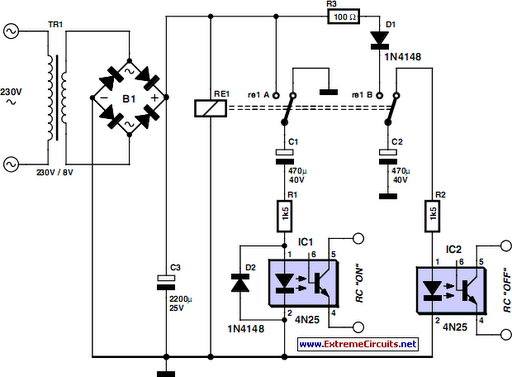
Remote Control Mains Switch
As the only electronics engineer in the family and circle of friends, it is sometimes not possible to avoid requests for assistance. Recently, a request was made by an elderly lady residing in a retirement home. In her room, the...
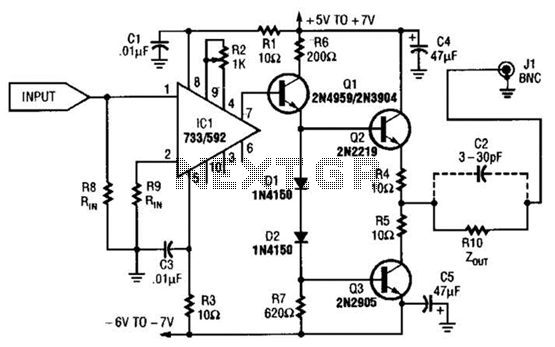
Ultrasonic Cleaner Circuit
An ultrasonic cleaner is effective for cleaning specific items. This circuit employs a microcontroller to manage timing and provide a digital display, although a basic oscillator can be utilized if preferred. RESL and RES2 are piezoelectric transducers activated by power...
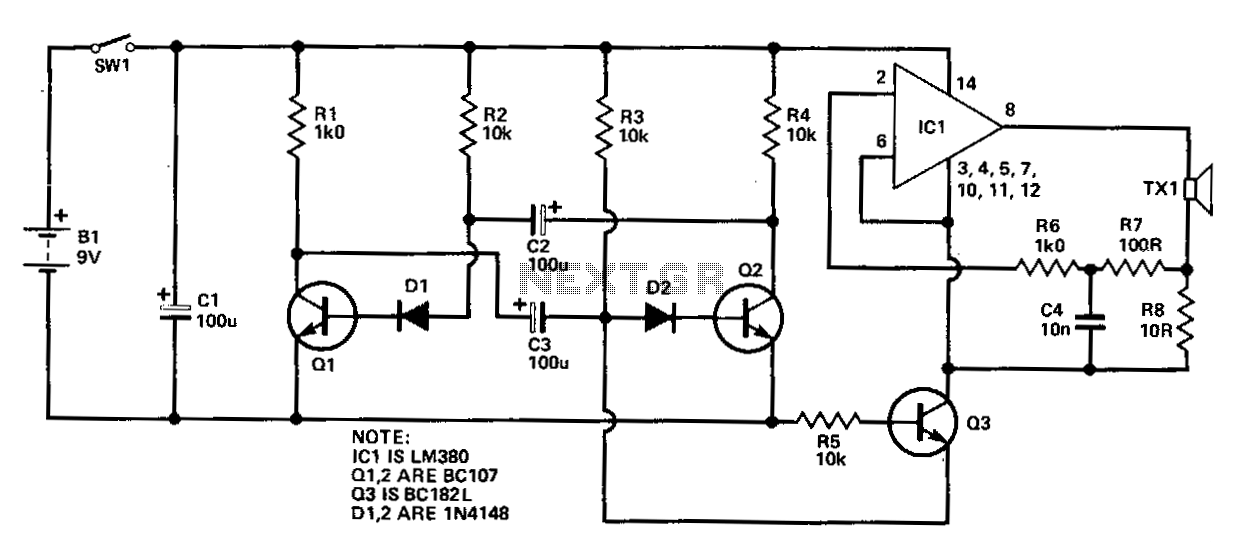
Ultrasonic-pest-controller
This circuit comprises two fundamental components: an oscillator tuned to 40 kHz and a voltage doubler with a pulse generator. The pulses generated are approximately 10 ms in duration and occur 2-3 times per second to minimize battery consumption while...
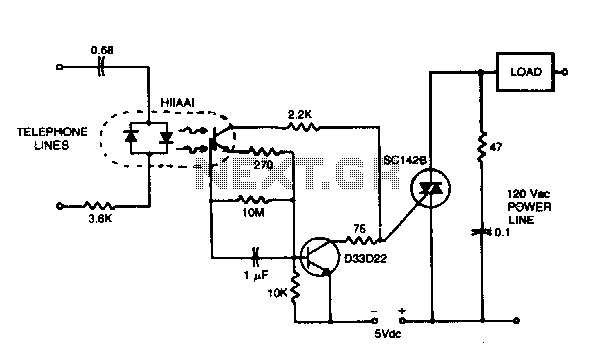
Remote ring extender switch
The circuit can operate lamps and buzzers from the 120 V, 60 Hz power line while maintaining positive isolation between the telephone line and the power line. The use of the isolated tab triac simplifies heat sinking by removing the...
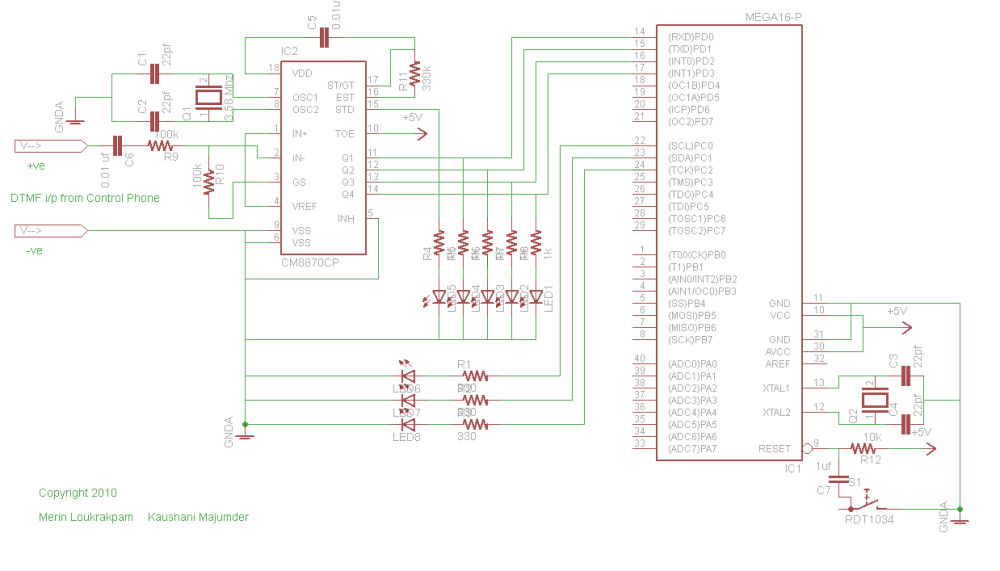
Home Automation through Cellphone Keying
This project was developed during a Bachelor of Engineering course to enable remote control of lights and other appliances within a room. The objective was to address the common issue of forgetting to turn off devices such as fans or...
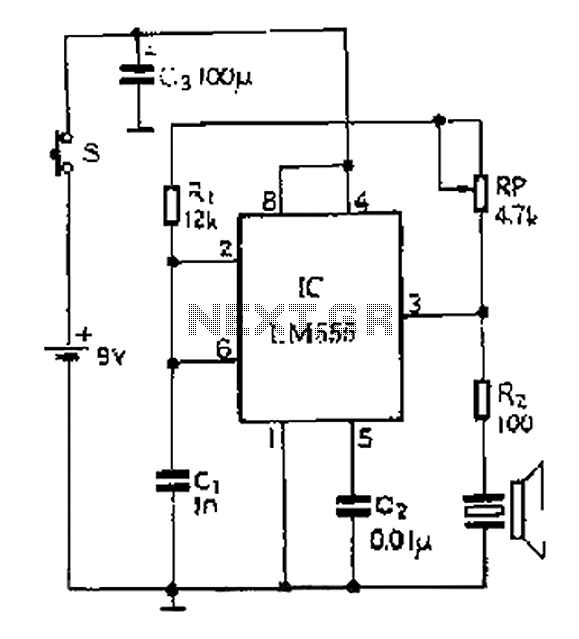
40kHZ ultrasonic transmitter circuit diagram
A 40 kHz ultrasonic transmitter circuit utilizes the LM555 timer as a time base circuit along with external components to create a 40 kHz multivibrator. The resistance of the adjustable resistor RP can modify the oscillation frequency. The output from...
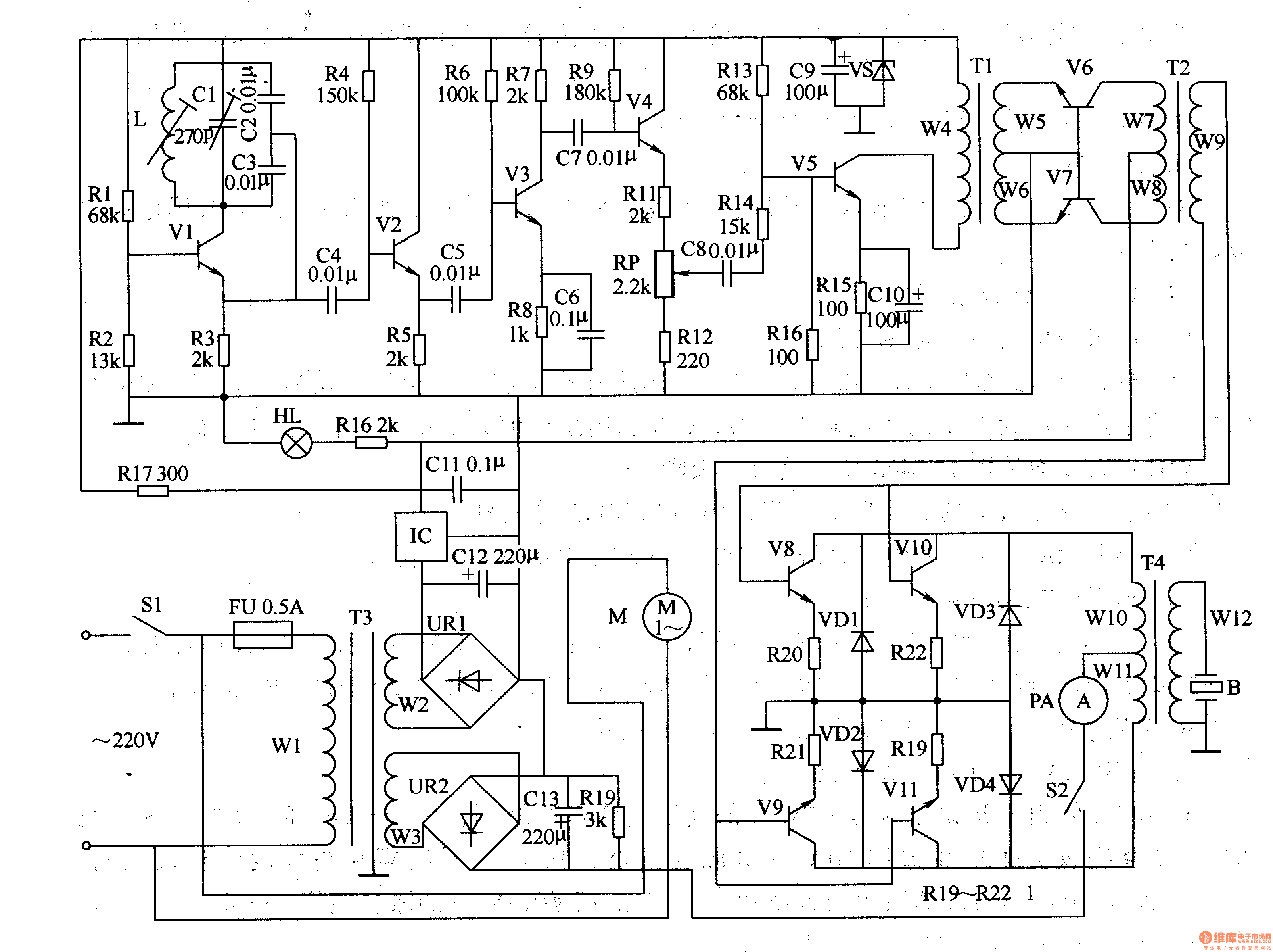
Ultrasonic Drilling Machine Two
The circuit comprises a power supply circuit, an ultrasonic oscillator circuit, a pre-amplifier, an amplifier, and a power amplifier drive output circuit. The power supply circuit includes a power switch (S1), a fuse (FU), a power transformer (T1), a bridge...

ultrasonic radar alarm
This project presents numerous practical applications in security and alarm systems for homes, shops, and vehicles. The circuit is highly sensitive and can be configured to either reset automatically or remain triggered until manually reset after an alarm. It comprises...
ultrasonic measurement circuit
This design circuit is for an electrostatic transducer used in ultrasonic measurement applications. It employs the LM1812 ultrasonic transceiver. The transducer (X1) and the LM1812 work together to transmit a burst of oscillations. The return echo is detected by X1,...