


Clear Glass Sensor
#glass sensor
#industrial
#hobbyist
#electronics
#sensor module
#clear glass
#detection
#simple circuit
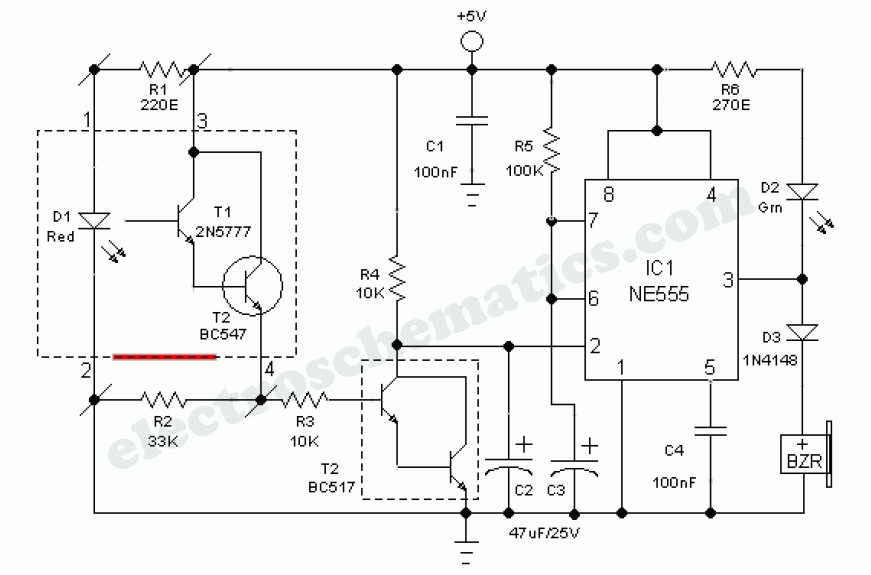
Description: Industrial-grade clear glass sensor modules are widely available but often not accessible to the average electronics hobbyist. The simple clear glass sensor...
Industrial-grade clear glass sensor modules are specialized devices designed for various applications, including environmental monitoring, industrial automation, and smart home systems. These sensors are constructed from high-quality clear glass, which allows for optimal light transmission and durability against harsh conditions. Typically, they incorporate photodetectors or other sensing elements that respond to specific stimuli such as light, temperature, or pressure.
In a schematic design, the clear glass sensor module would include key components such as a photodetector, an analog-to-digital converter (ADC), and a microcontroller unit (MCU) for processing the signals received from the sensor. The photodetector converts incoming light into an electrical signal, which is then processed by the ADC to provide a digital output suitable for the MCU. The MCU can be programmed to interpret the sensor data and execute specific actions, such as triggering alarms, adjusting lighting, or logging data for analysis.
Power supply considerations are crucial for the operation of these modules. They typically require a stable voltage source, which can be provided through batteries or a regulated power supply. Additionally, protective circuitry may be included to safeguard the sensor from voltage spikes or reverse polarity, ensuring reliable operation.
Communication interfaces such as I2C, SPI, or UART can be implemented to facilitate data exchange between the sensor module and other devices, such as a computer or a microcontroller. This enables the integration of the sensor into larger systems, allowing for remote monitoring and control.
Overall, while industrial-grade clear glass sensor modules may be beyond the reach of hobbyists, understanding their design and functionality can inspire the development of similar, more accessible sensor solutions tailored to individual projects and applications.Industrial grade clear glass sensor modules are widely available but not within the reach of an average electronics hobbyist. The simple clear glass sensor..
Industrial-grade clear glass sensor modules are specialized devices designed for various applications, including environmental monitoring, industrial automation, and smart home systems. These sensors are constructed from high-quality clear glass, which allows for optimal light transmission and durability against harsh conditions. Typically, they incorporate photodetectors or other sensing elements that respond to specific stimuli such as light, temperature, or pressure.
In a schematic design, the clear glass sensor module would include key components such as a photodetector, an analog-to-digital converter (ADC), and a microcontroller unit (MCU) for processing the signals received from the sensor. The photodetector converts incoming light into an electrical signal, which is then processed by the ADC to provide a digital output suitable for the MCU. The MCU can be programmed to interpret the sensor data and execute specific actions, such as triggering alarms, adjusting lighting, or logging data for analysis.
Power supply considerations are crucial for the operation of these modules. They typically require a stable voltage source, which can be provided through batteries or a regulated power supply. Additionally, protective circuitry may be included to safeguard the sensor from voltage spikes or reverse polarity, ensuring reliable operation.
Communication interfaces such as I2C, SPI, or UART can be implemented to facilitate data exchange between the sensor module and other devices, such as a computer or a microcontroller. This enables the integration of the sensor into larger systems, allowing for remote monitoring and control.
Overall, while industrial-grade clear glass sensor modules may be beyond the reach of hobbyists, understanding their design and functionality can inspire the development of similar, more accessible sensor solutions tailored to individual projects and applications.Industrial grade clear glass sensor modules are widely available but not within the reach of an average electronics hobbyist. The simple clear glass sensor..
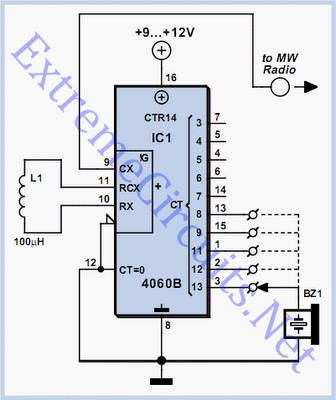
Simple Oscillator / Pipe Locator
Occasionally, there is a requirement to create a very basic oscillator. The circuit illustrated here is remarkably straightforward, utilizing only three components.
The described oscillator circuit typically consists of a resistor, a capacitor, and a single transistor. The operation of this...
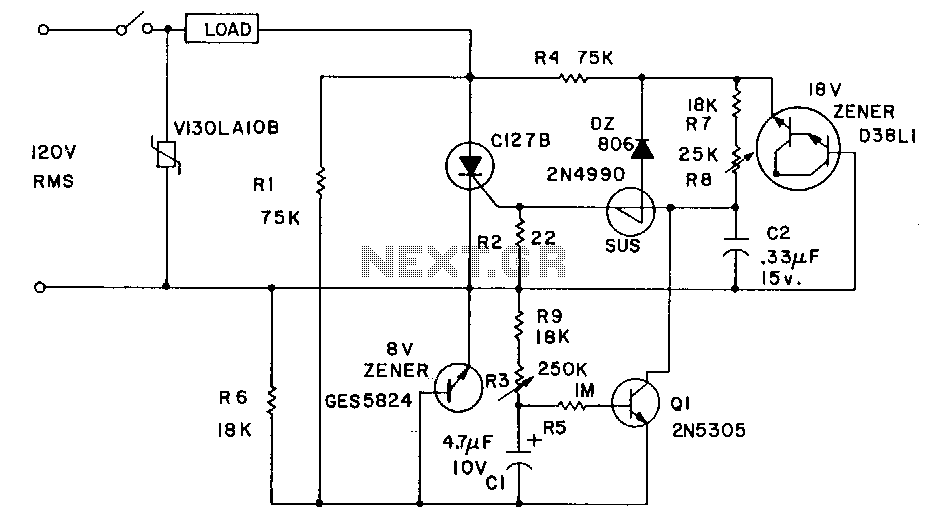
Burst-power-control
Industrial applications sometimes require that power be briefly applied to a load following the closure of a switch, such as a microswitch or foot switch. The load could be a heating element used for sealing plastic bags, a DC motor...
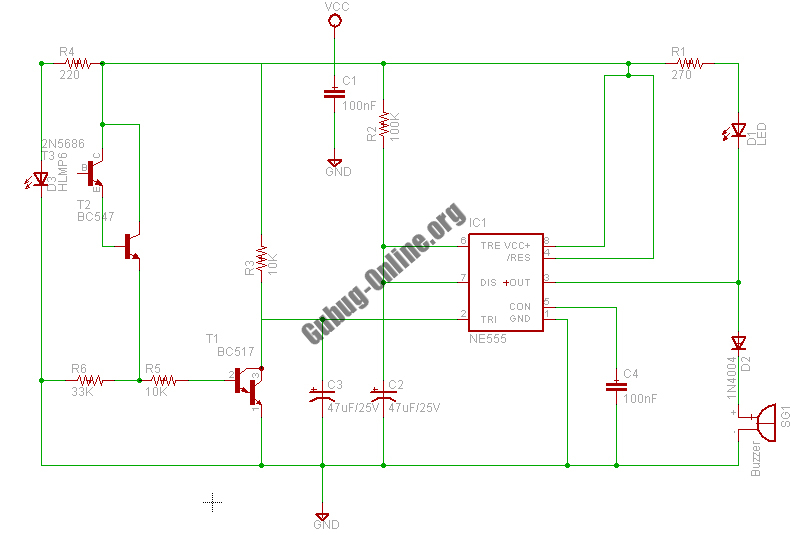
Clear Glass Sensor Circuit
This design circuit project involves a clear glass sensor circuit intended for experimental or hobbyist applications. The concept is straightforward and relies on a homemade sensor unit that includes one high-efficiency ultra-bright red LED (D1) and a standard phototransistor.
The clear...
Electronics Projects Circuits
Over 1400 top electronics projects and electronic circuits with photos, datasheets, and easy-to-read schematics, along with explanations of how they work and how to build them.
The collection comprises a vast array of electronics projects suitable for enthusiasts and professionals alike....