


caller id project
#caller id
#pic 16f628A
#mt8870
#decoder
#microcontroller
#telephone
#signal processing
#Malaysia
#electronics help
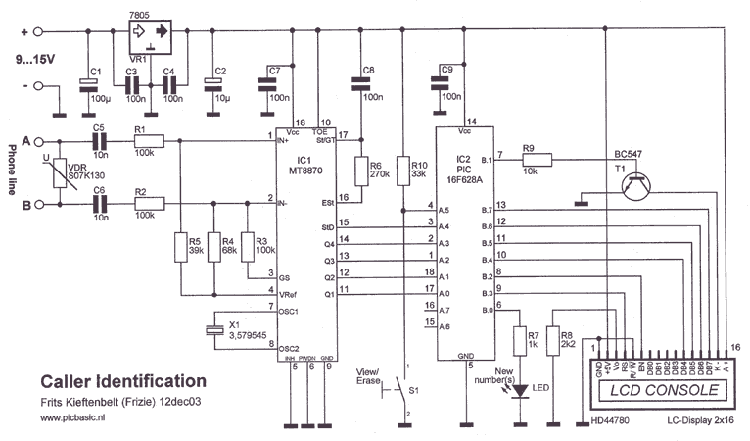
Description: Implementing caller ID functionality using the PIC 16F628A microcontroller. The programming and integrated circuit (IC) are functioning correctly; however, there are issues with the MT8870 decoder. Assistance is requested, particularly from those located in Malaysia, for troubleshooting ideas.
The project involves utilizing the PIC 16F628A microcontroller to decode caller ID signals, which are transmitted during the ringing phase of a telephone call. The MT8870 is a dual-tone multi-frequency (DTMF) decoder that converts the received audio tones into binary-coded decimal (BCD) output, which can then be processed by the microcontroller.
To ensure proper operation of the MT8870, several factors must be considered. First, verify the power supply connections to the MT8870, ensuring that the VDD and GND pins are correctly connected to the appropriate voltage levels, typically +5V. It is essential to check the crystal oscillator connected to the MT8870, as the correct frequency (usually 3.579 MHz) is crucial for accurate tone detection.
Next, inspect the audio input to the MT8870. The input should be connected to the telephone line in a manner that captures the caller ID signal effectively. A suitable coupling circuit may be required to interface the telephone line with the decoder, often involving capacitors and resistors to filter and condition the signal.
Additionally, the connection between the MT8870 and the PIC 16F628A must be verified. The BCD output pins from the MT8870 should be connected to the appropriate input pins on the microcontroller. Ensure that the pull-up resistors are used where necessary to maintain stable logic levels.
Lastly, debugging can be facilitated by using an oscilloscope to observe the output from the MT8870 and confirm that it is producing the expected BCD signals when a caller ID signal is present. This will help identify whether the issue lies with the decoder or the subsequent processing by the microcontroller.Doing the caller id with the pic 16f628A. My programming and ic are working very well but my mt8870 decoder is not working. i need some help here. i stay in Malaysia please help if anyone got any idea
The project involves utilizing the PIC 16F628A microcontroller to decode caller ID signals, which are transmitted during the ringing phase of a telephone call. The MT8870 is a dual-tone multi-frequency (DTMF) decoder that converts the received audio tones into binary-coded decimal (BCD) output, which can then be processed by the microcontroller.
To ensure proper operation of the MT8870, several factors must be considered. First, verify the power supply connections to the MT8870, ensuring that the VDD and GND pins are correctly connected to the appropriate voltage levels, typically +5V. It is essential to check the crystal oscillator connected to the MT8870, as the correct frequency (usually 3.579 MHz) is crucial for accurate tone detection.
Next, inspect the audio input to the MT8870. The input should be connected to the telephone line in a manner that captures the caller ID signal effectively. A suitable coupling circuit may be required to interface the telephone line with the decoder, often involving capacitors and resistors to filter and condition the signal.
Additionally, the connection between the MT8870 and the PIC 16F628A must be verified. The BCD output pins from the MT8870 should be connected to the appropriate input pins on the microcontroller. Ensure that the pull-up resistors are used where necessary to maintain stable logic levels.
Lastly, debugging can be facilitated by using an oscilloscope to observe the output from the MT8870 and confirm that it is producing the expected BCD signals when a caller ID signal is present. This will help identify whether the issue lies with the decoder or the subsequent processing by the microcontroller.Doing the caller id with the pic 16f628A. My programming and ic are working very well but my mt8870 decoder is not working. i need some help here. i stay in Malaysia please help if anyone got any idea
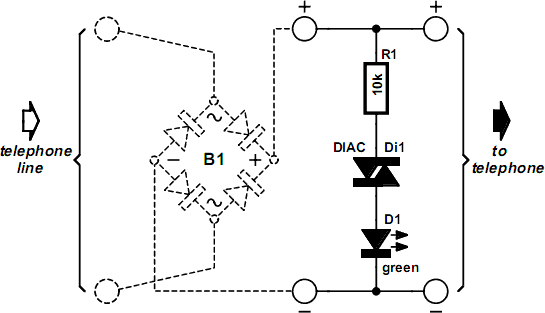
Telephone Free Indicator
Depending on local regulations and the telephone company to which one is connected, the voltage on a free telephone line can range from 42 to 60 volts. This voltage is sufficient to cause a diac to conduct, functioning similarly to...
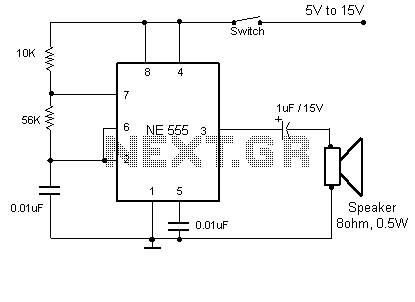
Telephone call meter using calculator & COB
This circuit utilizes a simple calculator along with a chip-on-board (COB) from an analog quartz clock to create a telephone call meter. The calculator converts STD/ISD calls into local call equivalents and continuously displays the current local call meter reading....
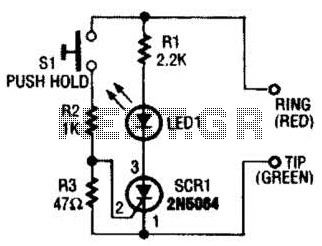
Telephone Amplifier Circuit
Section Ul-a is configured as a high-gain inverting voltage amplifier that is inductively coupled to the phone line via LI. Inductor LI is a homemade unit that consists of 250 turns of fine, enamel-coated wire that is wound on an...
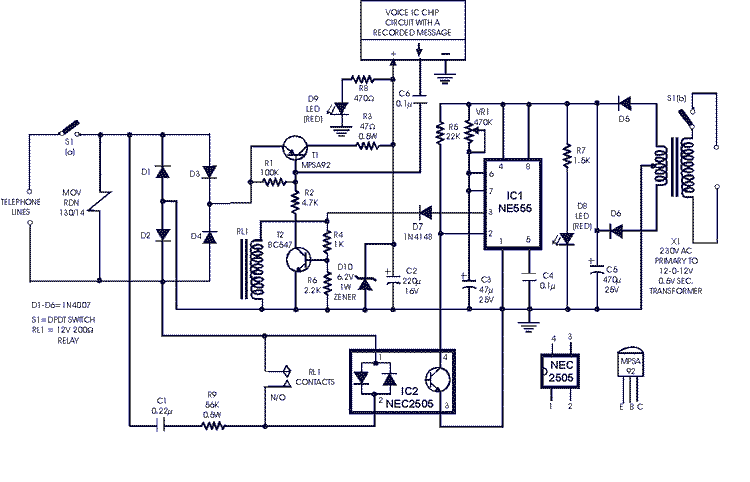
auto answering circuit
This circuit is not highly critical and can utilize various devices (such as a tape player with a message recorded on an endless tape) that do not overload the circuit or the telephone line. The incoming line is safeguarded by...
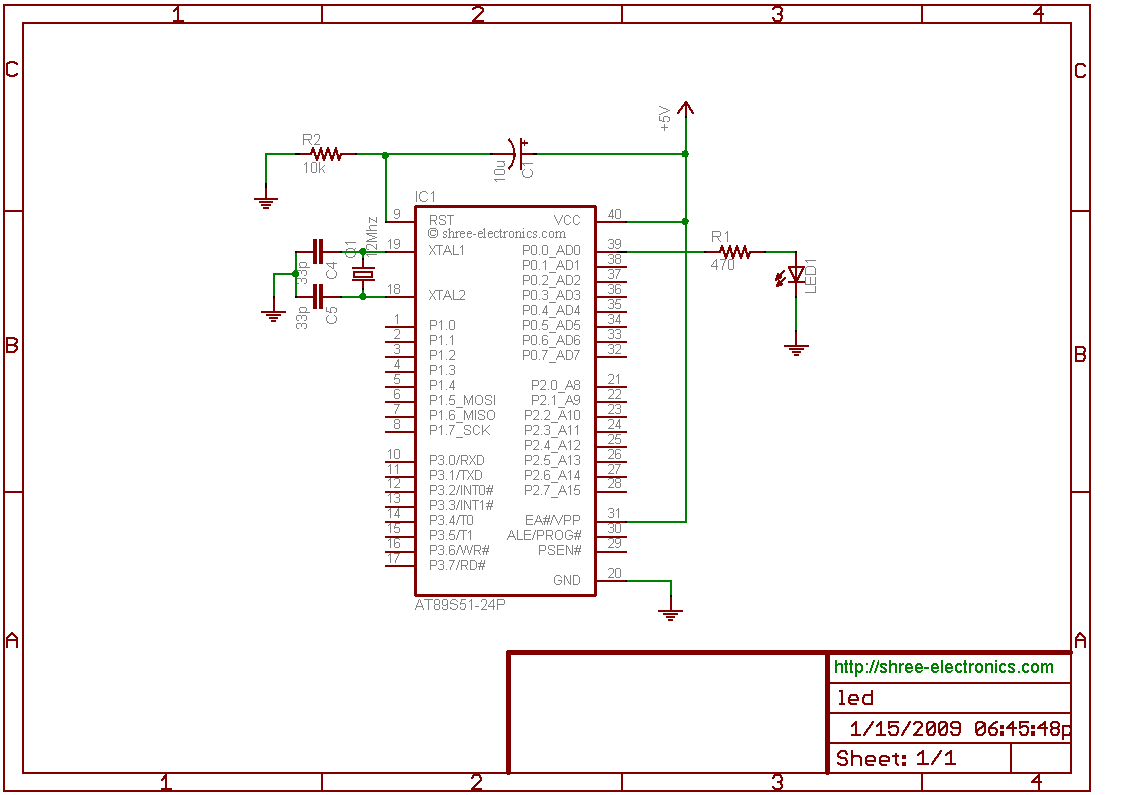
microcontroller led interfacing
The initial step often taken when learning about any microcontroller or embedded system is to make an LED blink. The circuit presented below illustrates the setup for interfacing an LED. Note: Due to the large dimensions of the circuit diagram,...
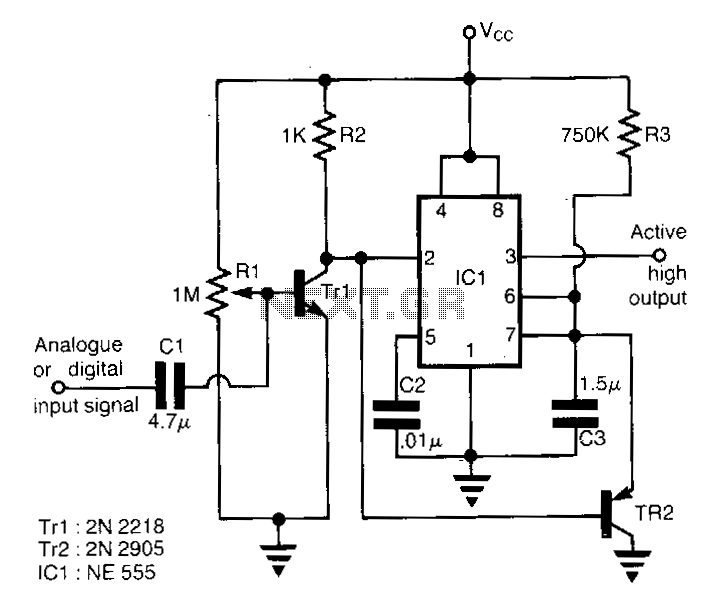
Telephone-speech-activity-detector
This circuit is designed for speech activity detection in telephone lines. It is particularly useful for half-duplex conversations between two stations, where simultaneous transmission of voice and data occurs over the same pair of cables by interspersing data with voice...
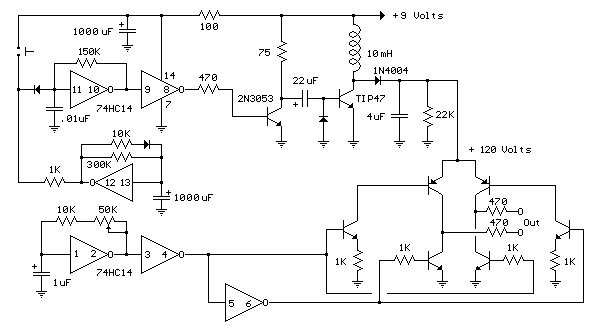
Telephone Ring Generator Using Switching Supply
The telephone ring generator shown below generates the needed high voltage from a simple switching mode power supply (SMPS) which employs a CMOS Schmitt Trigger square wave oscillator, 10 mH inductor, high voltage switching transistor (TIP47 or other high voltage,...
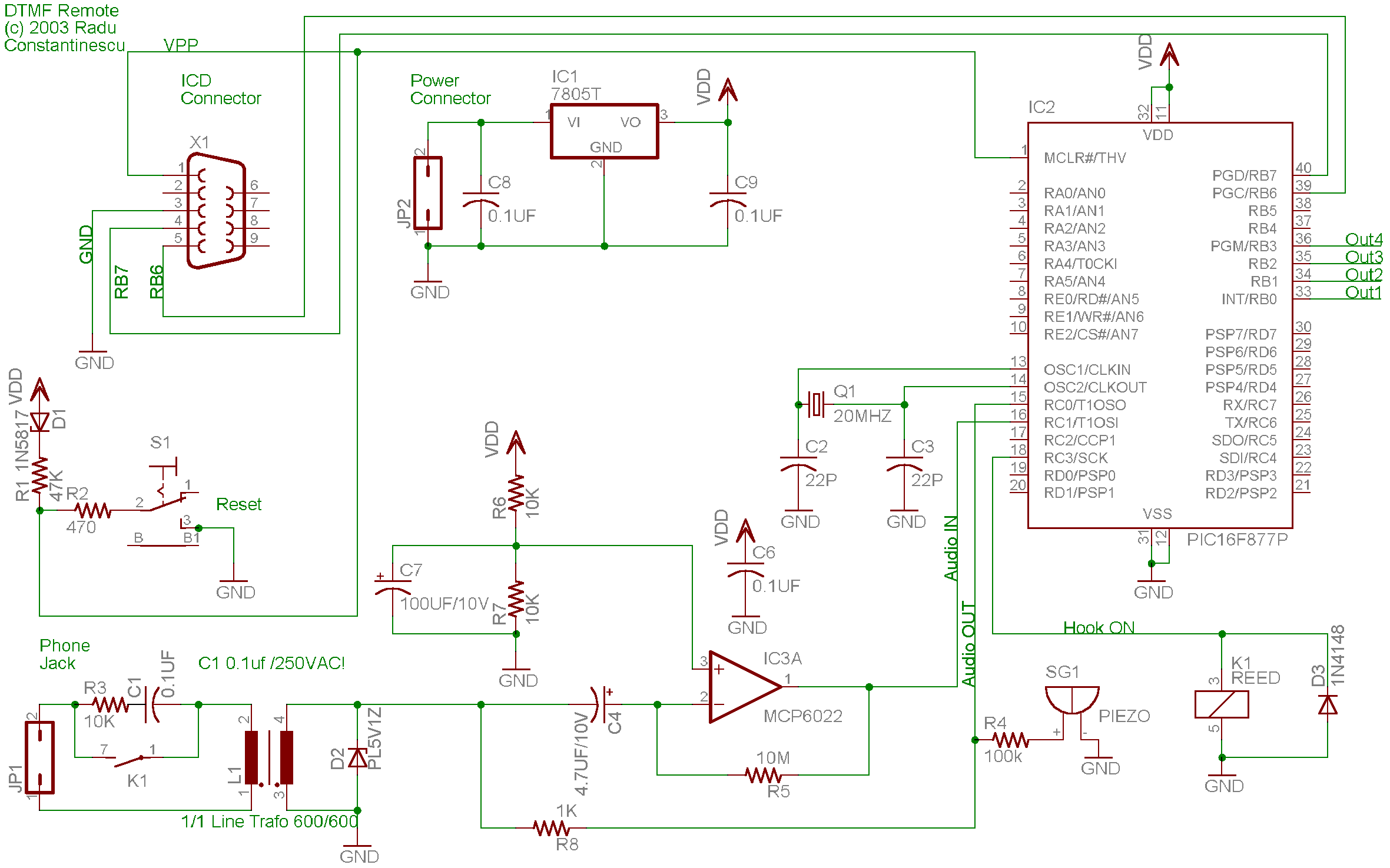
teleplone circuit
A telephone remote control system allows users to perform various functions remotely using their phone. This system automates complex tasks, simplifying the development and operation of telephone systems.
The telephone remote control system is designed to enhance user interaction with telecommunication...
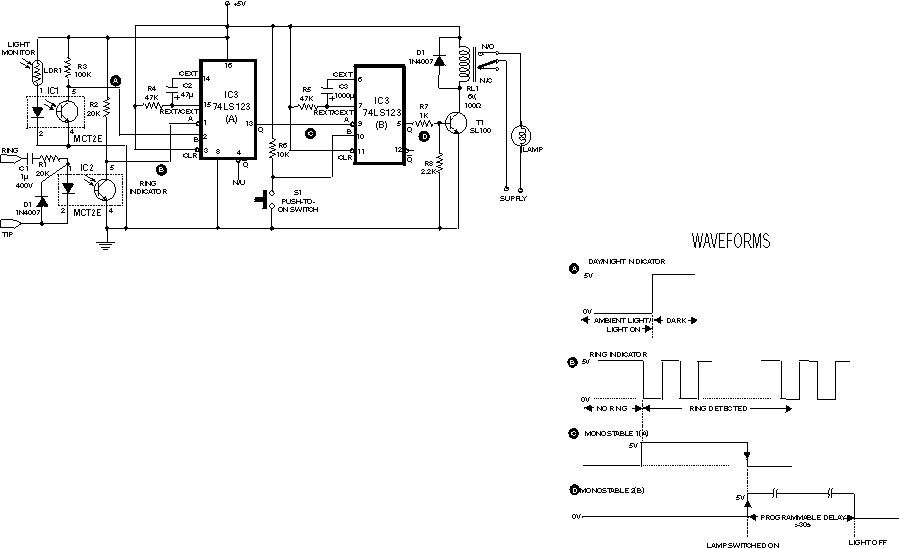
Telephone Light Ringer
The circuit shown here is used to switch on a lamp when the telephone rings, if the ambient light is insufficient. The circuit uses only two ICs and it can be implemented very easily. A light dependent resistance (LDR), with...