


TDA3567 Ntsc Decoder
#TDA3567
#NTSC
#decoder
#SECAM
#PAL
#signal conversion
#NXP Semiconductors
#video processing
#transcoder
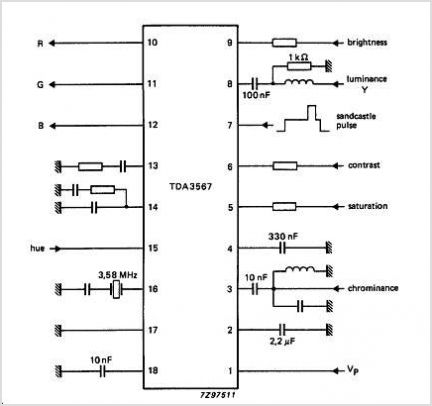
Description: The TDA3592A transcoder circuit converts SECAM input signals into true PAL signals and can be used in combination with all types of PAL decoders by NXP Semiconductors.
The TDA3592A is a versatile transcoder integrated circuit designed to facilitate the conversion of SECAM video signals into PAL format. This functionality is crucial for applications that require compatibility with PAL-based systems, which are widely used in various broadcasting environments. The device operates by processing the SECAM input signals and accurately generating corresponding PAL output signals, ensuring minimal loss of quality during the conversion process.
The TDA3592A features a range of input and output configurations, allowing it to interface seamlessly with different types of PAL decoders. This flexibility makes it suitable for integration into a variety of television and multimedia systems. The circuit utilizes advanced signal processing techniques to handle the color encoding and decoding processes inherent in SECAM and PAL formats, ensuring that color fidelity and image integrity are maintained throughout the transcoding operation.
In addition to its primary function as a transcoder, the TDA3592A may include features such as automatic gain control, which helps to stabilize output levels, and noise reduction capabilities that enhance the overall quality of the video signal. The device is designed for ease of integration, with a straightforward pin configuration that simplifies connections to other components in the system.
Overall, the TDA3592A transcoder circuit is an essential component for systems that require the conversion of SECAM signals to PAL, providing reliable performance and compatibility with a wide range of PAL decoders. Its design reflects NXP Semiconductors' commitment to delivering high-quality solutions for video signal processing.The TDA3592A transcoder circuit converts SECAM input signals into true PAL signals, and CAN be used in combination with all types of PAL decoder By NXP Semiconductors
The TDA3592A is a versatile transcoder integrated circuit designed to facilitate the conversion of SECAM video signals into PAL format. This functionality is crucial for applications that require compatibility with PAL-based systems, which are widely used in various broadcasting environments. The device operates by processing the SECAM input signals and accurately generating corresponding PAL output signals, ensuring minimal loss of quality during the conversion process.
The TDA3592A features a range of input and output configurations, allowing it to interface seamlessly with different types of PAL decoders. This flexibility makes it suitable for integration into a variety of television and multimedia systems. The circuit utilizes advanced signal processing techniques to handle the color encoding and decoding processes inherent in SECAM and PAL formats, ensuring that color fidelity and image integrity are maintained throughout the transcoding operation.
In addition to its primary function as a transcoder, the TDA3592A may include features such as automatic gain control, which helps to stabilize output levels, and noise reduction capabilities that enhance the overall quality of the video signal. The device is designed for ease of integration, with a straightforward pin configuration that simplifies connections to other components in the system.
Overall, the TDA3592A transcoder circuit is an essential component for systems that require the conversion of SECAM signals to PAL, providing reliable performance and compatibility with a wide range of PAL decoders. Its design reflects NXP Semiconductors' commitment to delivering high-quality solutions for video signal processing.The TDA3592A transcoder circuit converts SECAM input signals into true PAL signals, and CAN be used in combination with all types of PAL decoder By NXP Semiconductors
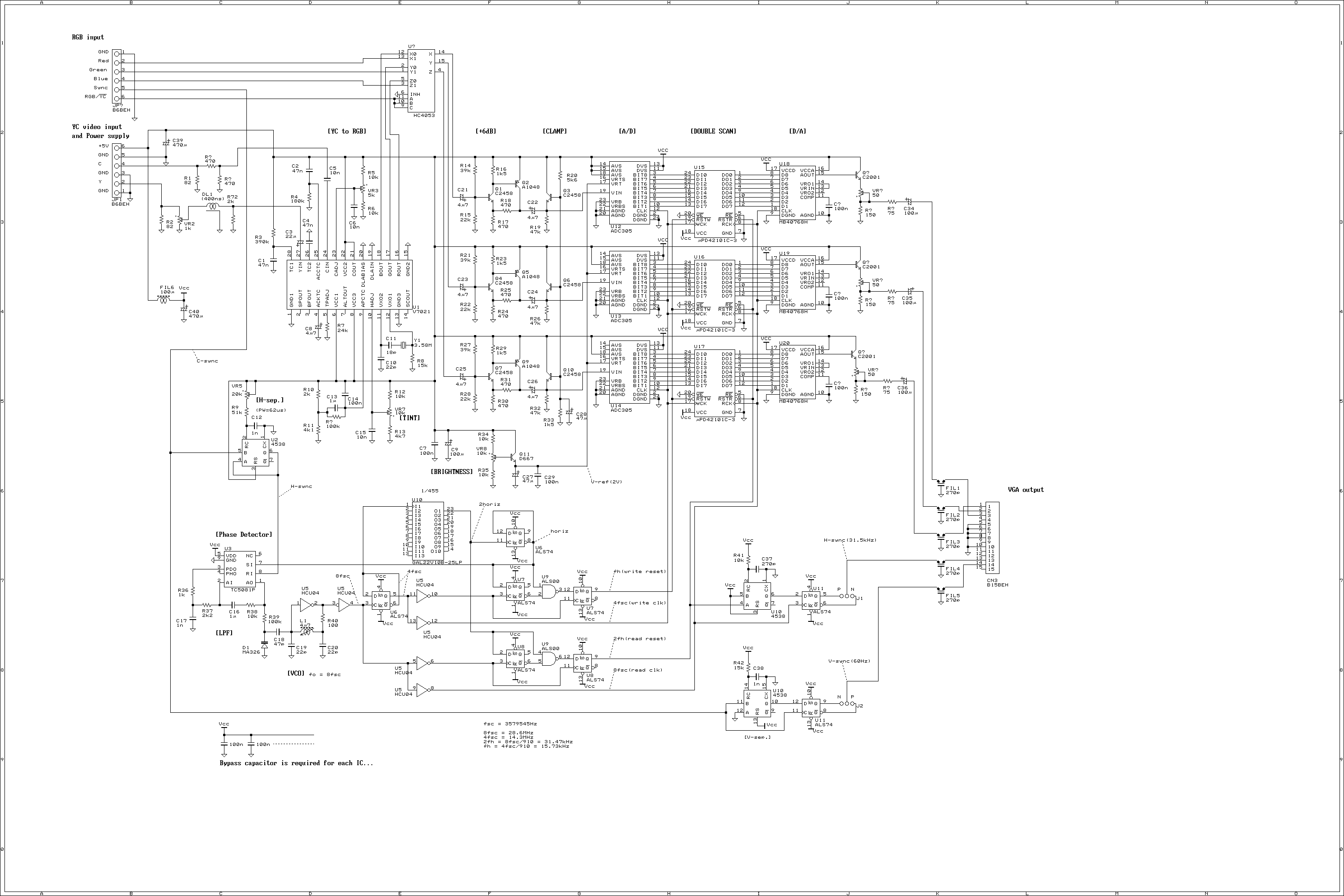
NTSC(YC/RGB) to VGA Scan Converter
This is a video scan converter to display NTSC video signal into VGA monitor. Normally, the VGA monitor occupies most desk top space, so that everybody will be thinking that if the VGA monitor can be used for video monitor.
The...
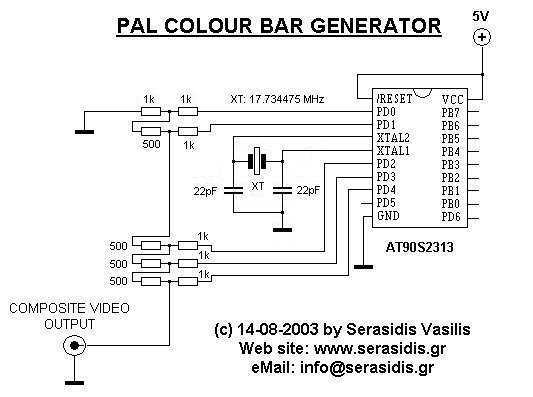
PAL colour bar generator
The first idea was to work with an 8.867238 MHz crystal (2 times the color carrier). When reading more about PAL video composite signal creation, it was found that to produce colors entirely in software, one must create the color...
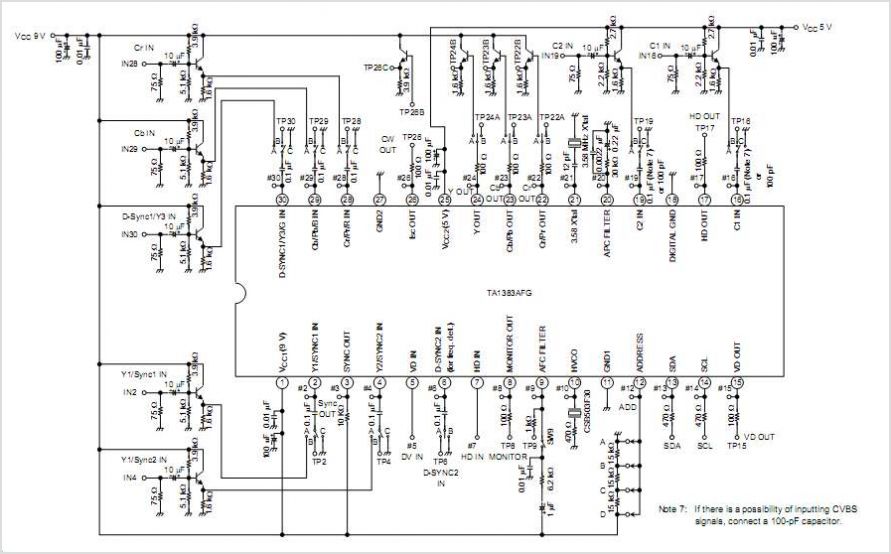
TA1383AFG NTSC Chroma Decoder Multi-Point Scan Sync Processor H/V Frequency Counter IC For Color TV
The TA2003PG and TA2003FG are integrated circuits designed for AM/FM radio applications. These ICs facilitate AM/FM radio functionality, including FM front-end and AM/FM intermediate frequency processing. When combined with the TA7368P mono power amplifier IC, a comprehensive AM/FM radio system...
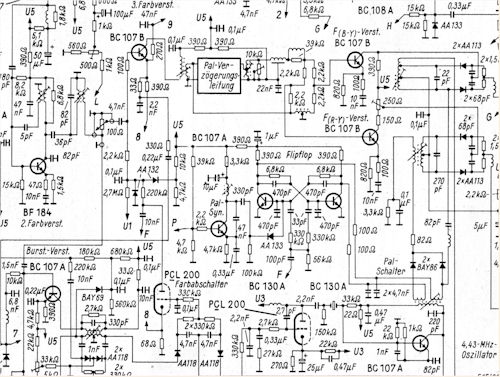
45 Years Anniversary of Walter Bruchs PAL Color Television
This article commemorates the 45th anniversary of the invention of PAL in 2008 and expresses appreciation for the contributions of German television pioneer Prof. Dr. Eng. Walter Bruch, often referred to as "Papa PAL," "Mister PAL," or simply "PAL pal"...
NTSC(YC/RGB) to VGA Scan Converter
This is a video scan converter to display NTSC video signal into VGA monitor. Normally, the VGA monitor occupies most desk top space, so that everybody will be thinking that if the VGA monitor can be used for video monitor.
The...
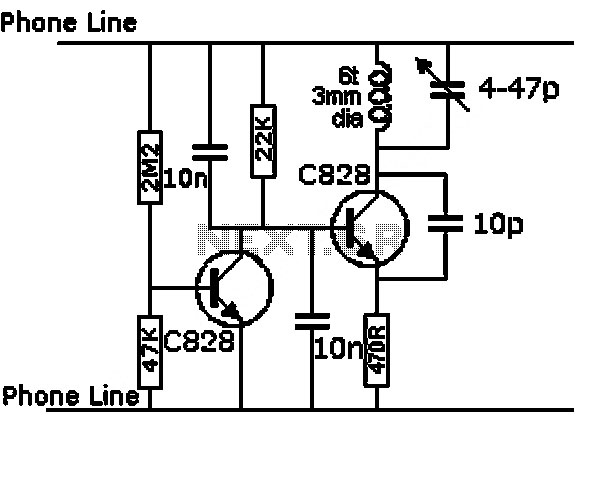
low power universal demultiplexer decoder
This circuit functions as a universal decoder, capable of operating either as a dual 1-of-4 decoder or as a single 1-of-8 decoder, depending on the signal applied to the Mode Control (M) input. In the dual mode, each section features...
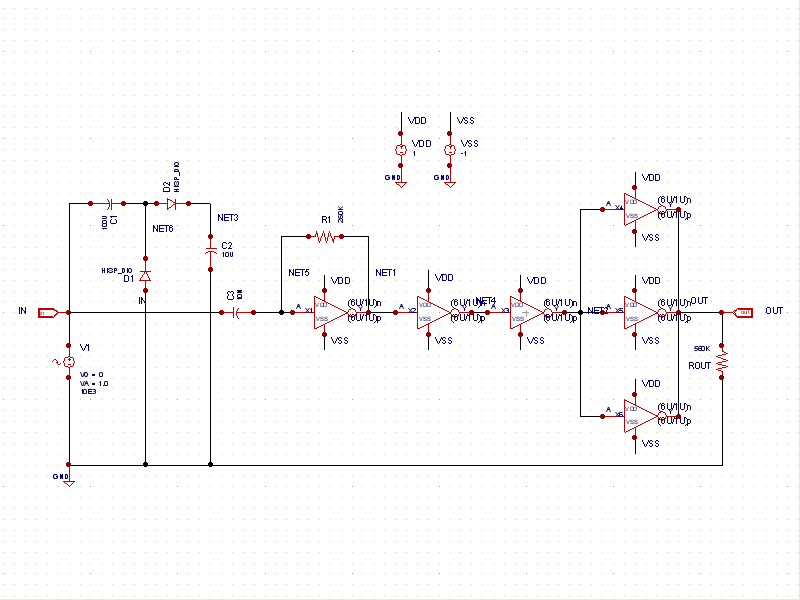
Sine to Square Wave Converter
This schematic example demonstrates a sinusoidal voltage input at a frequency of 10 kHz, which is converted to a square wave using an inverter-based circuit. The VDD and VSS rails are connected to +1V and -1V, respectively. The control file...
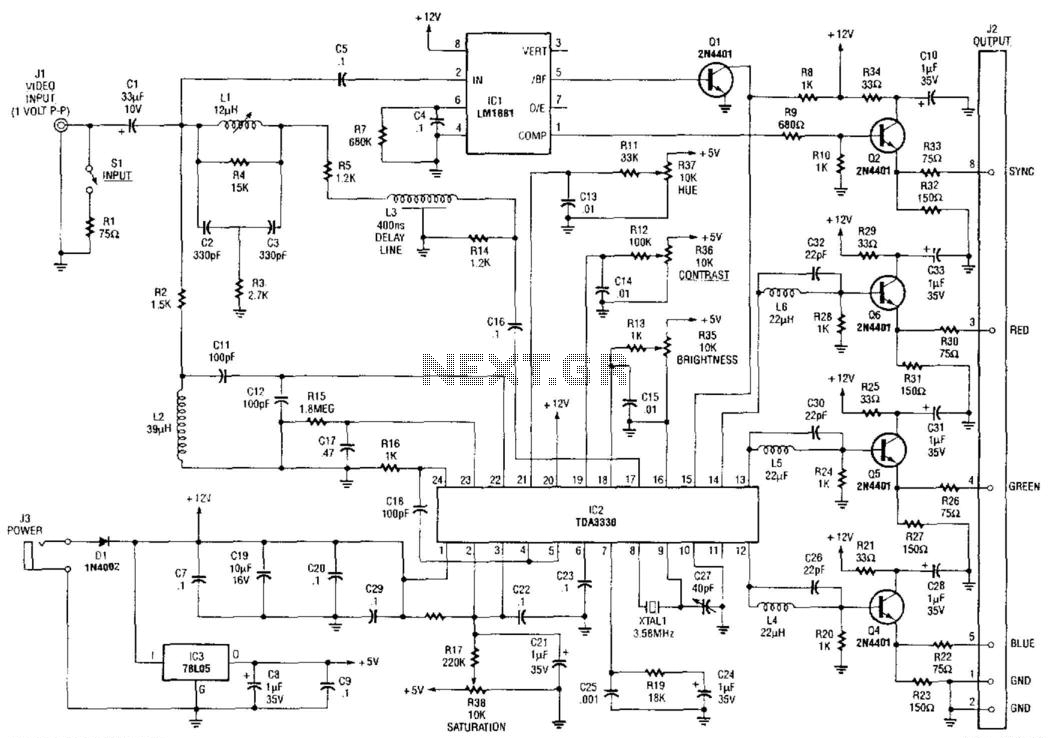
Ntsc/Rgb Video Decoder
An NTSC/RGB decoder is presented here. Utilizing a TDA3330, a 1-V input video signal is decomposed into its red (R), green (G), and blue (B) components, along with composite sync. U1 serves as an integrated sync separator (LM1881). This circuit...
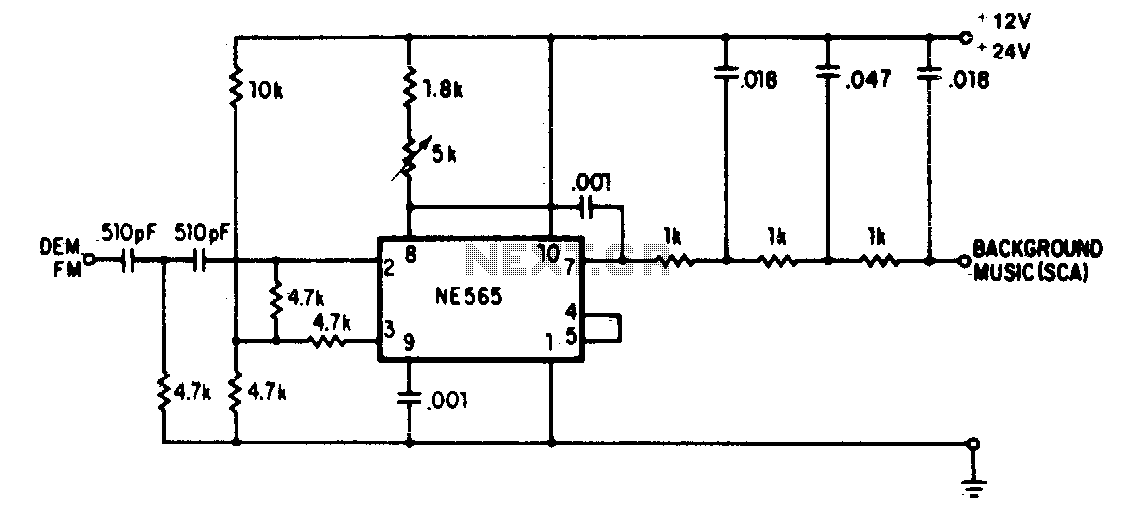
Sca background music decoder
A resistive voltage divider is utilized to establish a bias voltage for the input (pins 2 and 3). The demodulated FM signal is introduced to the input through a two-stage high-pass filter, which serves to provide capacitive coupling and to...