


TV RGB signal output from a SVGA graphics card
#TV signal
#SVGA
#PAL
#CRT timing
#graphics card
#video output
#CCIR
#interlaced refresh
#horizontal frequency
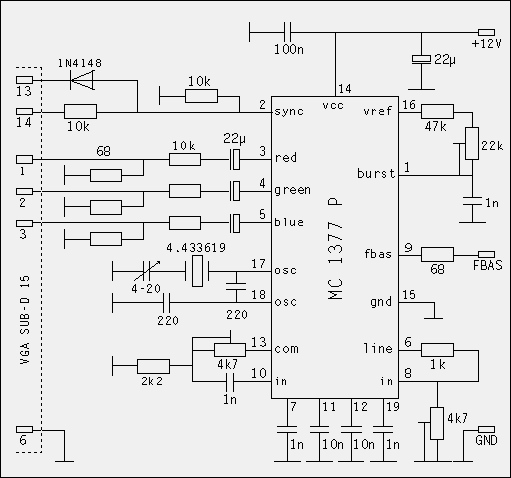
Description: The idea to produce a standard TV PAL signal using a SVGA graphics card was born a few years ago, where cheap graphics cards with TV output were still not available. To achieve a CCIR conform TV signal with 50 Hz vertical interlaced refresh and 15.625 kHz horizontal frequency on most SVGA cards its possible to re-program CRT timing and generate output signals outside the normal specification range.
To generate a standard PAL TV signal using an SVGA graphics card, the circuit design must focus on manipulating the timing parameters of the graphics card output. The goal is to achieve a CCIR-compliant signal with specific characteristics: a vertical refresh rate of 50 Hz and a horizontal frequency of 15.625 kHz.
The circuit typically involves a microcontroller or programmable logic device that interfaces with the graphics card. This component is responsible for reprogramming the timing parameters of the video output. The microcontroller can be programmed to adjust the pixel clock and synchronize the horizontal and vertical sync signals to match the required PAL specifications.
The output stage of the circuit will include a video encoder capable of converting the modified digital signals from the graphics card into an analog PAL composite video signal. This encoder must ensure that the color subcarrier frequency is set to 4.43 MHz, which is essential for PAL standards.
In addition, filtering and amplification stages are necessary to ensure the output signal meets the required voltage levels and impedance for standard television inputs. These stages may include low-pass filters to remove any high-frequency noise generated during the signal processing and amplifiers to boost the signal strength to a suitable level for transmission.
Overall, the successful implementation of this circuit allows for the generation of a compatible PAL signal from a standard SVGA output, enabling the use of older graphics cards in applications where traditional TV output is required.The idea to produce a standard TV PAL signal using a SVGA graphics card was born a few years ago, where cheap graphics cards with TV output were still not available. To achieve a CCIR conform TV signal with 50 Hz vertical interlaced refresh and 15.625 kHz horizontal frequency on most SVGA cards its possible to re-program CRT timing and generate output signals outside the normal specification range.
To generate a standard PAL TV signal using an SVGA graphics card, the circuit design must focus on manipulating the timing parameters of the graphics card output. The goal is to achieve a CCIR-compliant signal with specific characteristics: a vertical refresh rate of 50 Hz and a horizontal frequency of 15.625 kHz.
The circuit typically involves a microcontroller or programmable logic device that interfaces with the graphics card. This component is responsible for reprogramming the timing parameters of the video output. The microcontroller can be programmed to adjust the pixel clock and synchronize the horizontal and vertical sync signals to match the required PAL specifications.
The output stage of the circuit will include a video encoder capable of converting the modified digital signals from the graphics card into an analog PAL composite video signal. This encoder must ensure that the color subcarrier frequency is set to 4.43 MHz, which is essential for PAL standards.
In addition, filtering and amplification stages are necessary to ensure the output signal meets the required voltage levels and impedance for standard television inputs. These stages may include low-pass filters to remove any high-frequency noise generated during the signal processing and amplifiers to boost the signal strength to a suitable level for transmission.
Overall, the successful implementation of this circuit allows for the generation of a compatible PAL signal from a standard SVGA output, enabling the use of older graphics cards in applications where traditional TV output is required.The idea to produce a standard TV PAL signal using a SVGA graphics card was born a few years ago, where cheap graphics cards with TV output were still not available. To achieve a CCIR conform TV signal with 50 Hz vertical interlaced refresh and 15.625 kHz horizontal frequency on most SVGA cards its possible to re-program CRT timing and generate output signals outside the normal specification range.
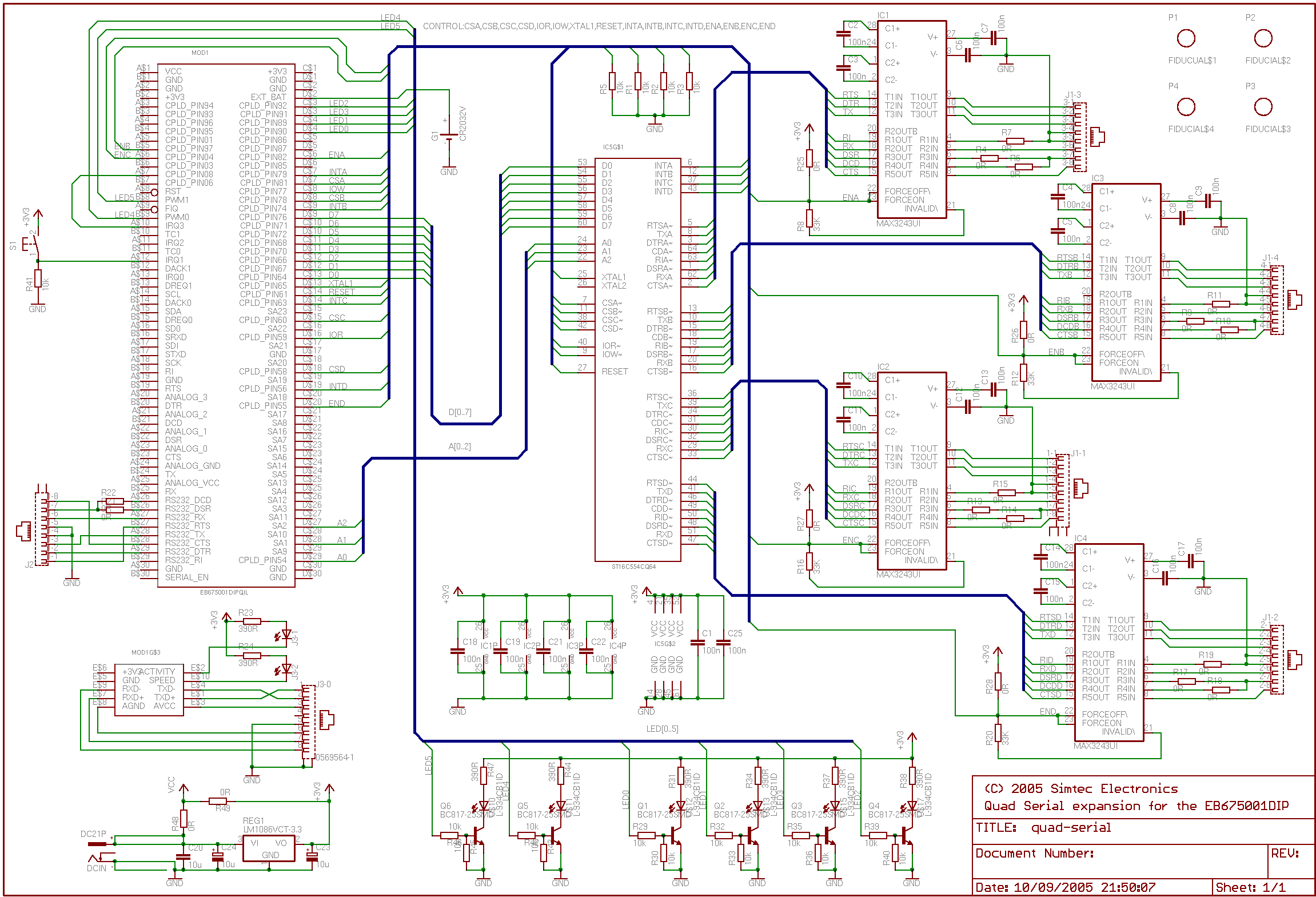
TV video output for the EB675001DIP
This application note outlines the creation of a basic framebuffer with PAL composite TV output for the EB675001DIP. The design employs a minimal number of additional components to facilitate this display. A user-configurable CPLD is utilized to provide all control...
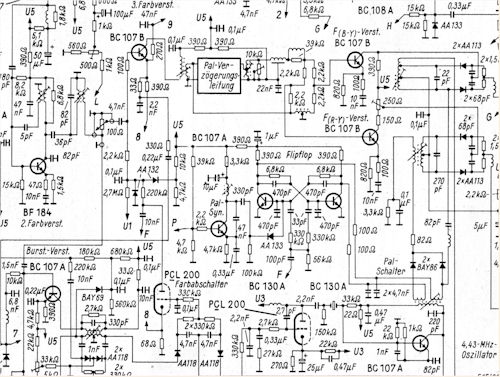
45 Years Anniversary of Walter Bruchs PAL Color Television
This article commemorates the 45th anniversary of the invention of PAL in 2008 and expresses appreciation for the contributions of German television pioneer Prof. Dr. Eng. Walter Bruch, often referred to as "Papa PAL," "Mister PAL," or simply "PAL pal"...
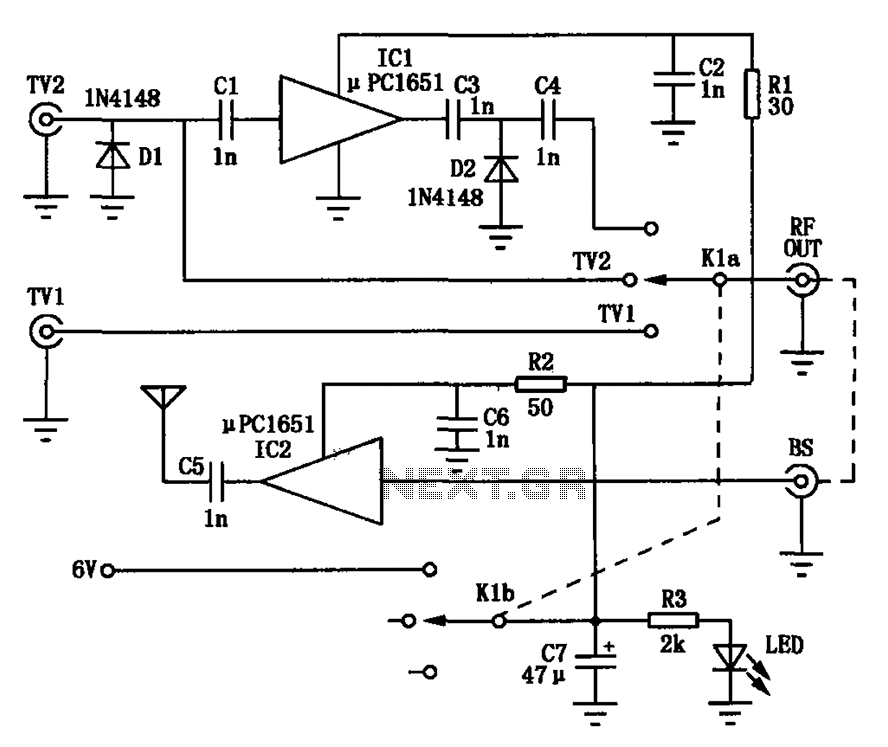
TV signal amplifying circuit diagram conversion
Amplification is utilized to convert video output signals from various devices, such as VCRs and DVD players, which often require amplification of weak output signals. Additionally, it can transmit radio frequency signals over a radius of approximately 7 meters, enhancing...
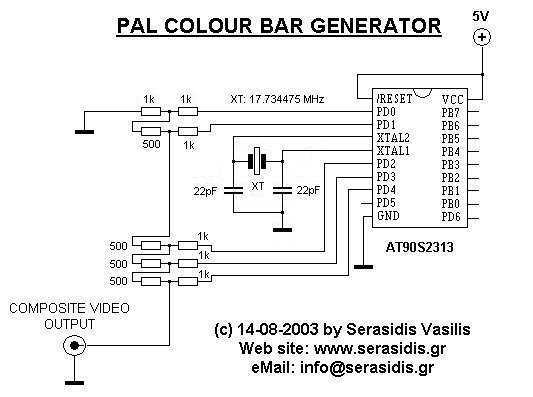
PAL colour bar generator
The first idea was to work with an 8.867238 MHz crystal (2 times the color carrier). When reading more about PAL video composite signal creation, it was found that to produce colors entirely in software, one must create the color...
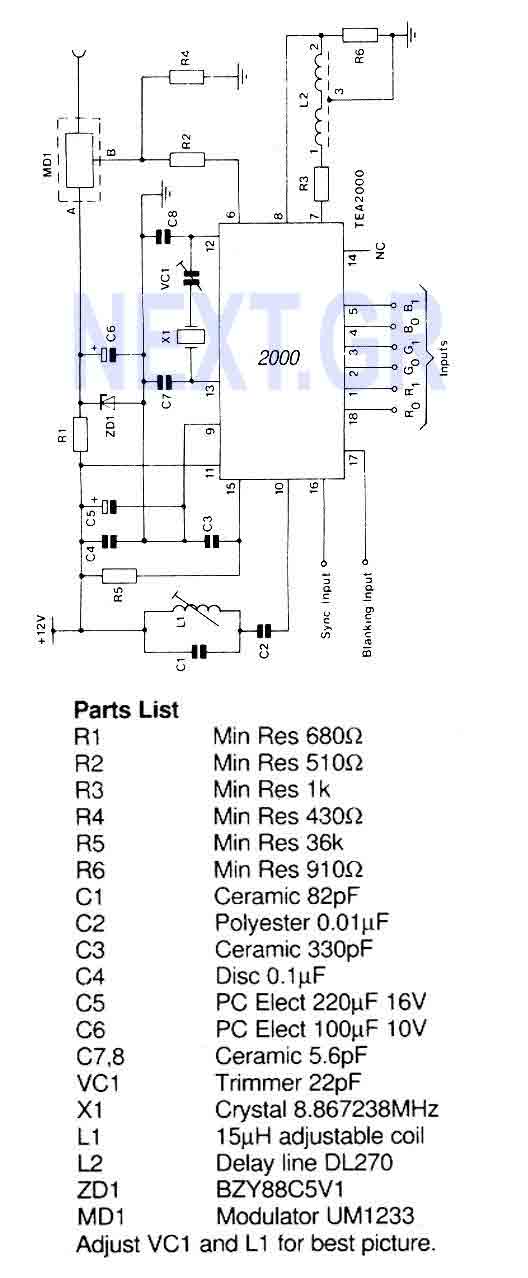
PAL Colour Encoder (TEA2000-V1)
A PAL color encoder and video summer which requires just composite sync and composite blanking inputs, and a 6-bit binary coded input giving the color information. The inputs are organized as 2 bits per primary color with gamma correction automatically...
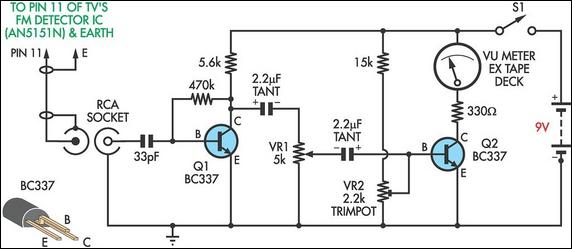
TV Relative Signal Strength Meter PCB
This circuit was designed to assist in the installation of TV antennas. The signal is monitored using a small portable TV set, and this circuit monitors the output of the TV's FM detector IC via a shielded lead. To initially...
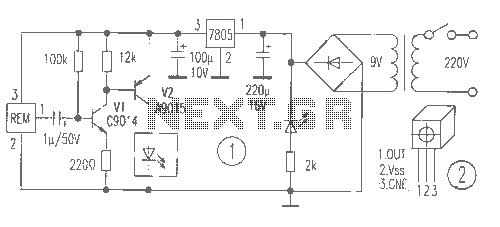
Simply by remote control law circuit diagram
The receiver provides two TV signals, one for the living room and another for the bedroom, along with a satellite receiver. Watching television in the bedroom is convenient in Taiwan; however, when watching television in the living room, it can...
PAL colour bar generator
The first idea was to work with an 8.867238 MHz crystal (2 times the color carrier). When reading more about PAL video composite signal creation, it was found that to produce colors entirely in software, one must create the color...
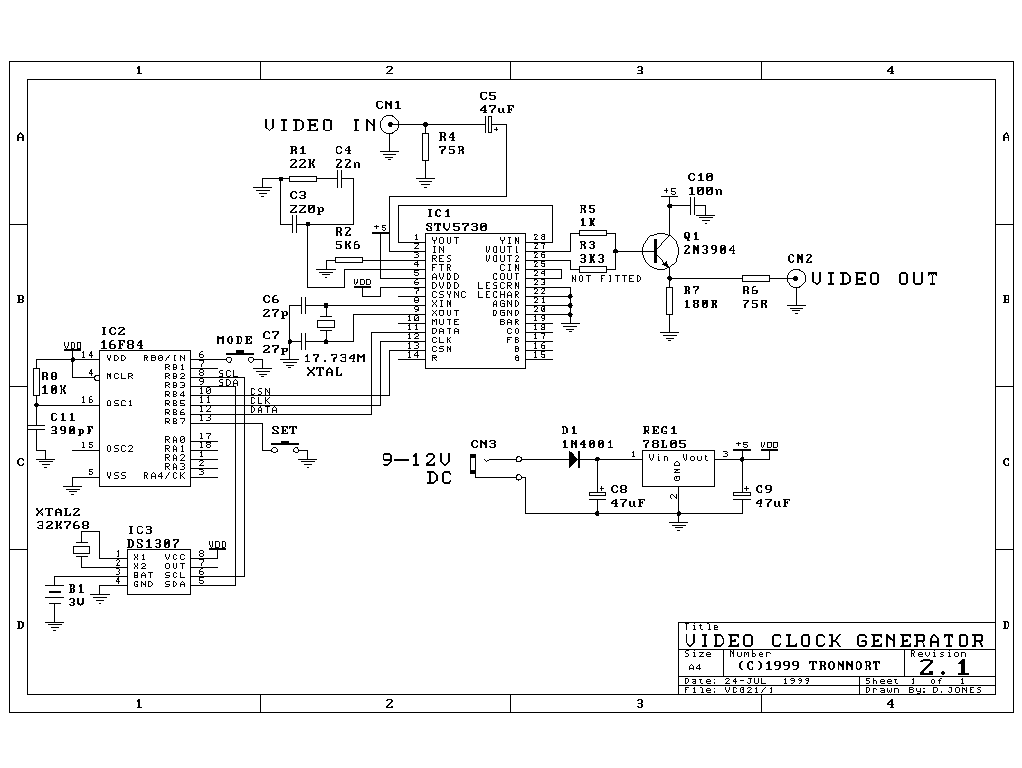
PAL/NTSC Video Time/Date Generator
The following design is capable of overlaying the time and date onto any existing PAL (or optionally NTSC) composite video signal. It is housed in a very neat and compact standard moulded casing and has standard 75ohm RCA video inputs...