


Solar Joule Thief Circuit Project
#solar
#joule thief
#energy harvesting
#low voltage
#steam engine
#carousel
#DIY
#renewable energy
#circuit project
Description: A steam engine-powered carousel project that utilizes the Joule Thief circuit.
This project combines the classic charm of a steam engine with the innovative Joule Thief circuit, creating a unique carousel that operates efficiently. The steam engine serves as the primary source of mechanical power, driving the carousel's rotation. The Joule Thief circuit, a simple boost converter, is employed to extract energy from low-voltage sources, such as depleted batteries or small solar cells, to power the lighting or electronic components of the carousel.
The steam engine consists of a boiler, a piston, and a flywheel, which converts steam pressure into mechanical motion. The carousel itself is mounted on a rotating platform, which can be designed to accommodate various decorative elements and figures that move in synchronization with the rotation.
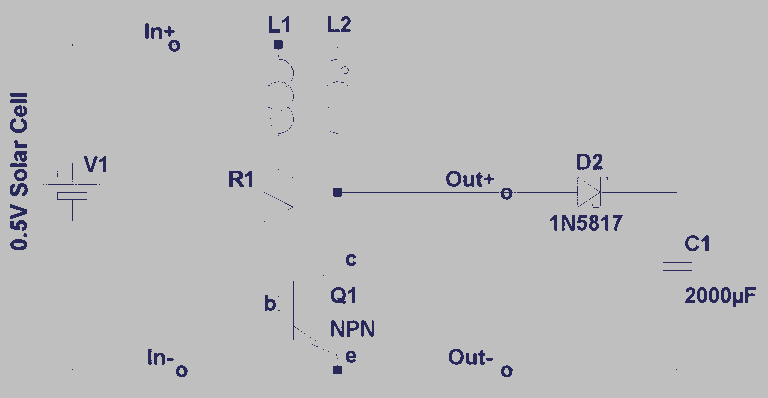
The Joule Thief circuit typically includes a transistor, a resistor, a coil, and a diode. This circuit is capable of boosting voltages from a low level (as low as 0.9 volts) to a higher level suitable for powering LEDs or other small devices. When the Joule Thief is integrated into the carousel project, it allows for the efficient use of energy harvested from the steam engine's operation or from alternative power sources, ensuring that the lighting remains vibrant without draining the primary power supply.
In summary, this steam engine-powered carousel project not only showcases mechanical ingenuity but also incorporates modern electronic principles to enhance its functionality and sustainability. The combination of traditional steam power with the Joule Thief circuit exemplifies a creative approach to energy use in miniature engineering projects.A Very Nice Steam Engine Powered Carousel Project That Uses The Joule Thief.
This project combines the classic charm of a steam engine with the innovative Joule Thief circuit, creating a unique carousel that operates efficiently. The steam engine serves as the primary source of mechanical power, driving the carousel's rotation. The Joule Thief circuit, a simple boost converter, is employed to extract energy from low-voltage sources, such as depleted batteries or small solar cells, to power the lighting or electronic components of the carousel.
The steam engine consists of a boiler, a piston, and a flywheel, which converts steam pressure into mechanical motion. The carousel itself is mounted on a rotating platform, which can be designed to accommodate various decorative elements and figures that move in synchronization with the rotation.
The Joule Thief circuit typically includes a transistor, a resistor, a coil, and a diode. This circuit is capable of boosting voltages from a low level (as low as 0.9 volts) to a higher level suitable for powering LEDs or other small devices. When the Joule Thief is integrated into the carousel project, it allows for the efficient use of energy harvested from the steam engine's operation or from alternative power sources, ensuring that the lighting remains vibrant without draining the primary power supply.
In summary, this steam engine-powered carousel project not only showcases mechanical ingenuity but also incorporates modern electronic principles to enhance its functionality and sustainability. The combination of traditional steam power with the Joule Thief circuit exemplifies a creative approach to energy use in miniature engineering projects.A Very Nice Steam Engine Powered Carousel Project That Uses The Joule Thief.
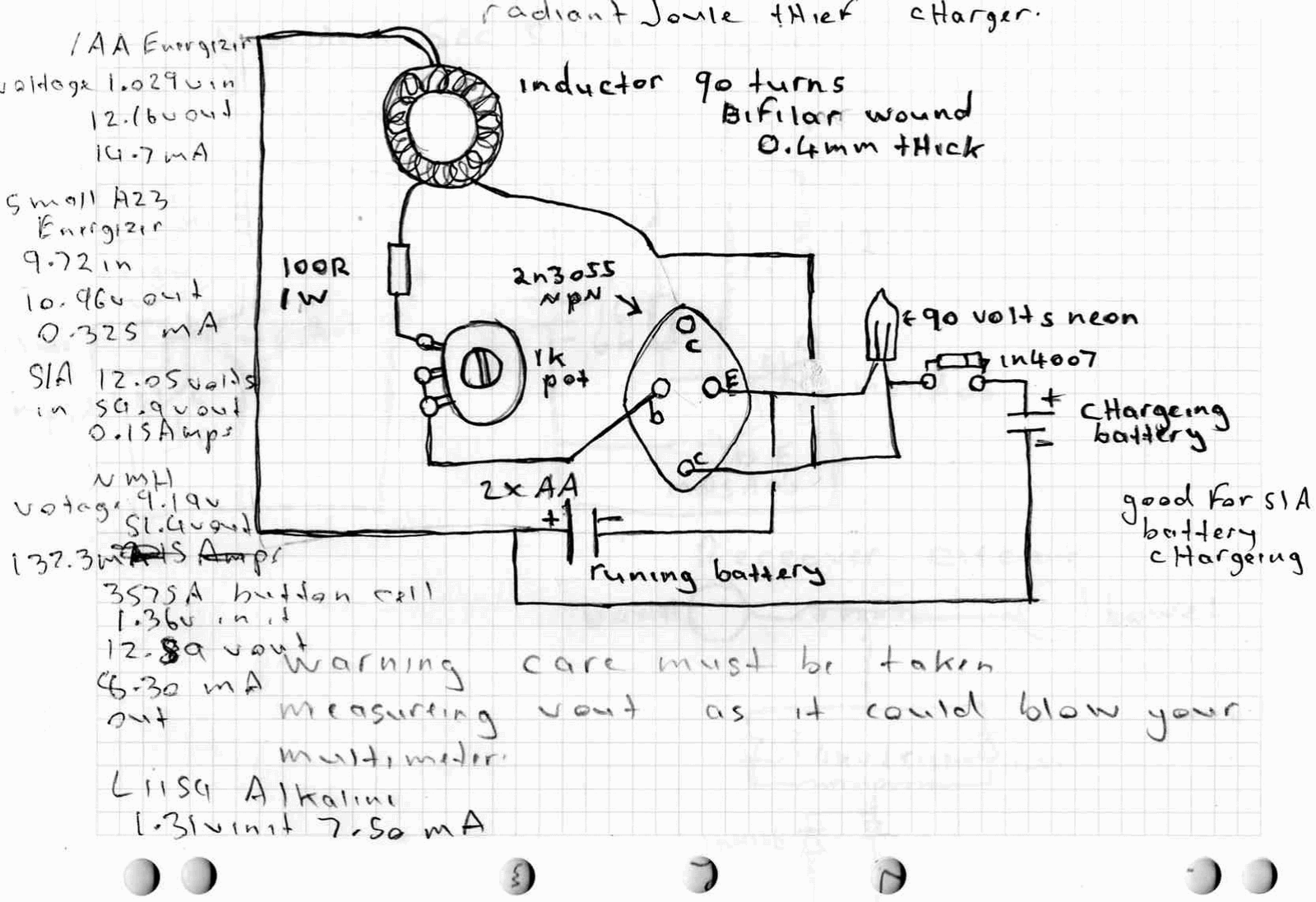
Making a Joule Thief Circuit
A high power joule thief circuit is explained in this post, which can be constructed by any new hobbyist. Here is the simplified drawing of the radiant joule thief battery charger. The inductor was wound with many turns until it...

Making A Simple Joule Thief circuit
This document outlines the construction of a simple joule thief circuit. A joule thief is a versatile device, particularly useful for powering LED lights from low-voltage power supplies. It is capable of extracting energy from nearly depleted batteries, making it...
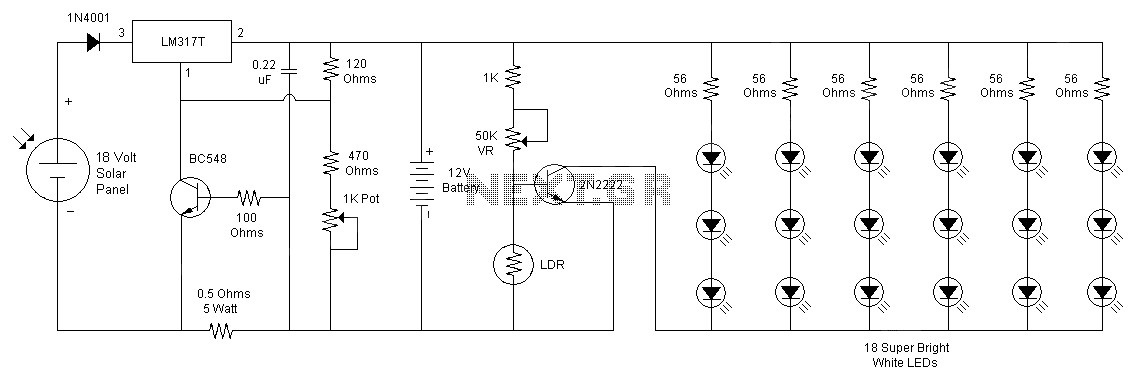
12v solar led night activated lamp
The figure illustrates a schematic for a 12V solar LED night-activated lamp circuit. This project is highly versatile and can serve various applications. For instance, it can function as an automatic solar garden light, allowing control of multiple garden lights...
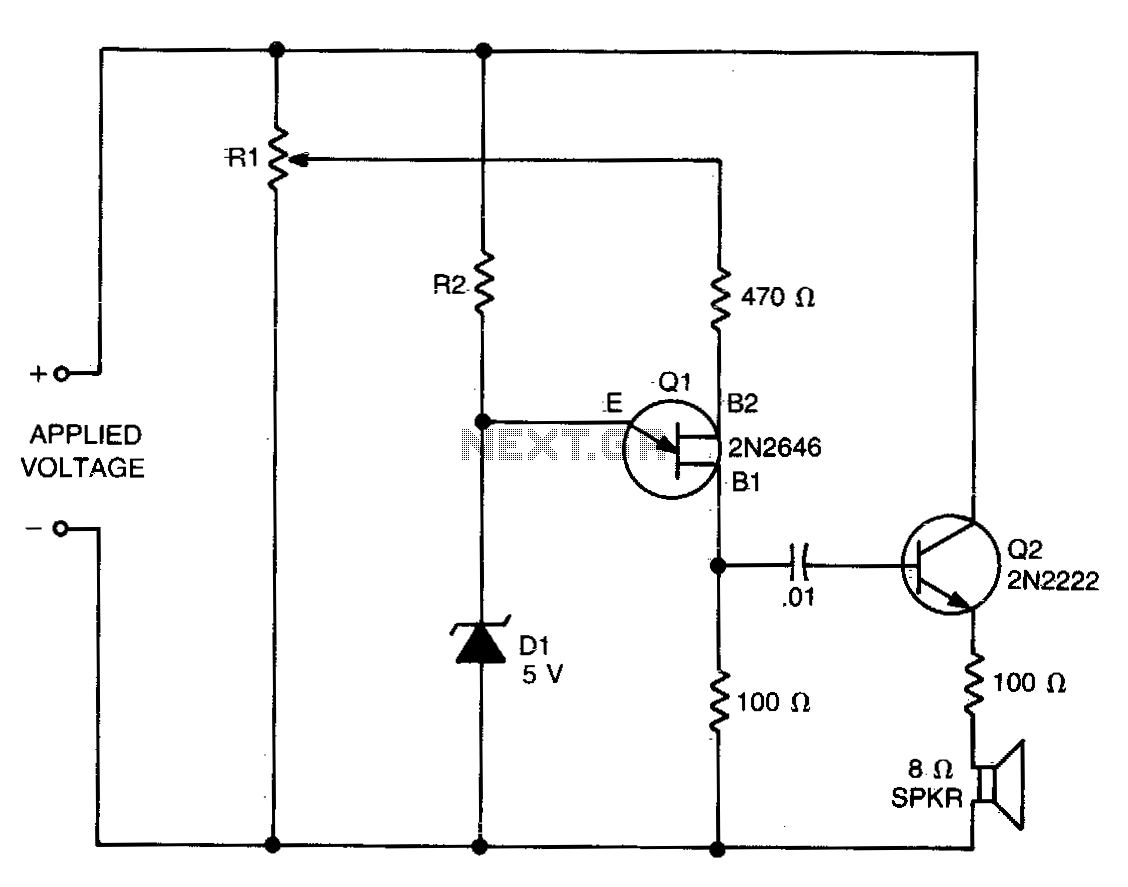
Low voltage detector
The values of R1, R2, and D1 are selected based on the voltage applied. Using a 12-volt battery, R1 is set to 10 kΩ, R2 to 5 kΩ, and D1 is a 5-volt zener diode or a string of forward-biased...
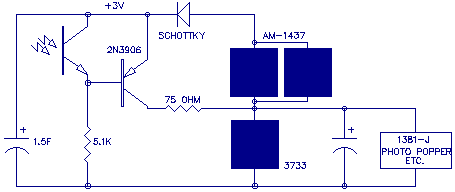
SmartCap solar engine
Here's a circuit diagram for Bob's "Vore-N-More" circuit containing the SmartCap solar engine:
In this diagram, the "SmartCap" is just the 1.5 F storage capacitor, phototransistor, 2N3906 transistor, and 5.1K bias resistor. The idea is that after charging, a loss of...
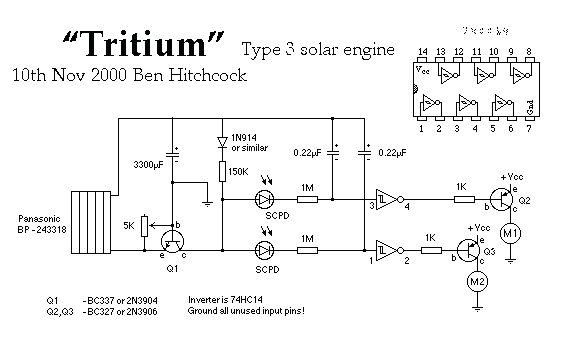
Tritium Solar engine
The Tritium circuit was the first type 3 SE. As such, it is quite experimental and should be regarded as a prototype rather than the state of the art. Nevertheless, it does function reasonably well, and in some circumstances outperforms...
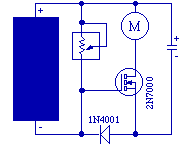
The D1 solar engine
The design is simple, tuneable, but no longer terribly useful. This design has a number of weaknesses; courtesy of Wilf Rigter, here are a few:
The provided description indicates a circuit design that emphasizes simplicity and tunability, yet lacks practical utility...
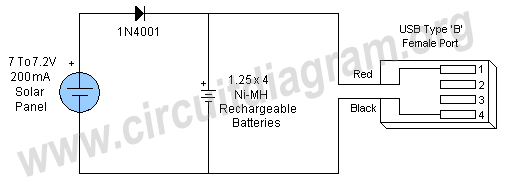
diy solar cell phone usb charger
This schematic illustrates a simple DIY solar cell phone or USB charger circuit. It is designed to charge any device that can be powered from a computer USB port, such as MP3 players, cell phones, and iPhones. The circuit utilizes...
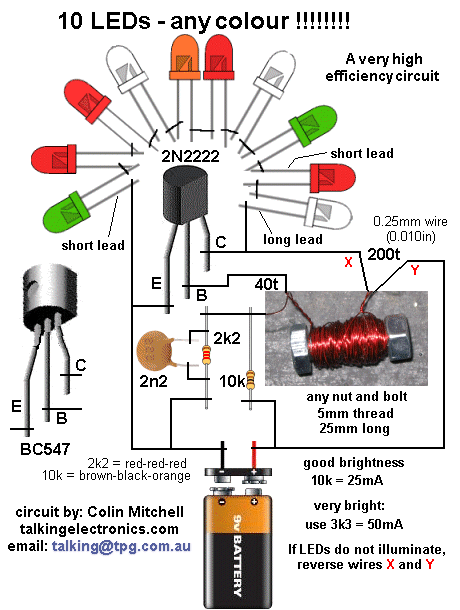
Joule Thief LED Night Light
There are numerous used batteries available, primarily AA size, from various electronic devices such as remote controls and cameras. Disposing of these batteries often raises concerns due to their residual charge. While rechargeable batteries are an alternative, they may not...