


Pathfinder is one of the blind LM567 KD56022
#ultrasonic
#obstacle avoidance
#LM567
#KD56022
#blind assistance
#sensor
#motor control
#distance detection
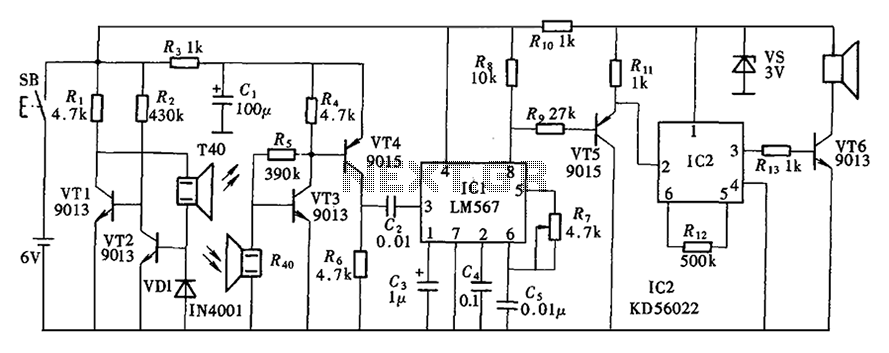
Description: The device is designed to assist blind individuals by providing a total crutch system that helps avoid obstacles. Due to the limited length of the handheld device, the detection distance is constrained. The system employs ultrasonic principles to create a miniature detector that can be integrated into the crutch handle. This setup enhances detection efficiency and range while ensuring ease of use. The ultrasonic detector functions as a pathfinding aid, comprising an ultrasonic transmitter, an ultrasonic receiver, a signal voltage amplifier, an ultrasonic sound detection circuit, and a warning circuit.
The ultrasonic pathfinding device for visually impaired users operates by emitting ultrasonic waves through a transmitter. These waves travel until they encounter an obstacle, at which point they reflect back to the receiver. The time taken for the waves to return is measured, allowing the system to calculate the distance to the obstacle.
The circuit consists of several key components. The ultrasonic transmitter generates high-frequency sound waves, typically in the range of 40 kHz, which are inaudible to humans but can be detected by the receiver. The receiver captures the reflected waves, converting them into an electrical signal. This signal is then processed by a voltage amplifier to enhance its strength for further analysis.
The detection circuit is responsible for interpreting the received signals and determining whether an obstacle is present within the defined detection range. If an obstacle is detected, the warning circuit activates an alert mechanism, which may include auditory signals or vibrations to inform the user of the potential hazard.
Integration of these components into a compact and user-friendly design is crucial for effective operation. The entire system is powered by a rechargeable battery, ensuring portability and ease of use. By employing this ultrasonic detection technology, the device significantly improves the mobility and safety of blind individuals, enabling them to navigate their environment with greater confidence. Blind when they go out to bring a total crutches to Pathfinder to avoid obstacles. Due to hand battle not be too long, the detection distance is very limited. Using ultrasonic principle to form a miniature detector, installed in the hand battle, not only can improve the detection efficiency and detection range, and easy to use. As shown for the ultrasonic detectors blind Pathfinder device, its circuit as shown in FIG. The circuit is an ultrasonic transmitter, an ultrasonic receiver and signal voltage amplifier, ultrasonic sound detection circuit and warning circuit.
The ultrasonic pathfinding device for visually impaired users operates by emitting ultrasonic waves through a transmitter. These waves travel until they encounter an obstacle, at which point they reflect back to the receiver. The time taken for the waves to return is measured, allowing the system to calculate the distance to the obstacle.
The circuit consists of several key components. The ultrasonic transmitter generates high-frequency sound waves, typically in the range of 40 kHz, which are inaudible to humans but can be detected by the receiver. The receiver captures the reflected waves, converting them into an electrical signal. This signal is then processed by a voltage amplifier to enhance its strength for further analysis.
The detection circuit is responsible for interpreting the received signals and determining whether an obstacle is present within the defined detection range. If an obstacle is detected, the warning circuit activates an alert mechanism, which may include auditory signals or vibrations to inform the user of the potential hazard.
Integration of these components into a compact and user-friendly design is crucial for effective operation. The entire system is powered by a rechargeable battery, ensuring portability and ease of use. By employing this ultrasonic detection technology, the device significantly improves the mobility and safety of blind individuals, enabling them to navigate their environment with greater confidence. Blind when they go out to bring a total crutches to Pathfinder to avoid obstacles. Due to hand battle not be too long, the detection distance is very limited. Using ultrasonic principle to form a miniature detector, installed in the hand battle, not only can improve the detection efficiency and detection range, and easy to use. As shown for the ultrasonic detectors blind Pathfinder device, its circuit as shown in FIG. The circuit is an ultrasonic transmitter, an ultrasonic receiver and signal voltage amplifier, ultrasonic sound detection circuit and warning circuit.
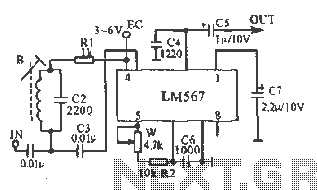
SCA broadcast receiver circuit diagram
This figure illustrates the schematic of the LM567 SCA broadcast reception information machine. The LM567 serves as a narrow-band phase-locked loop designed primarily for SCA broadcast demodulation. The configuration includes a potentiometer (W) and capacitor (C6) that determine the internal...
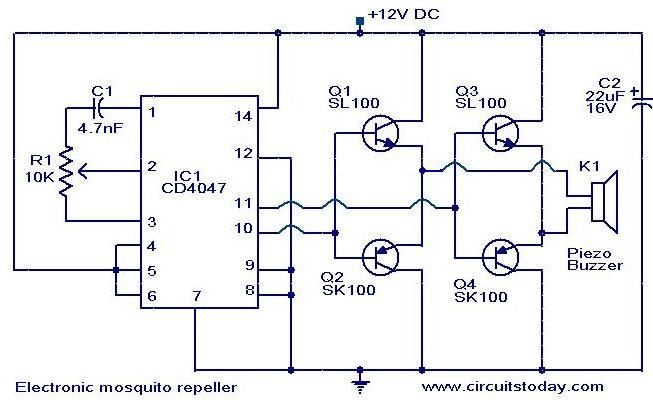
Electronic mosquito repeller
The circuit diagram of an ultrasonic mosquito repeller is based on the principle that insects, such as mosquitoes, can be repelled using sound frequencies in the ultrasonic range (above 20 kHz). The circuit utilizes a CMOS 4047 PLL IC configured...
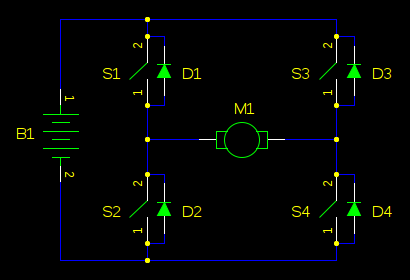
boost Why should I worry about a motor causing my supply voltage to shoot up when the back-EMF cant exceed the supply voltage
In motor control circuits, precautions must be taken to prevent the motor from feeding back into the power supply, which can cause the supply voltage to rise and potentially damage components. However, unless an external force is accelerating the motor,...
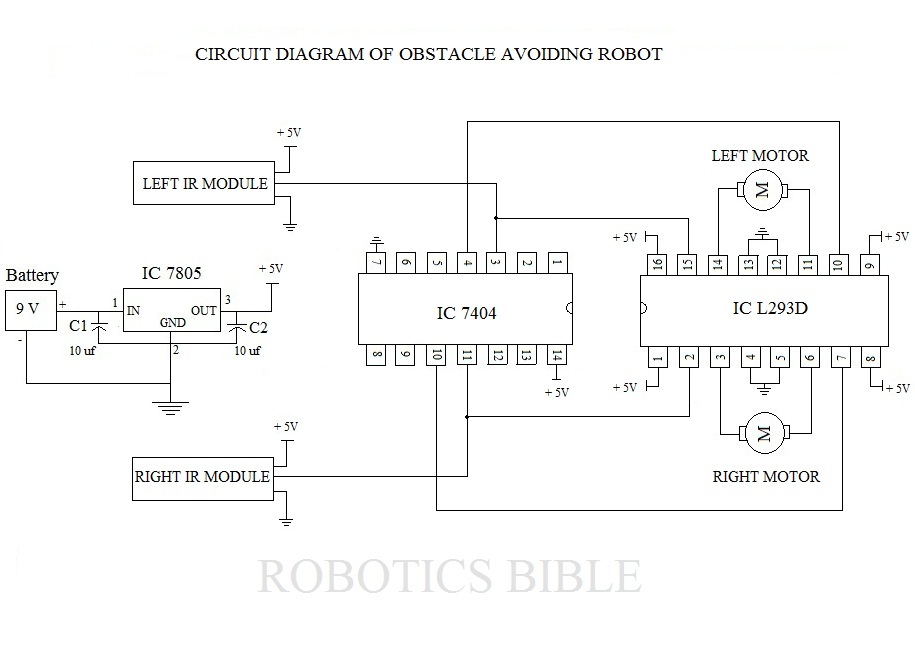
Obstacle Avoiding Robot without microcontroller
An obstacle-avoiding robot is an intelligent device that can automatically sense and navigate around obstacles in its path. It is designed without a microcontroller to simplify the circuitry and programming requirements. Understanding the circuit diagram is essential for constructing this...
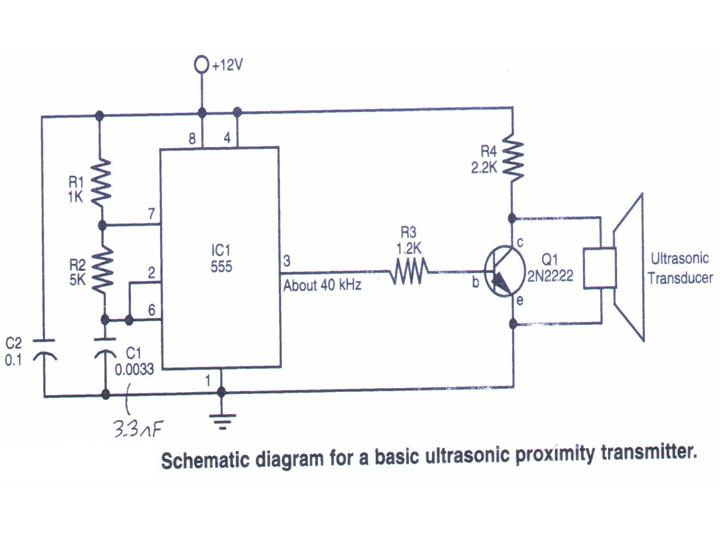
ultrasonic transmitter
This section provides step-by-step instructions along with images for constructing an Ultrasonic Proximity Transmitter. Due to the simplicity of the circuit, only a schematic for the sensor is presented here. The objective of this tutorial is to assist others in...
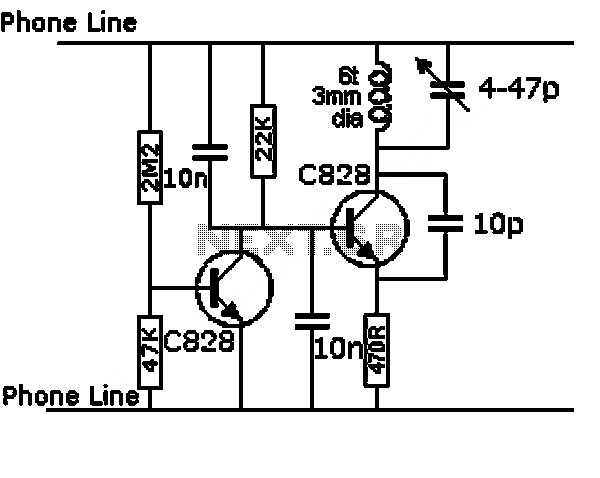
Ultrasonic Mosquito Repeller Circuit Using CMOS IC
This is the design circuit diagram of an ultrasonic mosquito repeller. The circuit operates based on the theory that insects, such as mosquitoes, can be repelled by sound frequencies in the ultrasonic range (above 20 kHz). The circuit utilizes a...
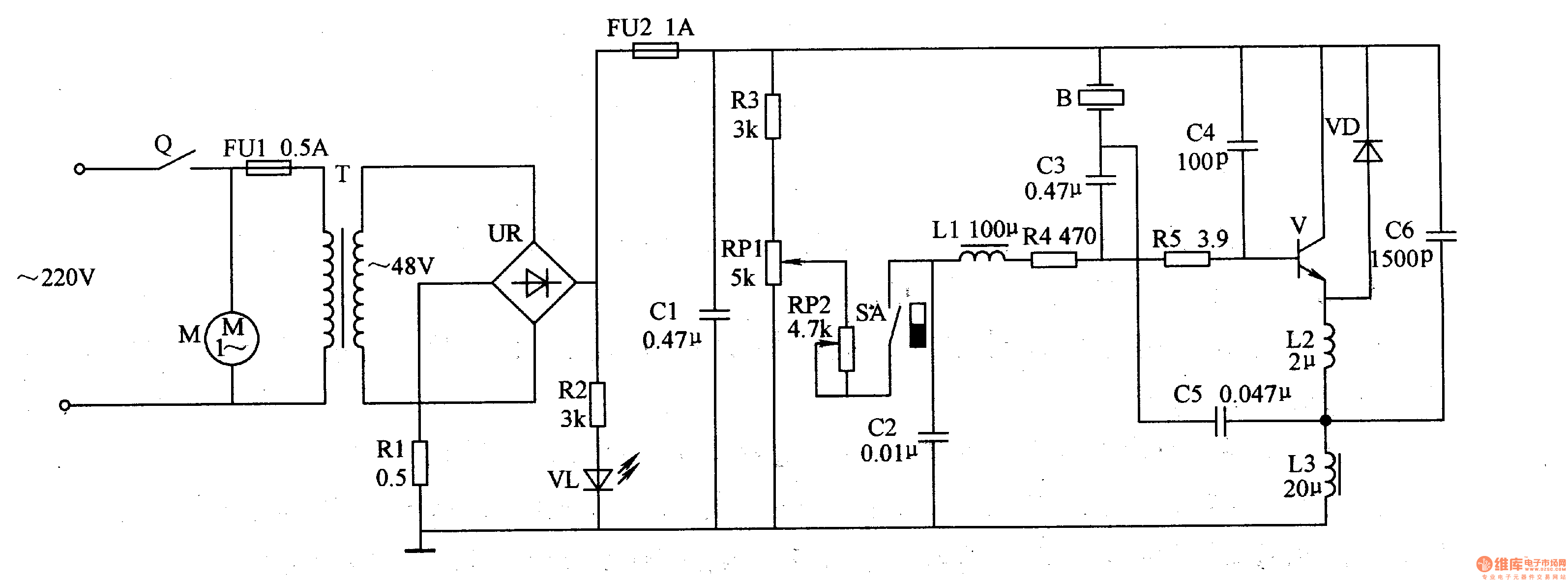
Medical ultrasonic atomizer 2
The medical ultrasonic atomizer circuit consists of a power supply circuit, an atomization amount liquid level detection control circuit, an ultrasonic oscillator, and a fan motor (M). The power supply circuit includes a timer (Q), fuses (FU1, FU2), a power...
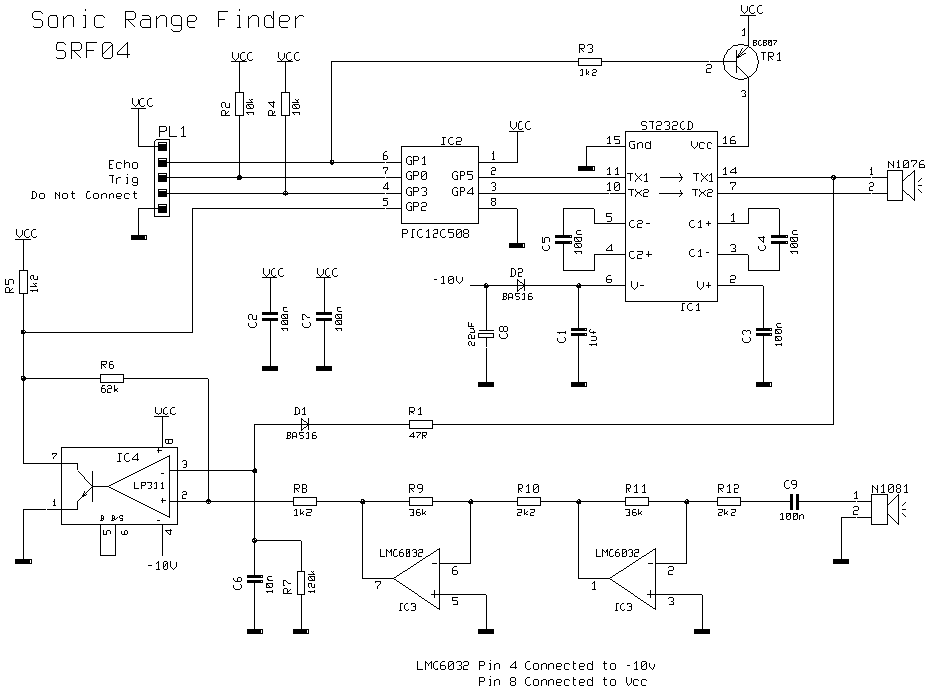
Ultra-Sonic Ranging Design
The module costs £38.00, and the transducer costs an additional £17.00. The Polaroid module effectively performs its intended function, which requires a certain range; however, it is not designed to serve as the vision system for a small robot. The...
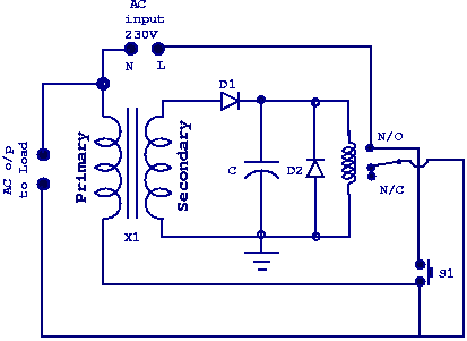
Obstacle Avoidance & Navigation for Industrial Robots
A project focused on obstacle avoidance and path tracing navigation for industrial robots. A robot is a self-guided machine capable of performing tasks autonomously. Additionally, robots often exhibit characteristics through their design or movements that give the impression of having...