


Network RJ45 Cable Tester Circuit
#RJ45
#network tester
#cable tester
#RJ11
#telephone tester
#LED indicator
#crossover cable
#straight cable
#network diagnostics
#multifunction tester
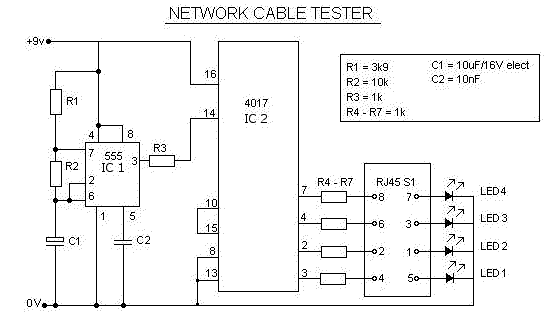
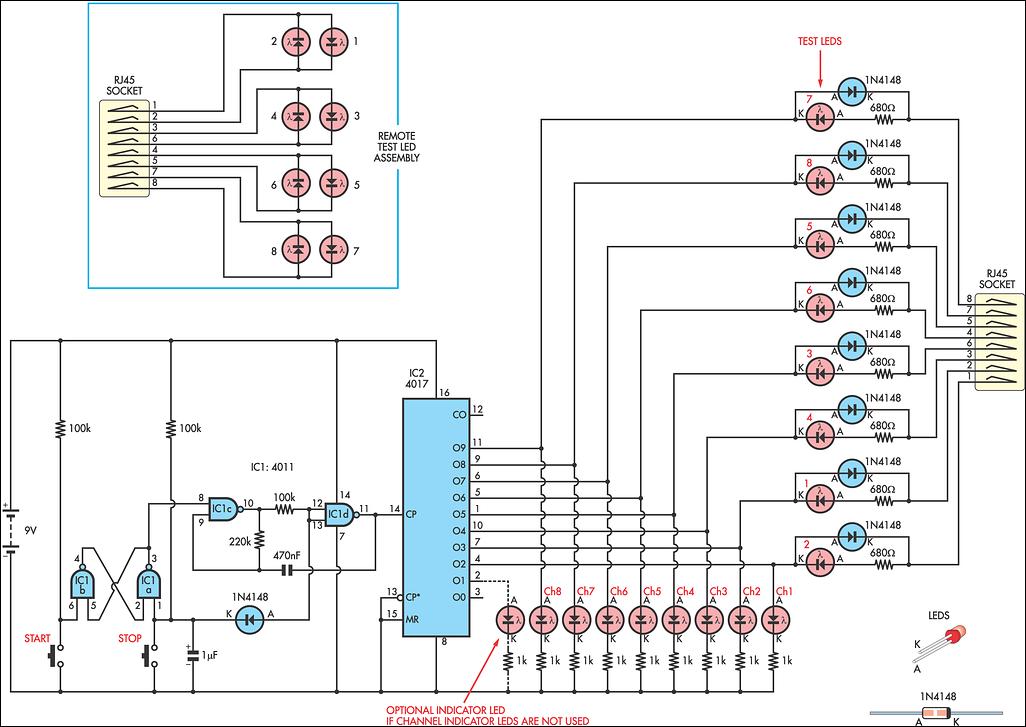
Description: This is a multifunction RJ45 network cable tester designed for testing network cables (RJ45) and telephone cables (RJ11). It is cost-effective and user-friendly. The tester determines whether a network cable is a crossover or straight type by illuminating a yellow or green LED. If a fault is detected or the test button is pressed, the tester conducts a wire test. When the red LED above the orange LED bar lights up, it indicates that the pins in the top RJ45 connector are sending a test signal. The illumination of the bottom red LED and corresponding orange LED bar indicates which of the eight pins in the bottom RJ45 connector is receiving the signal. If a wire is broken or not connected, none of the LEDs in the LED bar will light up orange. In the event of a short circuit between two or more wires, multiple orange LEDs will illuminate when the bottom red LED is activated. Each press of the button activates the output pin.
The multifunction RJ45 network cable tester is an essential tool for network technicians and installers. It serves to verify the integrity and functionality of both network and telephone cables by providing clear visual feedback through its LED indicators. The tester's design allows for easy identification of cable types, making it straightforward for users to determine if they are dealing with a crossover or straight-through cable configuration.
The operation begins with the insertion of the RJ45 or RJ11 connector into the appropriate port. Upon activation, the tester sends a signal through the cable, and the corresponding LEDs illuminate based on the signal's path. The red LED indicates that the signal is being sent, while the orange LED bar provides a visual representation of the receiving pins.
In cases where a wire is broken or disconnected, the absence of illumination in the orange LED bar alerts the user to the fault. This feature is particularly useful in troubleshooting scenarios, as it quickly narrows down the potential issues within the cable. Furthermore, the tester's ability to detect short circuits enhances its utility, as multiple illuminated orange LEDs signify that there is an unintended connection between wires, which can lead to network failures or performance issues.
The compact and portable design of the tester facilitates its use in various environments, from home installations to large-scale network setups. Its affordability makes it accessible for both professional and amateur users, ensuring that anyone can verify cable integrity with ease. Overall, the multifunction RJ45 network cable tester is a valuable instrument for maintaining efficient and reliable network communications.This is a multifunction RJ45 network cable tester. It is the design of the network cable (RJ45) test, and telephone (RJ11). It is cheap and easy to use. It works for network, telephone, cable with RJ45 half Registered Jack plug immediately indicate whether a crossover network cable or straight, flashing a yellow or green LED. If something is br oken or if you press the button, the tester is in line with the wire test. When the red LED above the orange light LED bar shows the pins in the top RJ45 connector sends a test signal, and when the bottom of the red LED illuminates orange LED bar indicates which of the eight dioceses of the bottom RJ45 connector signal receives in this state where the wire is broken or not connected, none of LEDs in the LED bar will light up orange. If a short circuit between two or more wires, more than an orange LED lights up when the bottom red LED lights.
Each time the button is the active output pin.
The multifunction RJ45 network cable tester is an essential tool for network technicians and installers. It serves to verify the integrity and functionality of both network and telephone cables by providing clear visual feedback through its LED indicators. The tester's design allows for easy identification of cable types, making it straightforward for users to determine if they are dealing with a crossover or straight-through cable configuration.
The operation begins with the insertion of the RJ45 or RJ11 connector into the appropriate port. Upon activation, the tester sends a signal through the cable, and the corresponding LEDs illuminate based on the signal's path. The red LED indicates that the signal is being sent, while the orange LED bar provides a visual representation of the receiving pins.
In cases where a wire is broken or disconnected, the absence of illumination in the orange LED bar alerts the user to the fault. This feature is particularly useful in troubleshooting scenarios, as it quickly narrows down the potential issues within the cable. Furthermore, the tester's ability to detect short circuits enhances its utility, as multiple illuminated orange LEDs signify that there is an unintended connection between wires, which can lead to network failures or performance issues.
The compact and portable design of the tester facilitates its use in various environments, from home installations to large-scale network setups. Its affordability makes it accessible for both professional and amateur users, ensuring that anyone can verify cable integrity with ease. Overall, the multifunction RJ45 network cable tester is a valuable instrument for maintaining efficient and reliable network communications.This is a multifunction RJ45 network cable tester. It is the design of the network cable (RJ45) test, and telephone (RJ11). It is cheap and easy to use. It works for network, telephone, cable with RJ45 half Registered Jack plug immediately indicate whether a crossover network cable or straight, flashing a yellow or green LED. If something is br oken or if you press the button, the tester is in line with the wire test. When the red LED above the orange light LED bar shows the pins in the top RJ45 connector sends a test signal, and when the bottom of the red LED illuminates orange LED bar indicates which of the eight dioceses of the bottom RJ45 connector signal receives in this state where the wire is broken or not connected, none of LEDs in the LED bar will light up orange. If a short circuit between two or more wires, more than an orange LED lights up when the bottom red LED lights.
Each time the button is the active output pin.
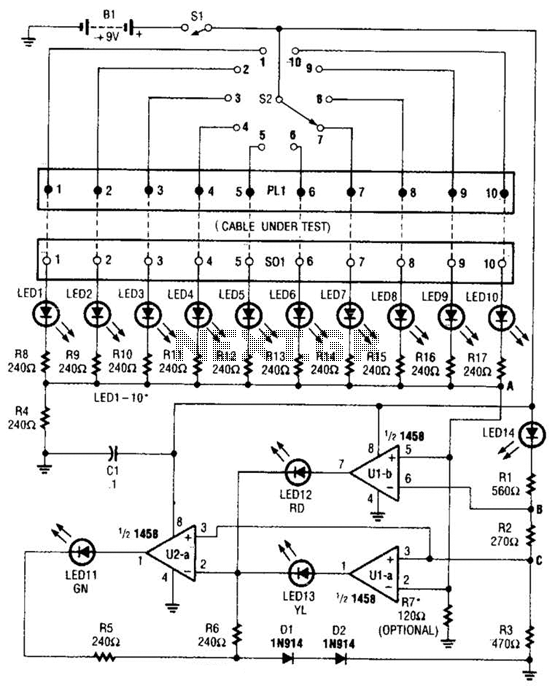
Cable Tester Circuit
The cable tester utilizes two operational amplifiers (op-amps) configured as window comparators to detect short or open circuit conditions. A third op-amp comparator is employed to indicate a properly functioning circuit, meaning it is neither open nor shorted. Colored light-emitting...
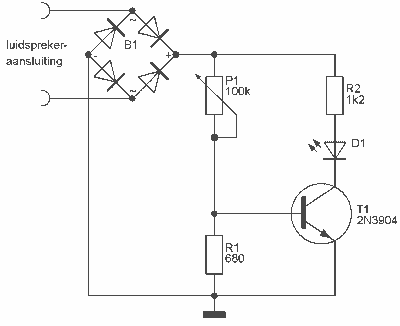
Audio Peak / Beat LED indicator
This indicator can be used, or see if your speakers can be damaged by the noise power. With P1 you can set the limit to which D1 LED lights. The pot is 100k here, you can even experiment with other...
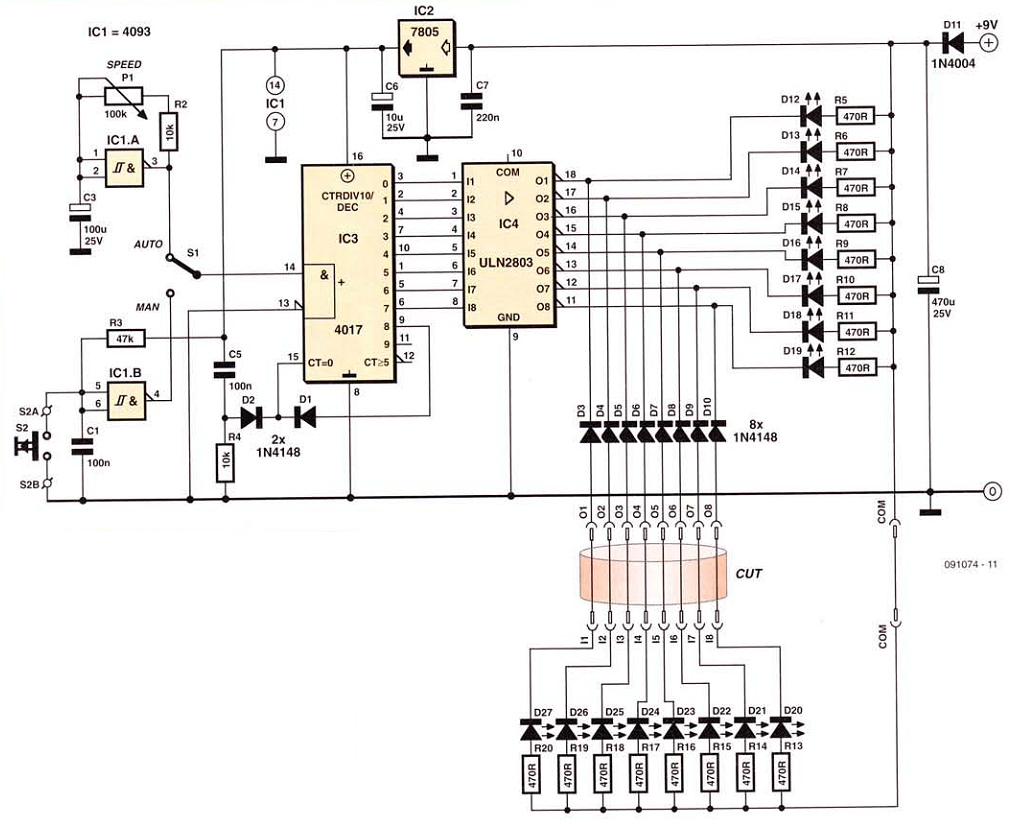
network wiring tester schematic circuit
This network wiring tester consists of two components: a transmitter unit, which is powered and installed at the network's starting point, and a passive receiver unit that can be moved from socket to socket. Both units contain eight LEDs, labeled...
Simple Cat.5 Network Tester
This circuit was developed to fulfill the requirement for a simple network tester that can be operated by a single individual. Previous commercial units necessitated the presence of a person at the other end to observe the remote LEDs, as...
el cheapo cable tester
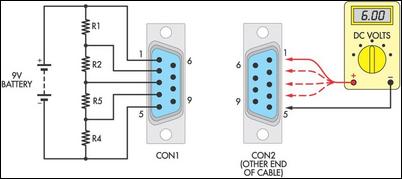
Many cable testers have been previously published, some of which are quite complex. However, here is a cost-effective and straightforward alternative. It utilizes only a 9V battery, two mating connectors, and several resistors, along with a multimeter for voltage measurements....

Multi Wire Cable Tester
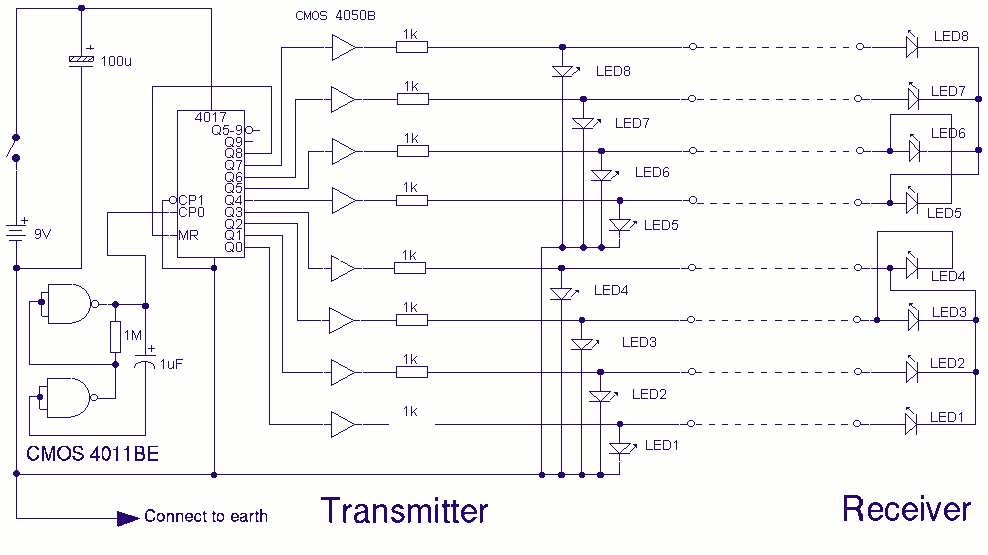
A multi-wire cable tester features a separate LED indicator for each wire. It is capable of detecting open circuits, short circuits, reversals, earth faults, and continuity, utilizing four integrated circuits (ICs). Initially designed for intercom systems, it is also applicable...
Multi Wire Cable Tester
A multi wire cable tester with a separate LED for each wire. Will show open circuits, short circuits, reversals, earth faults, continuity and all with four IC`s. Designed initially for my intercom, but can be used with alarm wiring, CAT...
Off line Telephone tester
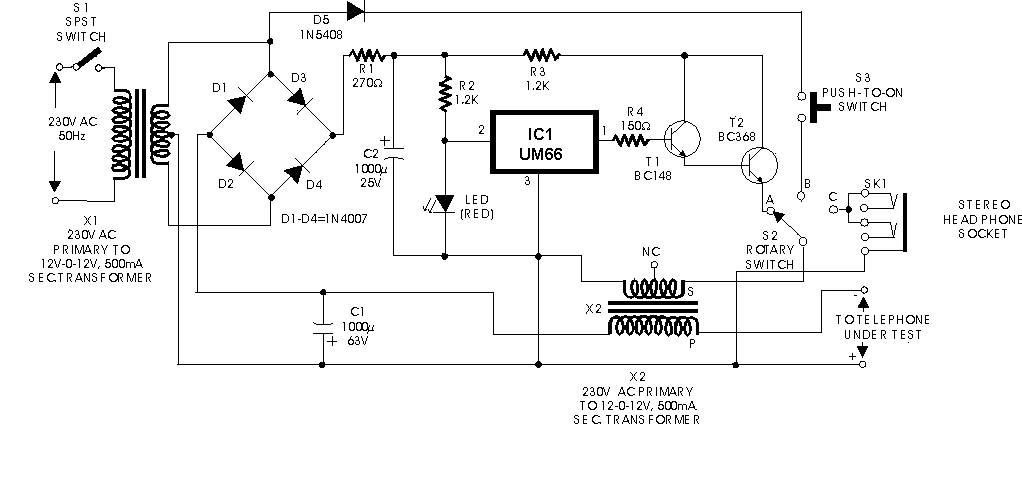
Offline telephone tester. This circuit allows for testing a telephone instrument without the need for a telephone line. The design is straightforward.
The offline telephone tester circuit is designed to evaluate the functionality of telephone instruments independently of an active telephone...
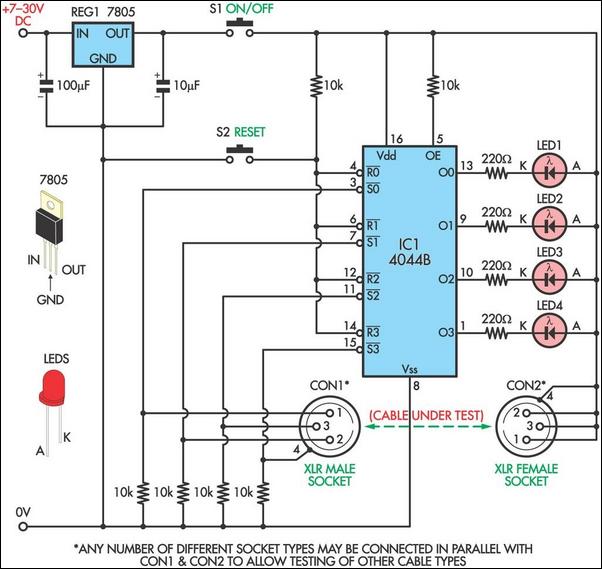
cable tester uses quad latch
This circuit is designed to facilitate the testing of microphone cables or other types of cables for intermittent breaks that are often challenging to detect with a multimeter. The circuit can accommodate cables with up to four cores. It employs...